Services
Pay Per Click Advertising for Southern California Service Businesses
Buy the top of the search page and pay only when someone clicks.
- Starting at
- $1,200+
- Timeline
- First clicks and calls within 48 hours of launch
- Services
- 11 included areas
Call (714) 823-3164 or ask a question. Clear recommendations, even if we never work together.
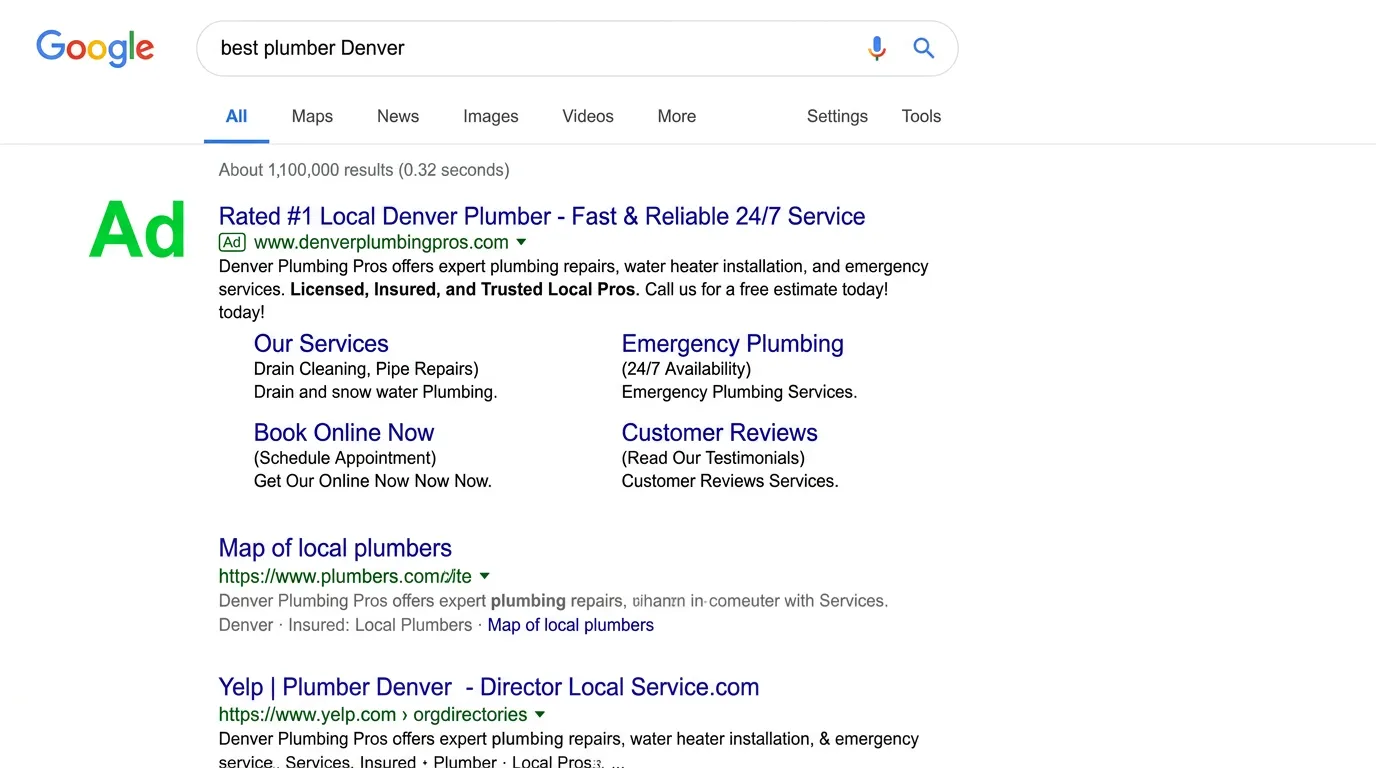
Pay per click advertising is paid search where you bid for a spot on the results page and pay only when someone clicks your ad. For a service business, it puts your phone number in front of people searching right now. You control the budget, the keywords, and the locations day to day.
Jump to a section
- The problem
- What PPC is
- Who it is for
- What is included
- Our process
- What it costs
- What changes
- All PPC services
- One Truck Versus Five Locations
- How the Paid Channels Compare
- Where a Dollar Turns Into a Job
- Audit Your Current Account in 20 Minutes
- What Works and What Wastes Money
- Busy Season, Slow Season, and Flexing the Budget
- More PPC Questions
- Questions
The problem
Most service business owners have tried Google Ads at least once. Usually it went one of two ways. Either they ran it themselves, picked broad match keywords, and burned through 2,000 dollars on searches like free repair and how to fix it yourself. Or they hired a company that charged a percentage of spend, sent a monthly PDF full of impressions and click through rate, and never once said how many phone calls the money bought. Both endings feel the same to the owner: money left, and the phone did not ring any more than usual.
What ppc actually is
Pay per click advertising covers every paid spot where you pay by the click or by the lead. For local service businesses that mostly means Google Search ads, Google Local Services Ads, Microsoft Advertising, Performance Max, and remarketing. The work is not the ads. The work is the account structure behind them. It is the negative keyword lists that stop waste. It is the conversion tracking that proves what happened. And it is the landing page the click sends people to. We handle all four. We also charge a flat management fee, so we have no reason to push your budget higher than it needs to be.
Who it is for
PPC fits service businesses with a real service area, a phone that gets answered, and a job worth at least a few hundred dollars. It works best when you can take on more work tomorrow. It also helps when you want leads while slower channels build. It is a poor fit if nobody answers the phone after 5 PM. It is a poor fit if your average ticket is under 100 dollars. Same goes if you can only spend a few hundred a month in a competitive county. We will tell you before you sign, not after.
What is included
- Google Ads account built under your ownership and billing
- Campaign structure mapped to each service line you want to sell
- Keyword research with match types and a starter negative keyword list
- Responsive search ads with pinned brand headlines and full asset sets
- Local Services Ads setup and Google Guaranteed verification where eligible
- Conversion tracking through GA4, Google Tag Manager, and call tracking numbers
- Landing page review and recommendations for each campaign
- Weekly search term mining and negative keyword additions
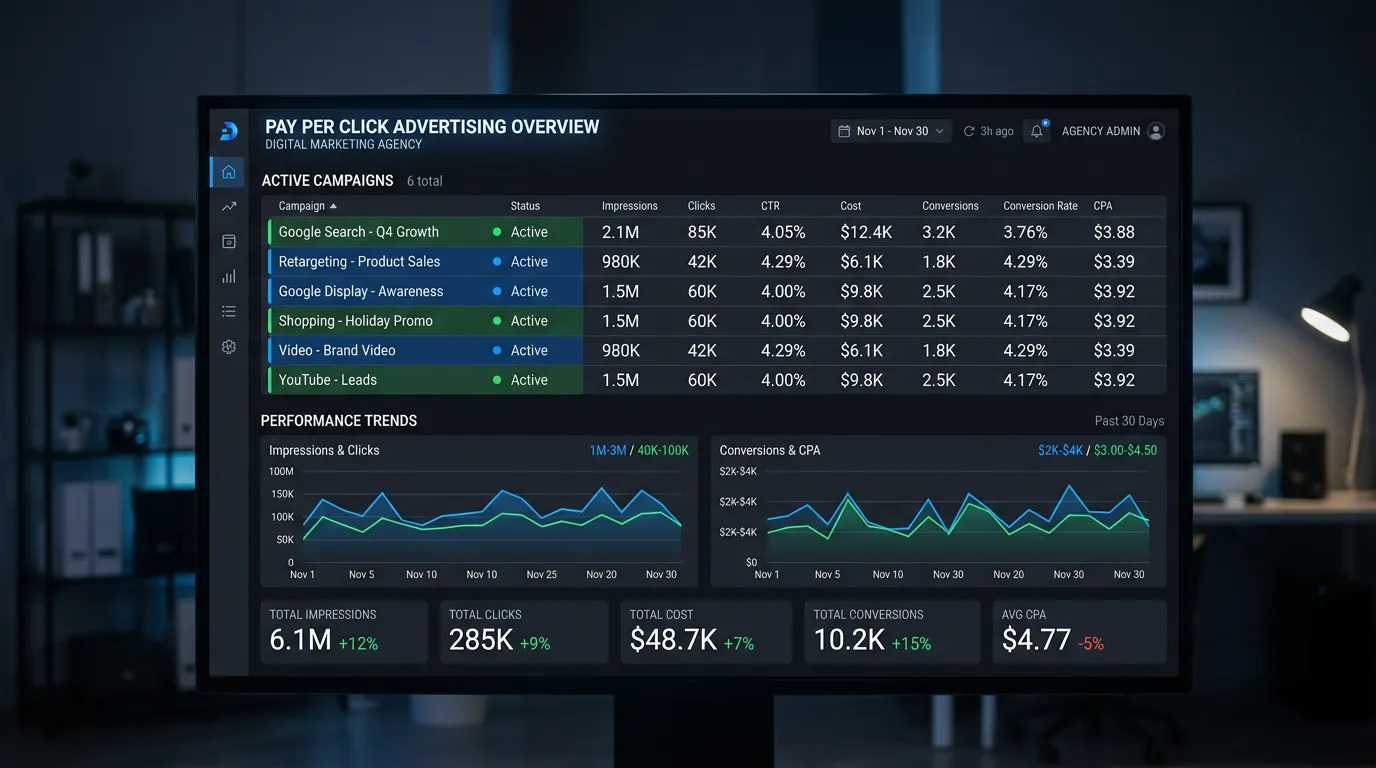
- Monthly report showing spend, calls, forms, cost per lead, and cost per booked job
- A named person you can call who actually works in your account
Our process
Account and Market Review
Days 1 to 5We pull 12 months of search terms, conversions, and spend from any existing account, check what competitors are bidding on, and price out what a click costs in your county. If the math does not work at your budget, we say so now.
Tracking Before Traffic
Days 3 to 10No campaign launches until calls and forms are tracked. We set up GA4 events, Google Tag Manager, a call tracking number with dynamic insertion, and conversion actions with sensible counting rules so one lead is not counted three times.
Build and Launch
Week 2 to 3Campaigns go live with tight match types, presence only location targeting, and an ad schedule that matches when your phones are answered. Budgets start conservative because early waste is highest before the negative list exists.
Search Term Cleanup
Week 3 to 8For the first six to eight weeks we read the search terms report weekly and cut queries that will never buy. This is where most early savings come from. Expect a few hundred negative keywords in the first two months.
Scale What Books Jobs
Ongoing, monthlyOnce each campaign has 15 to 30 conversions we move budget toward the service lines with the lowest cost per booked job, add bid adjustments by device and hour, and test new ad copy against the current winner.
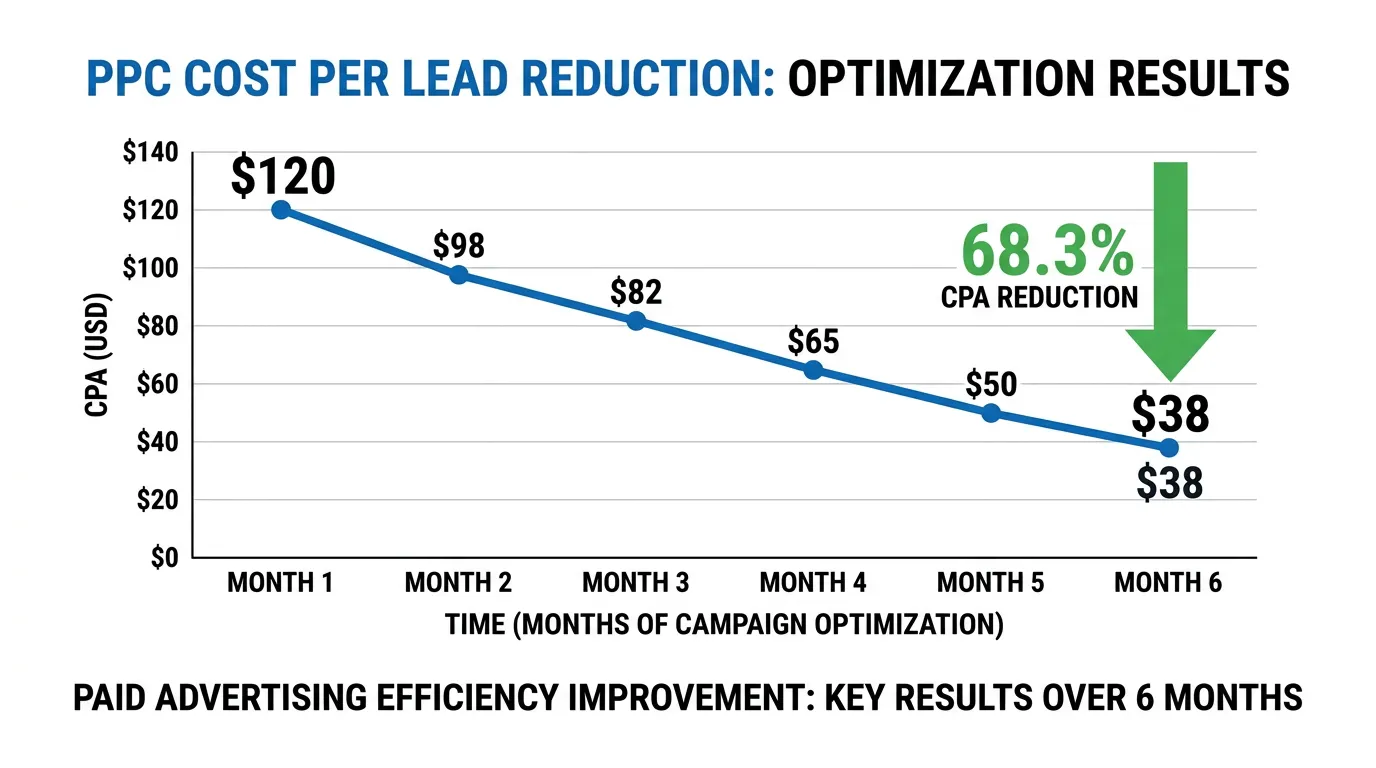
Realistic timeline: First clicks and calls within 48 hours of launch. Cost per lead usually drops 20 to 40 percent between month one and month three as negatives build. Numbers stabilize around month four.
What it costs
Management is a flat monthly fee based on account complexity, not a percentage of your ad spend. One service line in one city sits near the bottom. Multiple trades, several cities, Local Services Ads, and call tracking across many locations push it higher. Ad spend is billed by Google directly to your card and is separate from this fee.
Published ranges are starting points. The final number depends on your market, your current position, and how much ground there is to make up. You get a fixed scope in writing before anything begins.
What changes
Phone calls starting the week you launch, at a cost per call that is high at first and drops as waste gets cut
A known cost per lead and cost per booked job for each service line, so you can decide which jobs to buy more of
Wasted spend on job seekers, DIY searches, and out of area clicks cut sharply in the first 60 days
Coverage on the searches you do not rank for organically yet, without waiting six months
A clear picture of which services people actually search for in your area, which often changes what you promote
The ability to turn volume up before a slow month and down when the schedule is full
All pay per click advertising services
Every area we cover under pay per click advertising. Each one has its own page with process, deliverables, and timelines.
Google Ads Management
Search campaigns built around the jobs you actually want to book
Google Ads ManagementPerformance Max Campaigns
One campaign spends across Search, Maps, YouTube, Display, and Gmail
Performance Max CampaignsAd Copy and Creative Testing
Tests headlines and images at the asset level, not whole ads
Ad Copy and Creative TestingLanding Page Alignment
Every ad group points at a page that answers that exact search
Landing Page AlignmentConversion Tracking Setup
Tracks calls, forms, and chats, not just page views
Conversion Tracking SetupOngoing PPC Optimization
Weekly search term review and negative keyword additions
Ongoing PPC OptimizationPPC for Local Service Businesses
Built around phone calls, local service radius, and dispatch capacity
PPC for Local Service Businesses
Where we do this work
Based in Chino, serving Chino, the Inland Empire, Orange County, Los Angeles County, Riverside County, and San Bernardino County.
One Truck Versus Five Locations
A solo plumber and a five office dental group both buy paid search, but almost nothing about the setup is the same. For a one truck operator, the limit is not budget. It is capacity. Six booked jobs a week fills the calendar, so the account runs a tight radius, two or three service lines, and hours that match when the phone gets answered. The budget dial is a real tool. Turn it down Thursday when the week is full, turn it up Monday when it is thin.
A multi location business has a different problem. Run one campaign across five cities and the busiest city quietly eats the whole budget, while the newest location starves. Each location needs its own campaign, its own daily budget, and its own tracking number so calls route to the right front desk. Then you can see which office is weak and decide whether that is an ads problem or a staffing problem.
The middle case is two or three vans in one city. Keep the geography simple there and split by job type instead. Emergency work and scheduled work behave differently. Emergency clicks cost more, close faster, and come in at odd hours. Scheduled work costs less per click and takes days to close. Mixed into one campaign, the averages hide both.
How the Paid Channels Compare
Most local accounts use two or three of these, not all five. Here is what each one actually costs you and where it breaks down.
| Channel | What you pay for | Best used for | Watch out for |
|---|---|---|---|
| Google Search Ads | Each click, priced by live auction | Demand that already exists, any service line | Broad match sends searches you never picked |
| Local Services Ads | Each lead, not each click | Home trades that can pass a background check | You must dispute junk leads yourself, quickly |
| Performance Max | Clicks and views across all of Google | Extra volume after search is already working | Little control, and it can bill you for brand searches you already win |
| Microsoft Advertising | Each click, often cheaper than Google | Older buyers and office desktops | Much lower volume, so results move slowly |
| Remarketing | Showing ads again to past visitors | Long decision jobs like roofing or implants | Does nothing until the site has real traffic |
Start with search, add Local Services Ads if your trade qualifies, and treat the rest as later steps.
Where a Dollar Turns Into a Job
Money leaks at four points between the search and the job. Find the widest leak before you touch anything else.
Better ad copy cannot rescue a slow, vague landing page. Fix the bottom of the funnel first.
Audit Your Current Account in 20 Minutes
If you already run ads, you can find most of the waste yourself. Log in and check these seven things.
Open the search terms report for the last 30 days
Sort by cost. Any term with real spend and zero leads belongs on the negative list.
See how much of your budget sits in broad match
If broad match takes most of the spend and nobody reads search terms weekly, that is your leak.
Read the conversion actions column carefully
One lead should count once. A call, a form, and a tap to call from the same person is not three leads.
Confirm location targeting is set to presence
The looser default also shows your ads to people far away who searched about your area.
Check whether auto apply recommendations is on
Google can add keywords and loosen match types on its own. Most local accounts should leave this off.
Call your own tracking number at 7 PM on a weekday
If it rings to voicemail while ads are running, you are buying leads nobody answers.
Load your landing page on a phone using cell data
If the number is not tappable on the first screen, the click dies before it becomes a call.
What Works and What Wastes Money
These come from cleaning up accounts other people built. None of them are theory.
Do this
- Bid on your own business name when a competitor is running ads above it. Those clicks are cheap and the job was already yours.
- Split emergency work and scheduled work into separate campaigns so one average does not hide the other.
- Put your license number, service area, and hours in the ad text. Wrong fit clicks filter themselves out before they cost you.
- Listen to ten recorded calls a month. You learn why people did not book, which no report will tell you.
- Give a keyword 20 to 30 clicks before you judge it. Killing it after four clicks is guessing.
Not this
- Do not chase the cheapest cost per click. Cheap clicks usually mean you bought the wrong searches.
- Do not let Google auto apply its own recommendations overnight in a local account.
- Do not pause a working campaign when the schedule fills up. Lower the daily budget instead and keep the data flowing.
- Do not turn on Performance Max before your search campaigns convert. It will spend the budget and you will not know where.
- Do not send every ad to your homepage. Visitors have to hunt for the service they searched for, and most will not.
You are not buying clicks. You are buying the right to be the phone call someone makes in the next ten minutes.
Busy Season, Slow Season, and Flexing the Budget
Southern California demand arrives in waves. AC calls jump the first week it hits 95 degrees. Heating calls follow the first real cold snap. Roofing phones ring after the first winter rain, and dental offices get busy right after January 1 when benefits reset. Click prices rise on those same days, because every competitor is bidding harder at the same moment.
Here is the mistake almost everyone makes. They spend the most in the month they are already booked solid, then cut ads in the slow weeks when they actually need work. Flip it. Hold some budget back for the gaps. If Monday looks light, raise the daily budget that morning on the services with open capacity. Ads are one of the only channels that can respond that fast.
Flex the budget, do not flip a switch. Move it 20 to 30 percent at a time, and keep a floor so the account never goes dark. Campaigns that stop and restart lose the data they were using to bid, and it takes weeks to earn back. Emergency campaigns are the exception. Those you can raise the same day, because the person searching is calling somebody within the hour.
More PPC Questions
Why can't I see my own ads when I search for them?
Should I start with Local Services Ads or Google Ads?
How do I know if my PPC is actually working?
Frequently asked questions
How much do I need to spend on ads each month?
Do you charge a percentage of my ad spend?
Who owns the Google Ads account?
How fast will I see leads?
Should I run PPC and SEO at the same time?
Can you guarantee a certain number of leads?
What happens if I pause the ads?
Why did my last PPC company not work out?
Sources
- Google Ads Help: About negative keywords(opens in a new tab) Negative keywords stop your ads from showing on searches you do not want to pay for, and they have their own match types.
- Google Ads Help: About the search terms report(opens in a new tab) The search terms report shows the actual searches that triggered your ads, which is the data used for the 20 minute self audit.
- Google: Local Services Ads(opens in a new tab) Local Services Ads charge per lead rather than per click, so you pay only when a customer gets in touch.