Local SEO
Local SEO Strategy and Roadmap
Decides which cities and services are worth the fight
- Timeline
- Two to three weeks from kickoff to delivered roadmap
Call (714) 823-3164 or ask a question. Clear recommendations, even if we never work together.
A local SEO strategy is a written plan that decides which cities, services, and keywords a business will compete for, and in what order. It weighs demand against competition. It sets a realistic sequence of work. It also defines how results get measured, so effort goes where it produces calls.
The problem
Most local marketing fails on sequencing, not effort. An owner spends four months writing blog posts while the Google Business Profile sits in the wrong category. Or a company builds forty city pages for towns it has never worked in and none for the two zip codes producing half its revenue. Without a plan, the local SEO work that gets done is whatever somebody thought of last, and the budget scatters across tactics that never compound.
What it is
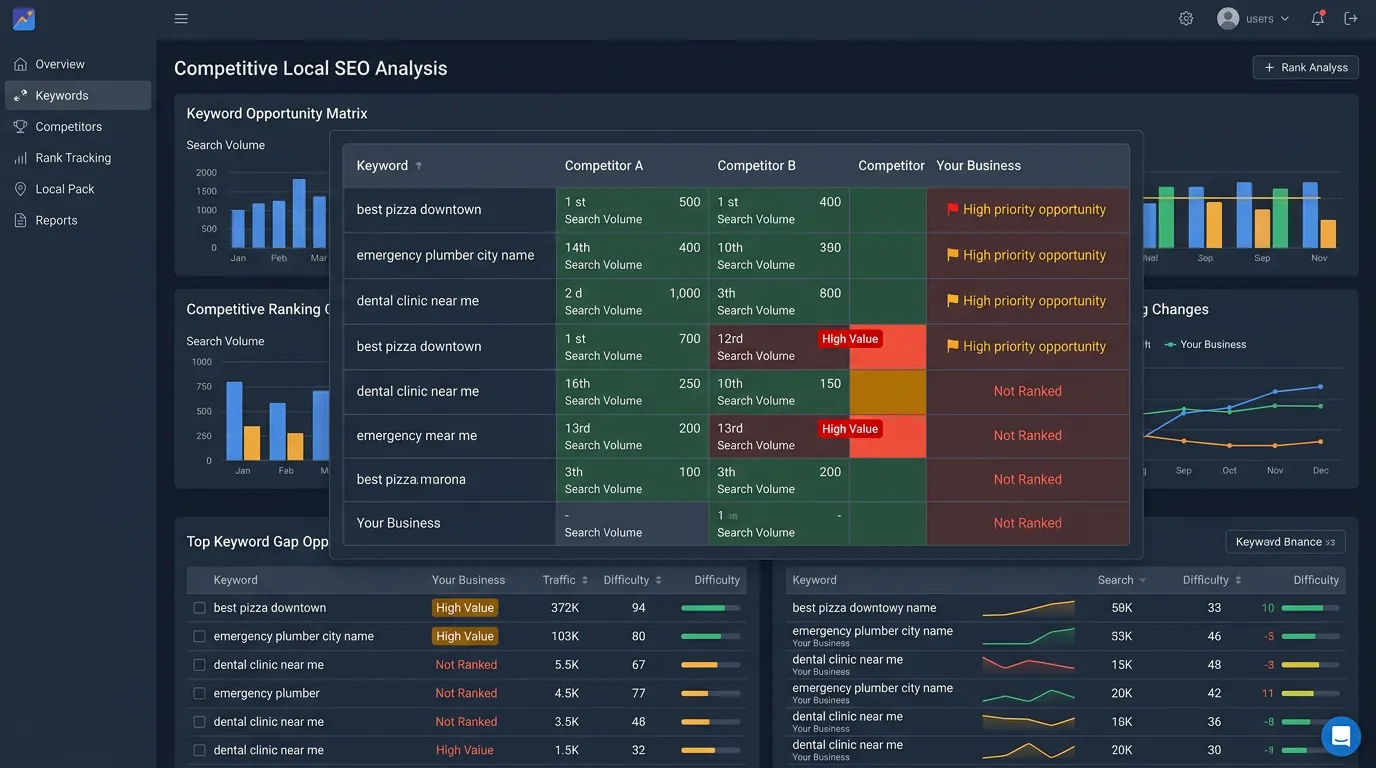
Strategy work starts with data you already have and rarely look at. That means your Google Business Profile performance, your Search Console queries, and your last twelve months of jobs by zip code. We also look at what the top three competitors in each city are doing. From that we build a keyword map. It pairs each service with the cities where that service is winnable. We score every target on demand, competition, and job value, then turn the result into a dated sequence. You end up with a document that tells you what to build first and what to skip. It also tells you what success should look like at day 30, 60, and 90.
Signs you need this
- You rank for your business name and almost nothing else
- You have city pages for towns you have never worked in
- Marketing priorities change every quarter with no stated reason
- Two people at the company disagree about which cities matter most
- You cannot say which service line your website actually produces leads for
What is included
- Keyword map by service and city with monthly volume
- Competitor teardown of the top three map pack holders per city
- Priority tier list of cities marked winnable, contested, or skip
- Site architecture plan showing which pages to build, merge, or delete
- Job value weighting so high ticket services get priority
- A dated 90 day work sequence with dependencies
- Measurement plan naming the tools and the numbers that count
- One hour walkthrough call and the raw research files
Our process
Data pull and interview
Week 1We export Google Business Profile performance, Search Console queries, and your job history by zip code. Then we sit with you for an hour to learn margin by service, capacity limits, and which jobs you actually want more of.
Competitor teardown
Week 1 to 2For each priority city we identify who holds the three map spots, their primary category, review count and velocity, page inventory, and backlink profile using Ahrefs and Local Falcon. This tells us what the entry price is per city.
Keyword and geography mapping
Week 2Every service gets paired to the cities where the math works. Keywords get scored on volume, intent, difficulty, and revenue per job, then assigned to a specific page so nothing competes with itself.
Sequencing and roadmap
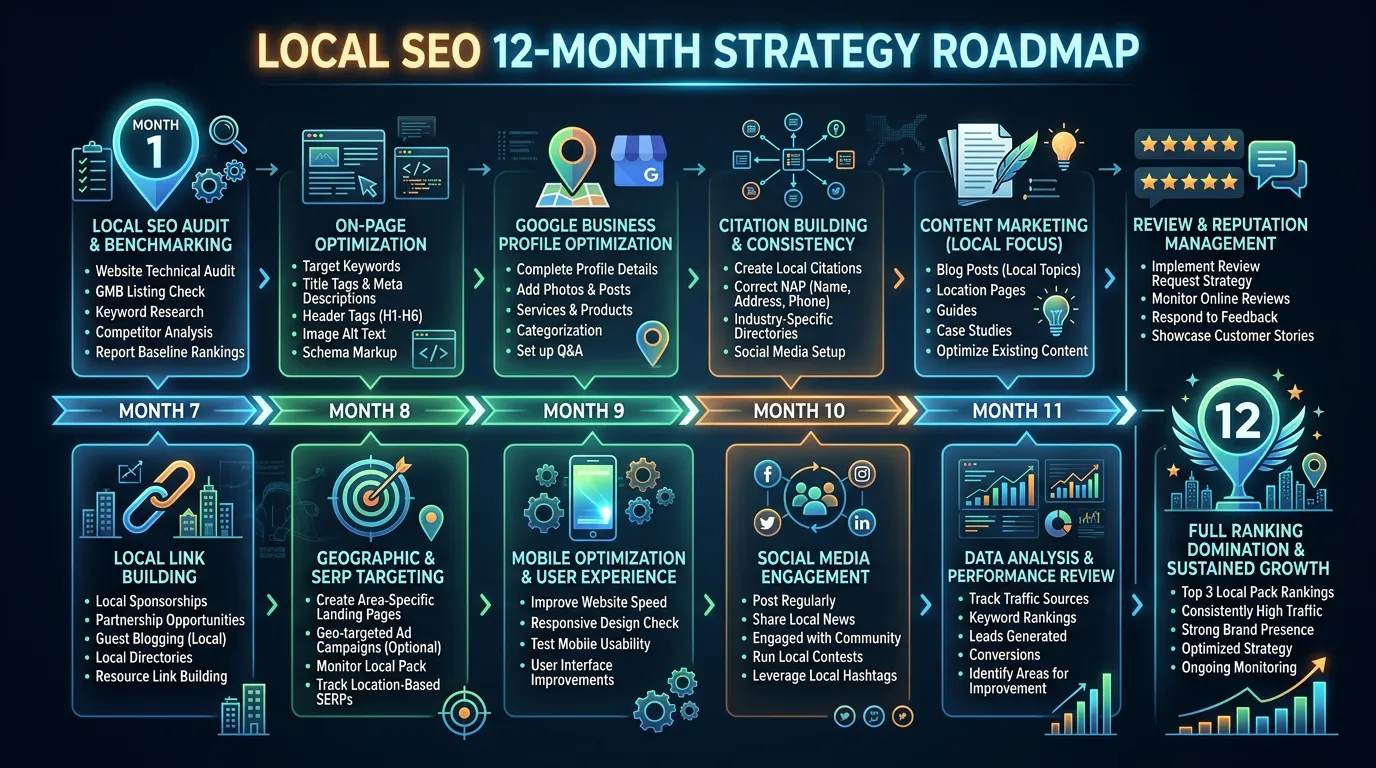
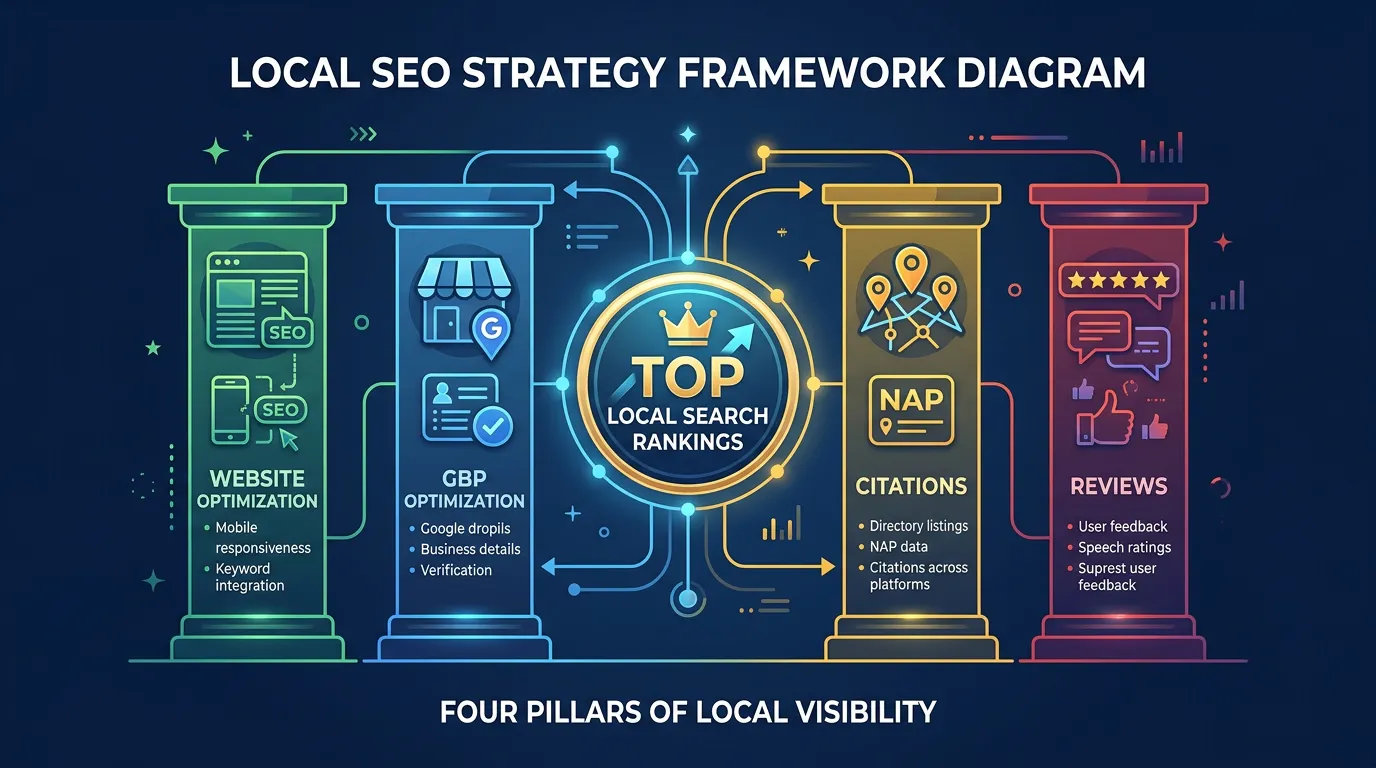
Week 3Work gets ordered by dependency and payback speed. Profile fixes come before content, content before link building. Each item gets a week, an owner, and an expected effect.
Walkthrough and handoff
Week 3We present the plan on a call, defend the choices, adjust anything that conflicts with how you actually run the business, and hand over the files. You can execute it yourself or with us.
Realistic timeline: Two to three weeks from kickoff to delivered roadmap. The plan itself covers the next 90 days with a rough sketch of months 4 through 12.
How We Score a City Before Committing to It
Before a city gets a page, a budget line, or a single keyword, it gets scored. Here is what we look at and what makes us walk away.
| Signal | What we look at | Good sign | Walk away sign |
|---|---|---|---|
| Demand | Searches for your service plus that city | Steady volume and a map pack showing | Almost no searches and no pack |
| Pack strength | Review counts of the current top three | All three under about 100 reviews | One holder above 400 and still growing |
| Travel | Drive time from your shop at 8am | Under 25 minutes | Over 45 minutes in real traffic |
| Job value | Average ticket for that service | High ticket or repeat work | Small one time jobs only |
| Proof | Work you have already done there | Photos and a customer to ask | You have never worked in the city |
A city needs at least three good signs before it earns a page and a budget line. Two is a maybe. One is a no.
A Worked Example: Three Vans, Eleven Cities
Say a plumber in Chino runs three vans and wants the whole Inland Empire. Eleven cities look possible on a map. The job history says something narrower. Most of last year's revenue came from four zip codes inside a twenty minute drive.
Scoring those eleven cities usually splits them three ways. Two or three come back winnable: real demand, pack holders under a hundred reviews, jobs already completed there. A few come back contested, worth attacking around month six once the review count catches up. The rest come back skip. One city might have a franchise sitting on hundreds of reviews and a forty minute drive in traffic. That fight costs more than it returns.
So the plan opens with three cities, not eleven. Three pages that can actually rank, local links in those cities, review requests aimed at customers in those zip codes. At month six the contested list gets scored again. Cities do not vanish from the plan. They wait their turn.
Keeping the Plan Alive Past Week Three
Most plans die quietly. Not because they were wrong, but because nobody owned them once the busy season started.
Do this
- Put one name and one date on every line of the plan
- Review it on the same day each month, busy season included
- Finish profile and page work before starting link outreach
- Write down why a city was skipped, not just that it was
- Change the plan when the job data changes
Not this
- Do not start six things in the same week
- Do not chase a city just because a competitor is there
- Do not rank keywords by search volume alone
- Do not build a page for a city you cannot reach in an hour
- Do not throw out the whole plan after one slow month
Two Questions Owners Ask Second
Should I spread the budget across every city I serve?
How do I tell a wrong plan from a slow one?