
Local SEO
Google Map Pack Optimization
Targets the three map results, not general organic rankings
- Timeline
- Category and relevance changes can move rankings within 2 to 6 weeks
Call (714) 823-3164 or ask a question. Clear recommendations, even if we never work together.
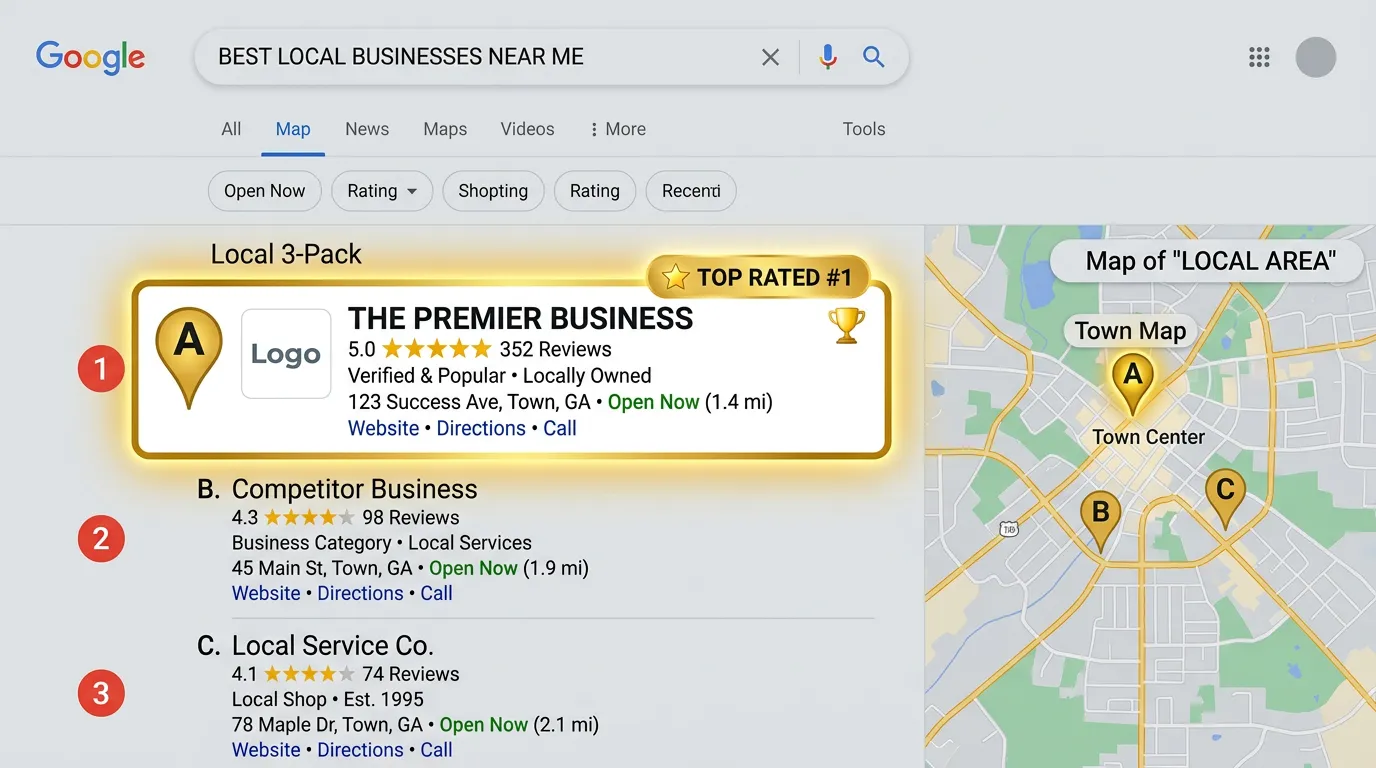
Map pack optimization is the work of getting a business into the three map results Google shows above the regular listings on a local search. Google names three factors for local ranking: relevance, distance, and prominence. The work targets them. You fix profile signals, match the landing page to the search, and build review and link volume.
The problem
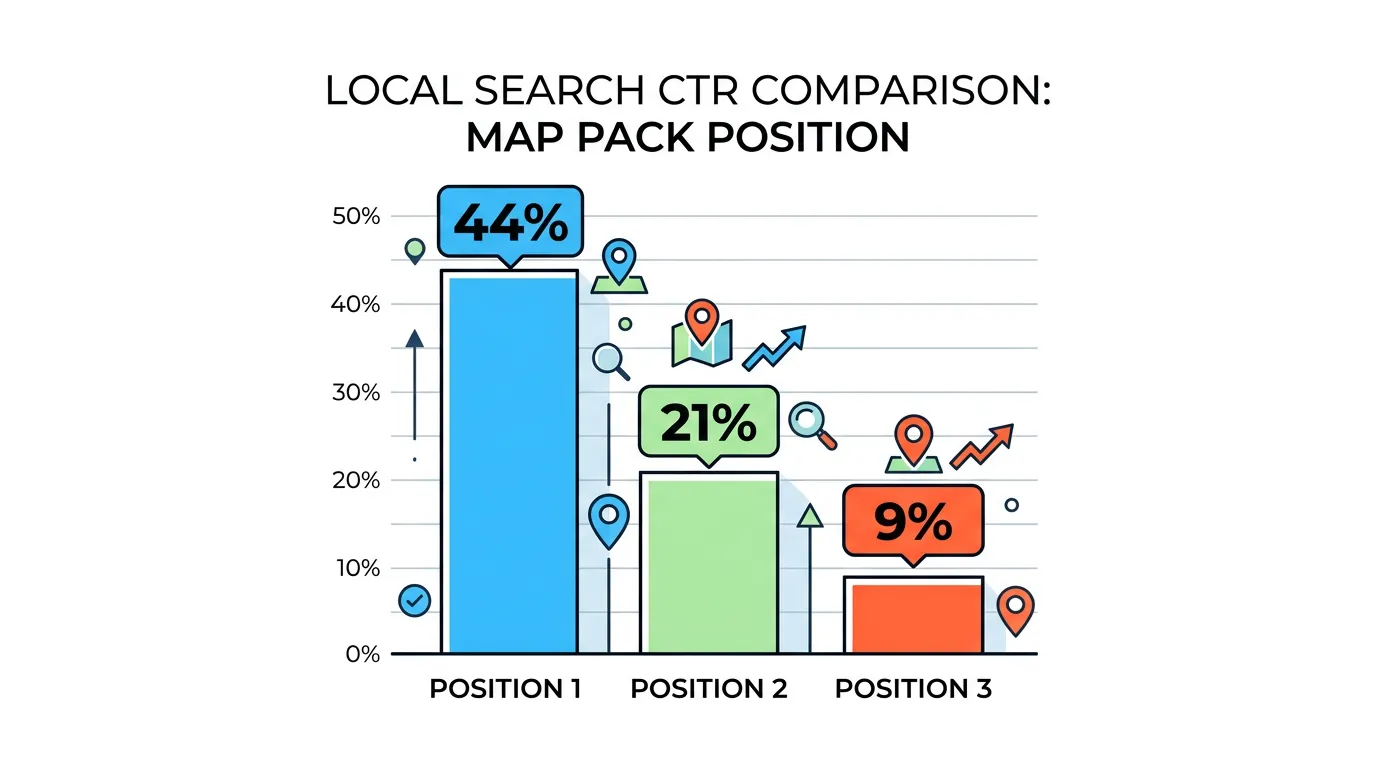
The three map results take the majority of clicks on local searches, and everything below them fights for scraps. Plenty of businesses rank on page one organically and still get almost no calls because they never appear in the map. The maddening version is watching a competitor with a worse website, fewer years in business, and a rented office take all three positions because their profile is set up correctly and yours is not.
What it is
Google has said in its own documentation that local ranking comes down to relevance, distance, and prominence. Distance is mostly out of your hands. Relevance is about whether your profile and site clearly match what the person searched. That means the correct primary category and a services list built from real search terms. It also means a landing page whose title and content back that up. Prominence is how well known your business appears to be. It comes from review count and how often new ones arrive, plus links, mentions, and organic strength. Map pack work attacks relevance first because it is fast. Then it grinds on prominence, because prominence is what holds the position once you have it.
Signs you need this
- You rank on page one organically but never appear in the map results
- You only show in Maps when you search from your own parking lot
- A competitor with fewer reviews and a worse site outranks you in Maps
- Website traffic is growing but calls from Google are flat
- Your profile links to your homepage instead of a matching service page
What is included
- Primary and secondary category testing against current pack holders
- Services list rebuilt from real search terms
- Landing page alignment so the linked page matches the target keyword
- Baseline and monthly geogrid scans across your service area
- Service area radius or city list configuration
- Review velocity target based on the current pack holders
- Competitor spam redressal filings for fake names and addresses
- Local business schema markup matching profile data exactly
Our process
Geogrid baseline
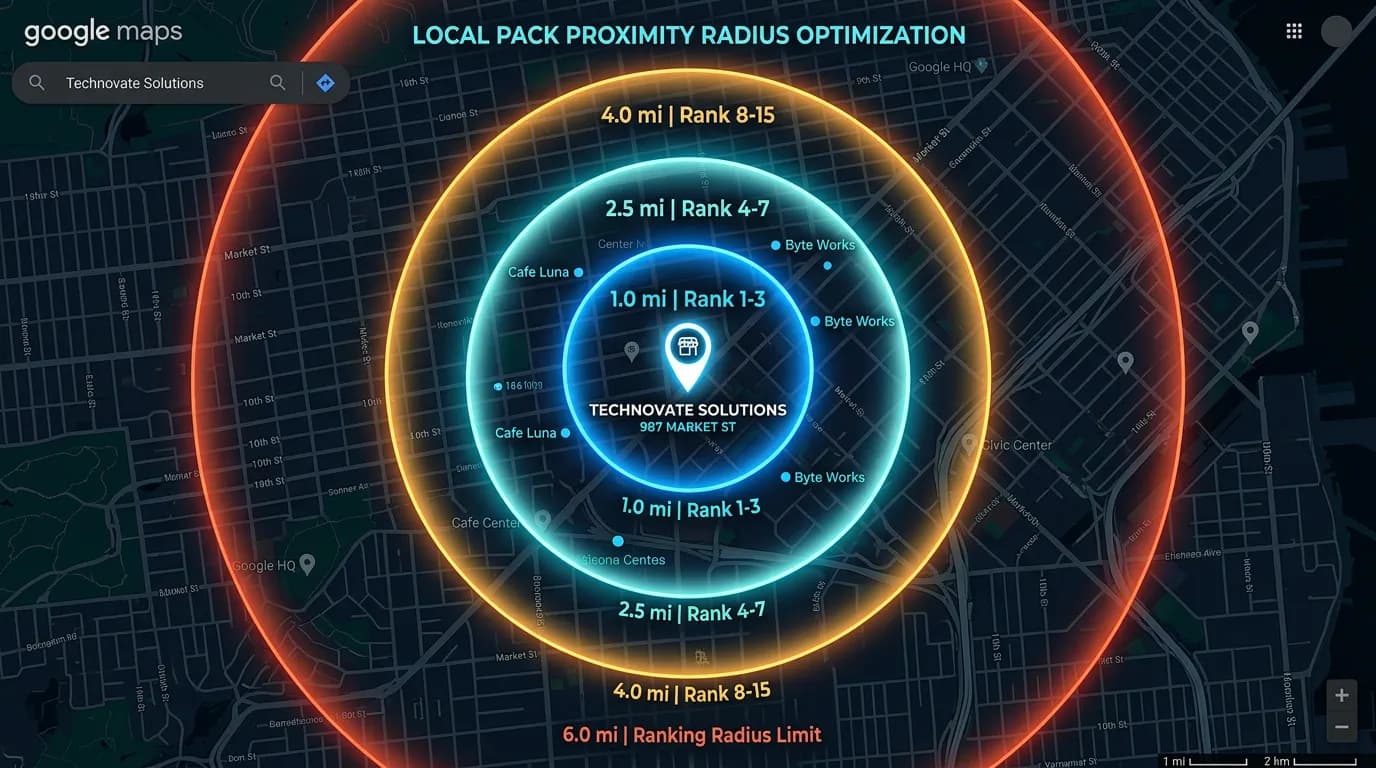
Week 1We run a Local Falcon scan across a grid of coordinates covering your service area for your top keywords. This shows where you already rank, where you fall off, and how far your visibility reaches from your pin.
Relevance fixes
Week 1 to 2Category changes, services list rebuild, description rewrite, hours and attributes. We test the primary category against what the current top three use, since the wrong primary category alone can keep you out of the pack entirely.
Landing page alignment
Week 2 to 4The page your profile links to gets rewritten to match the keyword you want. Title tag, H1, body content, embedded map, and schema all point at the same thing. A profile linking to a generic homepage leaves ranking on the table.
Prominence build
Week 4 onwardReview requests go out on a schedule sized to catch the pack holders. Local links and mentions get built. Organic rankings for the same keyword get supported since they correlate with map position.
Re-scan and adjust
Ongoing, monthlyMonthly geogrid re-scans show which grid points improved. If a category test did not move anything after six weeks, we revert it and try the next hypothesis rather than guessing.
Realistic timeline: Category and relevance changes can move rankings within 2 to 6 weeks. Prominence gains from reviews and links take 3 to 6 months. Holding a top three spot in a crowded city is ongoing work, not a finish line.
How We Test One Change at a Time
Map pack work goes wrong when three things change in the same week and nobody can say which one helped. Every test follows the same loop.
One variable per cycle. Two changes at once teaches you nothing about either one.
Which Levers Move Fastest, and What They Risk
Not every fix pays off on the same schedule. We run the fast levers first so you see movement, then grind on the slow ones that hold the spot.
| Lever | Time to move | Upside | Risk if you get it wrong |
|---|---|---|---|
| Primary category | 2 to 4 weeks | Biggest single relevance gain | Can drop you out of the pack |
| Services and description | 2 to 6 weeks | Picks up longer searches | Keyword stuffing gets edited out |
| Landing page match | 3 to 8 weeks | Helps map and organic together | Low risk, but needs dev time |
| Review velocity | 3 to 6 months | Holds the spot once you have it | Filtering out unhappy customers breaks policy |
| Local links | 3 to 9 months | Hardest thing for rivals to copy | Bought links risk a manual action |
If a fast lever does nothing after six weeks, the problem is usually further down the list.
Profile Fields That Feed Relevance, In Order
Work down this list before touching anything else. The top three do most of the work.
Primary category
Match the top three
Secondary categories
Only what you truly do
Services list
Words people search
Business description
750 characters, plain
Attributes
Filters people tap
Website link
Not the homepage
Photos of real work
Geotagging does nothing
Hours, holidays included
Closed now kills clicks
Stuck Between Position Four and Six
Position four is the worst seat in the house. You are visible in the Local Finder and invisible where the clicks happen. Before you add more work, check three things.
First, look at where you sit across the whole grid, not at your average. Fourth everywhere is a prominence problem. Second near your shop and eighth two towns over is a reach problem, and those two get fixed in different ways.
Second, compare review dates with the businesses above you, not review totals. Ninety reviews from this year often beat three hundred that stopped in 2021. Third, read the pack holders' business names. A name stuffed with service keywords breaks Google's guidelines, and the pack sometimes reshuffles once that gets corrected.
Two more things worth knowing. Pack membership rotates on its own, so check the same grid twice a week before you call a change a failure. And Google shows a different pack for slightly different words. Repair, service, and near me can each pull their own three businesses, so pick which one you are chasing.
Frequently asked questions
Why do I rank in the map from my office but not from home?
Does changing my primary category hurt my rankings?
How much do reviews affect map pack ranking?
What is a geogrid and why do you use one?
Can I report a competitor with a fake address?
Is the map pack the same as the Local Finder?
Sources
- Google Business Profile Help: Improve your local ranking on Google(opens in a new tab) Google names relevance, distance, and prominence as the three factors behind local ranking and the map pack.