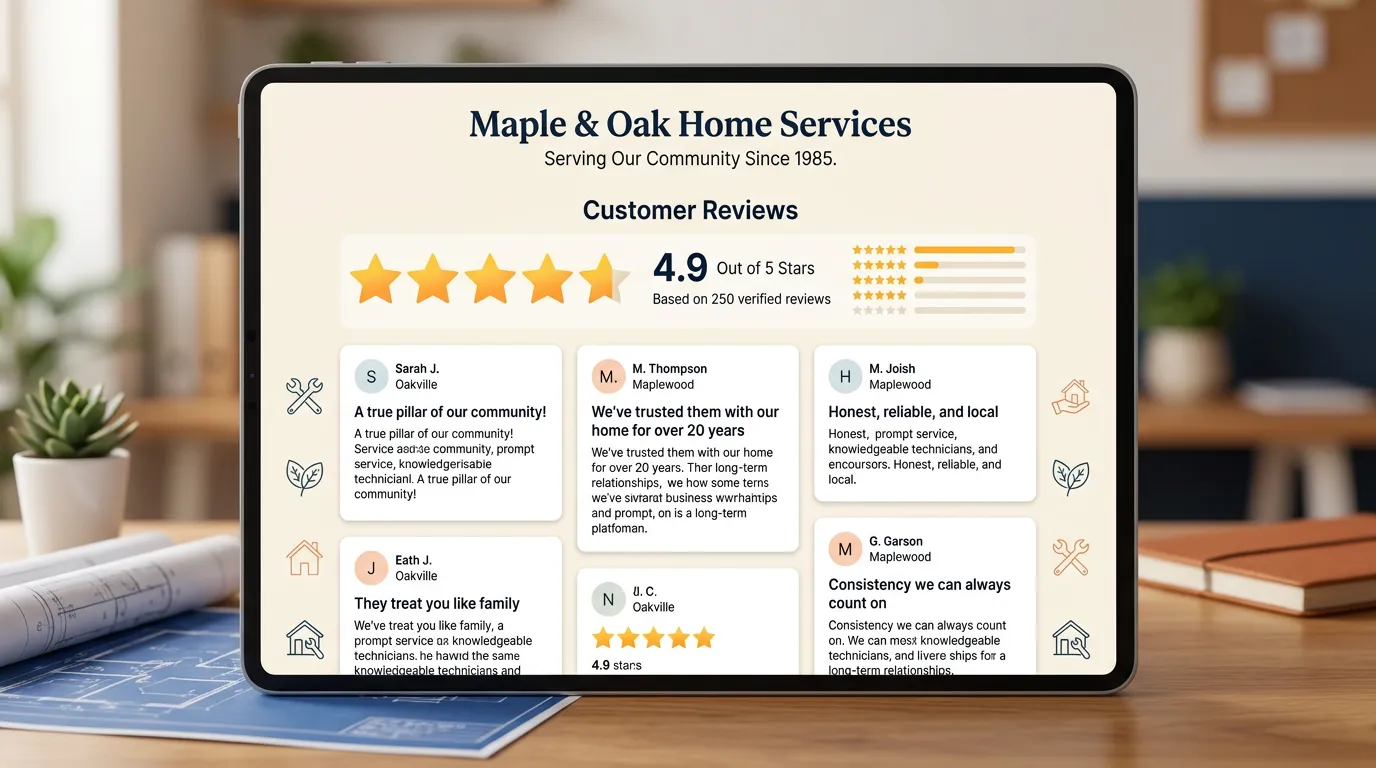
Industries and people we service
Marketing for Family Owned Service Companies
Built on reputation, growing without losing what works.
Call (714) 823-3164 or ask a question. Clear recommendations, even if we never work together.
Family owned service companies have decades of reputation offline and almost none of it online. Marketing here is different for three reasons. The name already means something locally. The customer base is aging. And the second generation is usually the one pushing for change. The job is moving trust that already exists onto the internet.
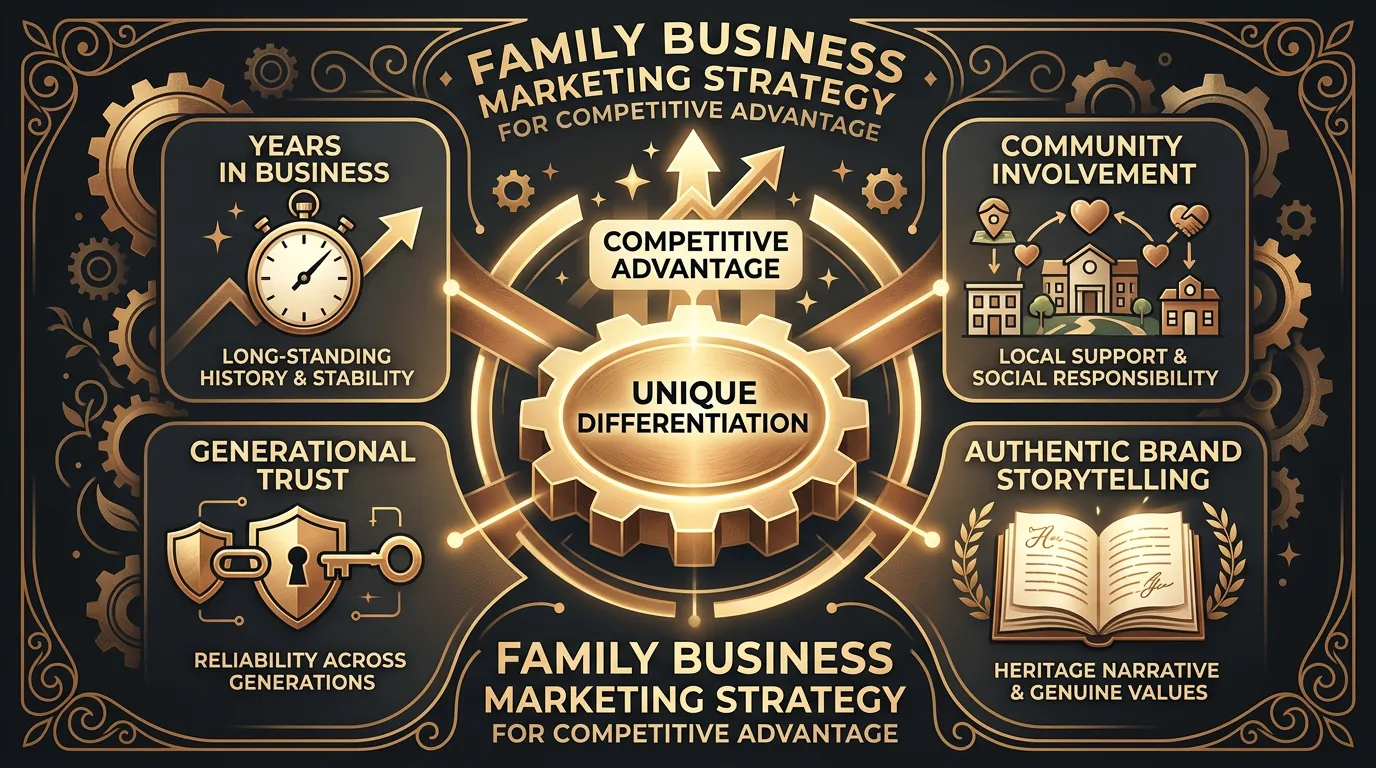
The pattern shows up in almost every one of these companies. Thirty years in business, thousands of satisfied customers, and nine Google reviews. The reputation is real. It just lives in people's memories and in a filing cabinet instead of online. That makes the first move different from what a new company needs. The asset already exists, and the family owned work is transferring it. A review campaign to past customers usually moves things faster than anything else available. Those customers are willing, and nobody has ever asked them. Putting the family story where people can actually see it comes next. Most of these sites bury the founding year in an About page nobody visits, while the home page reads like a template. Being second generation and still answering your own phone is a genuine difference. It belongs on the page a stranger lands on first. Brand search is the other underused asset. People already type the company name into Google, and competitors sometimes bid on it. Making sure that search lands somewhere that converts, with reviews visible and a phone number in reach, is cheap and works right away. The competitive picture has changed, though. National brands and investor backed groups have been buying up HVAC, plumbing, and dental practices across Southern California. They arrive with large ad budgets and hundreds of reviews. Family companies do not beat that on spend. They win on being the same people every time, and that has to be said out loud in the marketing instead of assumed. Decisions here also move slowly, since two or three family members usually have to agree. So we plan in phases rather than one large bet.
Where most engagements start
Google Business Profile Optimization
Turn your profile into the strongest lead source you own.
Google Business Profile OptimizationReputation Management
Generate reviews on purpose and protect the rating you have.
Reputation ManagementPay Per Click Advertising
Paid traffic that produces calls instead of clicks.
Pay Per Click AdvertisingWeb Design and Development
Fast, accessible websites built to turn visits into calls.
Web Design and Development
You already own more than you think
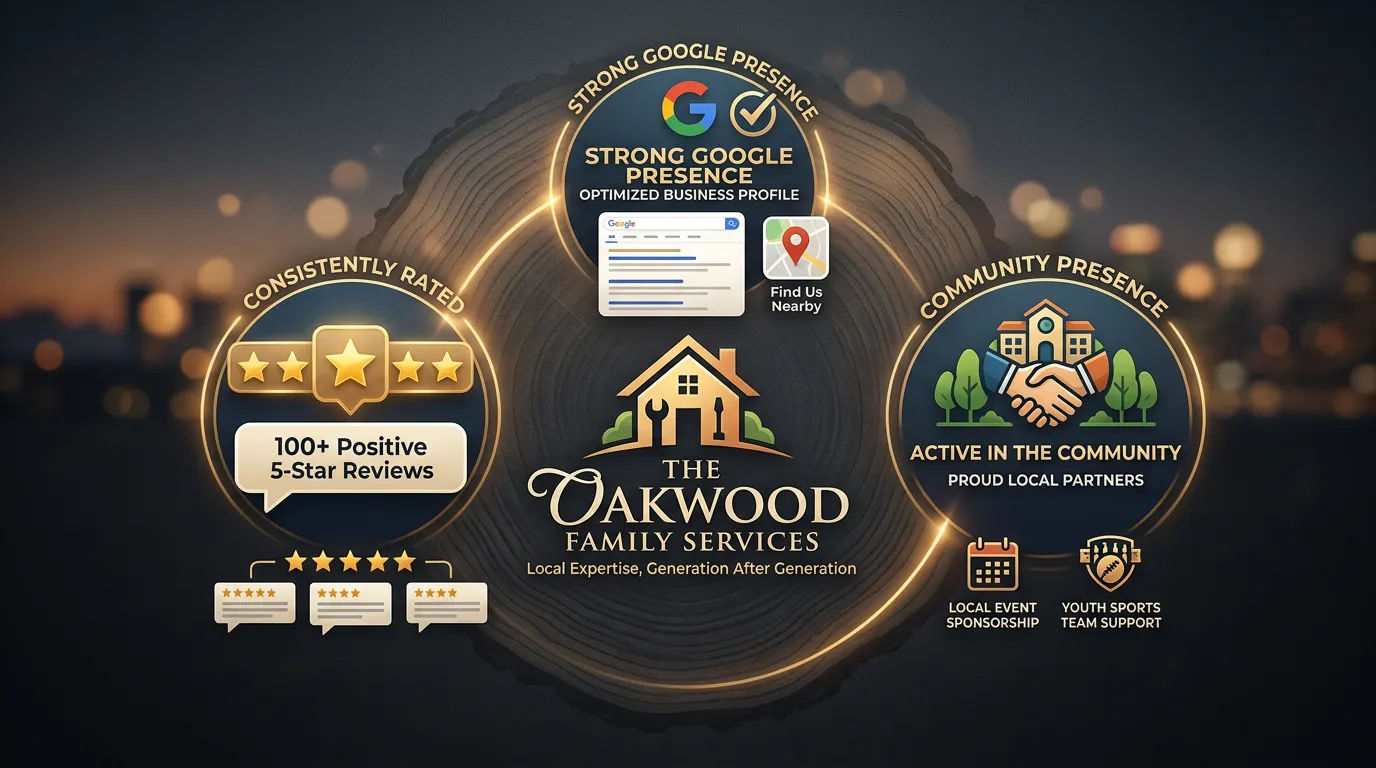
Before buying anything, take stock. Family companies sit on assets a five year old competitor cannot buy, and most of it is sitting in a filing cabinet.
Start with the customer list. Old invoices, service records, and a box of business cards are a review campaign, a mailing list, and a referral source all at once.
Then the photographs. Trucks from three decades, the first shop, the founder in his twenties, jobs done on houses that are now landmarks. A competitor cannot produce any of that at any price.
Then the people. A technician who has been with you eighteen years proves something no ad can claim. Put his name, his photo, and his years on the site, because that is the exact thing a national competitor cannot match.
Where you beat a national competitor, and where you do not
Be honest about both columns. Picking a fight in the wrong row is how family companies burn a budget.
| Area | Who usually wins | Why | What to do about it |
|---|---|---|---|
| Ad spend | The national brand | They can lose money for a year | Do not fight here. Narrow your area. |
| Review count | The national brand at first | More locations, staff, and systems | Ask your past customers. You can close this. |
| Same person every visit | You | They rotate crews and churn staff | Say it on the home page, with names. |
| Local history and detail | You | They cannot invent thirty years | Put dates, photos, and stories on the site. |
| Booking tools and follow up | The national brand | They invest in systems | Buy simple tools. This gap is closable. |
| Owner reachable by phone | You | There is no owner at their level | Offer it, and mean it. |
Two of these rows are structural and will not change. The other four are work you can finish this year, and three of them cost you time rather than money.
A first year the family can agree on
Family decisions move in steps. Splitting the year into phases with a decision point at each one settles arguments faster than one big proposal.
Each phase ends with a real number in front of everyone. That is what turns an argument about risk into a decision, and it is why phased plans survive family meetings when annual budgets do not.
Running a review campaign to thirty years of customers
This is the highest return move available to most family companies. It also goes wrong when it is rushed, so run it on a schedule.
Pull the list and clean it first
Recent customers first. Anyone who moved or passed away comes off before you start.
Send in small batches, once a week
Fifteen to twenty five at a time. A hundred reviews in one day looks bought.
Name the job in the ask
Mentioning the family owned work you did for them lifts response more than anything else you can change.
Send a direct review link, not instructions
Every extra tap loses people, and older customers give up fastest.
Text where you have permission, email where you do not
Texts get read. Only text customers who gave you the number for that purpose.
Never offer a discount or a gift
It breaks Google's rules and can get the reviews removed later.
Call your twenty best customers yourself
The owner asking in person converts far better than any message will.
Keep it running once the backlog is done
Ten to fifteen a month, forever, from the jobs you finish this week.
Saying family owned in a way that works
The phrase by itself is worth almost nothing. The details behind it are worth a lot. Here is the difference.
Do this
- Name the founder and the year, and say who runs it now.
- Show the family in one photo, at work, not posed in a studio.
- Say what you refuse to do, and that your name on the truck is the reason.
- Name long tenured employees and how many years they have been there.
- Tell one specific story about a job or a customer you still serve.
Not this
- Do not write family owned and operated with nothing after it.
- Do not use stock photos of a family that is not yours.
- Do not claim years in business you cannot back up.
- Do not hide the story on an About page nobody visits.
- Do not keep the second generation invisible until the founder retires.
Questions from second generation owners
Should we protect our own name in search?
Our customers are getting older. How do we reach younger homeowners?
Do we need to be on social media?
Frequently asked questions
We have been in business thirty five years and have nine reviews. Where do we start?
A national company bought our biggest competitor. How do we compete?
Three of us have to agree on any spending. How does that work?
Does our family story actually matter to customers?
What happens to our marketing when the founder retires?