Healthcare and Wellness
Digital Marketing for Dental Practices
New patient cost only makes sense against production per patient
Call (714) 823-3164 or ask a question. Clear recommendations, even if we never work together.
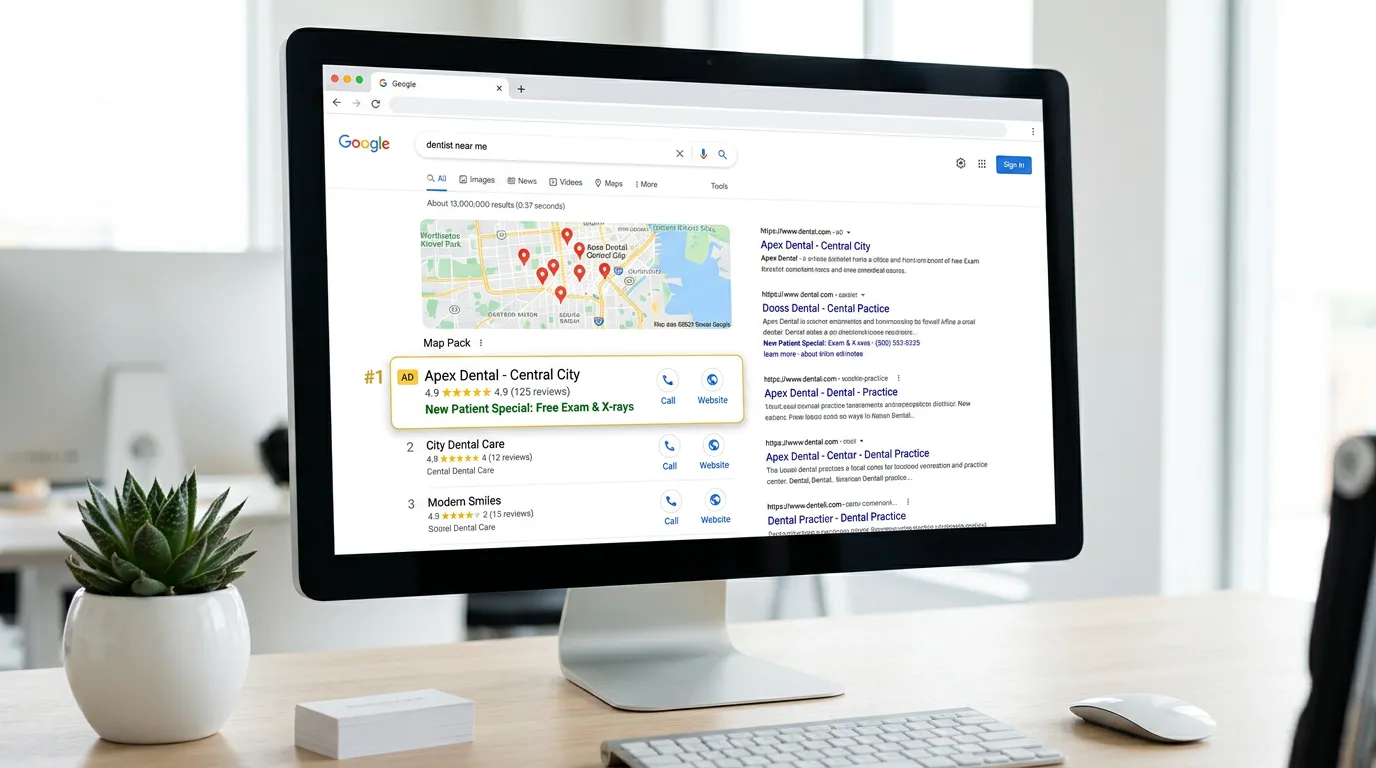
Dental marketing is judged by new patient starts and filled chair time, not traffic. Most patients pick a dentist from the map pack. That makes profile strength and recent reviews carry the most weight. Paid search earns its place on high value work like implants and clear aligners, where one case covers months of spend.
What usually goes wrong
- Open hygiene columns and last minute cancellations leave paid chair time empty
- PPO write offs shrink margin, so the practice needs higher value cases to stay healthy
- Corporate group practices nearby outspend you on ads every single month
- Patients accept the exam, take the treatment plan home, and never schedule it
- Recall lapses quietly, and nobody notices until the hygiene schedule looks thin
- The front desk misses calls at lunch, and those leads never call back
- Privacy rules limit what you can say in a review response or a before photo
What usually makes an owner start looking
- You hire an associate whose schedule has to be filled from day one
- You buy a practice and inherit a weak profile with old reviews
- You add implants, clear aligners, sedation, or sleep apnea treatment
- You drop a PPO plan and need fee for service patients to replace that volume
- A corporate dental office opens within a mile
- Production dips through the summer and you want a plan before it repeats
Which channels actually matter
Not every channel deserves the same weight for dental practices. This is how we would prioritise.
| Channel | Weight | Why |
|---|---|---|
| Reputation Management | Primary | Patients pick a dentist the way they pick a surgeon. Volume and recency of reviews shape both map ranking and the decision itself, and a single unanswered complaint can cost months of new patients. |
| Local SEO | Primary | Dental searches are hyper local. Map pack visibility for dentist near me and for procedure plus city queries produces the majority of new patient calls. |
| Pay Per Click Advertising | Secondary | Worth it for implants, full arch, clear aligners, and emergency dentistry where the case value supports a higher cost per lead. Not worth it for cleanings. |
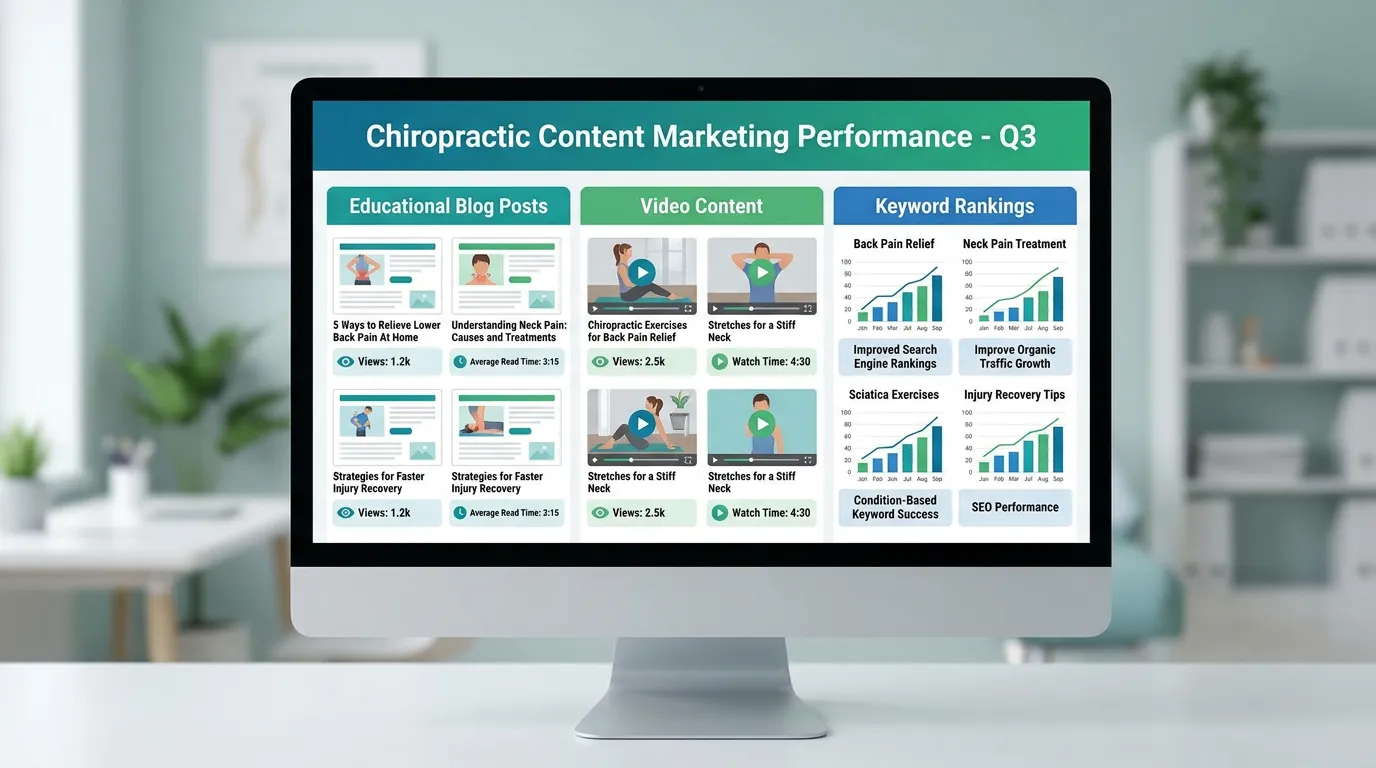
| Content Marketing | Secondary | Procedure pages that explain cost ranges, recovery, and alternatives capture patients who are still deciding whether to treat at all, which is most of them. |
| Lead Generation Systems | Supporting | Online scheduling, call tracking, and after hours form follow up close the gap between an interested patient and a booked appointment. |
Seasonality
December is the strongest month in most general practices. Patients rush to use the rest of their annual insurance benefits and flexible spending dollars before they reset. January starts slow because deductibles restart, then builds through spring. July and August bring pediatric and back to school exams. Adult production softens during vacation weeks, which is the right time to run implant and cosmetic campaigns.
What we measure
New patient starts per month
Cost per new patient by channel
Production per new patient in the first ninety days
Case acceptance rate on presented treatment plans
Open hygiene hours and same day cancellation rate
Concerns we hear
Marketing brings in insurance shoppers, not the patients I want.
That depends on what the pages say. If the site leads with a discounted new patient special, you get discount shoppers. If it leads with the procedures you want to do, the doctor's training, and honest cost ranges, you get patients who are choosing on fit instead of price.
I cannot ask patients for reviews without breaking privacy rules.
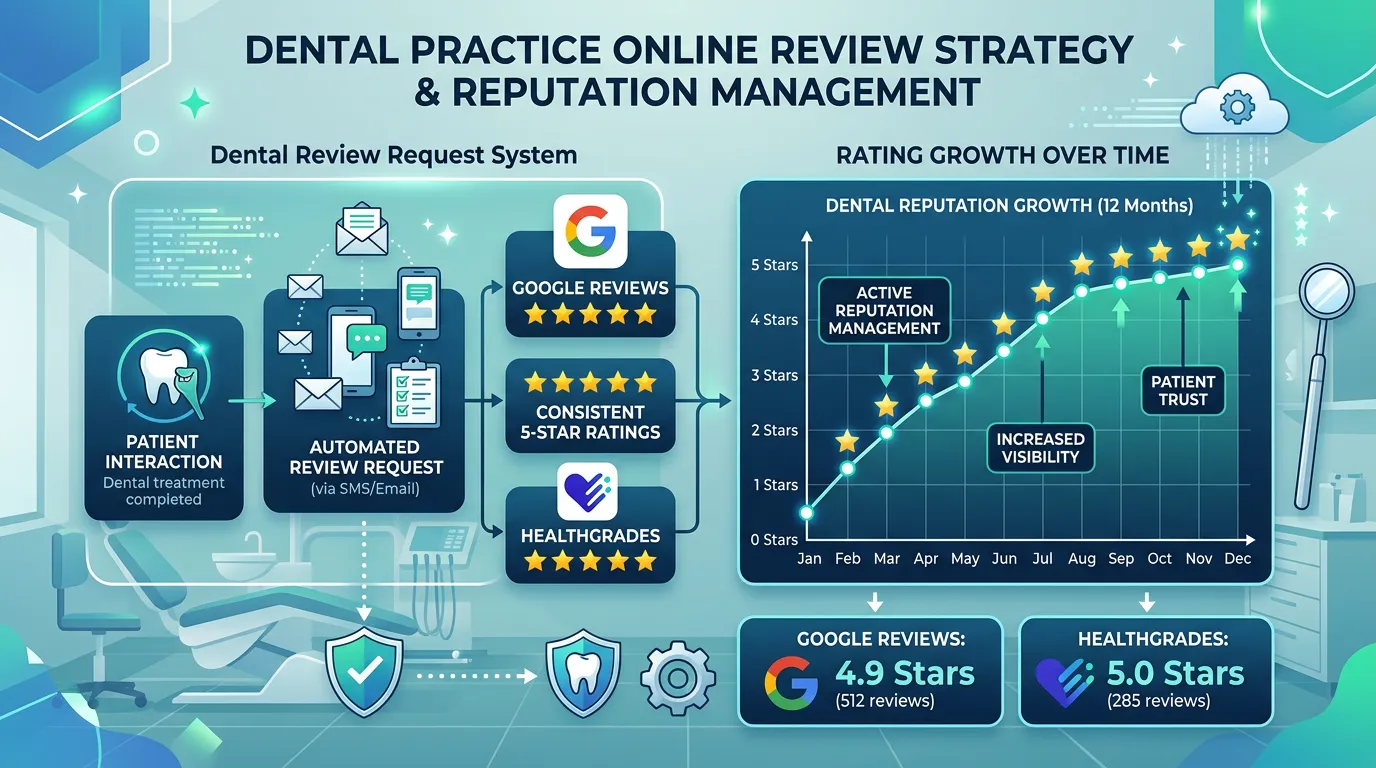
You can ask. What you cannot do is confirm someone was a patient or discuss their care in a public response. We build the request into the checkout moment and write response templates that stay general, thank the person, and move the conversation offline.
My schedule is full already.
Full and profitable are different. If the schedule is full of low value hygiene and PPO fillings, the dental practices work is to shift the mix. We target the procedures with better production per hour and let the front desk fill remaining time with the existing recall list.
The corporate office down the street has a huge budget.
They also have staff turnover, long waits, and reviews that say so. Independent practices win on continuity of care and the doctor's name being on the door. That story is specific and provable, and it is not something a corporate location can copy.
I paid an agency before and only got a report full of keywords.
Rankings without booked appointments are not a result. We track calls with a dedicated number, listen for whether they turned into appointments, and report new patient starts. If a channel is not producing patients, we say so and move the money.
Where we would start
The services that move the needle fastest for dental practices.
Reputation Management
Generate reviews on purpose and protect the rating you have.
Reputation ManagementGoogle Business Profile Optimization
Turn your profile into the strongest lead source you own.
Google Business Profile OptimizationPay Per Click Advertising
Paid traffic that produces calls instead of clicks.
Pay Per Click AdvertisingWeb Design and Development
Fast, accessible websites built to turn visits into calls.
Web Design and DevelopmentLead Generation Systems
Capture, track, and follow up on every inquiry automatically.
Lead Generation Systems
Where we serve this industry
The math that sets your ad budget
A cost per new patient means nothing on its own. Two practices can pay the same number and get opposite results.
Work it in this order. Take what a new patient produces in the first year. Subtract your overhead share. What is left is the most you can spend to get one.
Most dental practices run overhead somewhere near two thirds of collections. Use your own figure, not that one. Your accountant already has it.
This is why the same office can lose money on cleaning ads and make money on implant ads in the same month. The channel did not change. The case value did.
Where to spend by procedure
Cost per lead only makes sense next to case value. These are common patterns, not your practice. Pull your production report and redo the table with real numbers.
| Procedure | Typical case value | How patients search | Paid search verdict |
|---|---|---|---|
| Routine cleaning and exam | Low | dentist near me | Skip paid. Win this in the map |
| Emergency and toothache | Moderate, same day | emergency dentist open now | Bid, and make sure someone answers |
| Crowns and root canals | Moderate | root canal cost plus city | Content first, then a small budget |
| Clear aligners | High | aligners near me, plus cost | Bid, and expect a long follow up |
| Single implant | High | dental implant cost | Bid, track consults not clicks |
| Full arch | Highest | full mouth implants plus city | Bid hardest, longest sales cycle |
The bottom rows carry the budget. The top row should come from your profile and your reviews, not from ads.
Where new patient money leaks out
Most dental practices do not have a lead problem. They have a conversion problem, and it usually sits in one of these steps.
Count your missed calls for one week before you spend another dollar. That number shocks most offices.
A front desk checklist for paid leads
Every new patient call cost money before it rang. These habits protect that spend and none of them cost anything to start.
Cover the phone straight through lunch
Stagger breaks or use an answering service for that hour.
Return every missed call within the hour
After two hours most callers have booked somewhere else.
Ask how they found you and write it down
Call tracking helps. The patient's own answer helps more.
Offer two specific times, not an open question
Choices get booked. When works for you stalls.
Verify insurance before the call ends
It is the first thing they want to know. Answer it fast.
Text a confirmation while they are still on the phone
This cuts no shows more than a reminder the night before.
Work the unscheduled treatment list every week
The plan they took home is your warmest pipeline.
December, January, and the benefits cycle
When should the use it or lose it benefits campaign start?
January is always slow. Can marketing fix that?
Should we advertise financing?