
Resources
Pricing and Timeline Guides
Digital marketing pricing is deliberately vague across most of this industry
Call (714) 823-3164 or ask a question. Clear recommendations, even if we never work together.
Pricing guides explain what marketing work costs in Southern California, and how long each piece takes to show results. They cover typical monthly ranges by service, one time project costs, and what changes a quote. They also give realistic timelines, so you can tell an honest proposal from an optimistic one.
Digital marketing pricing is deliberately vague across most of this industry. That makes comparing two proposals harder than it should be. These guides publish ranges instead. You will find what local SEO, Google Business Profile management, paid ads, web design, video, and content typically cost in Southern California. You will also find what pushes a quote toward the top or bottom of a range. The usual drivers are how many cities you want to compete in and how crowded your trade is. Add how much cleanup the existing site and listings need, and whether you have one location or six. Timeline material sits right beside the pricing, because a fair price attached to an unrealistic promise is still a bad deal. Each service gets a first movement window and a meaningful results window. The honest note is that competitive trades in dense markets take longer than either. There is a section on reading a proposal. It covers what should be itemized, which deliverables are commonly padded, and what the split between ad spend and management fee should look like. It also explains why any guarantee of a specific ranking is a reason to stop reading. Contract terms get covered too, including month to month versus annual, ownership of accounts and content, and notice periods. Owners collecting bids and anyone renegotiating with a current provider are the readers this section is built for.
More resources
Local SEO Guides
Local SEO GuidesGoogle Business Profile Checklists and Guides
Google Business Profile Checklists and GuidesReputation Management Resources
Reputation Management ResourcesPPC and Advertising Guides
PPC and Advertising GuidesWebsite Conversion Guides
Website Conversion GuidesVideo Marketing Resources
Video Marketing Resources
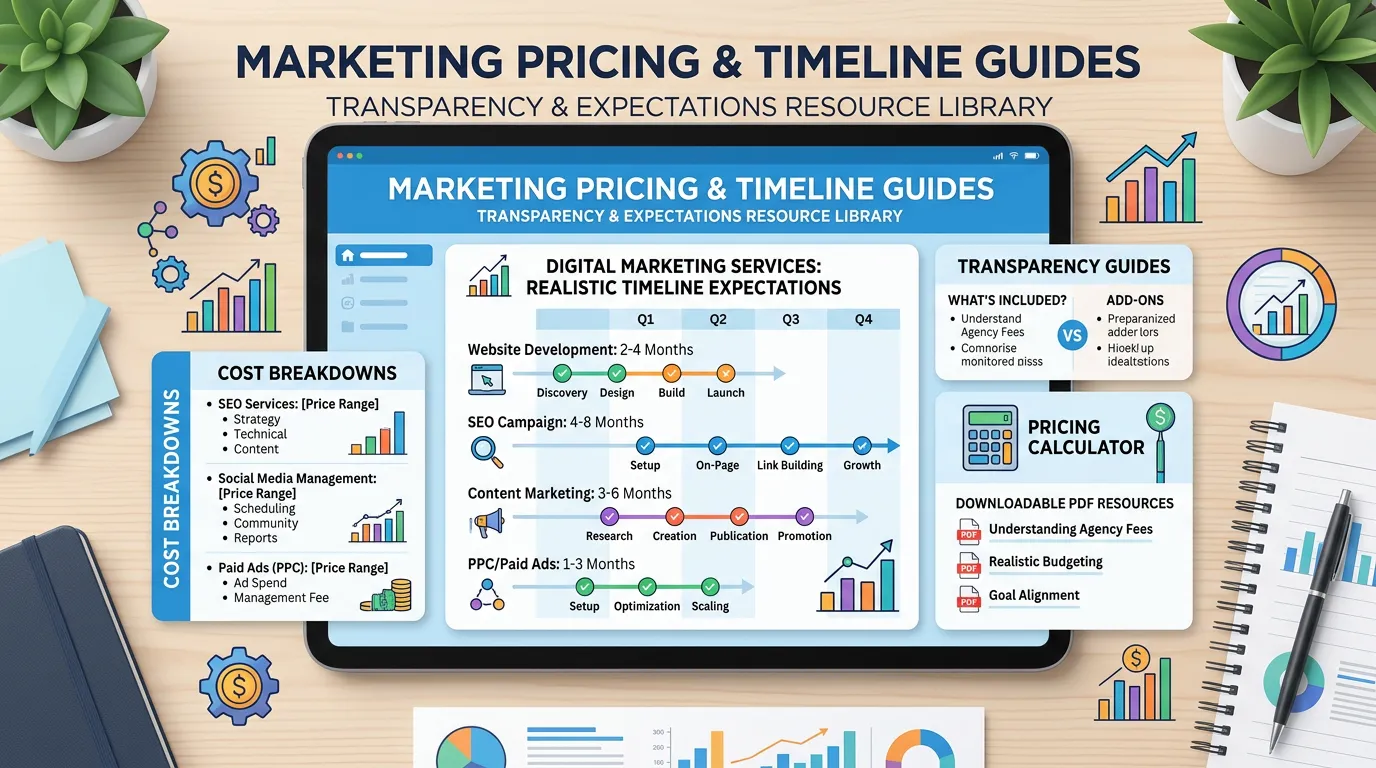
What each service typically costs here
These are Southern California ranges, not quotes. They are meant to tell you whether a proposal sits in a normal band or somewhere strange.
| Service | Typical range | How it is billed | What moves it |
|---|---|---|---|
| Google Business Profile management | $300 to $900 a month | Flat monthly | Number of locations and how much cleanup is needed |
| Google Ads management | $500 to $1,500 a month, or 10 to 20 percent of spend | Flat fee or a percentage | Number of campaigns and the size of the budget |
| Website build for a service business | $4,000 to $15,000 once | Project, paid in stages | Page count, custom work, and who writes the content |
| Content writing | $200 to $600 a page | Per page or bundled monthly | Research depth, length, and interviews |
| Video production | $800 to $3,000 a shoot day | Per day plus editing | Crew size and how many finished cuts you need |
A single location shop sits near the bottom of each range. A six location company usually sits above the top, because most of this digital marketing work is priced per location.
Reading a proposal line by line
Most proposals hide the same thing: how much work the fee actually buys. Two documents can look identical and one funds eight hours a month while the other funds thirty. Nothing on the page tells you which, unless you ask.
So ask three questions of every bidder. How many hours a month does this fee cover. Who does the digital marketing work, by name and location. What specifically gets published or changed in the first 30 days. Vague answers to the third question predict what month six will look like.
Then read for the things that should be separate lines. Ad spend must never be blended into a management fee. Setup work should be itemized. Content should say how many pages and roughly how long. Reporting should say what is in the report and how often it arrives.
Finally, check what happens if you leave. Who owns the pages, the photos, the ad account, and the profile. A proposal that goes quiet on ownership is telling you something more important than its price.
Questions to ask every bidder
Send the same list to everyone and compare the answers side by side. The comparison gets clear fast, and honest shops do not mind the questions.
How many hours a month does this fee buy?
Divide the fee by the hours. Now you have an hourly rate to compare.
Who does the digital marketing work, and where do they sit?
Ask for names and roles, not a photo grid on an about page.
What gets published in the first 30 days?
You want a list of specific items, with dates.
Is ad spend separate from your fee?
It must be its own line. Blended pricing hides the real management cost.
Who owns the accounts and the content?
The answer should be you, every time, with no hesitation.
What is the notice period to cancel?
Thirty days is normal. Ninety days on a first contract is not.
What does the monthly report show?
Ask to see a real one with another client's name removed.
What would make you drop a client?
Experienced shops have an answer ready. It tells you how they work.
Comparing two quotes fairly
Two numbers on two pages are not comparable until the scope behind them matches. Most owners find that out after signing.
Do this
- Compare deliverables first and totals second.
- Ask both bidders to price the exact same scope.
- Separate one time costs from the monthly commitment.
- Ask for a sample of work done in your trade, not a general portfolio.
- Call one reference and ask what got worse, not just what got better.
Not this
- Choose on price alone when the scopes are different.
- Accept proprietary as an answer to how something works.
- Sign before you have seen the reporting format.
- Let a discount decide a twelve month commitment.
- Assume the cheapest bid is also the lowest risk.
What pushes your quote up or down
Cities are the biggest driver. Each city you want to compete in means a real page, its own research, its own tracking, and its own place in the reporting. Going from two cities to eight is close to four times the digital marketing work, and an honest quote will say so.
Site condition is next. A clean modern site takes edits. An old site on a platform nobody supports takes a rebuild before anything else can happen. The same is true of listings. A business that moved twice and changed its phone number once can have dozens of wrong entries that all need fixing by hand.
Trade competitiveness matters more than most owners expect. Legal, restoration, and roofing in dense parts of Orange County and the Inland Empire need more content, more reviews, and more links than the same work in a smaller town.
Some things pull the price down, and you control most of them. Supply your own photos and job details. Write the first draft of your service pages. Give one decision maker rather than a committee. Commit to a longer term once you trust the work. Each of these takes hours out of the quote.