Home Services and Trades
Digital Marketing for Landscaping and Lawn Care
Route density beats lead volume for maintenance accounts
Call (714) 823-3164 or ask a question. Clear recommendations, even if we never work together.
Landscaping marketing has two jobs: recurring maintenance and design and install work. Maintenance needs tight routes, so you want to be the obvious choice in a handful of zip codes instead of spread thin. Design and install work is a bigger sale. It needs a portfolio, water efficient options, and pages that explain what a full yard project costs.
Jump to a section
What usually goes wrong
- Maintenance accounts churn quietly, and losing one street can wreck a route.
- Crews with a truck and a mower quote a low monthly rate and reset what customers expect to pay.
- Drive time between scattered accounts eats the margin on every stop.
- Water restrictions and rebate programs change what customers want, and most company sites never mention them.
- Design and install work is where the profit is, but maintenance customers never learn you do it.
- Labor is hard to keep, so growth means training before it means marketing.
- Seasonal cleanups and irrigation repairs get sold reactively instead of scheduled ahead.
What usually makes an owner start looking
- Losing a large HOA or commercial account and needing residential work quickly.
- Wanting to tighten routes into fewer cities instead of driving across the region.
- Adding design and build capability that needs bigger projects to fill it.
- Turf replacement and water efficiency rebates creating a wave of homeowner interest.
- Buying another company route and needing profiles, reviews, and websites merged properly.
- Spring arriving with a half empty schedule.
Which channels actually matter
Not every channel deserves the same weight for landscaping and lawn care. This is how we would prioritise.
| Channel | Weight | Why |
|---|---|---|
| Local SEO at the neighborhood level | Primary | This business is won by zip code, not by region. Service area pages built around real neighborhoods keep new accounts close to the stops you already make. |
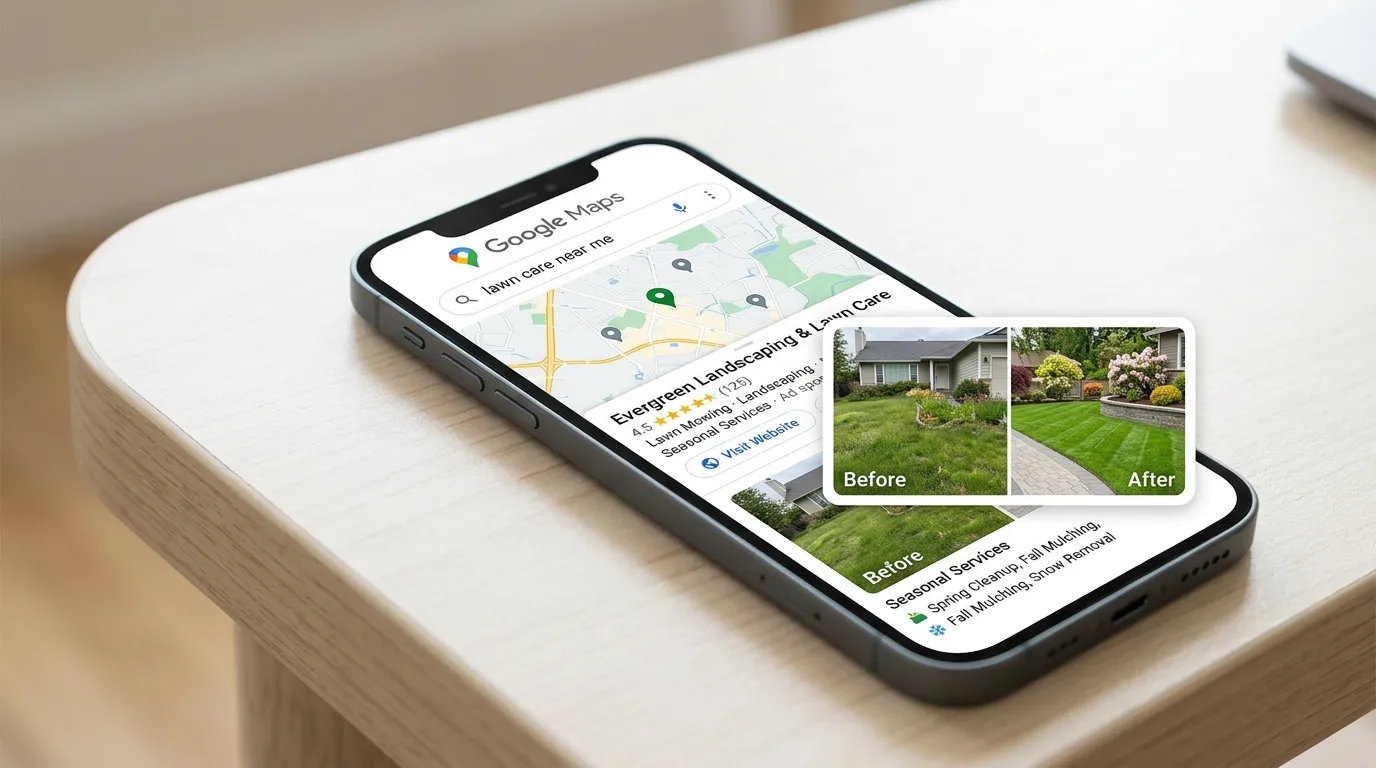
| Google Business Profile | Primary | Lawn care near me searches end in the map pack, and a profile with recent yard photos and steady reviews wins them without any cost per click. |
| Email and marketing automation | Secondary | Your maintenance list is the cheapest source of install revenue you have. Seasonal offers for irrigation, cleanups, lighting, and turf conversion sell to people who already trust the crew. |
| Paid search for design and install | Secondary | Landscape design and drought tolerant yard searches carry high project value. Those deserve budget separate from anything competing for low ticket mowing accounts. |
| Social media | Supporting | Before and after yard transformations spread locally and give existing customers a reason to mention you to a neighbor on the same street. |
Seasonality
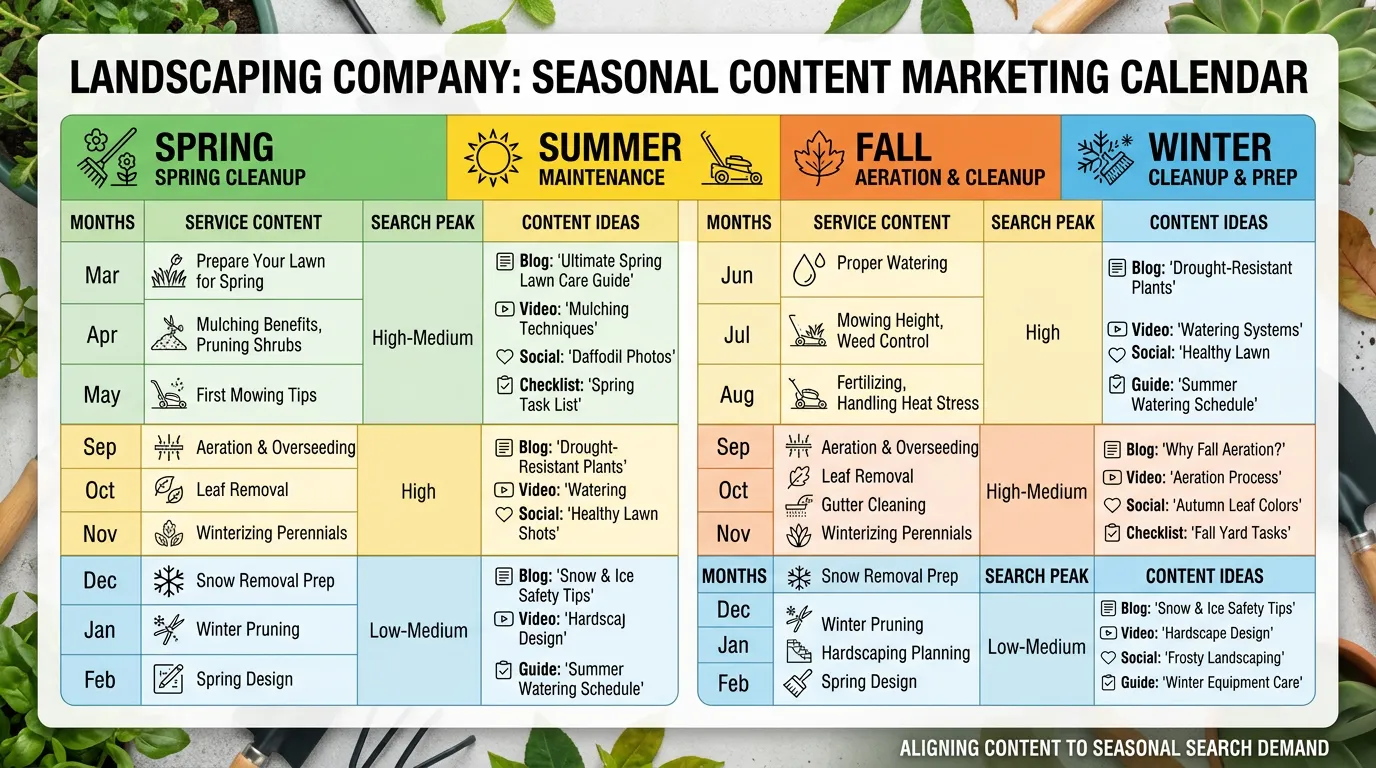
Southern California is a year round mowing market. That is both the opportunity and the trap. Spring is the biggest window for new maintenance signups and yard renovations. Late summer heat drives irrigation repairs and plant replacement. Fall brings cleanup and lighting work. Winter is when you sell the design and install projects for the spring build season.
What we measure
New recurring maintenance accounts per month and monthly recurring revenue
Account churn rate and average customer lifetime
Route density measured as stops per city or zip code
Design and install projects sold to existing maintenance customers
Cost to acquire an account against its first year value
Concerns we hear
We fill routes with door knocking and flyers.
That works and it should continue. It also caps out at the hours your crew can spend doing it. Search visibility runs while the crews work, and it reaches the homeowner who just moved in and is looking for someone this week.
Marketing brings us people who want the cheapest mow.
It does when the page only says lawn care. Pages that state what a visit includes, how often you come, and what you handle beyond mowing attract a different customer. The people who only want the lowest number never make it past a page that describes real service.
We are already full.
Then this is about replacing churn and improving the mix, not adding volume. Every route loses accounts. Filling those gaps with homes on the same streets, and upgrading low value stops to better ones, raises revenue without adding a single mile of driving.
Our customers are not online.
Their kids are, and adult children arrange a lot of yard service for parents. Beyond that, new residents are the biggest source of maintenance signups in any city, and nearly all of them find a landscaper the same way: they search.
We do not need a website, just the Google listing.
The listing gets you found. The site is where a homeowner learns what a visit includes, what you charge for cleanups, and that you also do irrigation and hardscape. Without it you are a phone number competing on price with every other phone number.
Where we would start
The services that move the needle fastest for landscaping and lawn care.
Google Business Profile Optimization
Turn your profile into the strongest lead source you own.
Google Business Profile OptimizationEmail and Marketing Automation
Follow up every time, without anyone remembering to.
Email and Marketing AutomationReputation Management
Generate reviews on purpose and protect the rating you have.
Reputation ManagementPay Per Click Advertising
Paid traffic that produces calls instead of clicks.
Pay Per Click AdvertisingSocial Media Marketing
Social proof that supports the sale instead of random posting.
Social Media Marketing
Where we serve this industry
Nobody cancels loudly
Maintenance customers do not call to complain. They text once, get no answer, and hire the crew already working two doors down.
So count what leaves. Pull last year's list, mark every account that stopped, and write the reason next to each one. Most owners have never done this and are surprised by the total.
Then fix the two cheapest causes: a phone nobody answers between stops, and a crew that changes every week. Both cost less to fix than the accounts they lose.
Where the money actually is on one route
The mowing stop is the door, not the business. This is the mix that decides whether a route is worth running.
| Service | Typical ticket | Margin | How it gets sold |
|---|---|---|---|
| Weekly or biweekly service | 120 to 250 a month | Thin | Search and neighbors |
| Irrigation repair | 150 to 900 dollars | Good | Found by the crew |
| Seasonal cleanup | 300 to 900 dollars | Good | Sold ahead by email |
| Landscape lighting | 2,000 to 8,000 dollars | Strong | Shown after dark |
| Turf to drought yard | 6,000 to 30,000 dollars | Strong | Rebates and design |
Typical Southern California ranges. Your own numbers will differ, but the shape of this table rarely does.
What to sell your own list each season
Same crew, same route, a different offer. Four emails a year to existing customers usually beat adding a fifth lead source.
Put the season's offer in the crew's hands too. The person standing in the yard closes it faster than an email does.
Selling water work without sounding like a salesman
Water rules and rebate programs shift, and homeowners are confused. Being the clear explainer is worth more here than any discount.
Do this
- Link to your water district's own rebate page and let people read the rules there.
- Photograph a broken head or a leaking valve and text the picture before you quote.
- Offer a spring irrigation check at a flat price instead of a free inspection.
- Show two finished drought yards from streets your crew already works.
Not this
- Do not quote rebate amounts from memory. They change and you get blamed.
- Do not sell a full turf removal to someone who needs three heads replaced.
- Do not say low maintenance. Say how many hours a year it really takes.
- Do not hide the design fee. Name it, then credit it toward the build.
Two questions route owners ask
How much can we pay to win one account?
We bought another company's route. What comes first?