Industries and people we service
Marketing for Senior Care
In home care, assisted living, home health, memory care.
- Specialties covered
- 5
Call (714) 823-3164 or ask a question. Clear recommendations, even if we never work together.
Senior care marketing covers in home care agencies, assisted living, home health, memory care, and respite care. It differs from other local marketing in three ways. The person searching is usually an adult child. The decision often follows a hospital discharge. And professional referral sources matter as much as search rankings do.
The person reading a senior care website is almost never the person who will receive the care. It is usually a daughter in her fifties. She often works full time, sometimes lives in another state, and is trying to work out what her father needs after a fall. Everything follows from that. The language has to be calm and plain. The cost question has to be answered somewhere on the site, even as a range. Families who cannot find any number assume the worst and call someone else. The timing is unusual too. A family may research quietly for months, then compress the whole decision into forty eight hours after a hospital discharge. That calls for two kinds of content. Long educational pages serve the quiet stretch. Short, direct pages with a phone number serve the crisis moment. It also means response speed decides a lot of this. The first agency that answers the phone often gets the client. California licensing is part of the story. Non medical home care agencies register with the state as Home Care Organizations. Assisted living communities hold RCFE licenses. Medicare certified home health is a separate category with its own rules. Families confuse all three constantly, and the site that explains the difference in plain words earns trust right away. Two more things set this category apart. Professional referral sources such as discharge planners and case managers send steady work, and they check your online presence before sending anyone. And the same website has to recruit caregivers, because in this business the hiring problem is usually larger than the lead problem.
Specialties in this group
Where most engagements start
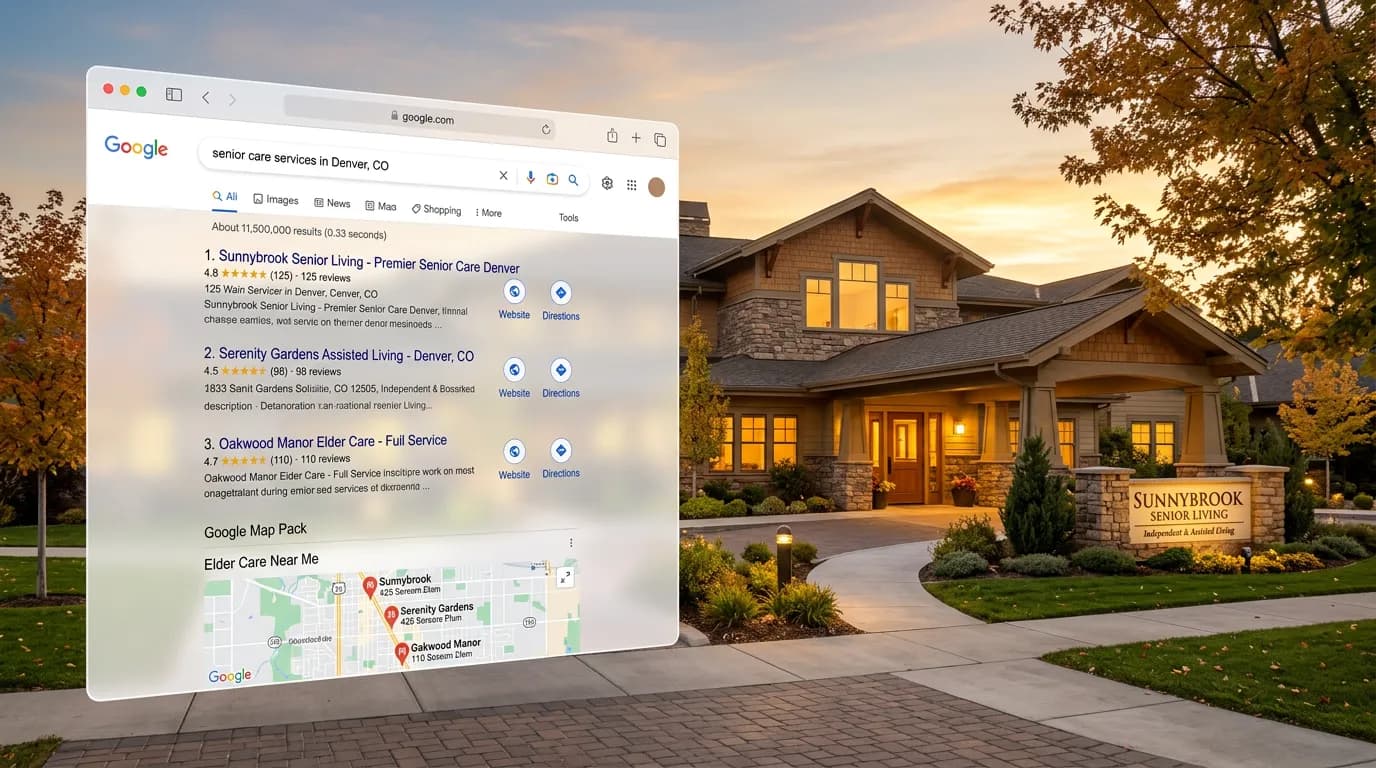
Google Business Profile Optimization
Turn your profile into the strongest lead source you own.
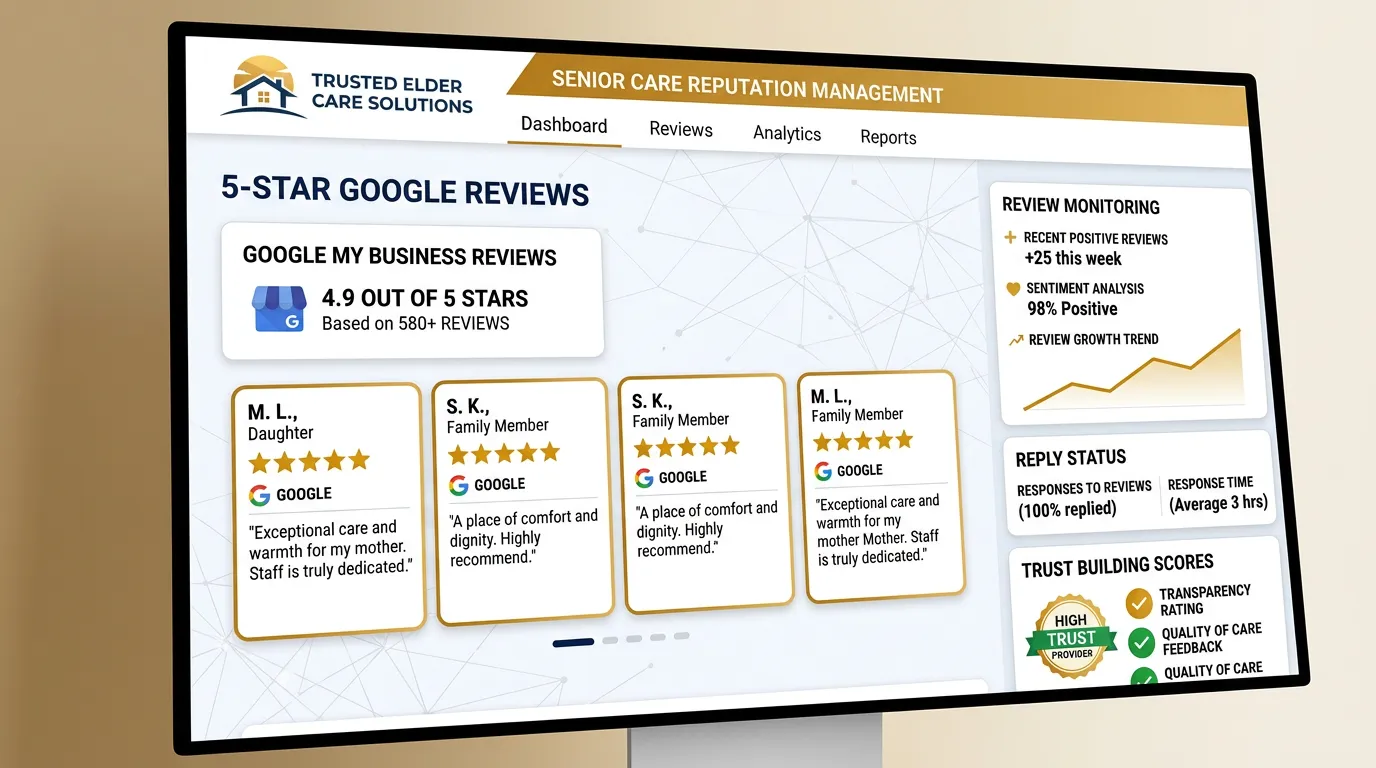
Google Business Profile OptimizationReputation Management
Generate reviews on purpose and protect the rating you have.
Reputation ManagementPay Per Click Advertising
Paid traffic that produces calls instead of clicks.
Pay Per Click AdvertisingWeb Design and Development
Fast, accessible websites built to turn visits into calls.
Web Design and Development
The five things families confuse, side by side
Almost every first call includes a version of this question. A page that lays it out plainly gets forwarded between siblings, which is worth more than a ranking.
| Type of care | California license | Who usually pays | Where referrals come from |
|---|---|---|---|
| Non medical home care | Home Care Organization | Private pay, some long term care insurance | Families and discharge planners |
| Home health | Medicare certified agency | Medicare or insurance after a qualifying event | Doctors and hospitals |
| Assisted living | RCFE | Private pay, some benefits | Placement agents and families |
| Memory care | RCFE with a dementia waiver | Private pay | Neurologists and support groups |
| Hospice | Licensed hospice agency | Medicare hospice benefit | Physicians and hospitals |
Many families arrive believing Medicare pays for long term custodial care. It generally does not. Saying so early builds more trust than avoiding the question, and it stops you from spending an hour on a family you cannot help.
The two clocks a family runs on
Senior care inquiries arrive on one of two clocks. The same website has to serve both, and they want opposite things.
The slow clock runs for months. A daughter notices her mother is forgetting medication and starts reading at night. She is not ready to call. She wants to understand the options and what they cost.
The fast clock runs for two days. There has been a fall, the hospital wants the bed back, and senior care has to start by Friday. Nobody on this clock reads a two thousand word article.
Build for both. Long explanatory pages catch the slow clock and earn trust early, and the family that read them for six weeks calls you first when the fall happens. Short pages with hours, a phone number, and what you can start this week catch the fast one.
How a hospital discharge turns into a client
This sequence runs the same way almost every time. Knowing it tells you exactly where to put your effort.
You can be third on the planner's list and still win, because the family checks all three online before dialing. You cannot win if the phone rolls to voicemail at 4:40 on a Friday afternoon.
What a referral source checks before sending anyone
Discharge planners, case managers, and elder law attorneys put their own reputation behind a referral. They look you up first, often while the family is still in the room.
License number and status, current and visible
They will verify it. Make it easy to find rather than something they have to hunt for.
Whether you can start today, tomorrow, or next week
Availability is the top reason a planner picks one agency over another.
Your exact service area, listed by city
A vague radius means they cannot tell whether you cover the patient's address.
Specialty capability, said plainly
Dementia, Parkinson's, lift transfers, bariatric care, and hospice support.
How caregivers are screened and trained
Background checks, TB clearance, training hours, and who supervises them.
A named contact who answers after hours
Discharges happen at six in the evening more often than anyone admits.
Recent reviews that sound like real families
Three reviews from years ago read as a company that stopped operating.
Insurance and bonding details
Many facilities are not allowed to refer without them.
Talking about price when you cannot give one
Rates depend on hours, level of senior care, and location, so agencies avoid the subject. Families read that silence as a warning.
Do this
- Publish an hourly range and say what moves a client to the top or bottom of it.
- Explain minimum shift lengths early, since that surprises people more than the rate does.
- Name the payment sources you accept, including long term care insurance and veterans benefits.
- Show a sample week so a family can do the math themselves.
- State clearly what Medicare does and does not cover for your kind of senior care.
Not this
- Do not make call for pricing your only answer.
- Do not quote a rate you cannot honor once the assessment is done.
- Do not hide the minimum hours until the contract is in front of them.
- Do not compare your price to a facility without saying what each one includes.
- Do not tell a family a benefit will cover it before eligibility is confirmed.
Questions agencies and communities ask
How do we market memory care without frightening people?
Is it worth working with placement agents?
Do families really check our licensing?

Frequently asked questions
Who is actually reading our website?
Should we pay for leads from senior care referral platforms?
How fast do we need to respond to an inquiry?
Can the same website help us hire caregivers?
Families rarely leave reviews. How do we build proof?