Local SEO
Local SEO for Service Businesses
Built for businesses that go to the customer, not the other way around
- Timeline
- Setup and lead capture fixes inside 30 days
Call (714) 823-3164 or ask a question. Clear recommendations, even if we never work together.
Local SEO for service businesses is local search work built for companies that go to the customer. They have no storefront. It covers profile setup as a service area business, with a hidden address. It covers a page for each city you serve. It also covers call handling for after hours leads, and content built around seasonal demand.
The problem
Advice written for storefronts does not fit a company operating out of trucks. You are told to upload photos of your interior, post your hours, and encourage walk-ins. Meanwhile your real problems are different: your address is your house, half your calls come in after five, your busy season is three months long, and a customer choosing between you and two competitors is doing it from a phone in a hallway next to a leaking water heater. That is a different job than getting someone to visit a shop.
What it is
A service area business, or SAB, is a Google Business Profile type for companies that serve customers at their own location. Your address stays hidden, and you list the cities or region you cover. That changes several things. Photos shift to trucks, crews, and completed work instead of a lobby. Google still measures ranking distance from your verified address, even though it is hidden. Reviews often name a specific technician. That helps with trust, and it shows you how each technician is doing. Your website carries more weight, because the profile alone cannot cover every city. And the whole system has to handle demand that spikes on the first hot week of summer, or the first real rain in October.
Signs you need this
- You work out of trucks and Google keeps asking for storefront photos
- Half your leads call after five and nobody answers
- Your busy season is three months and the rest of the year is quiet
- Your home address shows publicly on your Google profile
- You get calls from towns you do not serve and none from towns you do
What is included
- Service area business profile configuration with hidden address
- City and region service area list matched to where you actually go
- Truck, crew, and completed job photo library with an upload cadence
- Call tracking with dynamic number insertion and missed call alerts
- After hours call handling plan with an answering service recommendation
- Seasonal content and budget calendar built around your demand curve
- Trade specific directory listings such as Angi, Nextdoor, or Porch
- Emergency and same day service pages for the high intent searches
- Financing and free estimate pages where they fit your sales process
Our process
Profile and service area setup
Week 1 to 2We configure the profile as a service area business, hide the street address, and set the city list to match where crews actually go. Then we verify the setup will not trip a suspension, which is common when a home address is involved.
Lead capture audit
Week 2We call your number at different times of day, fill in your own forms, and time the responses. Most service businesses lose more revenue to missed and slow answered calls than to ranking. This step usually finds money immediately.
Emergency and high intent pages
Week 3 to 6Same day, emergency, and after hours searches convert at a much higher rate than research searches. We build those pages first with tap to call buttons, service area lists, and honest response time expectations.
Seasonal planning
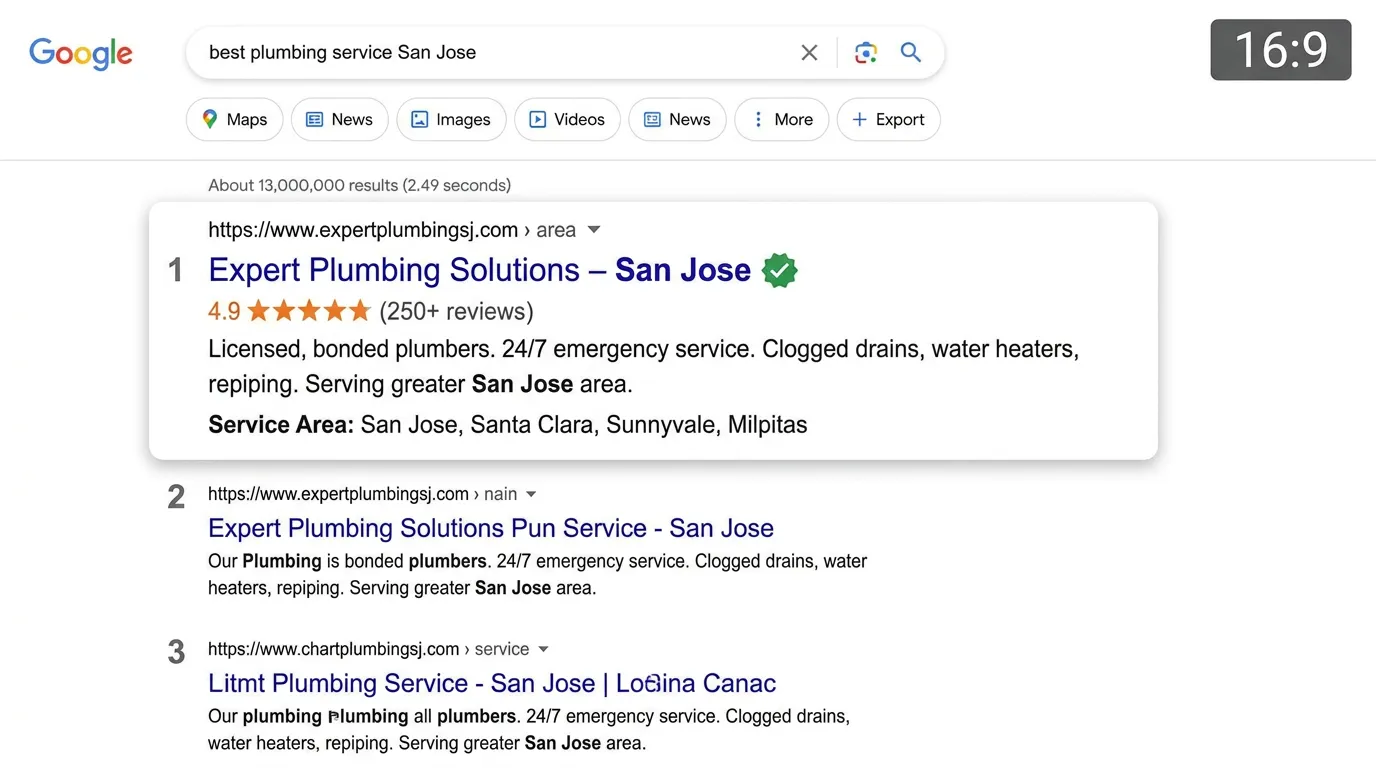
Week 4 to 8We map your revenue by month, then schedule content and budget six to eight weeks ahead of each demand spike so the pages are indexed and ranking before the phones start ringing.
Field feedback loop
Ongoing, monthlyTechnicians hear what customers actually searched and worried about. We collect that on a simple monthly basis and feed it into content, review requests, and page copy that speaks the way customers do.
Realistic timeline: Setup and lead capture fixes inside 30 days. Ranking movement in 60 to 120 days. Full seasonal cycle takes a year to measure properly since you need to compare the same month year over year.
Build the season before it starts
New pages need weeks to get found. Working backward from your first busy week keeps you from publishing into a season that is already half gone.
For a heating company that means writing in September, not on the first cold morning when the phone is already ringing.
The after hours call plan
Service businesses usually lose more jobs at the phone than in the rankings. This is the setup we put in before spending on visibility.
Decide who answers after five
An owner cell, a tech on rotation, or a paid service.
Turn on missed call text back
An automatic text within a minute of any missed call.
Set the ring count and order
Three or four rings, then roll to the next person.
Record a real voicemail
Say when you will call back, then actually do it.
Answer forms as fast as calls
A form at eight at night deserves a reply by eight the next morning.
Give the answering service a script
Name, address, the problem, and a booked window.
Listen to recordings weekly
You will hear price shoppers, hang ups, and bad handoffs.
Track calls by page, not just totals
You learn which pages send buyers and which send browsers.
Pricing on your site, and what hiding it costs you
Most service businesses will not put numbers on a page. The fear is fair. Every job is different, and a number gets quoted back at you a year later when materials cost more.
What happens instead is you get more calls and fewer jobs. People call to ask a price, you spend ten minutes on it, and they keep shopping. Meanwhile the competitor who published a range got the booking without ever taking that call.
The middle path works. State the diagnostic or trip fee exactly. Give a range for your five most common jobs and say plainly what pushes a job to the high end. List financing terms if you offer them. That filters price shoppers before they take a slot on the schedule.
If you truly cannot publish a range, publish the local SEO process. How you quote, whether the estimate is free, how long it takes, and what happens if the tech finds something worse. Certainty helps a worried customer almost as much as a number does.
Questions from the field
Do I need a separate profile for each truck?
My shop has a sign and a few customers stop by. Which type am I?
Are Angi, Thumbtack, and Nextdoor worth paying for?