Services
Lead Generation Systems for Southern California Service Businesses
Stop guessing where the next customer is going to come from.
- Starting at
- $1,500+
- Timeline
- Capture fixes ship in weeks 1 to 3 and often show results immediately
- Services
- 8 included areas
Call (714) 823-3164 or ask a question. Clear recommendations, even if we never work together.
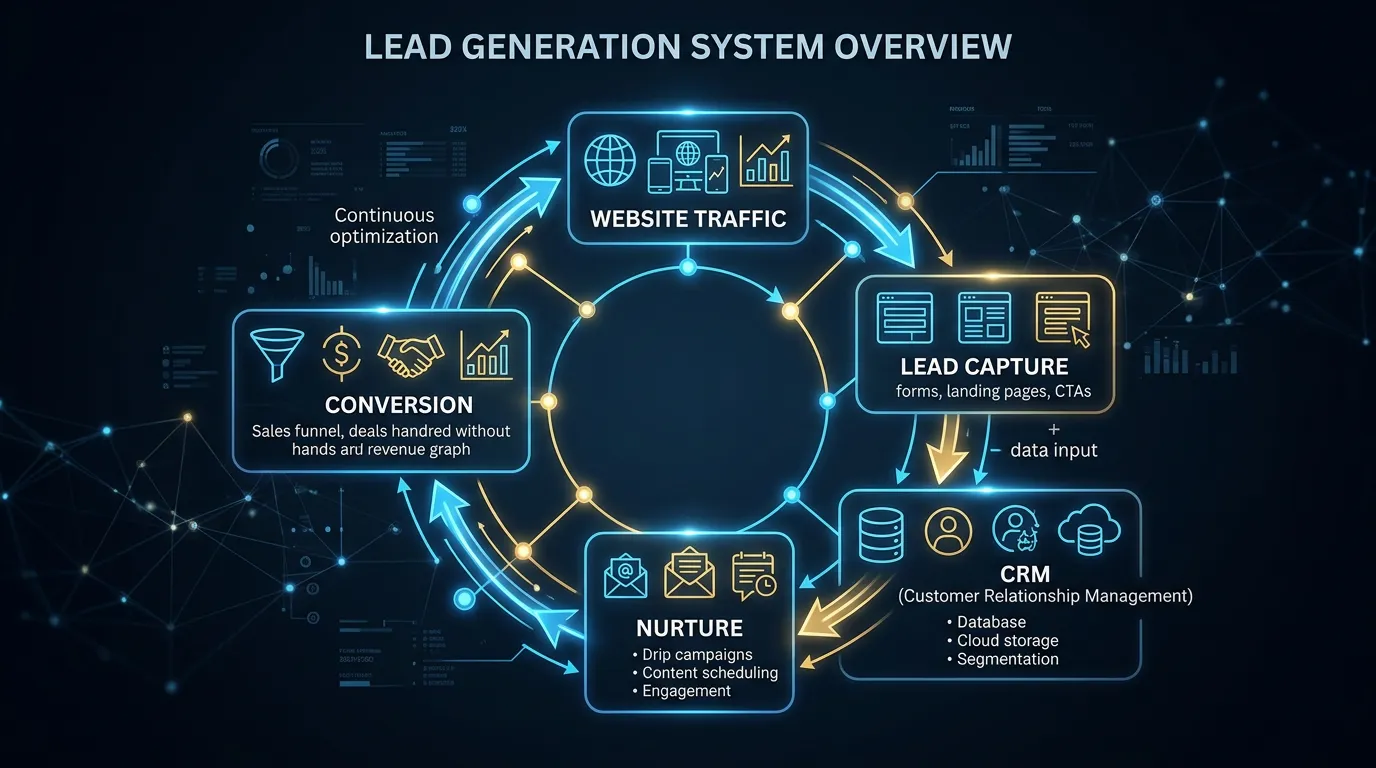
A lead generation system is the connected set of steps that turns a stranger into a booked job. That means the traffic source, the page they land on, and how they reach you. It also means the tracking that records the lead and the follow up that closes it. Each part gets built and measured, not left to chance.
Jump to a section
- The problem
- What Lead Gen is
- Who it is for
- What is included
- Our process
- What it costs
- What changes
- All Lead Gen services
- One van, three trucks, or six locations
- Honest comparison with the other options
- What happens in the first five minutes
- The mistakes that cost the most
- How to tell at 60 days if it is working
- When not to buy this
- Questions owners ask before signing
- Questions
The problem
Most service businesses do not have a lead problem, they have a leak problem. Traffic arrives and nothing catches it. The contact form has eleven fields and asks for a street address before anyone has decided to talk to you. The phone number is not tappable on a phone. Nobody knows which calls came from Google Ads and which came from the truck wrap, so the ad budget is defended with a feeling instead of a number. Leads that come in after 5pm get called back two days later, when the customer has already hired someone else. And the 60 percent of estimates that do not close get filed and never contacted again. Then the owner concludes marketing is not working and buys more traffic to pour into the same leaky bucket.
What lead gen actually is
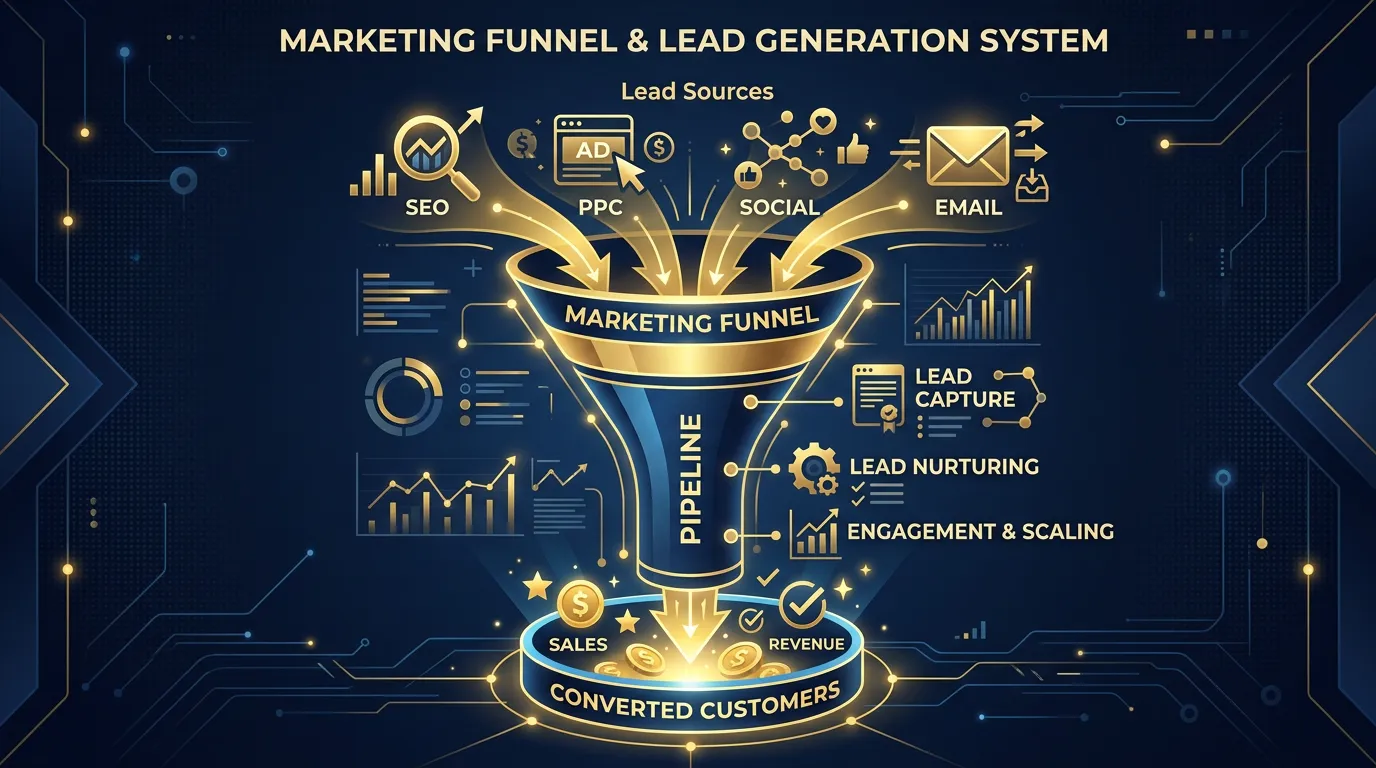
A lead generation system is the plumbing between your marketing and your calendar. It starts with capture. That means the forms, phone buttons, chat, and booking tools that let a ready buyer reach you in one tap. Next comes tracking, so every call and form fill is tied to a real source with real cost data. Then comes qualification, so your team spends time on the jobs you want. Junk gets filtered out before it eats a dispatcher's morning. A CRM connection keeps leads out of an inbox. And follow up matters, because unsold estimates are the cheapest lead source most businesses own. We build the missing pieces, connect the ones you already have, and report on the whole path from click to booked job.
Who it is for
This is for service businesses that already get some traffic but cannot tell you what happens to it. Maybe you spend on Google Ads, rank in the map pack, or get steady referrals. If you still cannot say which source produced last month's jobs, the system is the gap. It fits companies doing 500,000 dollars a year and up. At that size, a five point improvement in booked rate is real money. It is a poor fit if you have almost no traffic yet. A great system with nothing flowing through it still produces nothing. If that is you, start with local SEO or ads and build the system alongside.
What is included
- Audit of every current path a customer can use to reach you, tested on a real phone
- Rebuilt forms with field counts matched to how ready the visitor actually is
- Click to call buttons, sticky mobile call bars, and online booking where it fits
- Call tracking with dynamic number insertion and recorded calls
- GA4 conversion events for every form, call, chat, and booking
- Lead qualification rules with screening questions and routing logic
- CRM connection with mapped fields, deduplication, and pipeline stages
- Speed to lead automation so new leads get a response in minutes
- Email and text follow up sequences for unsold estimates
- A single dashboard showing leads, cost per lead, and booked jobs by source
Our process
Trace the Current Path
Week 1We submit your own forms, call your own numbers, and time how long a response takes. Almost every audit finds at least one broken path: a form that emails nobody, a number that rings a disconnected extension, or a chat widget nobody monitors.
Fix Capture First
Week 1 to 3Before adding tracking or automation, we fix the places where ready buyers give up. Field reduction, tappable phone numbers, and a visible next step usually produce the fastest measurable lift in the whole engagement.
Install Measurement
Week 2 to 4Call tracking, GA4 events, and UTM discipline go in so every lead carries a source. Until this exists, every conversation about which channel works is an argument between opinions.
Connect the CRM
Week 4 to 7Leads flow into one place with the source attached, duplicates merged, and stages that match how your business actually sells. Speed to lead automation gets turned on at the same time.
Build the Follow Up
Week 6 to 9Unsold estimates get a sequence. New leads get an instant acknowledgment. Old leads get a seasonal reactivation touch. This is where most of the recovered revenue comes from and it is the step most businesses skip.
Report and Tune
Ongoing, monthlyMonthly we review leads by source, cost per lead, contact rate, booked rate, and where leads stall. Then we fix the worst step. There is always a worst step.
Realistic timeline: Capture fixes ship in weeks 1 to 3 and often show results immediately. Full system live in 8 to 10 weeks. Reliable month to month forecasting usually takes 4 to 6 months of clean data.
What it costs
The number depends on how much already exists and how many pieces have to be built. Connecting call tracking and a CRM you already own is a fraction of building capture, qualification, automation, and reporting from nothing. Multi location businesses and companies with several service lines need more routing logic and cost more. Software fees for tools like CallRail or your CRM are billed to you directly, usually 100 to 400 dollars a month depending on volume.
Published ranges are starting points. The final number depends on your market, your current position, and how much ground there is to make up. You get a fixed scope in writing before anything begins.
What changes
A known number for how many leads each channel produced and what each one cost
Higher booked rate from the same traffic because fewer leads go unanswered
Faster response times, usually from hours to minutes on new inbound leads
Recovered revenue from unsold estimates that previously got no follow up
Less wasted dispatcher time because unqualified leads get filtered earlier
Ad budget decisions made from cost per booked job instead of cost per click
All lead generation systems services
Every area we cover under lead generation systems. Each one has its own page with process, deliverables, and timelines.
Lead Qualification Systems
Sorts leads before your team spends time on them
Lead Qualification SystemsLead Nurturing Sequences
Keeps unsold estimates alive instead of letting them go cold
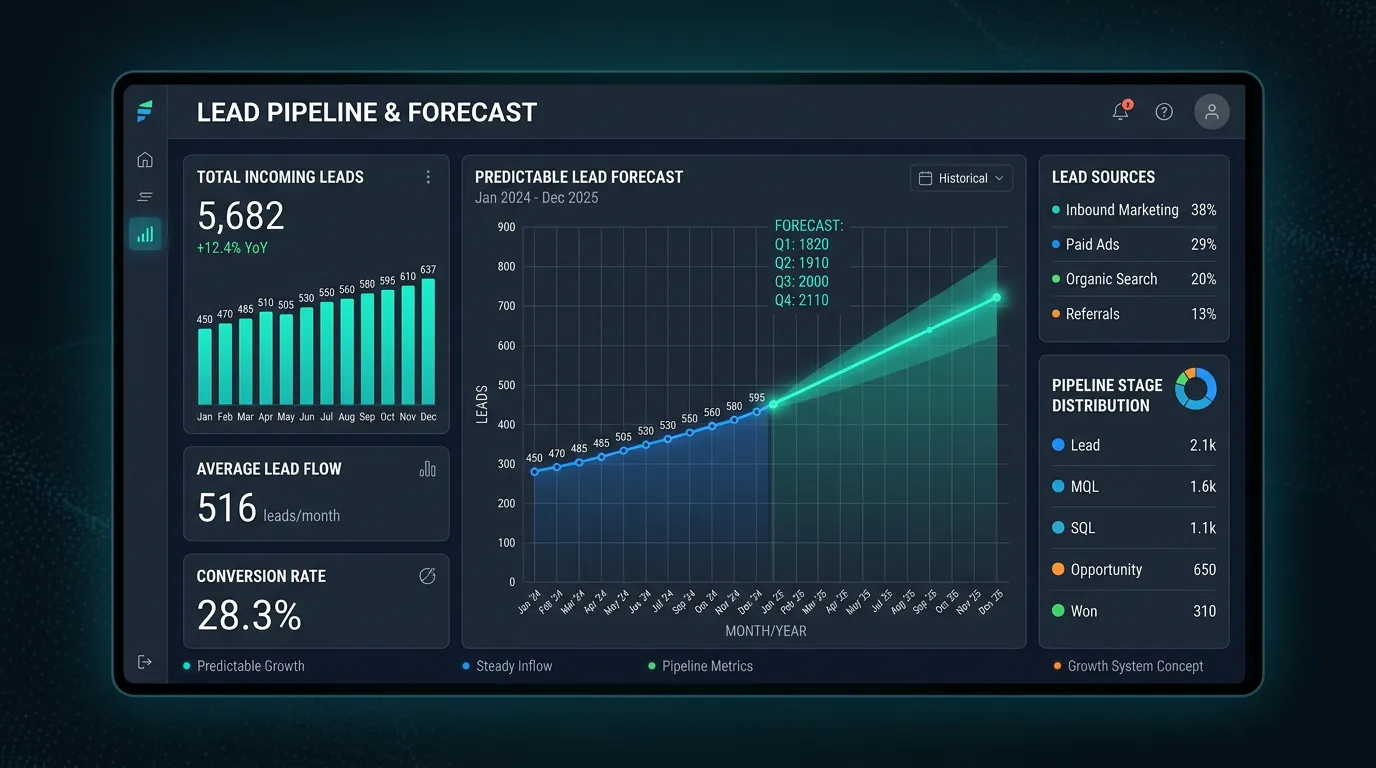
Lead Nurturing SequencesPredictable Lead Systems
Turns lead flow into a forecast instead of a surprise
Predictable Lead Systems
Where we do this work
Based in Chino, serving Chino, the Inland Empire, Orange County, Los Angeles County, Riverside County, and San Bernardino County.
One van, three trucks, or six locations
A one van operator does not need a nine number tracking setup. You need one number, a tappable button, a three field form, and a voicemail that texts you the message. Software cost stays under 60 dollars a month.
Three trucks changes the math. Leads now have to be routed, not just received. Somebody has to own the callback while the owner is on a roof. This is the size where a shared inbox starts losing jobs.
Six locations is a different job again. Each site needs its own number, its own booking calendar, and its own line on the report. Roll them together and a strong month in Riverside hides a dead month in Ontario. The customer in Corona does not care which branch is closest, only who picks up.
Honest comparison with the other options
Buying a system is not always the right move. Here is how it compares with what owners usually try instead.
| Option | Rough monthly cost | What you own after | Best when | Where it fails |
|---|---|---|---|---|
| Shared lead marketplace | 40 to 120 per lead | Nothing | You need work next week | Same lead sold to three rivals |
| Answering service only | 200 to 600 | Call logs | Calls ring out today | No source data and no follow up |
| Hire an inside sales person | 3,500 to 5,500 | The person, until they quit | Over 150 leads a month | They still work without source data |
| Spend more on ads, same site | Whatever you add | More traffic | Capture already works well | You pay full price for lost leads |
| Build the system | 1,500 plus tool fees | Numbers, data, automations | You already get 40 plus leads | Slow payback when volume is tiny |
Costs are rough market ranges seen around Southern California, not quotes from us. Most companies run two of these at once, and that is fine.
What happens in the first five minutes
Speed to lead is not one setting. It is a short chain, and every link has to be built.
If any link is missing the chain still runs, it just runs slower. The auto text is the cheapest link and usually the one nobody has.
The mistakes that cost the most
These are the errors we find most often. They cost real jobs, not just tidiness.
Do this
- Keep your main business line on your Google Business Profile, even when a tracking number shows first
- Record calls and listen to ten a month, because whoever answers the phone is part of the funnel
- Tag every lead with the job type, so you can see which service line pays
- Give after hours callers a real path, such as voicemail to text or a booking link
- Judge a channel on cost per booked job, not cost per lead
Not this
- Do not print tracking numbers on trucks, yard signs, or invoices, because those numbers get cancelled
- Do not ask for a street address before someone has agreed to talk to you
- Do not route every lead to the owner's cell, where it dies on a job site
- Do not turn on five automations in one week, or you will never know which one moved the number
- Do not delete a tracking number the month you stop a campaign, because calls keep arriving for 90 days
How to tell at 60 days if it is working
Sixty days is too early to judge revenue and long enough to judge the system. Every item here is a yes or a no.
Every lead carries a source
Under 5 percent should read unknown or direct.
Median first response is under 10 minutes
Business hours. Measure the middle, not the best day.
Contact rate is written down
The share you reached, not the share you dialed.
Unsold estimates are in a sequence
Not a sticky note. An automated list you can open.
You can see booked rate by source
Leads by source alone hides your worst channel.
After hours leads get a reply before morning
Check a Saturday. That is where systems fake it.
One dashboard answers it in two minutes
If it takes a meeting, the reporting is not done.
You have cut or killed one thing
Honest data should end at least one expense.
When not to buy this
Sometimes the honest answer is wait. Under 15 leads a month, this is the wrong first spend. Moving booked rate from 30 to 40 percent on 12 leads is one extra job. Put the money into local SEO or a small search budget instead.
If calls ring out during business hours, fix that first. No automation saves a company that does not answer the phone. A few hundred dollars for an answering service beats a 1,500 dollar system every time.
If you are booked ten weeks out and turning work away, you do not need more leads. You may need better ones. That is a pricing and screening project, and it costs less than this one.
And if nobody will own the CRM, hold off. Software does not create a habit. It only speeds up one you already have.
Speed beats polish. A rough callback in three minutes wins the job that a perfect callback tomorrow morning loses.
Questions owners ask before signing
Will call tracking numbers hurt my Google Business Profile?
How many tracking numbers do I actually need?
Can I build this myself?
Frequently asked questions
How is this different from just buying leads?
How fast will I see more leads?
Do I need a CRM before we start?
What actually causes leads to fall through the cracks?
Will this work if my traffic is low?
Do you replace my sales process?
Who owns the tracking numbers and the data?
Sources
- Guidelines for representing your business on Google(opens in a new tab) Google's rules for phone numbers on a Business Profile, including how call tracking numbers may be used alongside your main line.
- Google Analytics 4 events guide(opens in a new tab) Form fills, calls, chats, and bookings are recorded as GA4 events, which is how each lead gets tied back to a source.