
Local SEO
Local Citation Building and NAP Cleanup
Fixes wrong addresses and old phone numbers across the web
- Timeline
- Audit in week 1
Call (714) 823-3164 or ask a question. Clear recommendations, even if we never work together.
Citation building and cleanup is the work of making sure a business name, address, and phone number appear the same way everywhere online. It corrects wrong or out of date listings and suppresses duplicates. It sends accurate data to the major aggregators. It also builds listings on the directories that matter for the trade.
The problem
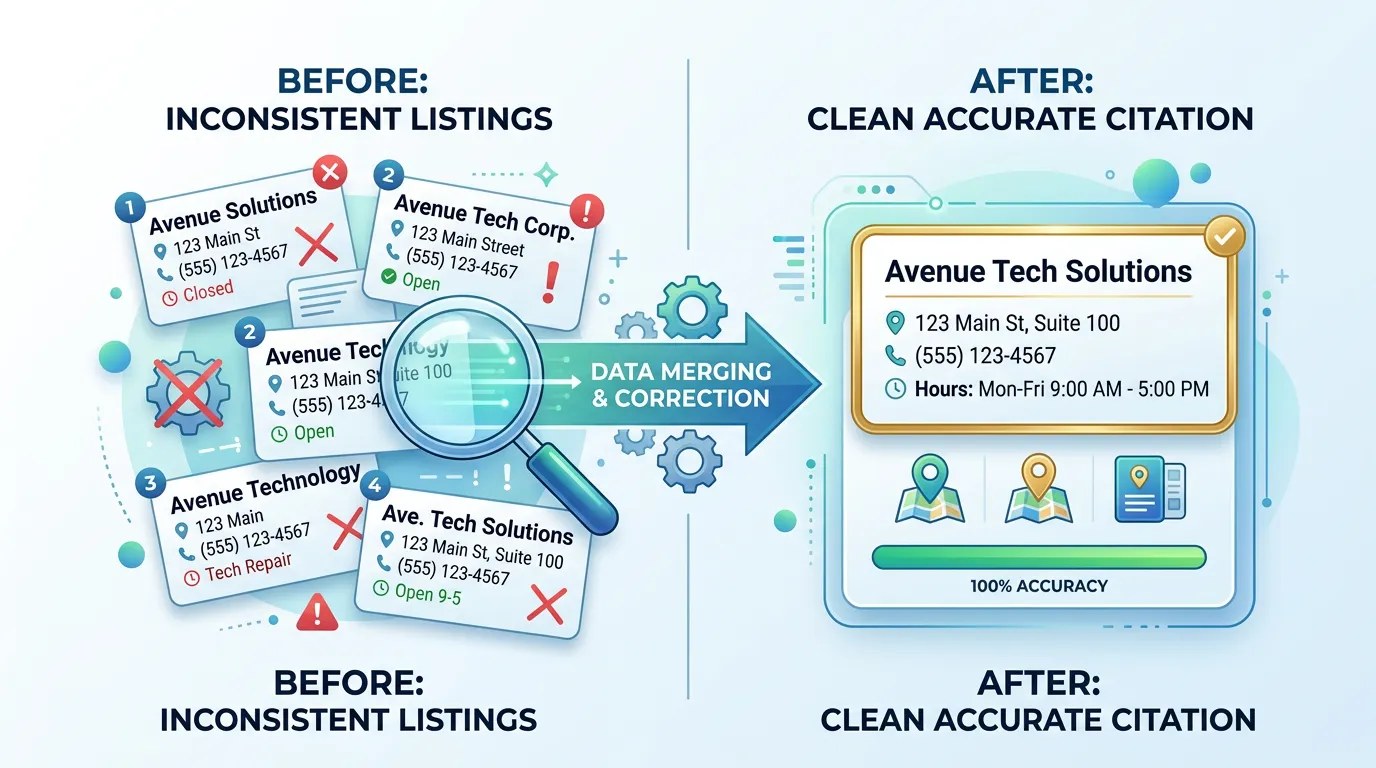
Businesses move, change phone numbers, rebrand, or start with a home address and later get an office. The old information does not disappear. It sits on directory sites and gets copied to new ones, and years later a customer calls a disconnected number and decides you went out of business. Duplicate Google listings are worse: they split reviews and ranking signals between two entries, and the wrong one often outranks the real one.
What it is
Citations are mentions of your business name, address, and phone number on other websites. That includes directories, industry sites, chambers, apps, and data aggregators. Google uses them as one signal that your business is real and sits where you say it does. The citation building work has two halves. Cleanup finds every wrong version already published, then corrects it or suppresses it. Citation building adds accurate listings where you are missing. It starts with the aggregators that feed hundreds of smaller sites. Then come the general directories, and after that the ones specific to your trade.
Signs you need this
- An old address or disconnected phone number still shows on directory sites
- You moved suites or offices and only updated Google
- Two Google listings exist for the same location, each with reviews
- You changed your business name and the old one still appears in search
- Customers mention finding a wrong phone number for you
What is included
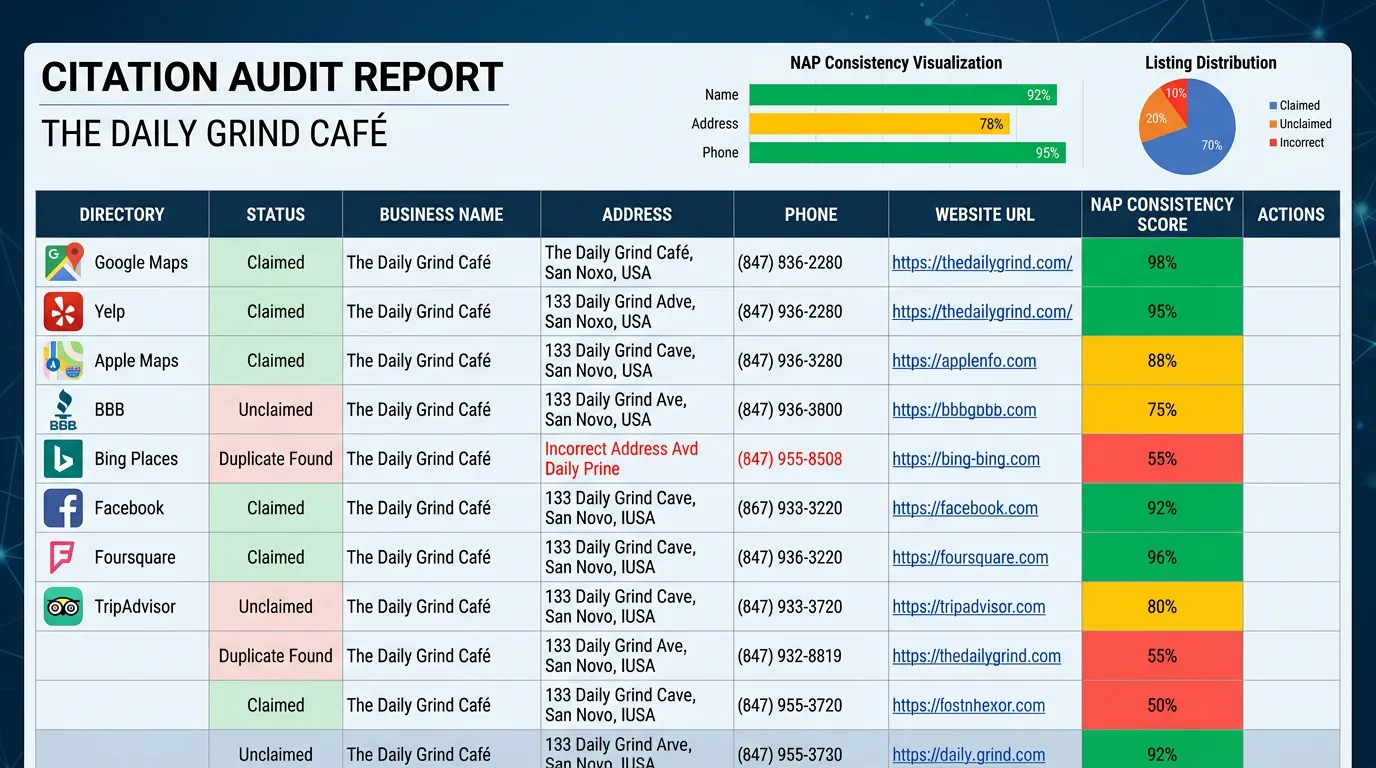
- Full audit spreadsheet of every listing found with current data
- Corrections on the four core aggregators: Data Axle, Foursquare, Localeze, and Neustar feeds
- Duplicate Google Business Profile identification and suppression requests
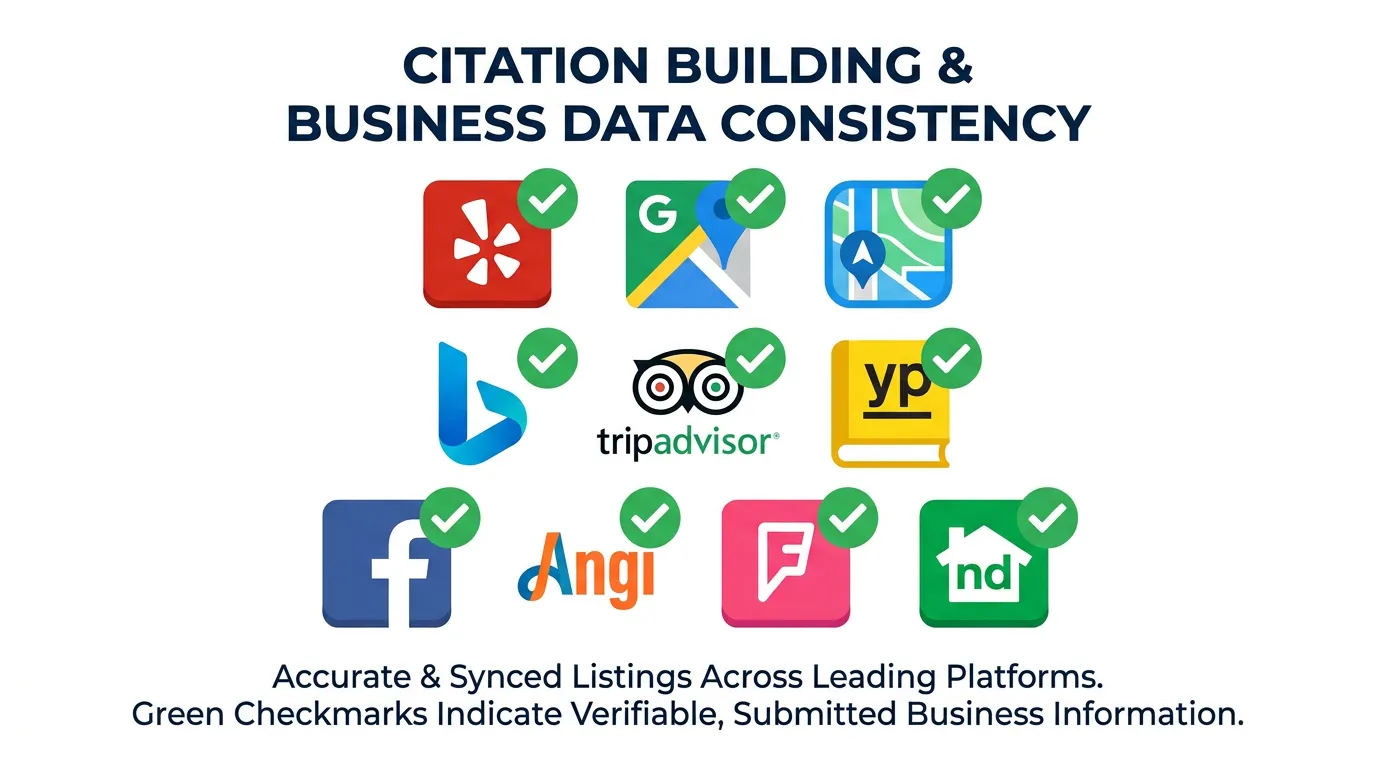
- Apple Business Connect and Bing Places listings claimed and completed
- 40 to 70 general and trade specific directory listings
- Industry directories such as Angi, BBB, Yelp, Nextdoor, Healthgrades, or Avvo depending on trade
- Login credential sheet handed to you at completion
- Recheck sweep at 90 days to catch listings that reverted
Our process
Audit and inventory
Week 1We scan for every version of your business data in circulation using BrightLocal Citation Tracker and manual searches for old phone numbers and prior addresses. Everything goes into one spreadsheet with a status column.
Fix the high impact listings first
Week 1 to 2Google, Apple, Bing, and Facebook get corrected first because they feed the most traffic and the most downstream copies. Anything showing a disconnected number gets escalated immediately.
Duplicate suppression
Week 2 to 5Duplicate Google listings get merged or marked as duplicates through the redressal process. Where reviews are split across two profiles, we work to preserve the profile with the review history where Google allows it.
Aggregator and directory build
Week 3 to 9Correct data goes to the aggregators that feed hundreds of smaller sites, then we build out the general and trade specific directories in batches with real logins we hand over to you.
Verification sweep
Month 3At 90 days we recheck everything. Some listings revert, some aggregator pushes fail silently, and some sites re-scrape old data. This sweep is the difference between a cleanup that holds and one that unravels.
Realistic timeline: Audit in week 1. Major corrections live within 2 to 4 weeks. Aggregator changes can take 4 to 12 weeks to propagate to smaller sites. Duplicate suppression on Google ranges from a few days to several months.
Where Your Business Data Actually Travels
Fixing one directory rarely sticks, because most sites do not type your data in. They receive it. Here is the path a correction takes.
This is why a fix takes weeks to settle, and why old data comes back when only the copy gets corrected and not the source.
NAP Rules We Follow on Every Listing
Consistency is not about being close. It is about being identical, character for character, on every site.
One exact business name
No added keywords
Ste or Suite, pick one
Mixed spellings hurt
One phone format everywhere
Same style, every site
Your real primary number
Never a tracking number
Street types spelled one way
Ave or Avenue, not both
One website address
https, one version
Hours that match your profile
Holiday hours too
One owner email on file
Not a staff address
Moving Offices Without Losing Six Months
A move is the fastest way to break local rankings, and most of the damage is self inflicted. Do it in the right order and the drop is small and short.
Update Google Business Profile first, on the day you actually start working from the new address. Expect to be asked to verify again, so have a lease or a utility bill ready before you touch anything. Then the aggregators, then Apple, Bing, Facebook, and your trade directories. Your website footer, contact page, and schema get changed the same week, because Google cross checks your site against your profile.
Keep the old phone number forwarding for at least a year. Old listings you will never find still carry it, and so do your customers' phones. If you can, do not change your business name and your address in the same month. Two big changes at once makes a suspension more likely and makes the cause much harder to unpick.
Then wait. Rankings usually wobble for four to eight weeks after a move, and longer when the new address sits farther from the area you serve.
Two Cleanup Questions
Should I fix a bad listing or just delete it?
Do citations still matter as much as they used to?
Frequently asked questions
How many citations do I actually need?
Can I use a call tracking number on my citations?
What if I run the business from my home?
How do I get a duplicate Google listing removed?
Should I pay for a subscription service like Yext?
Sources
- Google Business Profile Help: Guidelines for representing your business on Google(opens in a new tab) Rules on business names, real addresses, mailbox rentals, service area settings, and duplicate listings.