Local SEO
Local Content Strategy for Service Businesses
Built from real customer questions and search data, not topic guesses
- Timeline
- Calendar delivered in 3 weeks
Call (714) 823-3164 or ask a question. Clear recommendations, even if we never work together.
A local content strategy is a plan for what a business publishes to reach nearby searchers. It covers each stage of their decision. It puts cost questions, comparison topics, seasonal problems, and local rules ahead of generic tips. Every piece gets a target keyword, a purpose, and a place in the site structure.
The problem
Most local business blogs are graveyards. Twenty posts with titles like Five Tips for Summer, written years ago, getting zero traffic. They were published because somebody said businesses should blog, not because anyone searches for them. Meanwhile the questions customers actually ask on the phone every single day, how much does this cost, how long does it take, do I need a permit, are not answered anywhere on the site. That is free demand walking to a competitor who bothered to answer.
What it is
Local content strategy starts with sources most people ignore. Recorded sales calls are one. So are the questions your office manager answers ten times a week. Add the Search Console queries you already rank for on page two, and the People Also Ask boxes on your money keywords. From those we build a calendar of pieces, each with a clear job. Cost and pricing pages catch high intent searchers. Comparison pieces catch people deciding between two options. Seasonal pieces get published six weeks before demand starts. Local permit and regulation guides earn links and trust. Every piece gets a target keyword, an internal link plan, and a review date.
Signs you need this
- Your blog is full of generic tips that nobody local searches for
- Your phone staff answer the same five questions every day
- You publish only when somebody remembers to
- Competitors rank for cost and pricing searches and you do not
- You have no content aimed at your slow season

What is included
- Query mining from Search Console, call recordings, and People Also Ask
- A 12 month topic calendar with publish dates and target keywords
- Cost and pricing page plan for your top revenue services
- Seasonal content mapped to Southern California demand patterns
- Local permit, code, and regulation guides where they apply to your trade
- FAQ hub built from the questions your phone staff answer most
- Content briefs with headings, word count target, and internal links
- Refresh schedule for existing pages worth updating rather than replacing
Our process
Mine the real questions
Week 1 to 2We pull Search Console queries where you rank between positions 8 and 25, listen to a sample of recorded calls if you have them, and interview whoever answers the phone. That list is more valuable than any keyword tool export.
Score and cluster
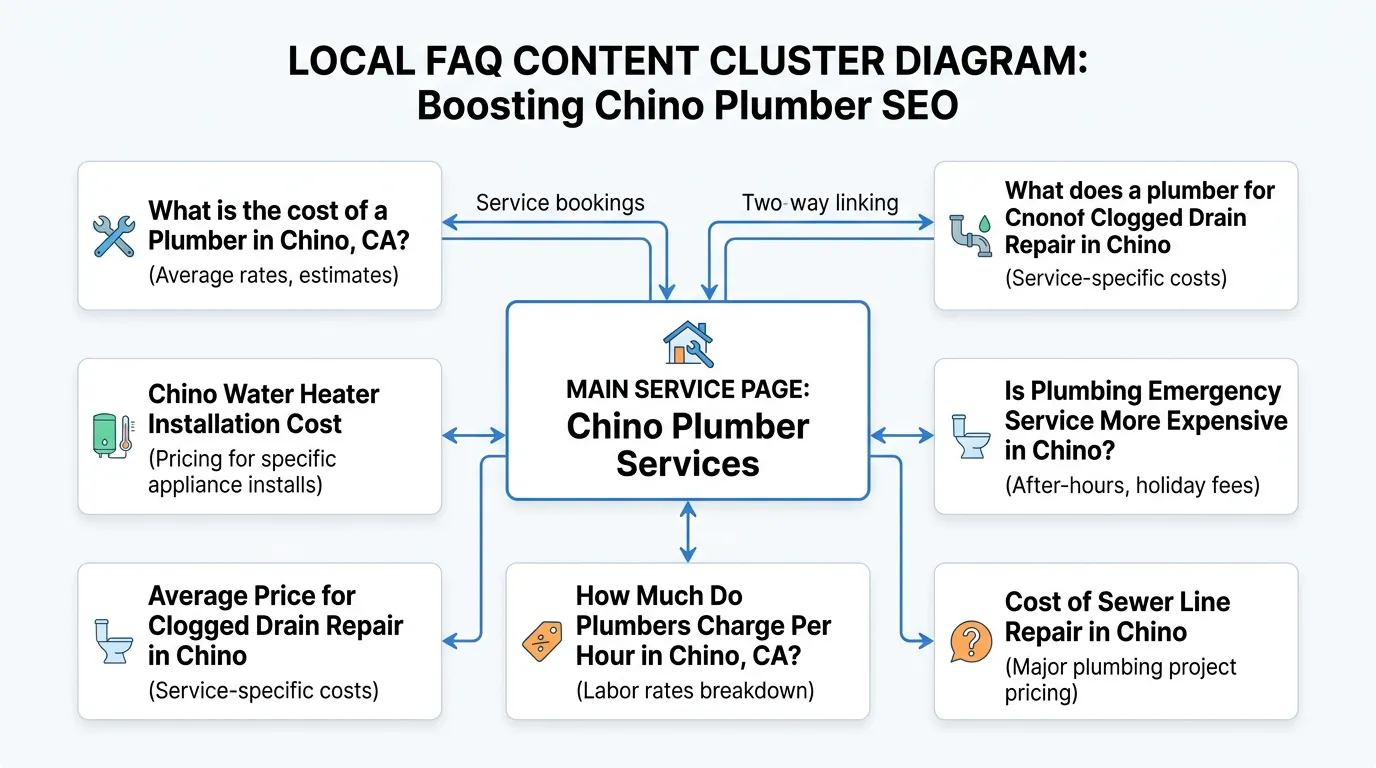
Week 2Topics get grouped into clusters around your main services, then scored on search demand, buying intent, and how close the topic is to a paying job. Cost topics almost always outrank general advice topics on that score.
Build the calendar
Week 3Twelve months of pieces with dates, working titles, formats, and target keywords. Seasonal items get scheduled to publish six to eight weeks before demand so they have time to index and rank.
Write briefs and produce
Ongoing, monthlyEach piece gets a brief with the outline, the questions to answer, internal links to add, and the source material. Production runs at a sustainable cadence, usually two to four pieces a month.
Refresh and prune
Every 3 monthsEvery quarter we review what is ranking, update pieces that slipped, consolidate overlapping posts, and delete pages that will never earn anything. Refreshing an existing page often beats writing a new one.
Realistic timeline: Calendar delivered in 3 weeks. First published pieces start showing impressions within 2 to 6 weeks. Content driven lead volume typically becomes visible between month 4 and month 8 depending on publishing cadence.

When to Publish for Southern California Demand
Content needs weeks to index and settle before it earns anything. So you publish before the season, not during it.
Publish six to eight weeks ahead of demand. A heat wave post written during the heat wave is next year's content.
Turning One Phone Call Into Three Pages
The best content source in your business is already recorded, or sitting in your office manager's head. Pull one week of calls and write down every question a customer asked before they booked.
Any question that takes more than thirty seconds to answer on the phone is a page. How much does a new water heater run. Do I need a permit for that. Will insurance cover it. Use their words as the heading, not the tidy version your marketing brain wants to write.
The answers your tech gives are the content. Real price ranges, the two or three things that move the number, how long the job takes, what happens when a part is on backorder. Write those down the way they get said out loud. That detail is the whole difference between your page and the identical article every competitor generated last month.
What a Brief Contains Before Anyone Writes
A piece without a brief becomes whatever the writer felt like that day. Eight lines prevent it.
One target keyword
And the page it supports
The question in their words
Not the tidy version
A word count range
Set by what ranks now
Headings in order
Short answer up top
Price ranges from your team
Sourced, never guessed
Two internal links out
Service page and a city
One link in from an old page
New pages need a path
A review date
Usually twelve months
Two Questions Before You Publish
Where should the blog live?
What do I do with a post that gets traffic but no calls?