Local SEO
Local SEO Audit
Scores profile, website, listings, reviews, and technical health
- Timeline
- Ten to fourteen business days from access granted to walkthrough call
Call (714) 823-3164 or ask a question. Clear recommendations, even if we never work together.
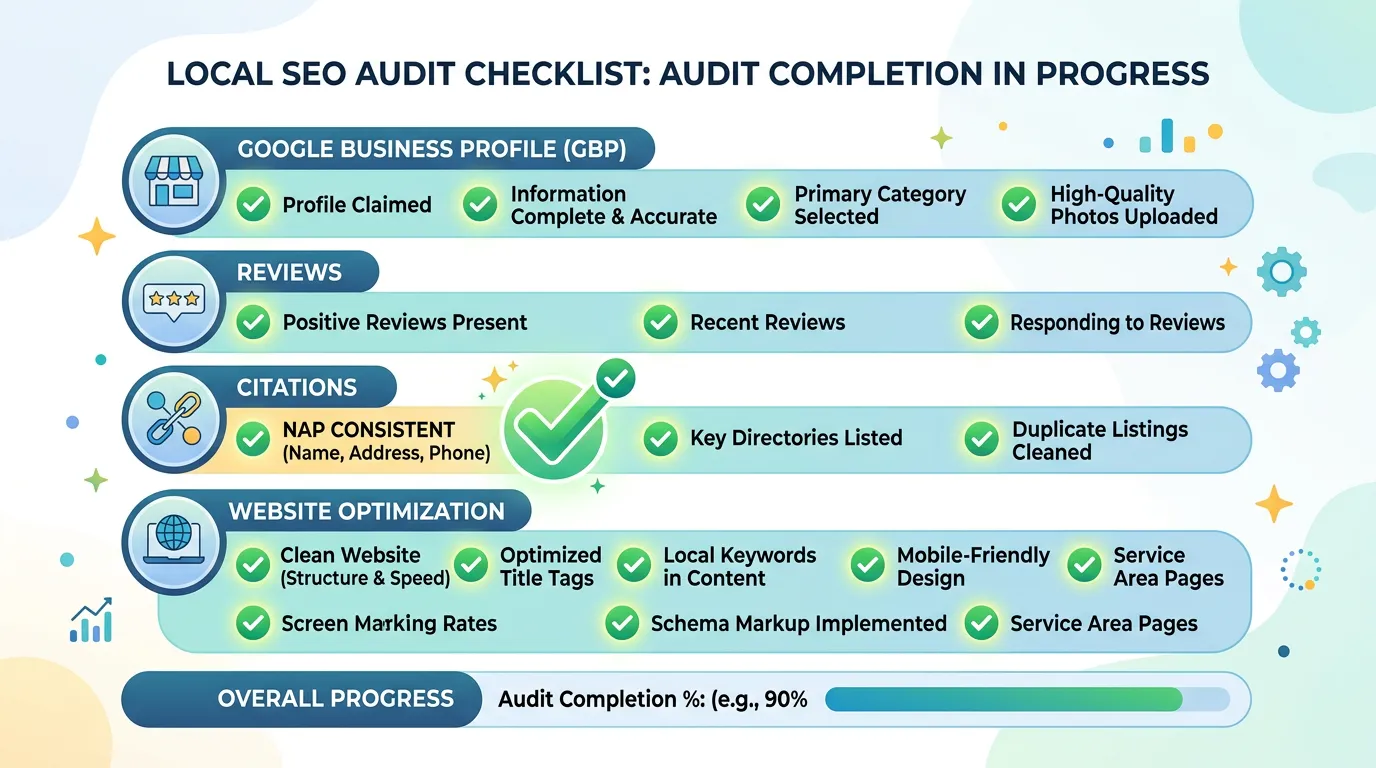
A local SEO audit is a full review of everything that affects how a business shows up in local search. It checks the Google Business Profile, the website, and its content. It checks your listings, your reviews, your technical health, and the businesses beating you. You get a scored report and a fix list ranked by expected impact and effort.
The problem
Rankings drop and nobody can say why. Or you are about to sign a contract with an agency and have no way to judge whether their plan is sensible. Or you inherited a website from a previous vendor and have no idea what is under the hood. Guessing is expensive: you can spend six months on content when the real problem is that your primary category is wrong and half your citations point at an address you left in 2021.
What it is
The audit is a diagnostic, not a sales document. We run a full crawl of the site with Screaming Frog. We review Search Console for indexing and query data. We score the Google Business Profile field by field, against Google's guidelines and against the current pack holders. We scan your citations for mismatches and run a geogrid to see your real visibility. We check page speed and Core Web Vitals, and we validate your schema. Then we compare all of it to the top three competitors in your main city. Everything we find gets written up with the evidence, the fix, the effort level, and the expected impact. After that we walk you through it on a call.
Signs you need this
- Rankings or calls dropped and nobody can explain what changed
- You are about to hire an agency and want an independent read
- You inherited a website and profile from a previous vendor
- You have been paying for local SEO for a year with no visible result
- You are buying a business and want to know what its online assets are worth
What is included
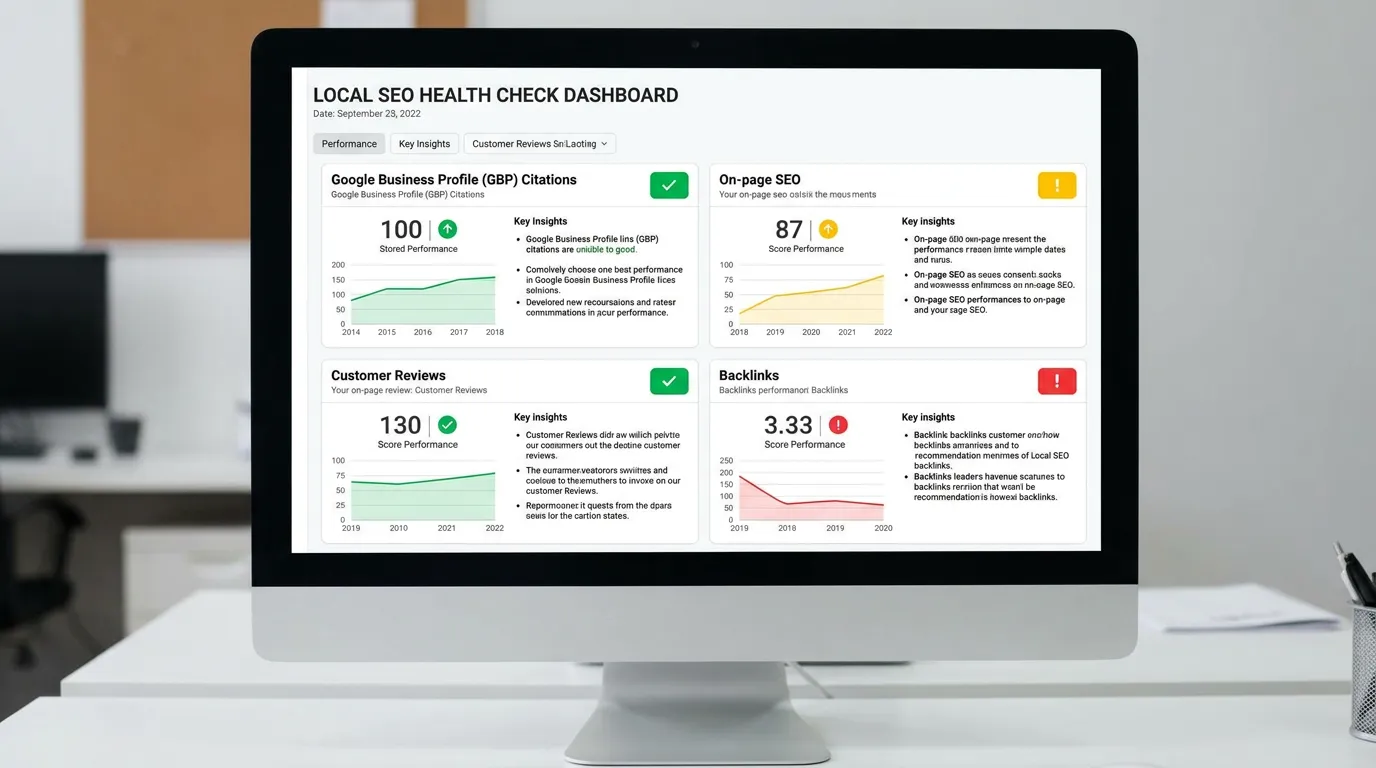
- Twenty to thirty page written report with screenshots and evidence
- Google Business Profile scored field by field with specific corrections
- Full site crawl covering indexation, duplicates, redirects, and broken links
- Search Console analysis of queries, pages, and coverage errors
- Citation accuracy scan with a list of every mismatch found
- Geogrid visibility scan for your top five keywords
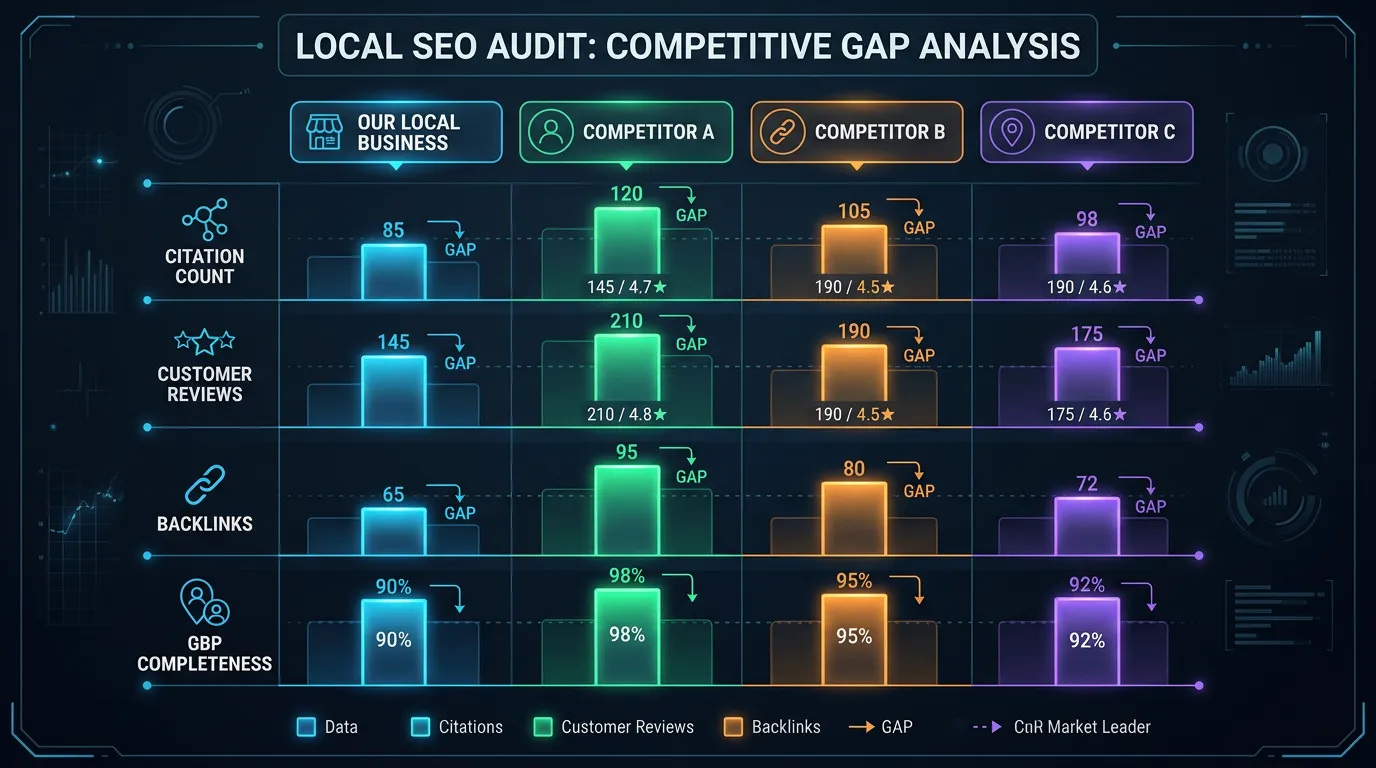
- Competitor comparison against the three businesses in your map pack
- Core Web Vitals and mobile usability findings
- Prioritized fix list scored by impact and effort
- Sixty minute walkthrough call with recording
Our process
Access and data collection
Days 1 to 3We get read access to Search Console, Analytics, and your Google Business Profile, then pull twelve months of history. If access is missing, we still audit from the outside, though the report loses some precision.
Technical crawl and profile review
Days 3 to 7Screaming Frog crawl of the full site, schema validation, Core Web Vitals check, and a field by field profile review against Google's guidelines and current pack holders.
Off site scan
Days 5 to 9Citation accuracy check, duplicate listing hunt, backlink profile review, review volume and velocity comparison, and a geogrid scan to see where visibility actually reaches.
Competitor benchmarking
Days 8 to 11The three businesses holding your map pack get the same review: categories, review counts, page inventory, referring domains, and content depth. This tells you the real entry price for your market.
Scoring and walkthrough
Days 11 to 14Findings get scored, ordered by impact versus effort, and written into the report. Then we spend an hour on a call going through it so the document does not just sit in a folder.
Realistic timeline: Ten to fourteen business days from access granted to walkthrough call. Rush turnaround in five business days is available for an additional fee when a decision deadline requires it.
How a finding gets ranked on the fix list
Every finding gets scored on what it is likely to change and what it costs to do. Easy does not mean first. Here are real examples of how items land.
| Example finding | Likely impact | Effort to fix | Where it lands |
|---|---|---|---|
| Primary category does not match the pack | High | About an hour | Do this week |
| A tracking number replaced the real number on the profile | Medium | Ten minutes | Do this week |
| City pages were never indexed | High | Days to weeks | Do this month |
| Twelve listings still show the old address | Medium | Two to three weeks | Do this month |
| Service pages copied city to city | High | Months of writing | Start now, finish later |
| Pages load slowly on phones | Medium | A developer project | Plan for next quarter |
A ten minute fix and a six month rewrite can both sit near the top. What decides the order is the size of the gap it closes.
The findings that show up in almost every audit
Four problems turn up so often that we look for them first. The most common is a primary category that sounds right to the owner and does not match what the businesses in the pack are using. It is a two minute change that no automated tool will ever flag for you.
Second is pages that exist but were never indexed. The site has eighteen city pages, Search Console shows nine of them excluded, and nobody ever looked. Those pages have been earning nothing since the day they went up.
Third is a duplicate profile. An old owner made one, a franchise sign up made one, or a data feed created one from a lease record. Reviews split between them and neither ranks as well as one profile would.
Fourth is old business data still living in the listing feeds. You moved or changed numbers, the big sites got fixed, and the smaller ones quietly restored the old record a few months later. That is the kind of thing a crawl finds and a memory does not.
What to do in the two weeks after the report
A report only pays for itself when someone acts on it. This is the order we suggest, whether we do the local SEO work or your own team does.
Clear the ten minute items the same day
Category, hours, phone number, and missing services.
Pick three fixes, not thirty
Everything at once means nothing gets finished.
Put a name and a date on each one
A list with no owner does not move, however good it is.
Send developer items as one ticket
Batching beats a drip of requests over three weeks.
Screenshot your starting numbers
Grid, calls, and impressions on the day you begin.
Recheck the profile after two weeks
Google sometimes reverts an edit without telling you.
Book the follow up for ninety days out
That is when the first honest read on movement arrives.
When an audit is not the right thing to buy
If you already know the problem, skip the audit and fix it. An owner who says the site has not been touched since 2019 and has no Google profile does not need a report to confirm that. Spend the money on the build.
If there is no budget or time to act on the findings for six months, wait. Audits go stale. Categories change, competitors add reviews, and Google ships changes. A report read in month seven is a history lesson.
If a new website is already being built, audit after it launches, not before. Half the findings will be about pages that are about to disappear. The one thing worth doing first is saving your current URL list so the new site can redirect properly.