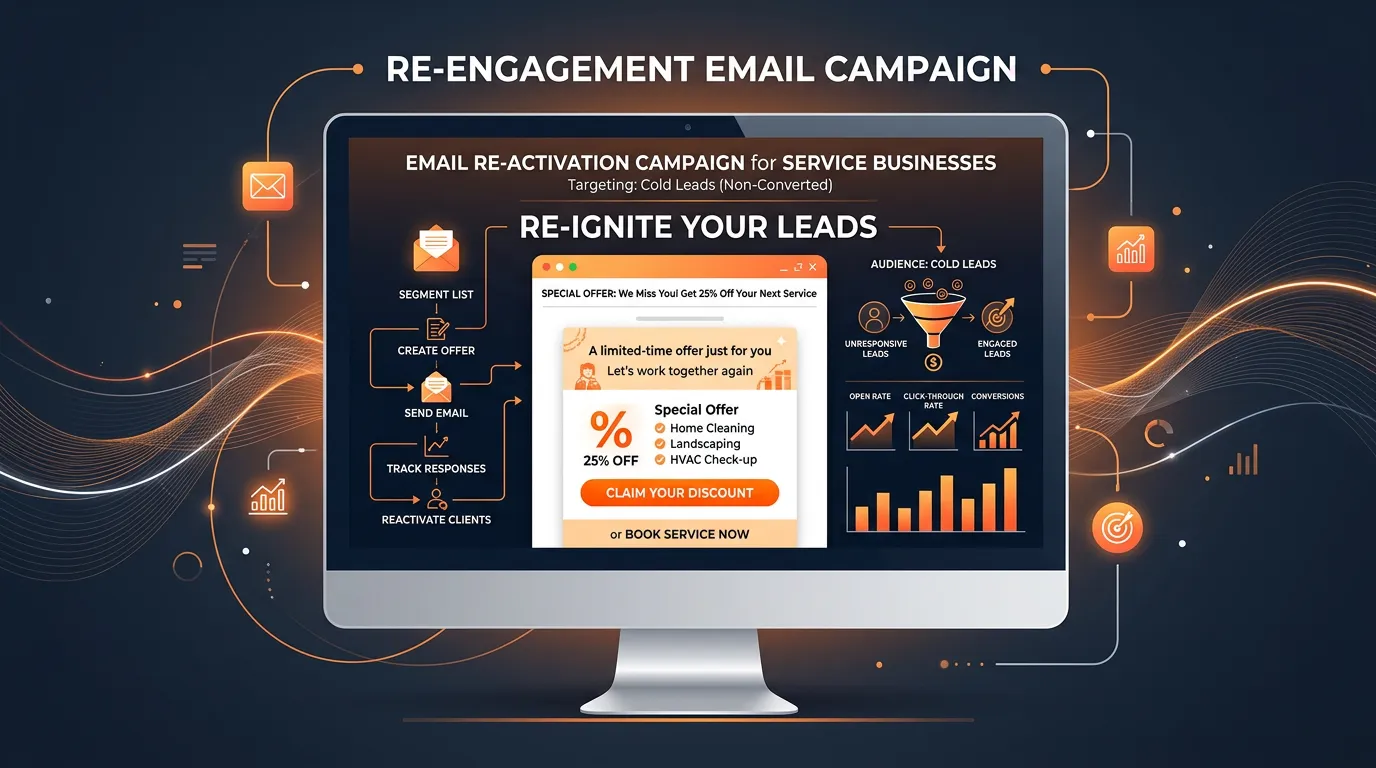
Lead Generation Systems
Lead Nurturing Sequences
Keeps unsold estimates alive instead of letting them go cold
- Timeline
- Five to six weeks to build and launch the first sequences
Call (714) 823-3164 or ask a question. Clear recommendations, even if we never work together.
Lead nurturing sequences are automated email and text follow ups that stay in contact with people who asked about your work but have not booked yet. For service businesses, the highest value use is unsold estimates. A structured follow up over several weeks routinely recovers jobs that would otherwise be lost in silence.
The problem
A remodeler gives 30 estimates a month and closes 9. The other 21 get nothing. No call, no email, no text, ever. Some of those homeowners were waiting on a spouse, a loan approval, or a tax refund, and would have bought in eight weeks from whoever was still around. Instead they hired the company that sent one follow up. The same thing happens with old leads: two years of inquiries sitting in a database that nobody has contacted since. It is the cheapest available revenue in most service businesses and it goes untouched because nobody owns the task.
What it is
A lead nurturing sequence is a written, scheduled series of touches. It runs automatically once a lead reaches a certain stage. For unsold estimates, that usually starts with a same day thank you with the proposal attached. Day three brings a value message answering the most common objection. Day seven is a check in. Day fourteen brings proof, such as a similar completed job. Around day thirty comes a final soft close, then the lead moves to a low frequency long term list. We mix text and email, because text gets read and email carries detail. The content answers the objection instead of sending a generic reminder. Everything respects consent rules, quiet hours, and easy opt out. That matters legally, and it also keeps you from annoying future customers.
Signs you need this
- Unsold estimates get no follow up after the day they are delivered
- You have years of old inquiries nobody has ever contacted again
- Follow up depends on whether someone remembers to make a call
- Customers tell you they hired someone else who kept in touch
- You have no documented consent for the numbers you would text
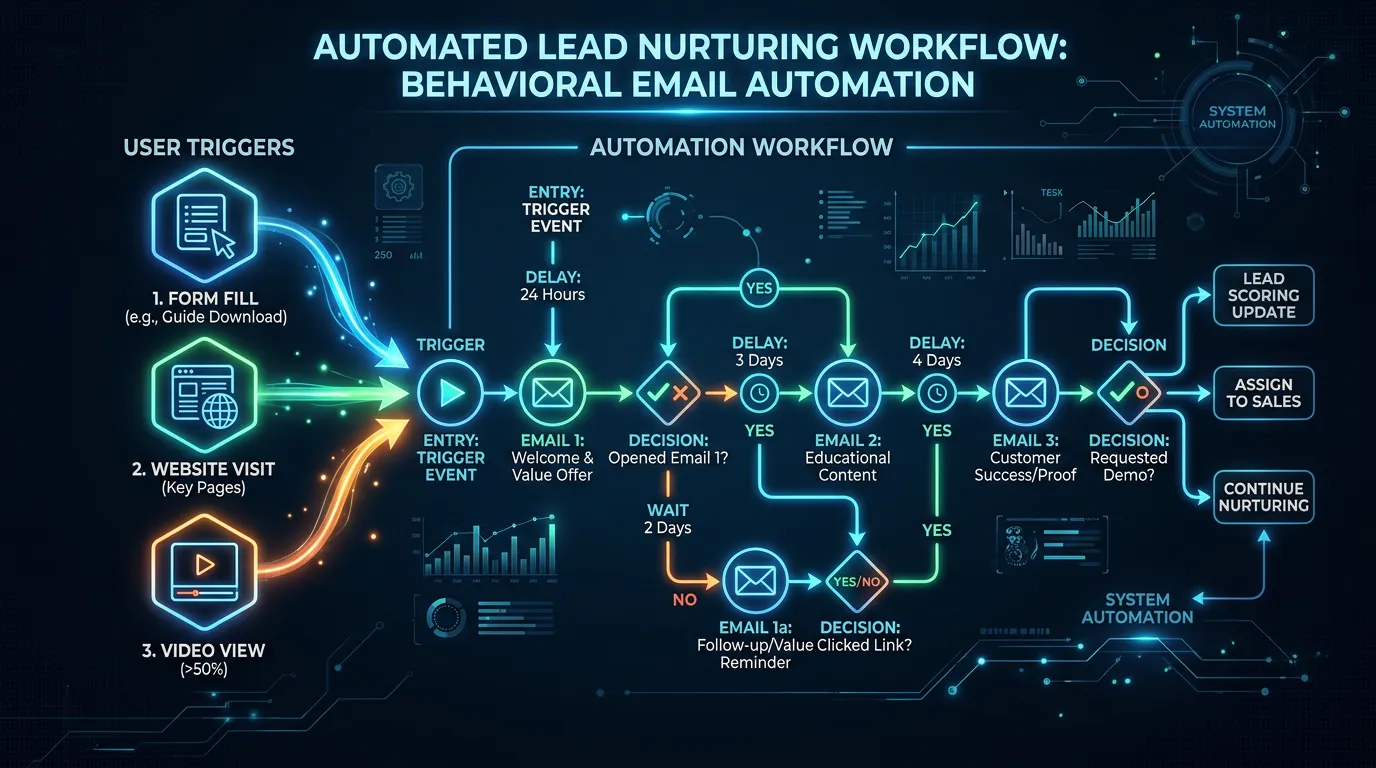
What is included
- Sequence map by lead type: unsold estimate, no show, old lead, and seasonal service
- Written email copy for every step in your voice, not a template library
- Text message copy kept short with clear opt out language
- Timing schedule matched to your real sales cycle length
- Objection based content: financing, timing, scope, and price comparison
- Proof assets such as similar completed jobs and relevant reviews
- Automatic exit rules so anyone who books or replies stops receiving the sequence
- Consent capture language on forms and documented opt in records
- Quiet hours and frequency caps configured for California requirements
- Performance reporting on open, reply, and recovered job counts per sequence
Our process
Find the Silence
Week 1We look at where communication currently stops. In most businesses it stops the day the estimate is delivered. We also count how many unsold estimates and dormant leads exist, which is usually a larger number than the owner expects.
Match Timing to the Sale
Week 1 to 2A water heater decision takes days. A kitchen remodel takes months. Sequence length and spacing get set from your actual average time to close, not a standard five email template.
Write to the Objection
Week 2 to 4Each message answers one real reason people stall: it costs more than expected, the timing is wrong, they are getting another bid, or they are not sure the lead nurturing work is necessary. Generic checking in messages get ignored.
Set Consent and Compliance
Week 3 to 5Forms get consent language, opt outs get honored automatically, and texting stays within permitted hours. This is not optional and the penalties for getting texting wrong are serious.
Launch and Watch Replies
Week 5 to 6Sequences go live with a monitored reply inbox, because the goal is a conversation, not an open rate. Anyone who replies exits automation immediately and reaches a human.
Measure Recovered Jobs
Ongoing, monthlyThe only number that matters is jobs booked from leads that had gone quiet. We report that monthly alongside opt out rate, which is the early warning sign that a sequence is too aggressive.
Realistic timeline: Five to six weeks to build and launch the first sequences. Recovered jobs typically start appearing within the first 30 to 60 days, faster for short cycle services.
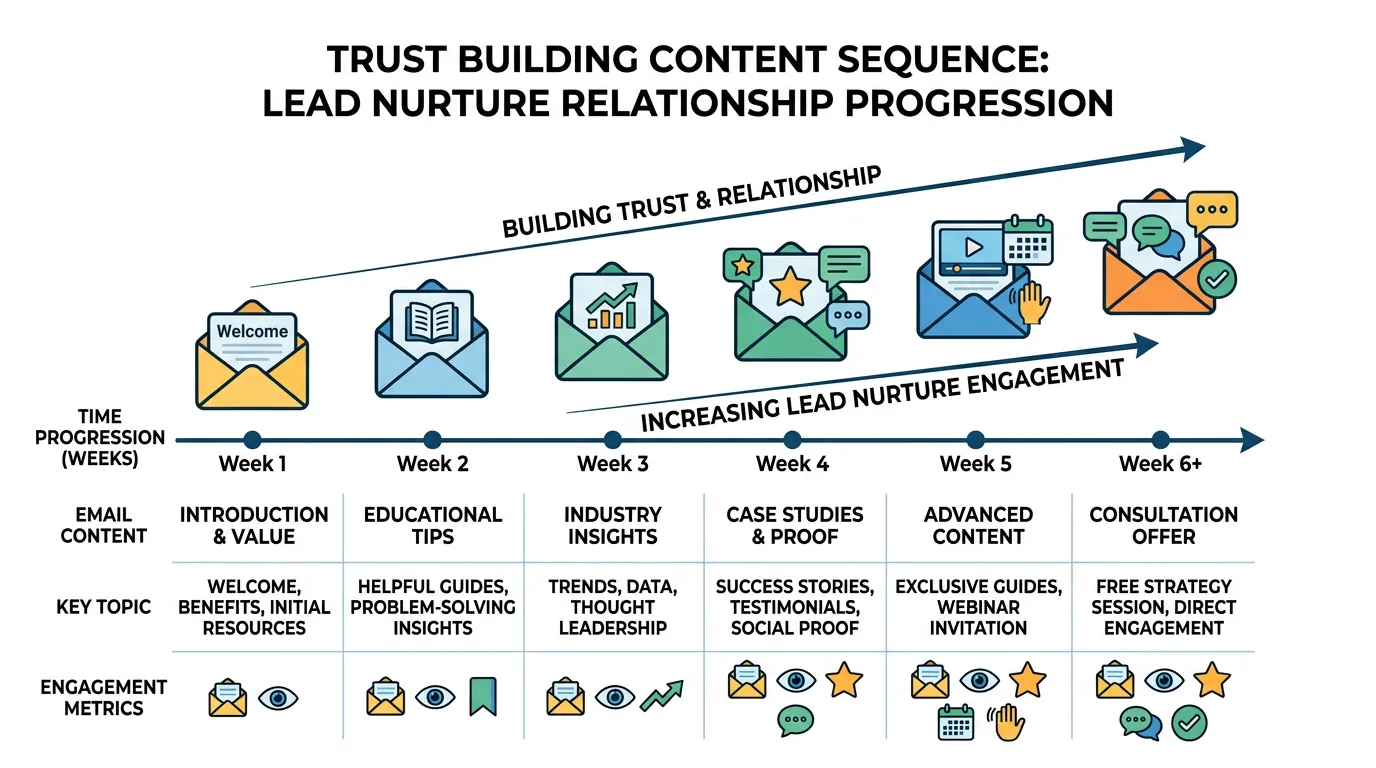
How long a sequence should run, by job type
Sequence length comes from how long the decision actually takes. Copying a five email template built for software is why most follow up feels wrong.
| Job type | Typical time to decide | Touches | Spread over |
|---|---|---|---|
| Water heater replacement | One to five days | 3 to 4 | About a week |
| AC or furnace replacement | One to four weeks | 5 to 6 | Four to six weeks |
| Roof replacement | Two weeks to three months | 6 to 8 | Ninety days |
| Kitchen or bath remodel | One to six months | 7 to 9 | Six months, spaced out |
| Legal or insurance consult | A few days, then quiet | 3 to 4 | Two weeks |
| Maintenance plan renewal | Decided on a set date | 3 | Two weeks before renewal |
Not sure? Pull your last 20 closed jobs and count the days from first contact to signature.
What the day three message actually says
The day three message decides whether the rest get opened. It should answer the biggest reason people stall on your kind of work. It should not ask whether they saw the estimate.
On a 14,000 dollar HVAC replacement, that reason is usually money. So the message names it. It shows what monthly financing looks like on that system. It shows what the repair route costs if they wait. It names any rebate and the date it ends.
On a remodel, the reason is usually trust and disruption. That message shows a finished job a few miles away, says how many days the kitchen was out of use, and names the person who would run the crew.
Two rules make it work. One message, one objection. And write it so a real person could have typed it, because the response you want is a question, not an open.
Texting without getting yourself in trouble
Text rules carry real penalties and they change over time. This is the working standard we set up. Have your attorney review anything you are unsure about.
Do this
- Ask for text consent in the form itself, in plain words
- Keep a record of the wording, the date, and the page
- Honor a STOP reply right away and for good
- Send only between 8am and 9pm in the customer's time zone
- Name your business in the first message every time
Not this
- Do not text a list you bought or scraped
- Do not text a number from a call log with no consent
- Do not bury consent inside a privacy policy link
- Do not send more than about two messages in a week
- Do not slip a sales pitch into a job update text
Follow up questions worth answering
What happens to people who never reply at all?
Should follow up come from a person or the company?
Do we follow up on jobs we lost on price?