Reputation Management
Reputation Recovery and Repair
Fixes the operational cause first, since marketing cannot outrun bad service
- Timeline
- Triage and response inside 30 days
Call (714) 823-3164 or ask a question. Clear recommendations, even if we never work together.
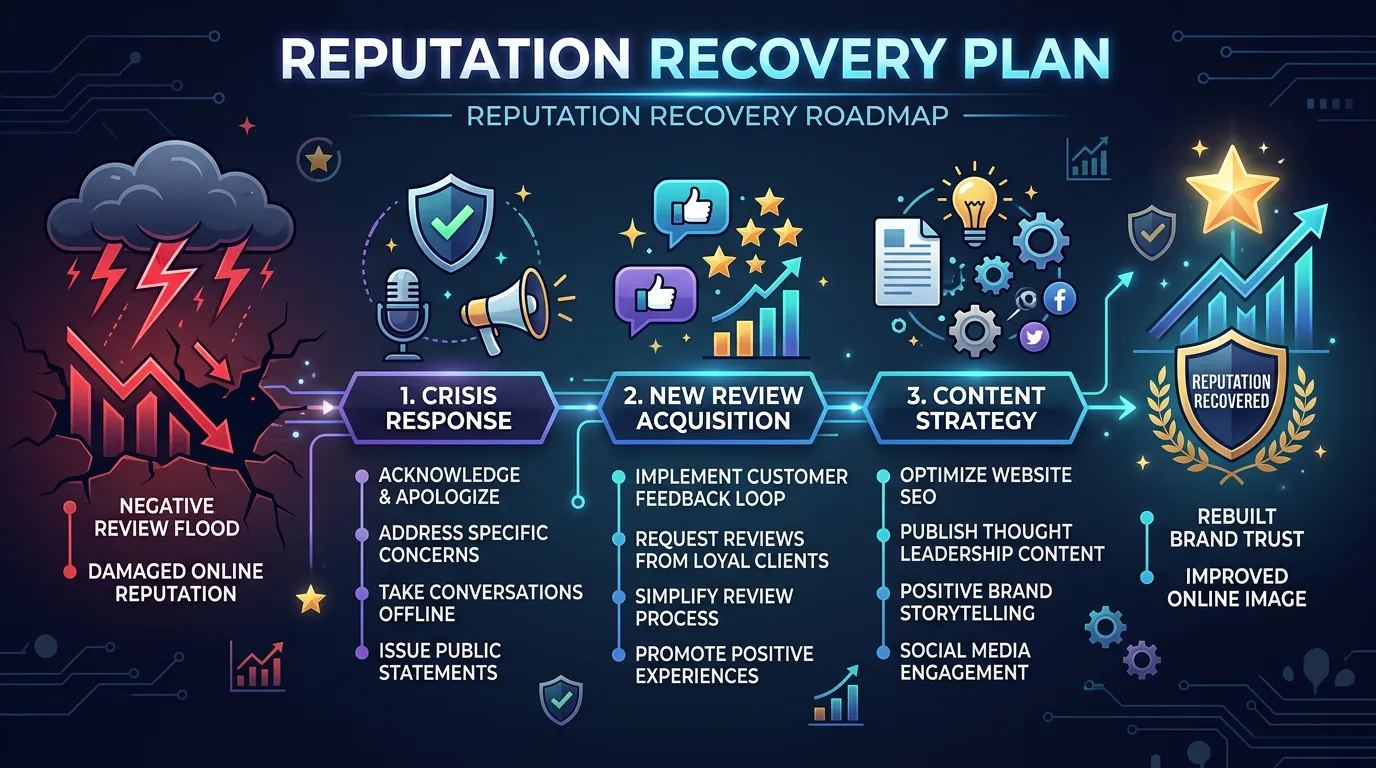
Reputation recovery is focused work to repair a damaged online reputation. It comes after a cluster of bad reviews, a public complaint, or a bad stretch in operations. The reputation recovery work has four parts: fix the cause, file removal requests where policy allows, rebuild review volume, and push negative search results down for your business name.
The problem
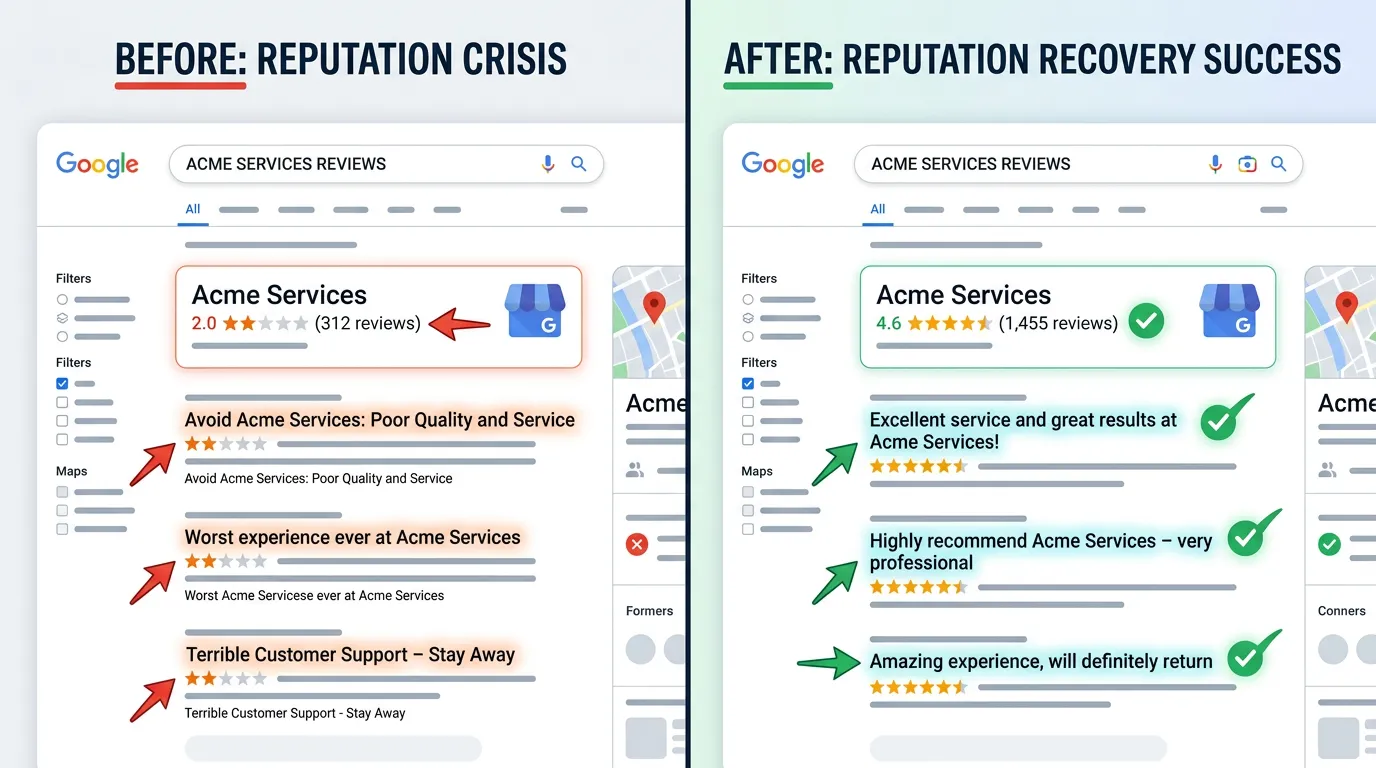
Something went wrong. A crew had a bad month, a manager left and standards slipped, a job went sideways and the customer told everyone, or a competitor ran a fake review campaign. Now your rating dropped below four stars, the first thing people see is a detailed complaint, and calls are down without any change in your marketing spend. Panic responses make it worse: arguing publicly, buying fake reviews, or blasting every customer from the last five years with a request, which produces a burst that platforms filter and customers notice.
What it is
Reputation recovery is a project with steps in order, not a monthly service. First we find out what actually happened, because if the cause is still live, nothing else works. Then we sort every negative review into piles. Some break platform policy and can be filed for removal. Some need a strong public reply. And some come from customers worth contacting for a private fix. Then we rebuild review volume at a pace your job count can support. A low volume business that suddenly gains forty reviews gets filtered. At the same time, we work on the search results for your business name. We strengthen the pages you control, so a damaging article or complaint page falls below the fold. We measure progress every month, and the honest timeline is months, not weeks.
Signs you need this
- Your rating dropped below four stars in the last year
- A cluster of similar complaints appeared over a short period
- Calls dropped with no change in ranking or ad spend
- A complaint page or news article ranks on page one for your business name
- You believe a competitor is leaving fake reviews on your profile
What is included
- Root cause investigation with call recordings, job records, and staff interviews
- Triage of every negative review with a recommended action on each
- Removal filings for policy violating and fake reviews with evidence
- Priority response writing for the reviews prospects read first
- Private outreach plan for customers where resolution is realistic
- Rebuild schedule sized to your actual monthly job volume
- Brand search page one analysis and property strengthening plan
- Weekly progress check-ins during the first 90 days
- Crisis playbook so the next incident is handled in hours, not days
Our process
Find the cause
Week 1 to 2We read every negative review from the period, listen to call recordings if available, and talk to staff. Reviews cluster around a cause: a specific tech, a scheduling change, a price increase handled badly, a subcontractor. Marketing cannot fix an active problem.
Triage and file
Week 2 to 4Each negative review gets an action: remove, respond, resolve privately, or leave alone. Fake and policy violating reviews get filed with evidence. Real ones get a response written to reassure the next reader.
Stabilize operations
Week 3 to 8The specific operational change gets made and documented, whether that is a training gap, a dispatch problem, or a person. We hold rebuild efforts until this is done, because new customers walking into the same problem produces more of the same reviews.
Rebuild at a safe rate
Month 2 to 12Review generation restarts at a pace matched to job volume. For a business doing sixty jobs a month, that might be eight to fifteen new reviews monthly. Fast enough to move the average, slow enough to look real.
Work the brand search page
Month 2 onwardWe strengthen the properties you control for your business name: your site, profiles, and any owned pages, so the damaging result moves down. This is slow, honest work. Nothing gets deleted from the internet.
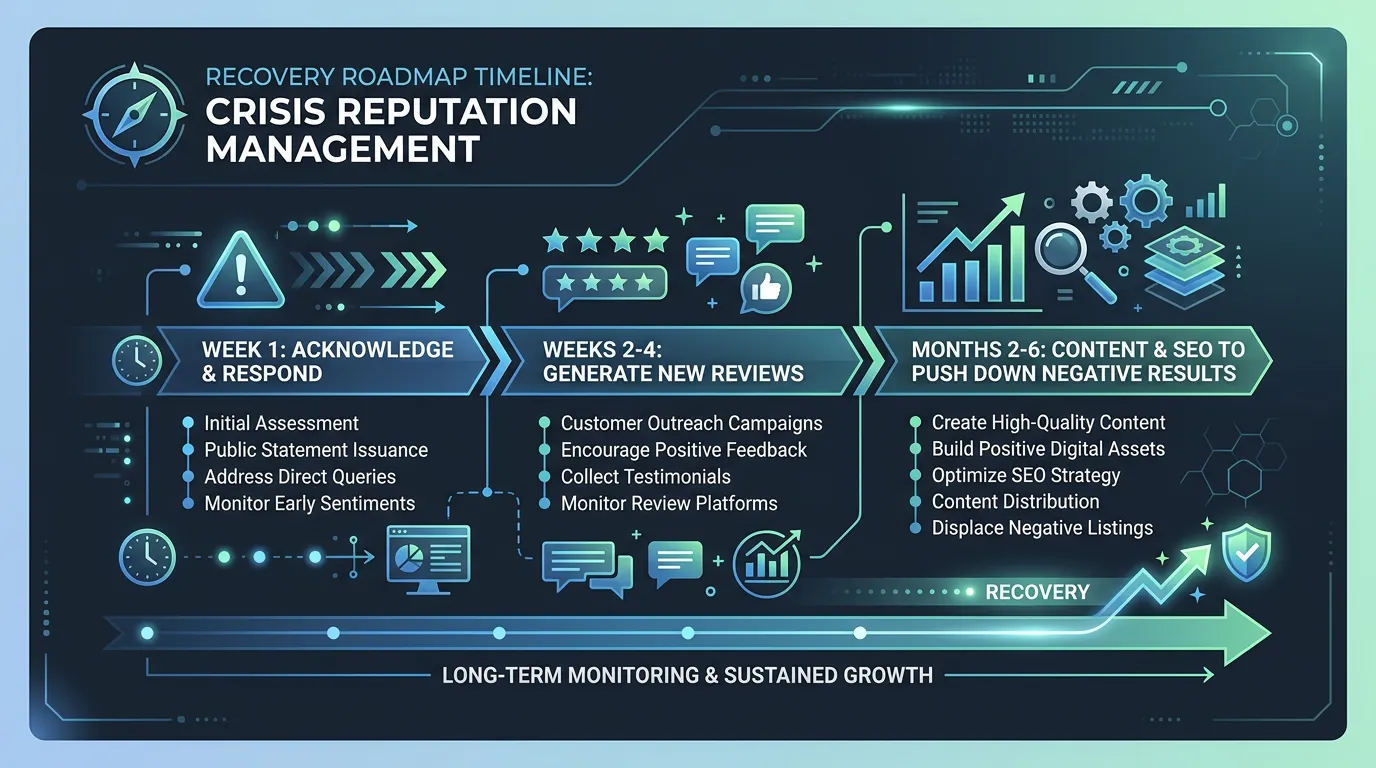
Realistic timeline: Triage and response inside 30 days. Operational stabilization 4 to 8 weeks. Visible average rating recovery in 4 to 9 months depending on existing review volume and monthly job count. Brand search results shift over 6 to 12 months.
How Many New Reviews It Takes to Move the Average
Reputation recovery timelines feel arbitrary until you do the arithmetic. This is plain math, not a forecast, and it explains why a big profile recovers so much slower than a small one.
| Where you are now | Target | New five star reviews needed | At 10 a month |
|---|---|---|---|
| 3.4 stars, 25 reviews | 4.2 | About 25 | 3 months |
| 3.9 stars, 40 reviews | 4.5 | About 48 | 5 months |
| 4.1 stars, 80 reviews | 4.5 | About 64 | 7 months |
| 3.6 stars, 150 reviews | 4.3 | About 150 | 15 months |
| 4.3 stars, 200 reviews | 4.6 | About 150 | 15 months |
The formula is review count times the gap you want to close, divided by five minus your target. It assumes every new review is five stars, which never happens, so treat these as the best case. It also assumes you have the job volume to earn ten reviews a month.
What We Look At When Reviews Cluster
A rating drop almost always has a start date. Finding it is the first day of the reputation recovery work, and it is usually easier than owners expect.
We line the negative reviews up by date, then lay other dates next to them. When a technician was hired or quit. When the dispatch software changed. When prices went up. When a subcontractor started. When a second location opened. The overlap is often obvious within an hour of looking at both lists side by side.
Then we read the text for the repeated word. Late. Mess. Billing. Callback. Four reviews saying nobody called me back is a phone problem, not a field problem, and it gets fixed at the front desk. Sending the crew to a customer service class would waste a month and change nothing.
Sometimes no cause turns up, and that is useful too. A cluster with no operational match is often one upset customer with several accounts, or a competitor. Those go into removal filings with the pattern documented, screenshots included, and dates lined up.
The First Two Weeks, When Panic Is Expensive
Almost every business that made its own reputation problem worse did it in the first fourteen days. These are the decisions that matter most.
Do this
- Fix the thing customers keep naming before anything else
- Answer the worst review first, not the easiest one
- Call the customers you can still reach by phone
- Send new review requests only to jobs from the last 90 days
- Write down the date each operational fix went in
Not this
- Do not buy reviews or hire anyone promising removals
- Do not blast five years of past customers in one week
- Do not screen customers so only the happy ones get asked
- Do not open a second profile to start with a clean slate
- Do not reply in public while you are still angry
Two Questions From Week One
Can we start a new profile and leave the old one behind?
The bad stretch was two years ago. Does it still matter?