Reputation Management
Review Response Protocols
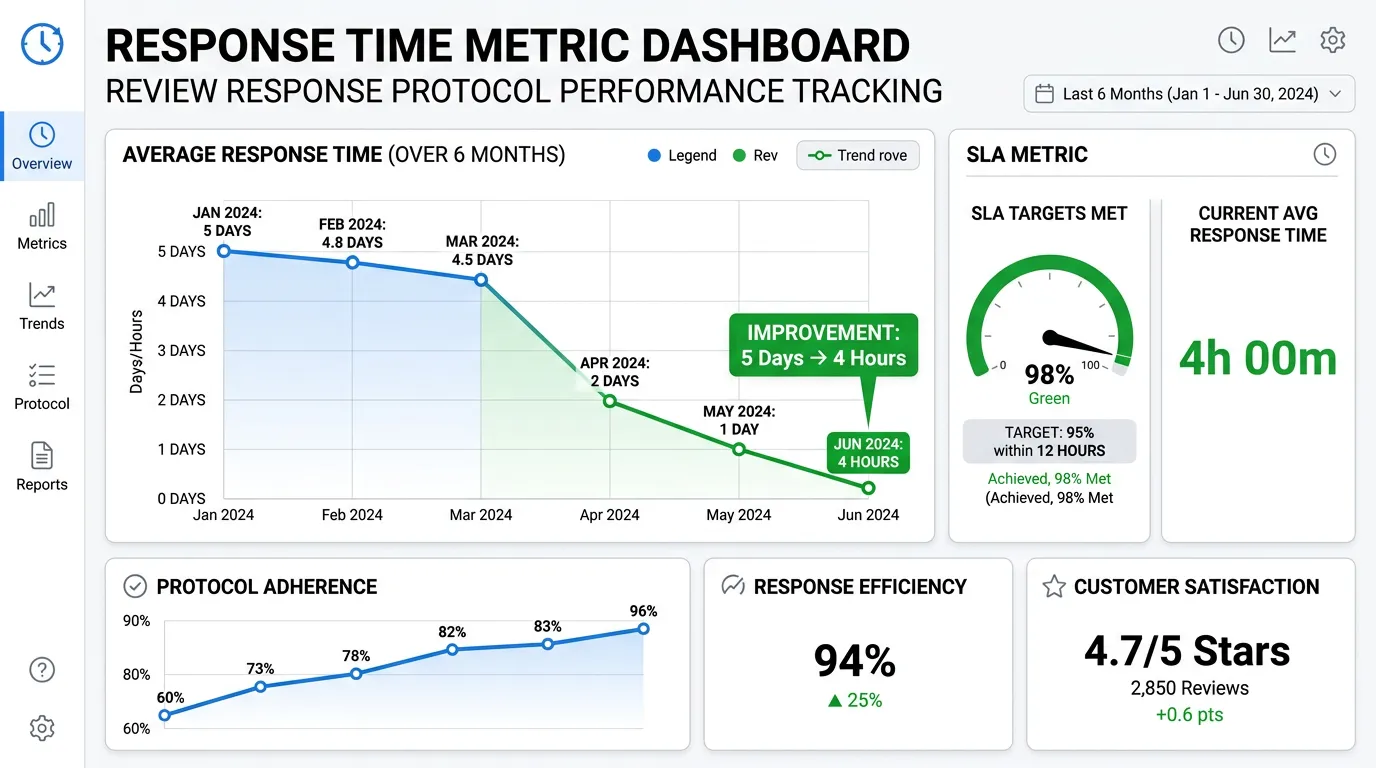
Responses are written for future readers, not for the reviewer
- Timeline
- Policy and templates complete in 3 weeks
Call (714) 823-3164 or ask a question. Clear recommendations, even if we never work together.
A review response protocol is a written standard for how a business replies to reviews. It sets who writes the reply, how fast, what tone, and what can never be said in public. It covers good, mixed, and bad reviews. It also sets compliance rules for regulated industries, where confirming that someone was a customer is itself a violation.
The problem
The instinct after a bad review is to defend yourself, and public arguments between a business and a customer are read by everyone who looks at your profile afterward. The other failure is silence. A profile with twelve unanswered negative reviews looks like a business that does not care. And in healthcare, the well meaning reply that says we are sorry your appointment ran long confirms a person was a patient, which is a privacy problem the practice does not need.
What it is
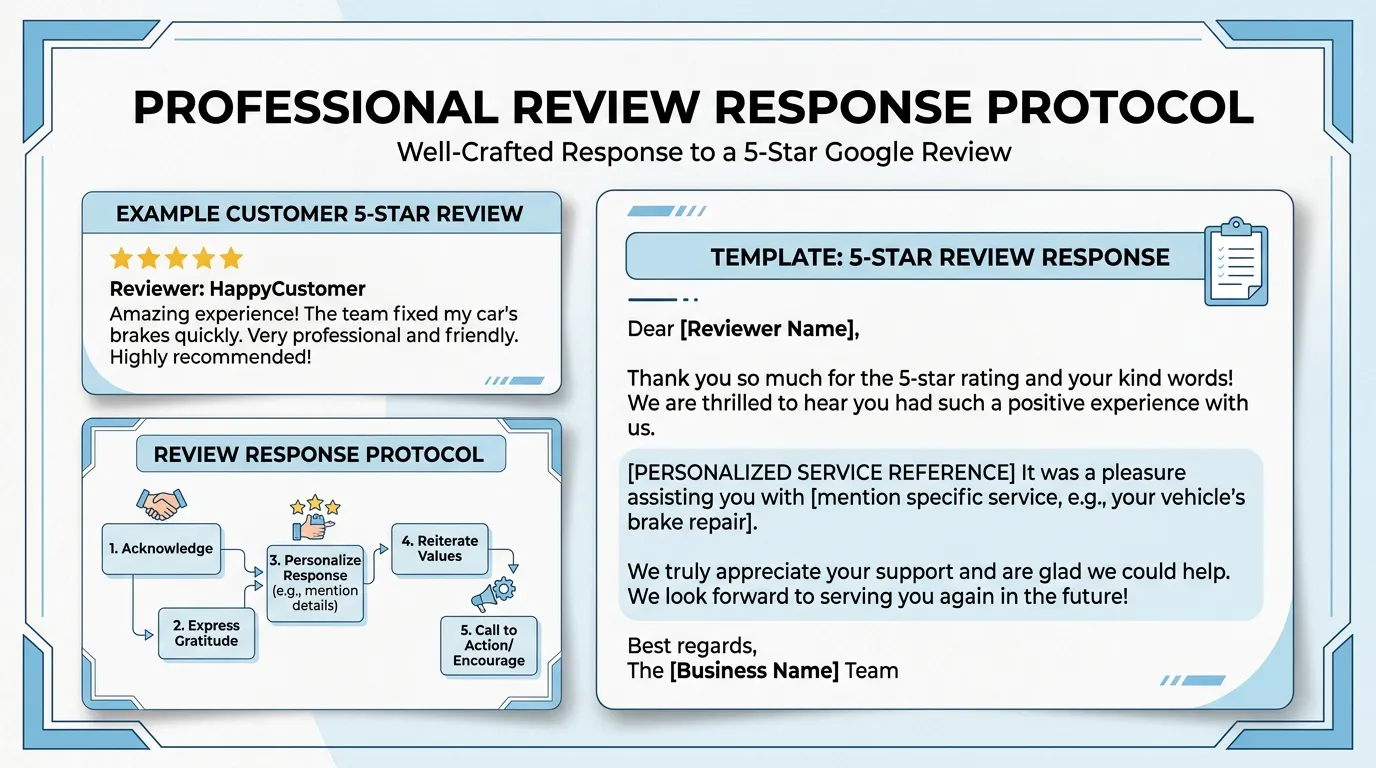
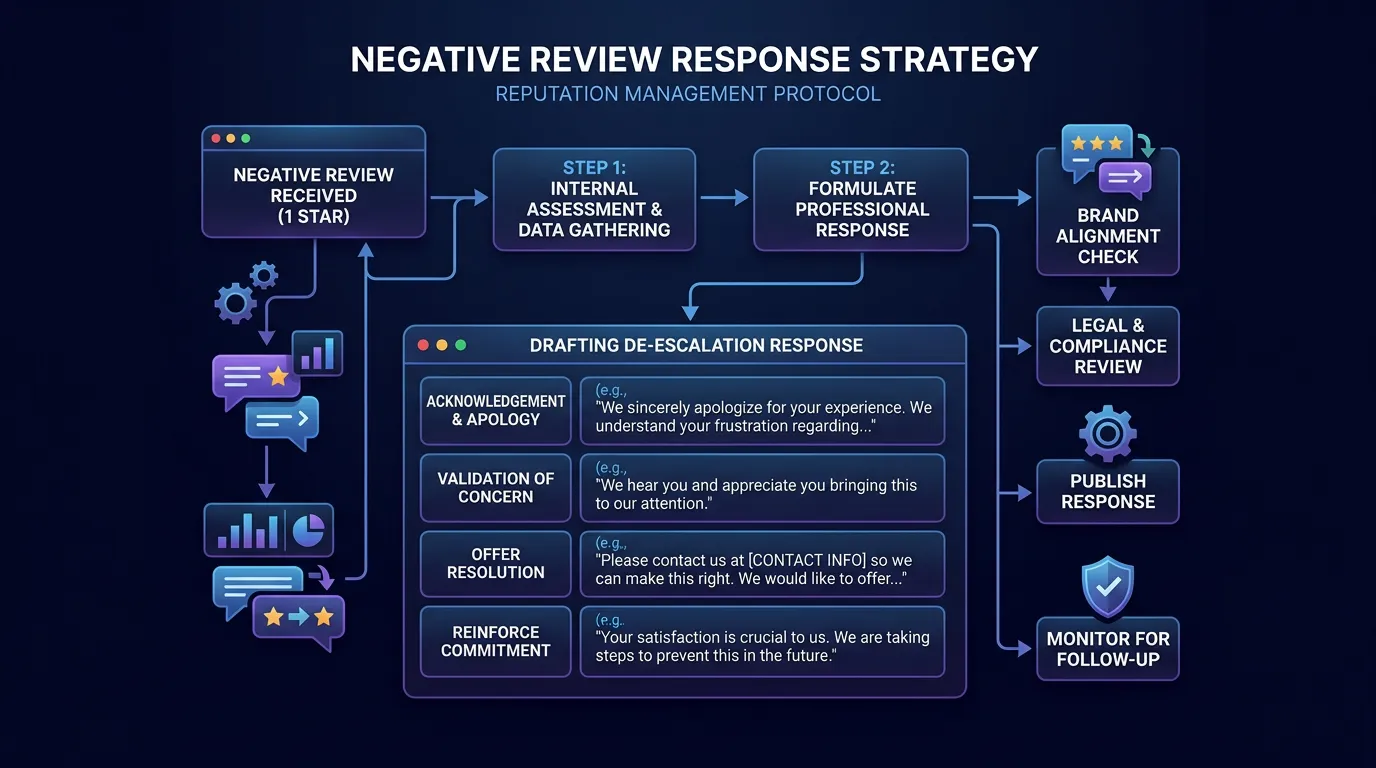
A protocol takes the emotion out by deciding the reply in advance. It sets time windows. Anything under four stars gets a reply within 24 to 48 business hours. Positives get one within a week. It sets ownership: who drafts, who approves, and who is never allowed to post a reply directly. It gives you templates with a set structure. You personalize each one instead of pasting it, since twenty identical replies look automated and hurt you. It sets a four part shape for negatives. Thank the person. Acknowledge the issue without admitting liability. State the correction. Then move it offline with a name and a direct number. And it lists the hard rules: no customer details, no diagnosis or treatment details, no calling the reviewer a liar, no case facts, and no offers of money in public.
Signs you need this
- Your negative reviews have no review response at all
- A past reply from your business argues with the customer in public
- Every review response on your profile says the same thing word for word
- Your practice replies to healthcare reviews with treatment details
- Nobody knows who is supposed to write review replies
What is included
- Written response policy naming owners, approvers, and time windows
- Template set for five star, four star, mixed, and one to two star reviews
- Personalization rules so replies never read as copy and paste
- Compliance language for healthcare, legal, and financial services
- Escalation path for reviews that allege injury, discrimination, or fraud
- Offline resolution script for the follow up phone call
- Guidance on when to request review removal instead of responding
- Quarterly review of published responses for tone drift
Our process
Read the back catalog
Week 1We read every existing review and response across platforms. Old responses that argue, blame, or reveal customer details get flagged, and where the platform allows editing, they get rewritten.
Write the policy
Week 1 to 2Who responds, in what window, with what approval. For most businesses one person owns responses and one approves negatives. The rule that matters most is that nobody replies to a one star review within the first hour.
Build the templates
Week 2 to 3Four base structures with variable sections. They are starting points, not scripts. Each one gets adapted with the specific detail from the review so the customer can tell a person read it.
Compliance pass
Week 3For medical, dental, chiropractic, therapy, legal, and financial clients, every template gets stripped of anything that confirms a relationship or references services provided. HIPAA fines for review responses are real and have been issued.
Run and refine
Every 3 monthsResponses go out on the standard. Quarterly we reread the last three months of published replies looking for tone drift, repetition, or anything that reads defensive, and adjust the templates.
Realistic timeline: Policy and templates complete in 3 weeks. Back catalog cleanup runs 2 to 4 weeks depending on review count. Ongoing responses run within the 24 to 48 hour standard from then on.
Rewriting a Reply That Made Things Worse
Here is a made up example of a common failure. A customer writes that the crew showed up three hours late and left a mess. The owner replies at nine at night: we arrived inside the window you agreed to, the crew swept the entire room, and our records show we called you twice.
Every word of that might be true. It still costs calls. It argues, it cites records like a court filing, and it puts the reader on the customer's side without meaning to. Nobody reading it stops to decide who was right. They picture themselves in that argument.
The rewrite is four sentences. Thank you for telling us. A three hour wait is not the standard we set, and I am sorry. I went back through that day's schedule with our dispatcher and made a change. Please call the office and ask for me directly so I can make it right.
What changed is small. No records. No defense. One apology, one action, one named person to call. The customer may never answer. The next fifty readers are the real audience.
What You Can Safely Say, by Industry
The rules for a plumber and the rules for a dental office are not the same. This is the short version of what goes in a compliance pass.
| Industry | Safe to say | Never say in public | Why it matters |
|---|---|---|---|
| Dental or medical | Thank you for the feedback, please call the office | Anything confirming a visit or treatment | Confirming a patient is a disclosure on its own |
| Law firm | General thanks and a direct phone number | Case facts, outcome, or fees | Confidentiality does not end at the review box |
| Home services | The correction you made and who to call | Customer name, address, or job price | You are handing a stranger private details |
| Senior care | Thanks for the feedback, invite a private call | A resident name or any health detail | Family reviews still involve protected information |
| Insurance or financial | An offer to review it privately | Accounts, products, or coverage held | Client data rules apply to public posts too |
When you are unsure, thank the reviewer, give a name and a number, and say nothing else in public. A short reply is never the thing that gets a business in trouble.
Rules for Whoever Hits Publish
These are the rules that go on the one page taped near the desk of the person who owns responses.
Do this
- Wait at least one hour after reading a one star review
- Read the reply out loud before you publish it
- Name a real person for the customer to call
- Keep it to four sentences or fewer
- Have a second person read anything under three stars
Not this
- Do not quote your records, notes, or call logs
- Do not mention refunds, discounts, or money at all
- Do not paste the same sentence on two reviews in a row
- Do not reply late at night or from a personal account
- Do not correct the customer's version of events in public
The reply is not a letter to the person who complained. It is a note to the next fifty people deciding whether to call you.
Who Drafts, Who Approves, Who Never Posts
Most bad replies come from unclear ownership, not bad writing. Three people can reach the profile, each assumes someone else has it, and the one who finally posts is the angriest.
The structure that holds up is simple. One person drafts every reply. One person approves anything under three stars before it goes live. Field staff never post, because the person named in a review should not be the one answering it. Everyone else keeps their login for emergencies only.
Then name a backup. Reviews do not pause for vacation, and a two week gap is visible on the profile forever. Write both names into the policy.