Reputation Management
Review Sentiment Tracking
Tags every review by theme, staff member, and service line
- Timeline
- Baseline tagging complete in 3 weeks
Call (714) 823-3164 or ask a question. Clear recommendations, even if we never work together.
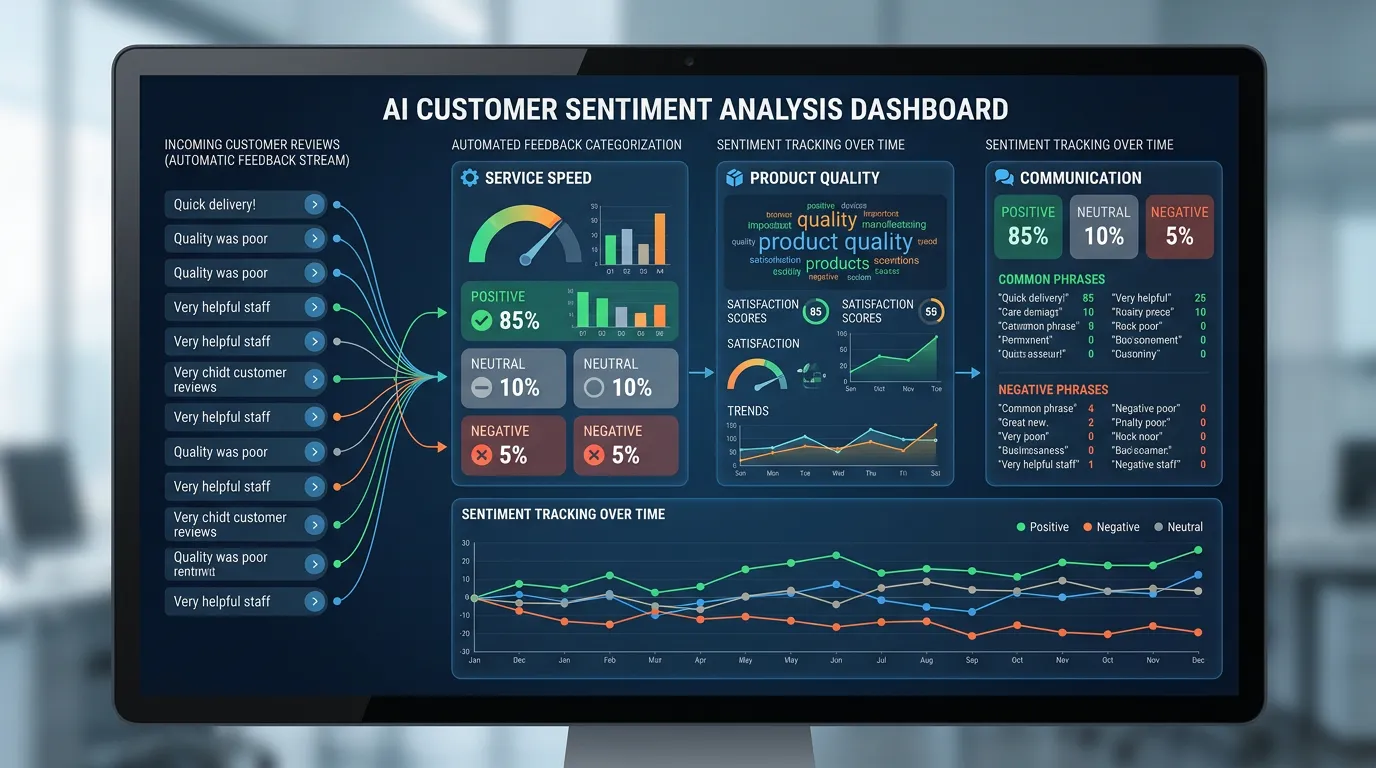
Sentiment tracking means tagging every review by theme and tone, then following those themes over time. It turns scattered feedback into real data. You can see what customers praise, what they complain about, which staff members get named, and whether a problem is growing or getting solved.
The problem
Reviews get read one at a time and reacted to individually. A late arrival complaint feels like bad luck. Four of them across two months is a dispatch problem, and nobody sees it because nobody is counting. The same blindness applies to the good news: if eleven reviews this quarter praise one technician by name, that is worth knowing for scheduling, training, and marketing. Without tagging, all of that information stays locked in a pile of text nobody analyzes.
What it is
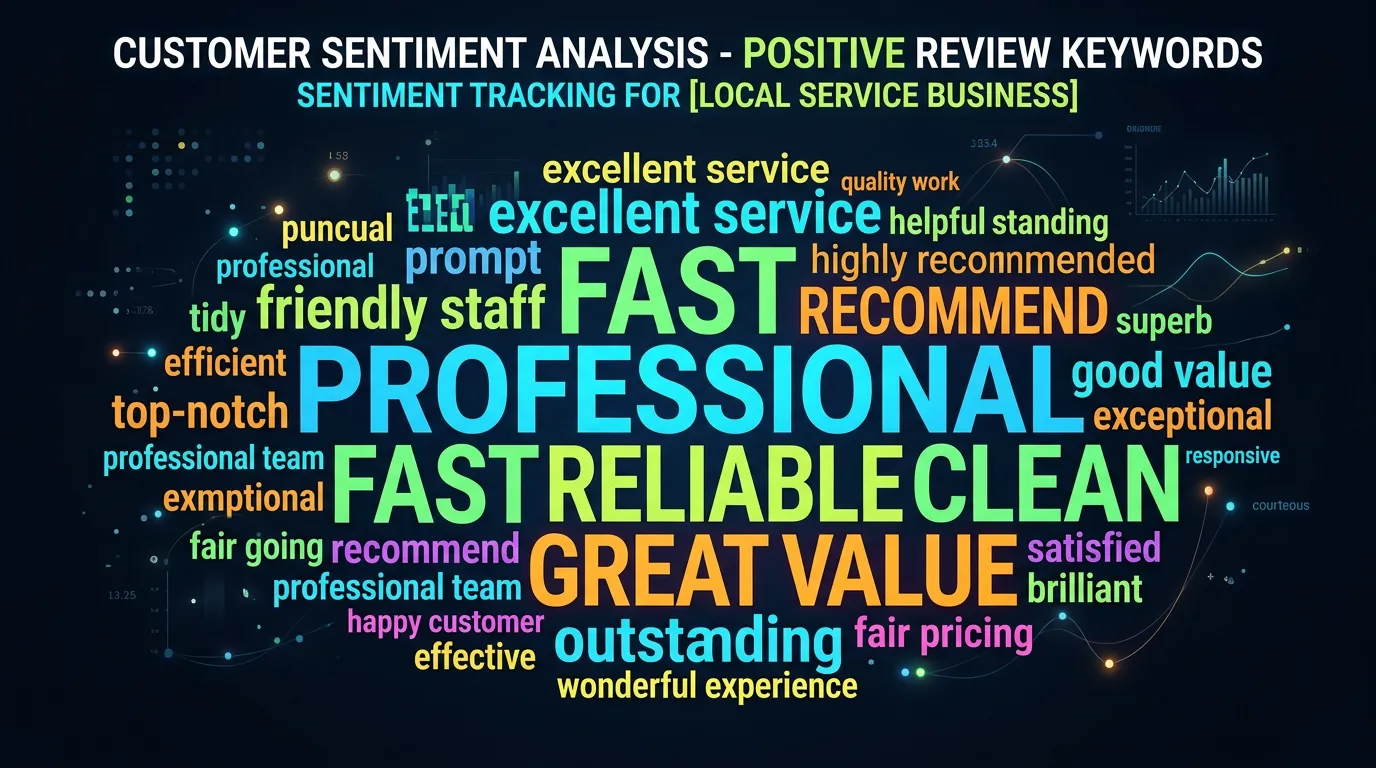
Every review gets tagged against a set of categories built for your business: timeliness, communication, price and value, quality of work, cleanliness, billing, scheduling, and staff members by name. Tone gets scored on top of the star rating. Plenty of four star reviews hide a real complaint, and some one star reviews are about something you cannot control. Those tags roll up into a monthly and quarterly view that shows which themes are rising and which are falling. When a theme crosses a set line, it goes to operations with the actual reviews attached. It does not go over as a vague note to improve customer service. The same data feeds marketing. What customers praise most often should be what your website says first.
Signs you need this
- The same complaint keeps appearing and nobody has counted how often
- You cannot tell whether service quality is improving or declining
- Your four star reviews contain complaints you never noticed
- One employee's name appears repeatedly and you are not sure in what tone
- Your website markets strengths that customers never actually mention
What is included
- Tagging taxonomy built for your service lines and staff structure
- Historical tagging of the last 12 to 24 months of reviews for a baseline
- Ongoing tagging of every new review across all platforms
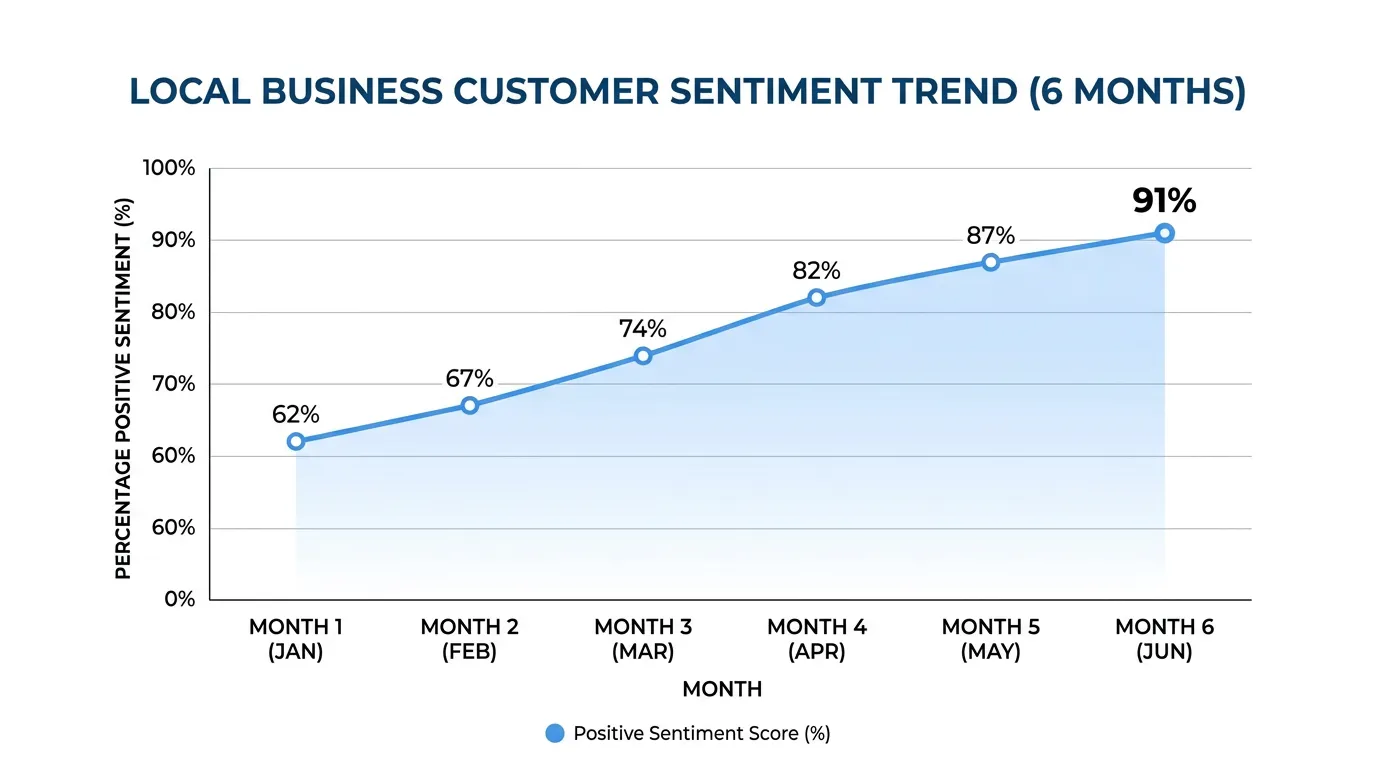
- Theme trend charts showing rising and falling issues by month
- Staff level mention tracking, positive and negative
- Four and five star reviews scanned for hidden complaints
- Quarterly operations report with the specific reviews behind each theme
- Marketing input list showing the strengths customers name most
Our process
Build the taxonomy
Week 1We create the tag list from your actual service lines and the complaint types already present in your reviews. Generic taxonomies produce generic insight, so the categories come from your business, not a template.
Tag the history
Week 1 to 3The last 12 to 24 months get tagged so month one has a real baseline. This alone usually surfaces two or three patterns the owner did not know about, often tied to a specific period or person.
Set thresholds
Week 3We agree on what triggers escalation: three mentions of the same issue in a month, any mention of safety or damage, or any negative mention of a specific employee. Thresholds make the data actionable instead of interesting.
Tag and report monthly
Ongoing, monthlyNew reviews get tagged as they arrive. The monthly report shows theme counts against the prior three months so a rise is visible while it is still small enough to fix cheaply.
Quarterly operations review
Every 3 monthsOnce a quarter we sit with you and go through the trends with the actual reviews attached. The output is a short list of operational changes, and next quarter shows whether they worked.
Realistic timeline: Baseline tagging complete in 3 weeks. First trend report at day 30. Trends become reliable after three months of data. Operational changes usually show up in review themes within 60 to 90 days of implementation.
A Working Tag List and What Each One Triggers
Tags without thresholds produce a report that is interesting and changes nothing. Here is what a home services tag list looks like once the triggers are attached.
| Tag | What lands here | Escalates at | Goes to |
|---|---|---|---|
| Timeliness | Late, no show, wide arrival windows | 3 in a month | Dispatch |
| Communication | No callback, no update, unreturned voicemail | 3 in a month | Front desk |
| Price and value | Surprise charges, quote changed on site | 2 in a month | Estimating |
| Quality of work | Rework, leaks, a second visit needed | Any mention | Service manager |
| Cleanliness | Mess left behind, damage, boot prints | 2 in a month | Crew training |
| Billing | Wrong invoice, card charged twice | Any mention | Office manager |
| Named staff | A person named, good or bad | Any mention | Owner |
The thresholds are the part people skip. They are what turns a pile of reviews into a short list of things somebody has to fix this month.
Four Reviews, One Dispatch Problem
Here is how tagging pays for itself. Picture an HVAC company with four reviews across nine weeks that all mention waiting around. Read one at a time, spread over two months, each one looks like a bad day.
Tagged and lined up, they stop looking random. All four land on a Tuesday or a Wednesday. All four are afternoon appointments. All four follow a morning install that ran long. That is not four unlucky customers. That is a schedule that books installs and service calls off the same crew.
The fix is a scheduling change, not a talk about customer service. And the check comes next quarter. If the timeliness tag count drops, the change worked. If it does not, the change was wrong and you find out in ninety days instead of finding out from your rating a year later.
From a Review to a Fixed Problem
The loop is short on purpose. Most sentiment work fails at the fourth step, where the finding never reaches the person who can act on it.
Sending the reviews themselves, not a summary, is what makes the conversation short. Nobody argues with four customers saying the same thing.
Two Questions About the Data
Do four star reviews get tagged too?
What do we do with reviews we think are unfair?