Email and Marketing Automation
Lead Nurture Email Sequences
Built for services people research for weeks, not emergency calls
- Timeline
- Five to six weeks to research and write a sequence
Call (714) 823-3164 or ask a question. Clear recommendations, even if we never work together.
A nurture sequence is a series of emails sent over days or weeks to a lead who is not ready to buy yet. Each message answers a question, handles an objection, or shows proof. That keeps your business present and believable until the person is ready to move forward.
The problem
Some services are never bought on the first visit. A kitchen remodel gets researched for four months. A family looking at assisted living talks to six providers over a year. An estate plan sits on someone's list until something forces it. These leads arrive, get one sales call, and then hear nothing, so when they finally decide they go with whoever was in front of them that week. Businesses in these categories often conclude their leads are low quality, when the truth is the leads were fine and the follow up ended on day two.
What it is
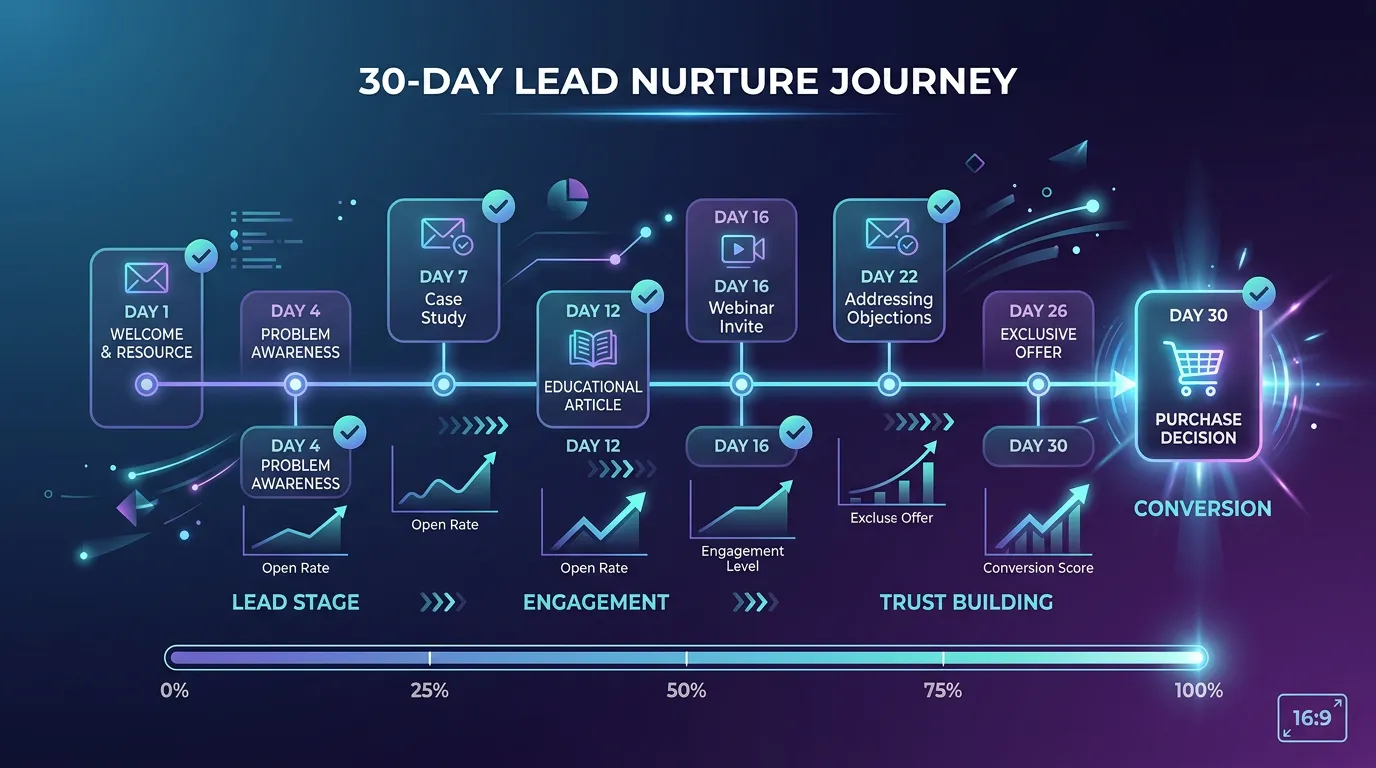
A nurture sequence is written around the objections that really stop your buyers. We gather those from your own sales calls instead of making them up. For remodeling, that usually means cost uncertainty, fear of a job dragging on, and worry about living through construction. Each email takes one of those and answers it honestly, with a real project timeline, a real cost range, or photos from a finished job. The messages are spaced so it feels like a helpful contact rather than pressure: day one, day three, day seven, then weekly. The sequence stays useful even if the person never buys, which is what makes it acceptable to receive. It always includes an easy way to speed things up. Some readers decide on email two, and they should not have to wait for email six to learn how to start.
Signs you need this
- Leads say they are still thinking about it and you never hear back
- Your service takes weeks or months to decide on and follow up stops in days
- Sales calls repeat the same five questions every time
- Old leads hire competitors months later without ever telling you
- You have leads in the CRM from last year that nobody has contacted since
What is included
- Objection inventory built from your recorded sales calls
- Five to eight email sequence written for one specific service line
- One objection or question addressed per email with real proof
- Case examples and photos from completed jobs where available
- Send timing schedule based on your actual decision cycle length
- Branching so engaged readers get a faster path to booking
- Re engagement message for leads who go silent through the sequence
- Handoff rules telling your sales team when to call personally
Our process
Objection research
Week 1 to 2We listen to recorded sales calls and interview whoever handles quotes, then write down the questions that come up over and over. This is the raw material for the whole sequence, and it beats any template.
Decision cycle mapping
Week 2We look at how long your leads actually take from first contact to signed job. A three week cycle and a six month cycle need very different pacing, and guessing this wrong makes the sequence either pushy or forgotten.
Writing
Week 3 to 5Each email gets drafted around one objection, with a specific piece of proof attached: a real timeline, a real cost range, a completed job with photos, or a customer who had the same worry.
Branch and handoff design
Week 5Readers who click, reply, or visit the pricing page get flagged for a personal call. Everyone else continues on the slower path. The sequence exists to create the moment for a human conversation, not to replace one.
Launch and refine
Week 6 onwardAfter 60 days we look at where readers stop opening and which email produces the most replies. Weak emails get rewritten, and the strongest one usually gets moved earlier in the sequence.
Realistic timeline: Five to six weeks to research and write a sequence. Because it runs over the full decision cycle, meaningful results take one to two cycles, which is 60 to 120 days for remodeling and legal, and can be longer for senior care.
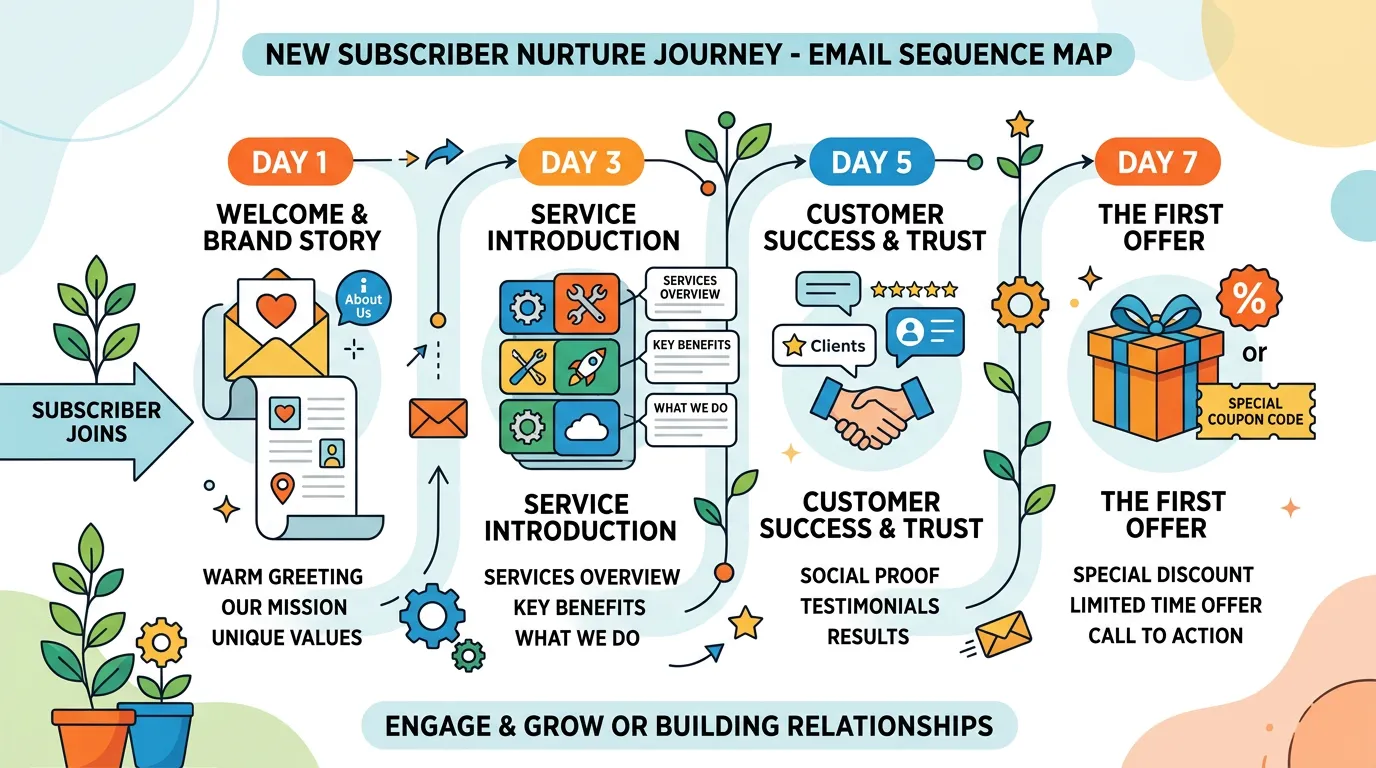
A Six Email Sequence for a Kitchen Remodel Lead
This is what one objection per email looks like in practice, with the proof each message has to carry.
| Day | What it covers | The worry it answers | Proof included |
|---|---|---|---|
| Day 1 | What happens next | Am I about to get sold? | The steps, written out |
| Day 3 | What kitchens cost here | The price is a mystery | Three ranges by scope |
| Day 7 | How long the kitchen is down | We cannot live like that | A week by week schedule |
| Day 14 | Who is in my house | Strangers with a key | Crew photos and screening |
| Day 21 | What goes wrong, and who pays | Surprise change orders | Your actual change order terms |
| Day 30 | When to start for a spring finish | Am I already too late? | Current lead time in weeks |
The same shape works for roofing, solar, and estate planning. The worries change, the structure does not.
Where the Content Comes From
The best nurture emails are closer to transcripts than to copywriting. Sit with whoever runs your estimates, record ten calls, and write down every question in the customer's own words.
You will hear the same six questions in nine of those ten calls. Those six are your sequence. Anything that came up in a meeting but never on a call does not make the list.
Use their phrasing in the subject line. Homeowners do not ask about scope creep. They ask whether the price is going to change halfway through the job.
One warning. If your team cannot answer a question honestly in writing, that is a business problem, not a writing problem. Fix the answer before you send the email.
Pacing a Sequence Over a Long Decision
Most sequences fail on timing rather than words. Too fast reads as pressure. Too slow and you are simply forgotten.
Do this
- Match the gaps to your real cycle, tighter early and wider after week three
- Send from a person's name and address, not from info at your domain
- Keep each email under 200 words with one clear link
- Move anyone who clicks the pricing page onto a faster track
- End the sequence honestly, with a note that you will stop emailing
Not this
- Do not send on a holiday weekend, since that buys you a delete
- Do not repeat the same ask six times in new wrapping
- Do not attach a twelve page PDF, because it trips filters and nobody opens it
- Do not restart the sequence when an old lead fills out your form again
- Do not leave a lead in nurture after a real sales conversation has happened
Nurture Questions From Long Cycle Businesses
Can one sequence cover two services with different cycles?
What do we do with leads who never open anything?