
Foundational Guides
What a Digital Marketing Strategy Costs, and What Moves the Price
The two budgets, the four pricing models, and the things that decide whether your quote is two thousand dollars or twenty.
Call (714) 823-3164 or ask a question. Clear recommendations, even if we never work together.
There are two prices, and mixing them up causes most of the confusion. The plan itself is usually a one time fee, often a few thousand dollars for a small service business. The marketing strategy work the plan directs is a separate monthly budget. What moves the fee is how many locations, service lines, and channels have to be audited first.
Jump to a section
- Two Budgets People Keep Mixing Up
- The Four Ways This Gets Priced
- What Pushes a Quote Up
- What Pulls a Quote Down
- What the Free Route Really Costs
- A Simple Way to Size the Fee
- What You Will See Quoted, by Model
- Get These Named in the Price Before You Sign
- Why Two Quotes for the Same Plan Differ by Four Times
- Money Questions That Come Up Late
- Questions
Two Budgets People Keep Mixing Up
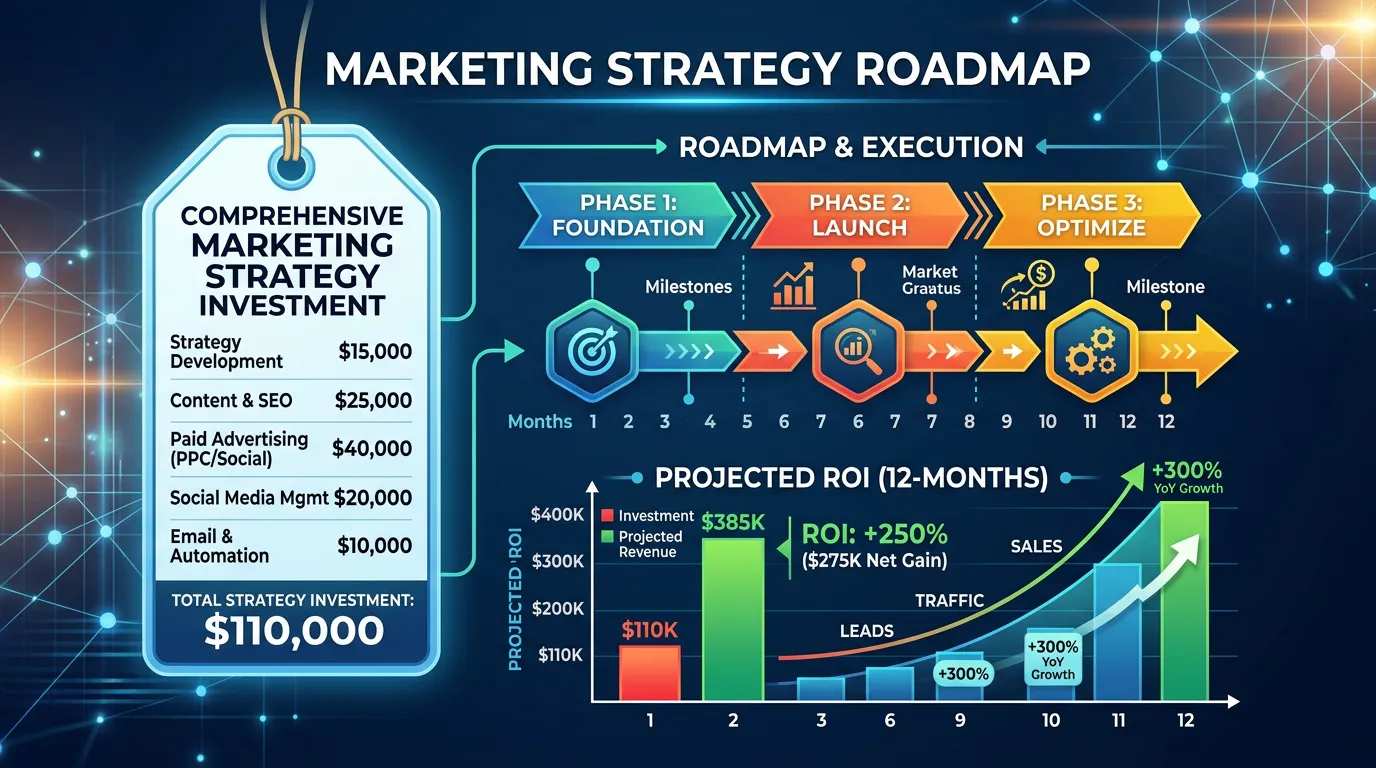
Ask what a marketing strategy costs and you get numbers that sit five times apart, because two different things are being priced. The first is the thinking. That means an audit of what you already have, a look at your real numbers, and a written set of decisions. It is usually a one time fee. The second is the doing. That means ad spend, a website, content, software, and whoever runs each piece every month. It is an ongoing budget, and over a year it is almost always the larger of the two. Owners get burned when they compare the two by accident. A four thousand dollar plan looks expensive next to a fifteen hundred dollar monthly retainer, until you notice the retainer is eighteen thousand dollars a year and contains no decisions at all. It runs the other way too. A cheap plan that sends you into three channels you cannot afford to fund is not cheap. Judge the fee against the money it will direct, not against another fee.
The Four Ways This Gets Priced
Hourly is the simplest. An independent consultant quotes a rate, commonly a hundred to three hundred dollars an hour, and you buy as many hours as you want. It works well for one decision, like whether to rebuild the site or repair it. It works badly for a full plan, because nobody can tell you in advance how many hours an audit will take. Fixed fee is the usual shape for a written strategy. You agree on a scope and a price up front, and the vendor carries the risk of it running long. For a single location service business you will see quotes from about two thousand to ten thousand dollars. Companies with several locations or several service lines run higher. A monthly arrangement puts an experienced marketing lead inside your business for a few days a month, often in the range of two thousand to eight thousand dollars a month. That suits a company that needs decisions all year, not once. The fourth way is free, folded into a retainer. The plan costs nothing and the agency earns it back by doing the marketing strategy work. There is nothing wrong with that, as long as you remember the plan will recommend what that company sells. Get two of them from firms that sell different things. The gap between the two is the interesting part.
- Hourly: best for one narrow decision
- Fixed fee: the common shape for a full written plan
- Monthly retainer for a marketing lead: decisions all year
- Free with execution: no fee, but the plan has an author with a stake
What Pushes a Quote Up
A quote is mostly a guess about hours, so anything that adds hours adds dollars. Locations come first. Two branches are not twice the marketing strategy work of one, but they are close, because each market has its own competitors, its own search results, and its own budget argument. Service lines are second. A company selling one thing needs one channel plan. A company selling repair, installation, and maintenance contracts needs three, and they compete with each other for the same money. Existing channels are third. Every account already running has to be opened, read, and judged. Four live channels take a week longer to audit than one. Broken measurement is fourth and it surprises people. If the analytics were never set up properly, or forms post to a page nobody tracks, the numbers cannot be trusted, and somebody has to fix that before the plan means anything. Fifth is the number of people who have to agree. Two owners with different opinions is one thing. A franchise with brand rules and a corporate marketing fund is another.
- More than one location or market
- Several service lines pulling at the same budget
- Four or more channels already running
- Tracking that has to be rebuilt before the data means anything
- Franchise rules, brand approvals, or several decision makers
- A rushed timeline, or custom work like competitor mystery shopping
What Pulls a Quote Down
You control more of this price than you think. Hand over clean numbers on day one. If you can state your average job value, your close rate, and where your last hundred customers came from without anyone digging, you have removed the slowest part of the job. Give account access early. A week spent waiting for a login to an old ad account is a week somebody is billing for. Narrow the question. A plan that answers where should our next ten thousand dollars go is far cheaper than a plan that reviews everything you have ever done. Take a phased scope. Buy the audit first, read it, then decide whether you want the full roadmap. Plenty of firms will split it that way if you ask, and some owners find the audit answers the question on its own. Book in your quiet season. A firm with an open calendar in February is easier to negotiate with than one turning work away in May. Last, do the customer interviews yourself. Five recorded calls with people who hired you recently are worth more than most research, and you are the only one who can make those calls without paying for them.
What the Free Route Really Costs
Free plans are worth reading. They are just not free. A proposal from an agency is a sales document written by someone with an interest in the answer, and that shows up as recommendations that match what that company happens to sell. A firm that mostly sells ads will find an ads problem. This is not dishonesty, it is a blind spot, and it is the reason two free proposals are more useful than one. Templates are the other free option. A plan template gives you the shape of a document without any of the decisions, and the decisions are the whole product. Then there is doing it yourself, which is free the way rebuilding your own transmission is free. Be honest about the hours. Pulling numbers, auditing your own site, checking what competitors show, and writing the thing is a realistic fifteen to twenty five hours for most owners, spread over evenings. Put your own hourly value on that time and compare it with a quote. For some owners the do it yourself version is genuinely the right call. For others it is the most expensive plan on the table, because it takes four months and then sits unfinished.
A Simple Way to Size the Fee
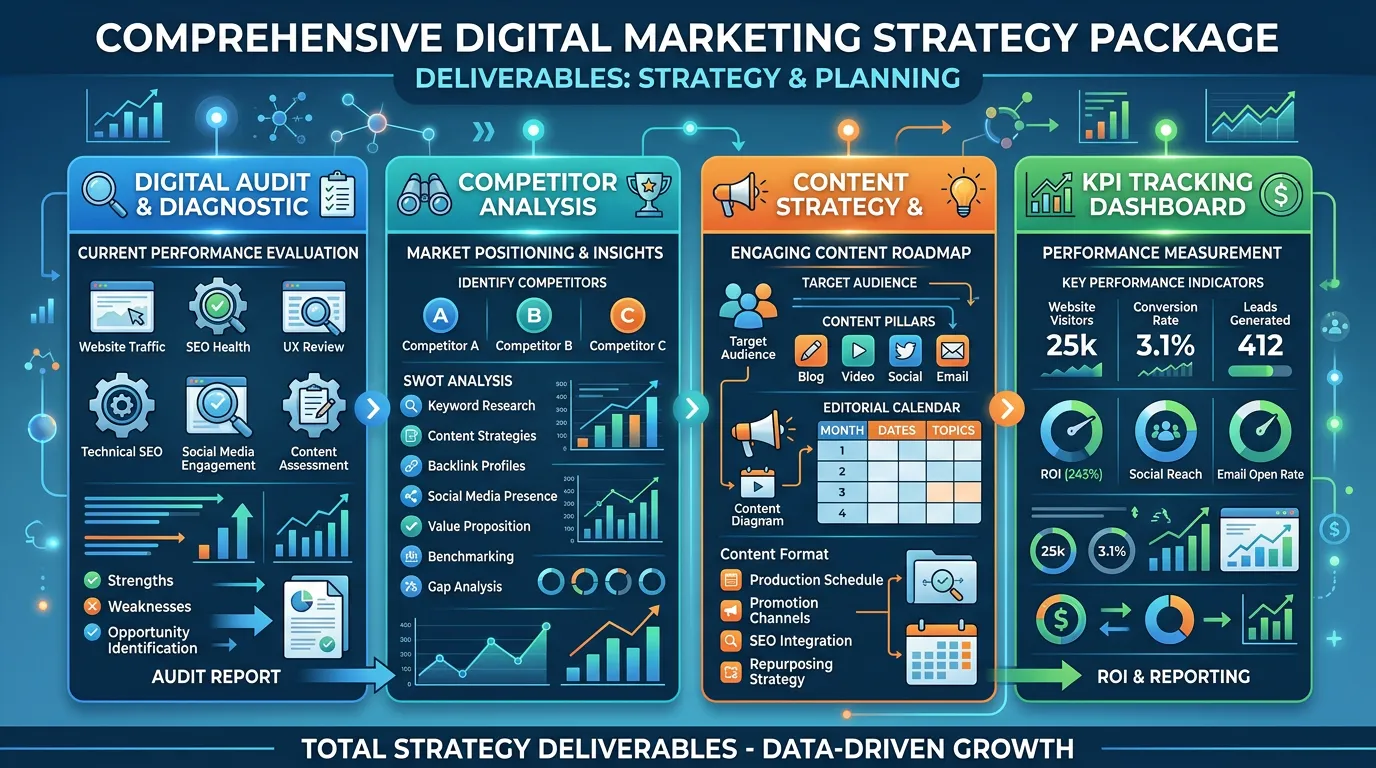
Two rules of thumb keep this sane. First, the fee for the thinking should stay smaller than one or two months of the spending it directs. If you spend five thousand dollars a month across channels, a plan somewhere in the low thousands is in proportion. If you spend eight hundred dollars a month, almost any paid plan is out of proportion, and the better move is to do the free basics well and revisit in a year. Second, work out how many jobs the plan has to influence to pay for itself. Take a hypothetical roofing company where the average job brings in nine thousand dollars and the margin is thirty percent. That is about two thousand seven hundred dollars of gross profit per job. A four thousand dollar plan pays for itself if it causes roughly one and a half extra jobs over a year, or if it stops one channel that was burning four hundred dollars a month for nothing. Written that way, the question stops being whether the fee is big. It becomes whether the plan is likely to change any decision. If you already know exactly what you are doing next quarter and just need it executed, do not buy a plan. Buy the execution.
What You Will See Quoted, by Model
These are ranges you will run into when you call around, not quotes. Every market is different and every scope is different.
| Model | Common range | What you get | Best when |
|---|---|---|---|
| Hourly consulting | 100 to 300 an hour | Answers to specific questions | One decision, not a full plan |
| Audit only | 750 to 3,000 one time | A findings list, no roadmap | You suspect something is broken |
| Fixed fee strategy | 2,000 to 10,000 one time | Audit, channel plan, roadmap | You are about to commit real money |
| Multi location strategy | 10,000 and up | A plan per market and shared budget rules | Three or more locations |
| Marketing lead by the month | 2,000 to 8,000 a month | Ongoing decisions and oversight | You need judgement all year |
| Free with a retainer | No fee up front | A plan built around one vendor | You already trust that vendor |
Ranges move with your market, the scope, and how much digging your data needs.
Get These Named in the Price Before You Sign
Two quotes can look alike and cover very different work. Ask for each of these in writing and the cheaper one often stops being cheaper.
Which accounts get audited
Site, analytics, ads, profile, email.
How many months the roadmap covers
And how detailed quarter one is.
Whether a budget table is included
Split by channel, with a test reserve.
How many meetings you get
Discovery, walkthrough, and after.
Who owns the finished document
You should, in a file you can edit.
What happens if the data is a mess
Rebuilding tracking is often extra.
How many rounds of edits are covered
Two is normal, open ended is not.
Whether the fee credits toward work
Common, but only if it is written down.
Why Two Quotes for the Same Plan Differ by Four Times
Most of the gap is scope you cannot see on the cover page. One firm reads your analytics and writes a plan. The other calls your three biggest competitors as a shopper, listens to a month of your recorded calls, and rebuilds your tracking before it trusts a single number. Both documents get called a marketing strategy.
The second gap is who does the marketing strategy work. Someone who has made these decisions for twenty years is expensive by the hour and often cheaper by the project, because the audit takes them two days instead of two weeks. A low quote sometimes means a junior person learning on your money.
The third gap is what happens after delivery. A plan with a live walkthrough, a check in a month later, and a file you can edit costs more than a PDF landing in your inbox. That difference earns its keep. Plans usually fail in the first month on access and ownership, not on the thinking.
Ask each firm to describe the marketing strategy work in hours and to say who does each part. The one that cannot answer is guessing, and you will pay for that guess either way.
Money Questions That Come Up Late
Is a cheaper plan from a smaller firm worse?
Should I pay for a second opinion on a plan I already have?
What if we cannot afford a plan at all right now?
Would rather we handled it?
This article covers how to do the work yourself. If you would rather have it done for you, that is what our digital marketing strategy service is.
Digital Marketing Strategy
Frequently asked questions
Is paying for a marketing strategy worth it for a small business?
What is a fair hourly rate for a marketing consultant?
Do agencies charge for a marketing strategy if I hire them for the work?
How long does strategy work usually take?
Can I buy a plan for one channel instead of everything?
Sources
- Google Search Central: Do you need an SEO?(opens in a new tab) Google's list of questions to ask before hiring anyone for search work, which is the same kind of questioning that separates two quotes with the same price.
- Google Business Profile Help: Add your business to Google(opens in a new tab) The free floor under every quote: claiming and completing a Google Business Profile costs nothing, which is the honest first step when a paid plan is out of proportion to the budget.