Video Marketing
Video Marketing for Local Businesses
Built for a service area, not for a national audience
- Timeline
- Six to eight weeks from planning to first videos live
Call (714) 823-3164 or ask a question. Clear recommendations, even if we never work together.
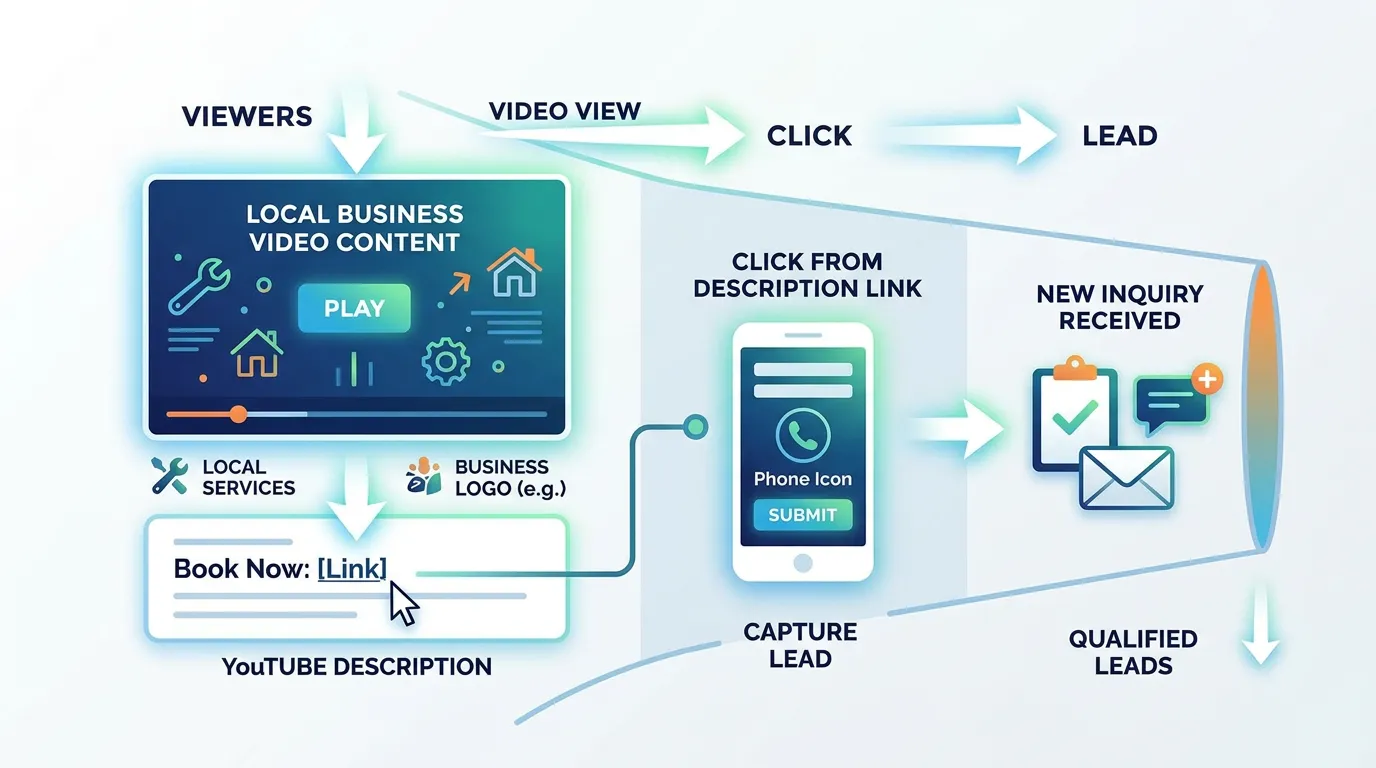
Video marketing for local businesses is video built around a service area and a phone call, not a national audience. The goal is not views. It is showing a nearby customer what your work looks like, who will be at their door, and why the price is what it is. That all happens before they decide who to call.
The problem
Almost every guide to video marketing was written for brands selling nationally. It talks about audience growth, follower counts, and going viral. A pest control company in Chino does not need a million views. It needs 400 households within eight miles to recognize the name and feel comfortable letting a technician into the house. Advice built for the wrong scale sends local owners chasing follower counts, producing content for people who will never buy, and concluding video failed when the actual problem was that nobody defined what winning looked like locally.
What it is
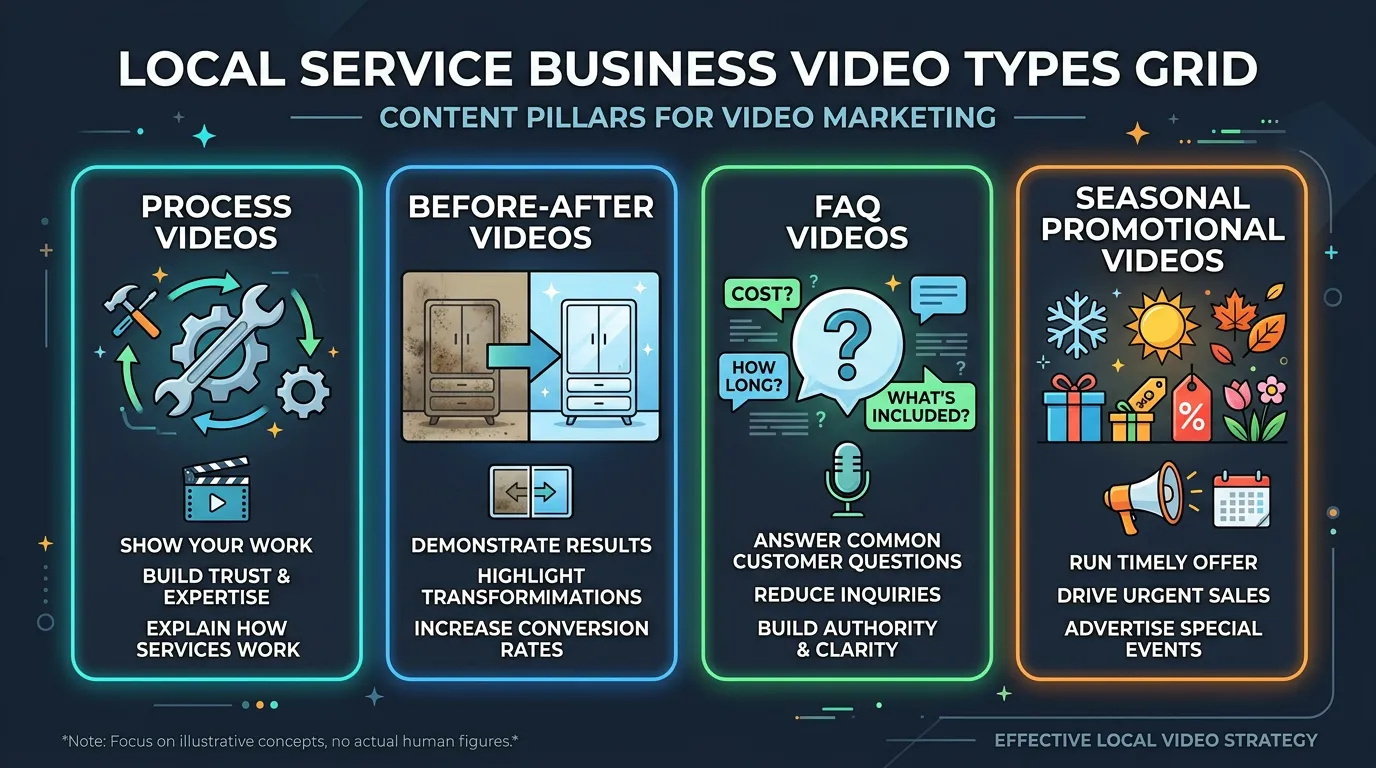
Local video marketing works from a short list. Most local service businesses need a company introduction that shows the owner and the crew. Then one explainer per main service, two or three customer stories filmed nearby, before and after job footage, and a set of short vertical clips. Those go where a local buyer already looks: the matching service page, the Google Business Profile, YouTube for the how to searches, and ads aimed at your zip codes. Success shows up in three ways. Calls get easier. Estimates close faster because people already saw the work. And fewer callers ask the questions the videos answer.
Signs you need this
- Customers ask the same three questions on every estimate call
- You compete against national franchises with slick advertising
- Your reviews mention trust and professionalism, and nothing online shows it
- You have no video anywhere: no site, no profile, no social
- Your sales rely on an in person meeting to build confidence
What is included
- Minimum viable video set defined for your specific trade
- Company and crew introduction filmed at your shop or yard
- One service explainer for each of your main revenue services
- Two to three customer stories filmed at real local job sites
- Before and after footage from jobs in the neighborhoods you target
- Clips formatted for Google Business Profile within Google's limits
- Vertical clips for social and a horizontal cut for the website
- Geographic targeting plan for any paid video placement
- Seasonal production plan matched to your busy and slow months
- Reporting on calls, estimate close rate, and branded search volume
Our process
Trade Specific Planning
Week 1 to 2A roofing company, a dental practice, and a home care agency need entirely different videos. We start from what your buyers fear, which for care is trust, for trades is being overcharged, and for medical is discomfort.
Local Proof Gathering
Week 2 to 4We identify customers willing to be filmed, ideally in neighborhoods you want more work in. A homeowner in the same city carries more weight with a local buyer than a polished testimonial from anywhere.
One Day Production
Week 4 to 6We film the introduction, the explainers, and one or two customer stories in a single organized day, then capture job footage on a separate shorter visit while a crew is working.
Local Placement
Week 7 to 8Videos go where local buyers actually look: matching service pages, the Google Business Profile, YouTube for search questions, and paid placements targeted to your service zip codes rather than a whole metro.
Seasonal Refresh
Twice per yearWe produce ahead of your season, not during it. Filming AC content in June is a scheduling fight nobody wins. New footage gets captured in the slow months and published when demand rises.
Realistic timeline: Six to eight weeks from planning to first videos live. Effects on estimate close rate show within a quarter. Recognition in your service area builds over six to twelve months.
Two Videos Almost Every Local Business Skips
The first is the video about what happens when someone calls you. It sounds boring and it is one of the most watched pieces on a local site. Show the phone being answered, the questions you ask, how the arrival window works, what the technician does at the door, and how payment is handled. A nervous homeowner is not shopping for skill at that point. They are trying to picture a stranger in their hallway.
The second is the video about price. Most owners avoid it because they think it invites arguments. It does the opposite. Explain the range for one common job, then explain the three things that move a quote up or down: access, age of the equipment, and what gets found once a panel is off.
That one video does two jobs. It stops the sticker shock that kills estimates, and it filters out people shopping only on price before you drive across town. Both of these can be filmed in under an hour with no set and no script.
What Local Buyers Fear, by Type of Business
The video that works is the one that answers the fear, not the one that lists services. The fear is different in every trade.
| Type of business | What the buyer is afraid of | The video that answers it | Where it works hardest |
|---|---|---|---|
| HVAC and plumbing | Being pushed into a full replacement | A repair versus replace walkthrough | Service page and YouTube |
| Roofing | A crew that leaves the job half done | Day by day footage of one tear off | Service page and paid ads |
| In home care | A stranger alone with a parent | Caregiver introductions and how you screen | Website and Google profile |
| Dental and medical | Pain and a surprise bill | A calm walk through the visit and the cost | Procedure page and ads |
| Auto body | Paint that never matches | Before and after panels in daylight | Google profile and short form |
Pick the fear your reviews mention most. If several reviews thank you for explaining things, your buyers are afraid of being fooled, and that tells you what to film first.
A Year of Local Video, Planned Around Your Season
Seasonal businesses film at the wrong time of year. Filming AC content in July is a scheduling fight nobody wins.
Customer stories are easiest to get at the end of a busy season, while the work is fresh and people still remember how bad the problem was.
Before You Film at a Customer's Home
Filming at a real house is the strongest local proof you can get. It also goes wrong in small, avoidable ways.
Get a signed release first
It covers the person, the property, and future use.
Ask about the house number and street sign
Some people are fine on camera but not with the address.
Agree on a time and hold to it
Ten minutes has to mean ten minutes.
Ask about dogs, kids, and a quiet room
A barking dog ends a take faster than bad light.
Get the finished work in the shot
The repair on screen matters more than the talking head.
Ask what almost stopped them from calling
That answer is usually the best line in the video.
Park where you will not block a neighbor
You want more work on that street, not a complaint.
Send them the clip before it goes live
It costs nothing and prevents an awkward takedown.
A homeowner does not need a million views of your work. They need to see one job finished well on a street they recognize.