Video Marketing
Short Form Video Content
Vertical clips of real work, usually 7 to 30 seconds
- Timeline
- First batch posting within three weeks
Call (714) 823-3164 or ask a question. Clear recommendations, even if we never work together.
Short form video is vertical clips of roughly 7 to 60 seconds, made for Instagram Reels, YouTube Shorts, TikTok, and Facebook. For service businesses, the content that works is real work. Think satisfying repairs, before and after reveals, quick tips, and honest answers to the questions customers ask.
The problem
Short form is where most local businesses either do nothing or burn out. The do nothing version assumes it is for teenagers and dance trends and has nothing to do with a plumbing company. The burnout version starts strong, posts daily for three weeks, runs out of ideas, and stops. Both miss what actually works, which is unglamorous and repeatable: film the job you are already doing, cut the most interesting 15 seconds, add a caption explaining what happened, post it. Drain cleaning footage regularly outperforms anything produced with a script and a lighting kit.
What it is
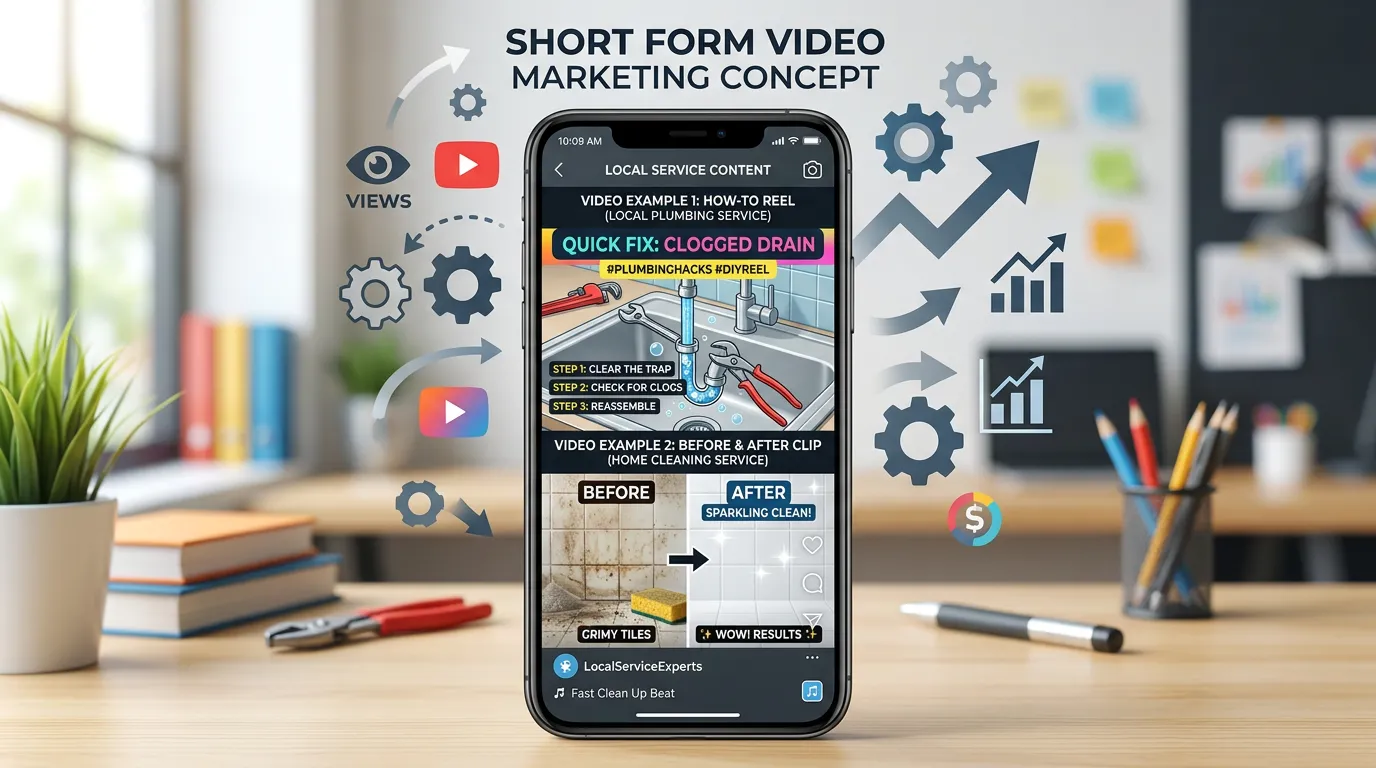
Short form for a service business is a system built on footage you already generate. We set your technicians up to capture quick clips on their phones, using a simple shot list. Then we handle the editing and posting. Clips get cut vertical at 9 by 16. They open with a hook in the first second, because the scroll is instant. They carry captions, because most viewing is muted, and they stay short. We batch a month at a time, so nobody has to think about content every day. The formats that repeat well are before and after reveals, satisfying process footage, quick answers to questions customers ask, and honest mistake warnings.
Signs you need this
- You started posting Reels and stopped after a few weeks
- Your crews take job photos but nobody captures video
- Your social feeds show only finished project photos with no motion
- Competitors' short clips get more engagement than your entire feed
- You have hours of raw footage that never became anything
What is included
- Technician capture guide with a simple shot list and phone settings
- Monthly batch of 8 to 16 edited vertical clips
- Hook written or added as an overlay in the first second of every clip
- Burned in captions styled for readability on a small screen
- Trimming and pacing so nothing opens with an introduction
- Format mix across reveals, process, quick tips, and question answers
- Posting schedule across Instagram, YouTube Shorts, TikTok, and Facebook
- Platform native uploads rather than reposted files with watermarks
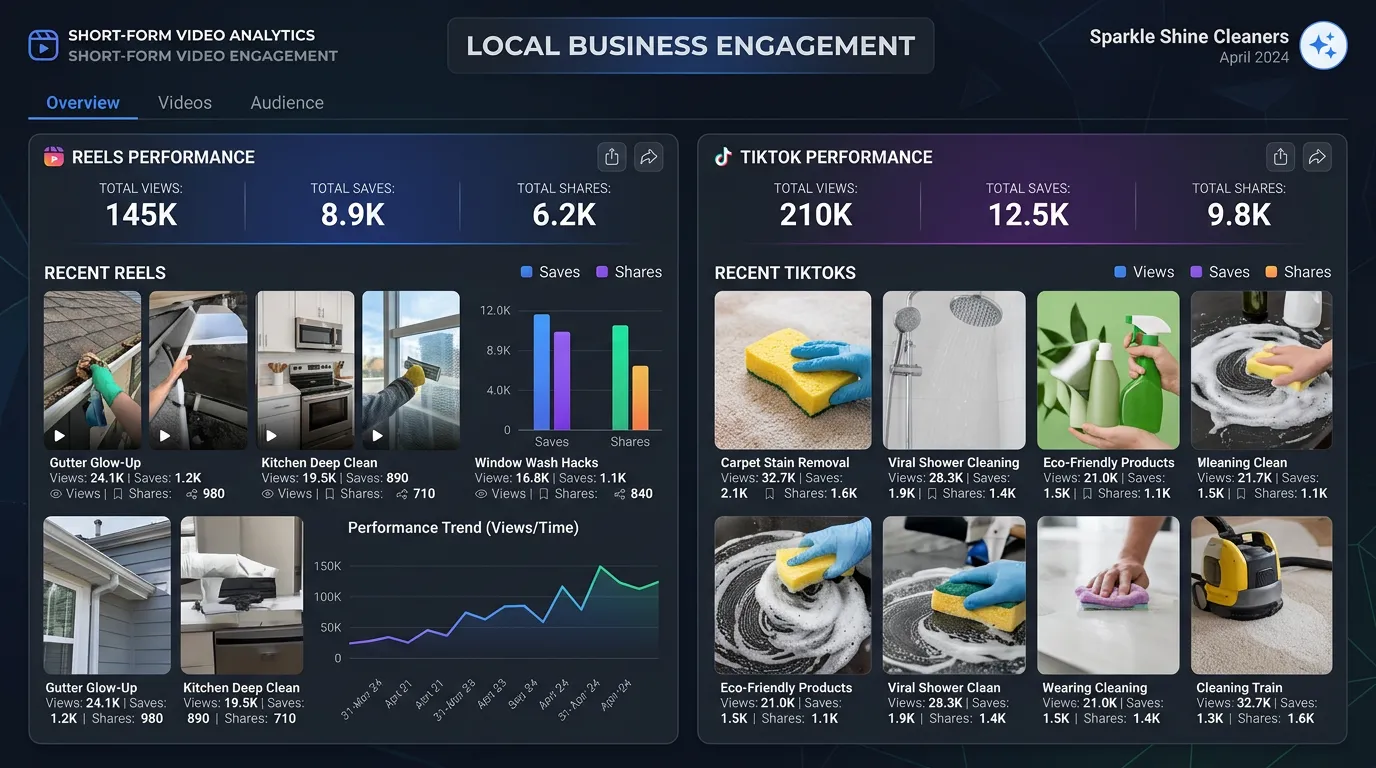
- Monthly report on views, retention, saves, and profile actions
Our process
Capture System Setup
Week 1We train your crews to shoot vertical, hold steady for five seconds, and capture the before and the after. Ten minutes of instruction turns your existing job schedule into a permanent content source.
First Batch Edit
Week 2 to 3We take the first month of raw clips and cut 8 to 16 finished pieces. Editing is deliberately fast and simple, because heavily produced short form usually performs worse than raw footage of real work.
Hook and Caption Pass
Week 3Every clip gets an opening hook overlay and burned in captions. Anything that opens with hi guys or a logo gets recut, since the first second decides whether the clip survives the scroll.
Scheduled Posting
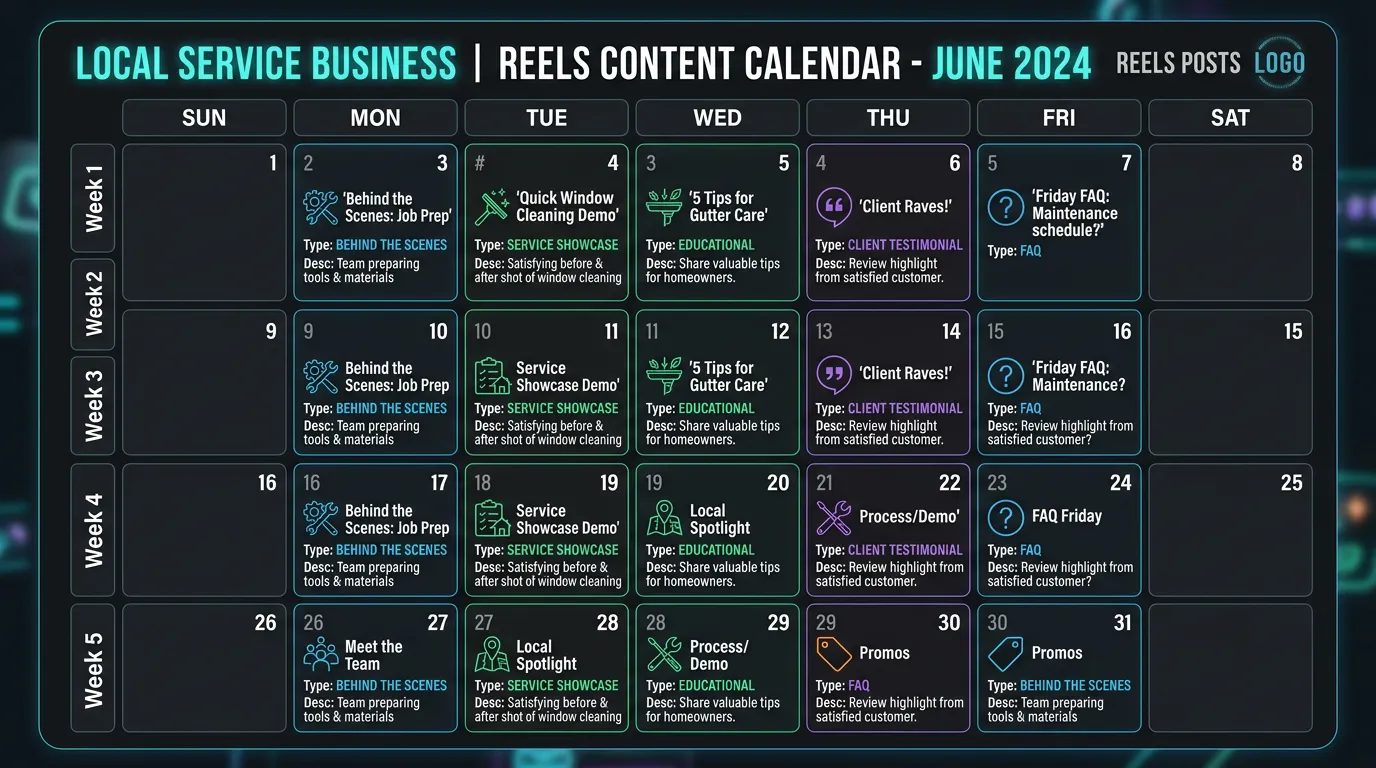
Ongoing, weeklyClips post two to four times a week, uploaded natively to each platform rather than cross posted with a watermark, which the platforms tend to suppress.
Read the Retention
Ongoing, monthlyEach month we look at which clips held viewers past three seconds and which format did it, then bias the next batch toward what worked. Usually one or two formats carry most of the performance.
Realistic timeline: First batch posting within three weeks. Meaningful audience growth typically takes three to six months of consistent posting. Occasional clips take off much earlier and unpredictably.
How a Job Turns Into a Posted Clip
Nobody stops working to make content. The crew films for 30 seconds, and everything after that happens off their plate.
One shared phone album is the whole system. Ask crews to email files or learn a new app and the footage stops arriving within a month.
Filming Clips Your Editor Can Actually Use
Give this to whoever holds the phone. Ten minutes of training decides how much footage survives the edit.
Do this
- Shoot vertical and hold each shot still for at least five seconds.
- Film the before shot before anyone touches anything. You cannot go back.
- Get close. A phone at arm's length beats a wide shot from across the yard.
- Wipe the lens first. Work trucks leave a film on everything.
- Say what the problem was in one plain sentence at the end.
Not this
- Do not talk over a running compressor, a shop vac, or a fan.
- Do not film a face, an address, or a license plate without asking.
- Do not open with hi guys, a logo, or your name.
- Do not zoom while filming. Walk closer instead.
- Do not delete the boring clips. Those become the footage an editor cuts to.
What Each Platform Rewards
The same clip can go everywhere, but the first line and the pacing should change on each one.
| Platform | Length that works | What holds attention | Caption approach |
|---|---|---|---|
| Instagram Reels | 7 to 20 seconds | A reveal that loops back to the start | Short overlay, a few tags |
| YouTube Shorts | 15 to 45 seconds | A clear question answered plainly | Overlay plus a searchable title |
| TikTok | 10 to 30 seconds | Process footage and honest talk | Casual overlay, sound left on |
| Facebook Reels | 10 to 30 seconds | Local work and places people know | Plain overlay, name the city |
Facebook is the one most trades skip and the one where a local audience is easiest to reach, because your existing customers are already there.
What to Do When One Clip Takes Off
Every so often a clip runs far past your usual numbers, and it is never the one you expected. Act in the first 48 hours, because the window closes fast.
Answer the comments. Replies push a clip further and they are where the real questions show up. Then make three more clips in the same format that week, since the format is what worked, not the specific job. Check that your profile actually says what you do and where, because a lot of new people will look.
Then set expectations. A clip with big view counts often brings almost no local calls, because most of those viewers live nowhere near you. Look at profile visits, saves, and where viewers are from. If nothing moved in your service area, treat it as a lucky day and go back to the plan.
Two Things That Trip Crews Up
Can I use trending music on a business account?
My techs say they do not have time to film.