Video Marketing
Video Marketing Strategy
Decides the video set before a camera comes out
- Timeline
- Two to three weeks to produce the plan
Call (714) 823-3164 or ask a question. Clear recommendations, even if we never work together.
Video strategy is deciding which videos to make, who each one is for, where it will run, and how you will measure success. You do all of that before anyone films anything. It replaces the common pattern of filming whatever looks interesting, then wondering why the footage never got used.
The problem
Most video projects fail at the planning stage, not the production stage. A business hires a videographer, gets a nicely shot two minute brand film, posts it once, and never uses it again because it does not fit anywhere. It is too long for social, too vague for a service page, and too polished to feel real. Nobody decided in advance what question the video was supposed to answer or where it would live. Six months later the conclusion is that video did not work, when what actually happened is that nothing was planned.
What it is
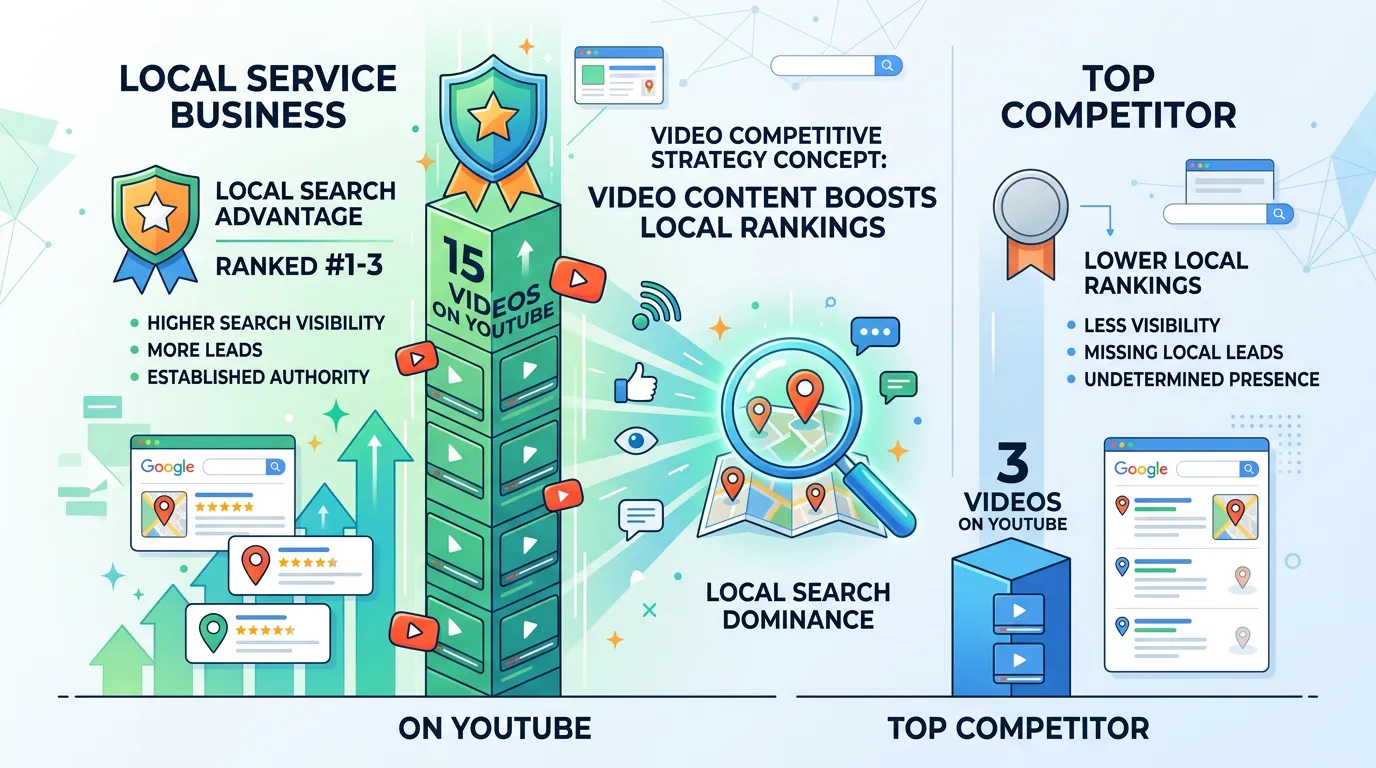
Video strategy starts with your sales conversations. We list the questions you answer on every estimate call, the objections that stall deals, and the services with the best margin. Each one becomes a candidate video. Then we give every video a destination. This one is the hero on the water heater page. This one is the 30 second Google Business Profile post. This one is the six second bumper ad, and these eight are vertical clips. We put them in order by impact, so the first shoot day produces what you need most. We also set a budget that matches how much video your business can realistically use.
Signs you need this
- You have footage from a past shoot sitting unused on a drive
- You made one brand video and never knew where to put it
- Your team debates what to film and nothing gets filmed
- You are about to hire a videographer with no brief prepared
- You post videos occasionally with no pattern and no measurement
What is included
- Sales call question inventory taken from your team, not from keyword tools
- Video set list with a defined purpose and audience for each video
- Destination map assigning every video to a page, profile, ad, or feed
- Production sequence ordered by expected business impact
- Format and length spec for each platform you will publish to
- Shoot day plan grouping videos by location to minimize days
- Realistic budget range covering production, editing, and distribution
- Measurement plan naming the metric that decides whether each video worked
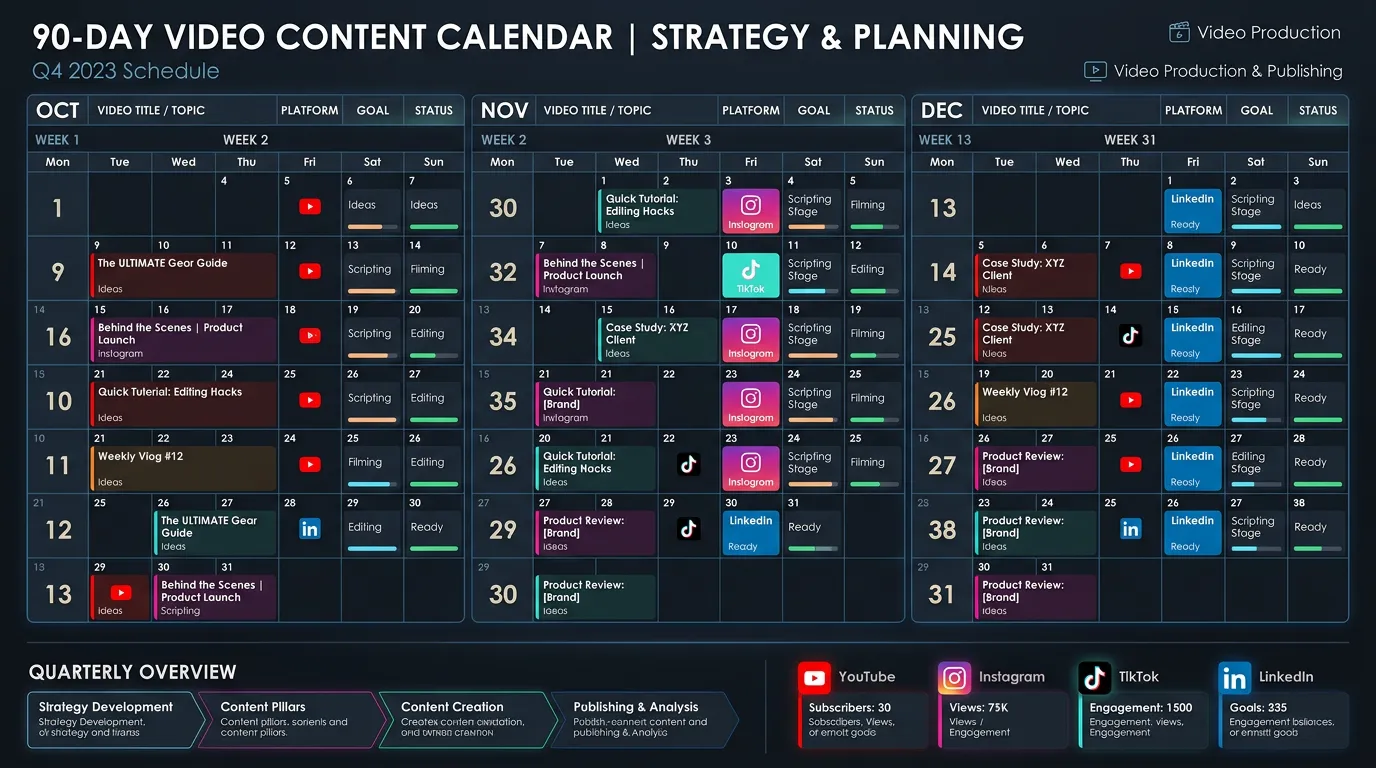
- A twelve month calendar showing when each batch gets produced
Our process
Sales Conversation Mining
Week 1We interview whoever answers your phone and whoever runs estimates. The questions they repeat all day are the questions your videos should answer, and they are almost never the topics an owner would have picked.
Service and Margin Review
Week 1 to 2We match candidate videos against which services actually make money. There is no point producing beautiful content about a service you would rather stop selling.
Assign Destinations
Week 2Every video gets a home before it is approved. If we cannot name the page, profile, ad, or feed it belongs to, it does not make the list. This one rule removes most wasted production.
Sequence and Budget
Week 2 to 3We order production by impact and group by location so one shoot day covers several videos. Then we set a budget you can sustain for a year rather than one that spends the whole allowance in month one.
Review and Adjust
QuarterlyAfter the first batch publishes we compare retention and conversion against the plan and reorder what remains based on what actually held attention.
Realistic timeline: Two to three weeks to produce the plan. The plan then covers roughly twelve months of production, reviewed quarterly.
Matching Each Video to the Objection It Answers
A video earns a spot on the plan when it answers something a buyer actually says on the phone. Here is how the common ones line up.
| What the buyer is thinking | The video that answers it | Where it runs | How you know it worked |
|---|---|---|---|
| That price seems high | A cost breakdown that shows what the money buys | Next to the pricing block on the video marketing service page | Fewer price objections on estimate calls |
| I have no idea what this work involves | A process walkthrough with real job footage | Top of the matching service page | Longer time on page and more form fills |
| Can I trust a stranger in my house | Owner and crew introduction | Google Business Profile and the about page | More calls coming from profile views |
| Will they actually finish it | A customer story filmed at the finished job | Beside the contact form | Higher close rate on estimates |
| Is this even the right fix for me | A short answer to one repeated question | YouTube and short form feeds | Search views and saved clips |
If a video does not trace back to a sentence a real caller said, it usually goes unused.
Ranking the List When You Can Only Film Once
Most plans start too big. A list of twenty videos is a wish list. We score each candidate on three things: how much the video marketing service brings in, how often the question comes up, and how badly plain text explains it. A service that scores high on all three gets filmed first.
Take a plumber with three vans. Repipes carry the best margin. Drain calls come in daily but close on the phone in two minutes, so they need a fifteen second clip, not a two minute explainer. Water heater replacement sits in the middle, and every caller asks the same three questions about it. So the repipe and the water heater videos get the shoot day, and drain work gets cut from footage later.
Order matters more than the full list. Plenty of plans stall after the fourth video because a busy season arrives. That is fine if those were the right four. It is expensive if the first day was spent on a company history piece nobody asked for.
What a Finished Plan Contains Before You Book a Crew
Run your plan against this list. If more than two lines are missing, the shoot day will cost more than it should.
A named question for every video
Phrased the way a caller says it, not the way your website says it.
One destination per video
A page, a profile, an ad, or a feed. Nothing gets approved without one.
A length and shape per platform
Six seconds and ninety seconds are different scripts, not one script trimmed.
Locations grouped into shoot days
Days drive the cost. Two sites in one day beats two separate days.
A person assigned to each video
Owner, lead tech, or customer. Deciding on the morning costs you an hour.
The number that decides it worked
Picked before filming. Chosen afterward, everything looks like a success.
A filming window in your slow season
Nobody films air conditioning work in July. Book the quiet months.
Planning Questions That Come Up Late
Can the plan use footage we already have?
Who from my team needs to be part of planning?