Reputation Management
Online Review Management
The weekly routine: requests out, replies written, alerts cleared
- Timeline
- Handover and backlog cleanup inside 2 weeks, then a continuous weekly and monthly rhythm
Call (714) 823-3164 or ask a question. Clear recommendations, even if we never work together.
Online review management is the day to day handling of a business's reviews on every platform. That means sending requests, writing replies, watching alerts, filing removal requests, and reporting on volume and rating. It is the routine that keeps a review profile healthy once the systems and standards are in place.
The problem
Most review problems are not strategy problems. They are follow through problems. The system exists, the templates exist, and then a busy season hits and nobody sends requests for six weeks. Replies stack up. A one star review sits unanswered for a month. When the owner finally looks, the profile shows a business that stopped paying attention, and rebuilding the habit is harder than maintaining it would have been.
What it is
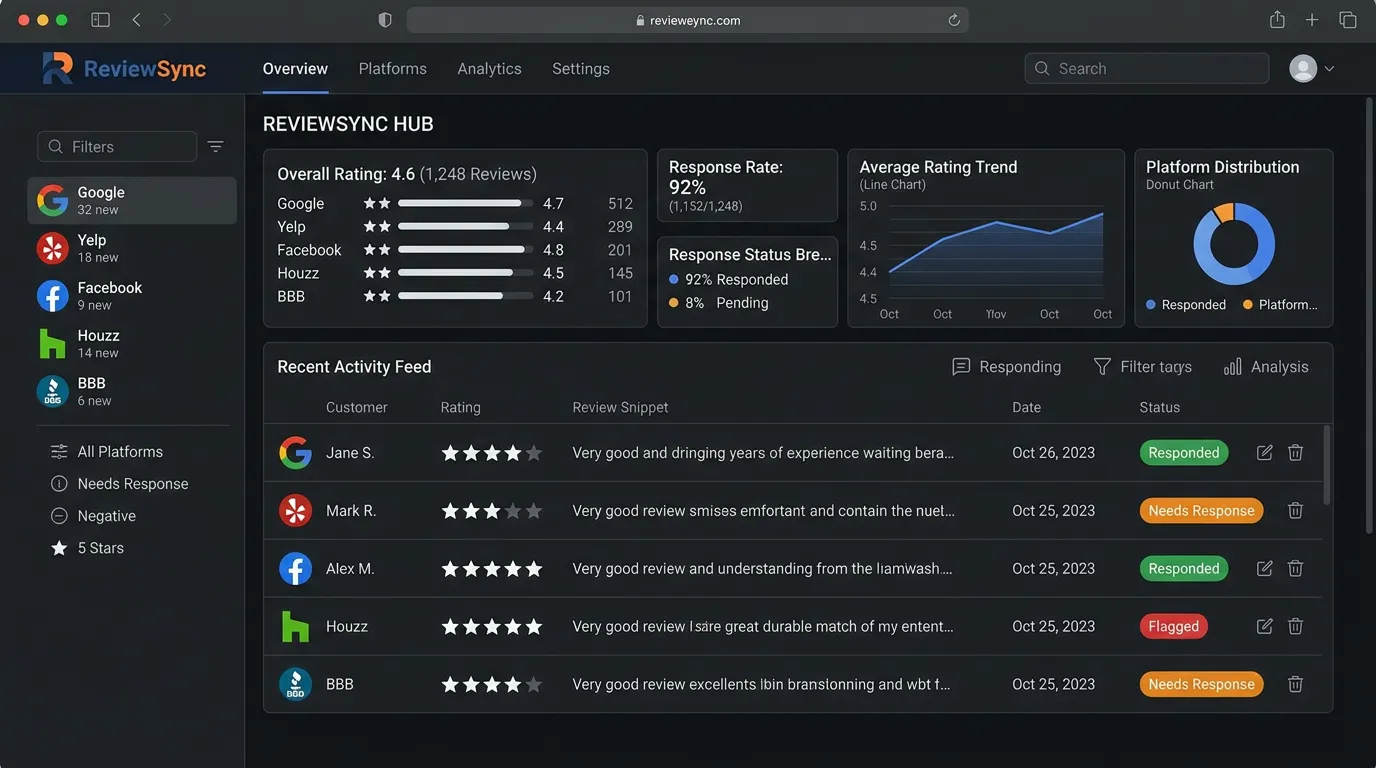
This is the part that gets done over and over. Every week we send review requests for completed jobs. We draft and publish replies to new reviews. We clear the alerts. Anything that needs a decision comes to you with a recommendation, not a question. Every month you get a report. It shows new review count by platform, current rating, response rate, average response time, and the themes coming through. This review management work sits on top of the generation system and the response protocol. It does not replace them. It is also the piece most businesses cannot keep up in house past the first busy season.
Signs you need this
- Requests stop going out whenever the business gets busy
- You have unanswered reviews from more than a month ago
- Nobody owns review responses, so they happen when someone has time
- You have a review tool nobody logs into
- Your review volume swings wildly month to month with no explanation
What is included
- Weekly review request sending or trigger verification
- Response drafting and publishing across every platform you use
- Daily alert monitoring with same day escalation on one and two star reviews
- Removal request filing when a review violates platform policy
- Review link and QR code maintenance as platforms change URLs
- Monthly report on volume, rating, response rate, and response time
- Quarterly refresh of templates so replies do not get repetitive
- A named person who owns this, with a backup when they are out
Our process
Take over the routine
Week 1 to 2We inherit the existing system, verify the links still work, clear any backlog of unanswered reviews, and confirm who at your company approves responses to negatives before they publish.
Weekly send and reply
Ongoing, weeklyRequests go out on a set day for the week's completed jobs. Replies get drafted and published on a set schedule so nothing depends on someone noticing a notification.
Daily alert clearing
Ongoing, dailyAlerts get checked every business day. One and two star reviews escalate to you same day with a draft response attached, so the decision takes two minutes instead of becoming a project.
Monthly reporting
Ongoing, monthlyNew reviews by platform, current rating, response rate, average response time, and the top three themes. If volume dropped, the report says why, which is usually that requests stopped going out.
Quarterly tune up
Every 3 monthsTemplates get refreshed, links get retested, and platform rule changes get incorporated. Review platforms change their URLs and policies more often than anyone expects.
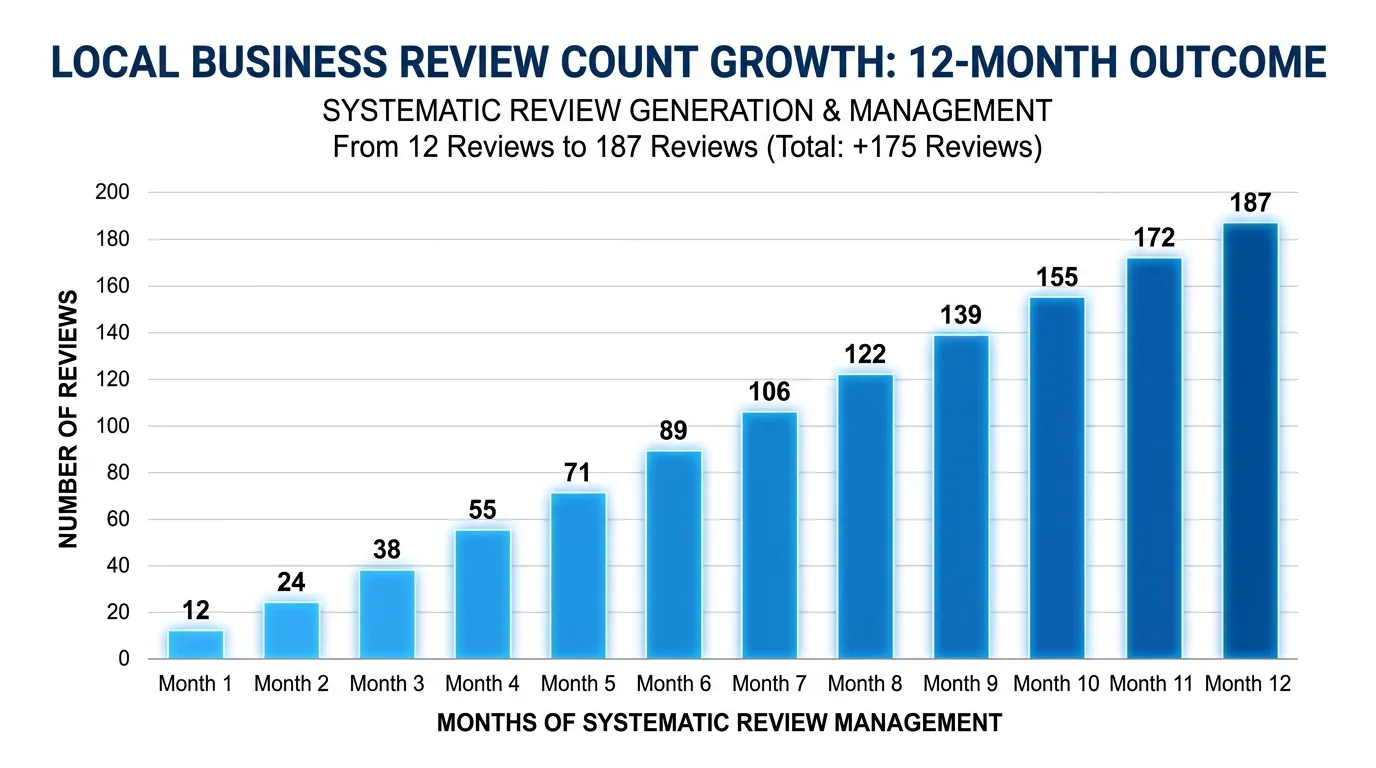
Realistic timeline: Handover and backlog cleanup inside 2 weeks, then a continuous weekly and monthly rhythm. Most clients see review volume stabilize into a predictable monthly range by month 3.
The weekly rhythm, and what breaks when it slips
This is a routine, not a project. Here is the whole thing, what each piece costs in time, and what goes wrong first when it stops.
| Task | How often | Time it takes | What happens when it stops |
|---|---|---|---|
| Send requests for finished jobs | Weekly, same day | About 20 minutes | Volume drops within three weeks |
| Draft and publish replies | Twice a week | 30 to 45 minutes | Complaints sit with no answer |
| Clear alerts | Every business day | Five minutes | A one star review ages past 48 hours |
| Test every review link | Monthly | Ten minutes | Requests point at a dead page |
| Report volume and response time | Monthly | About an hour | The slide shows up late |
| Refresh templates | Quarterly | About an hour | Replies start reading like a robot |
Add it up and the routine is a few hours a month. That is why owners believe they will keep doing it, and why it stops in July.
What to require from whoever runs this
The list is the same whether the review management work goes to your office manager or to an outside company.
A named owner and a named backup
Vacations are when replies quietly stop.
Manager level access, never your password
You can pull it back in under a minute.
An approval rule for anything under four stars
Who signs off, and how fast.
A response deadline in writing
24 to 48 hours on negatives.
Requests counted against completed jobs
Review counts hide a send that stalled.
A monthly report short enough to read
Volume, rating, response time, themes.
Your own copy of every template and link
They stay yours if the arrangement ends.
A list of what never gets said in public
No names, no job details, no money.
The first two weeks look nothing like the rest
Handover starts with an inventory. Every platform gets listed, every link gets opened on a real phone, and every unanswered review gets counted. That count is usually the surprise. A ten year old company often has forty or more replies it never wrote, and a few of them sit right where prospects read first.
Then the backlog gets cleared in order. Every negative gets a reply no matter how old it is. Positives get a sample, not all of them, because a wall of replies appearing on five year old reviews looks staged. Expect month one to flatter you, since requests that were not going out start going out. Month three is the honest number.
Keeping it in house, and when that stops working
Plenty of businesses should run this themselves. If your front desk person is organized and has the hours, a saved template and the checklist above will do the job. Under roughly 30 new reviews a month, in house is usually cheaper and often faster, since they already know the customer and the job.
It breaks in predictable places. Several platforms instead of one. Reviews in Spanish that need a reply in Spanish. Regulated wording for a dental or legal office. An angry one star at five on a Friday.
Decide it with arithmetic. Take the hours from the table, multiply by what that person's time costs you, and compare. Then ask the harder question. Over the last six months, did it happen every week? If not, the in house price was never the real number.
Review management is not hard work. It is small work that has to happen on a day when nobody feels like doing it, which is why it is the first thing dropped in a busy month.