Reputation Management
Review Platform Management
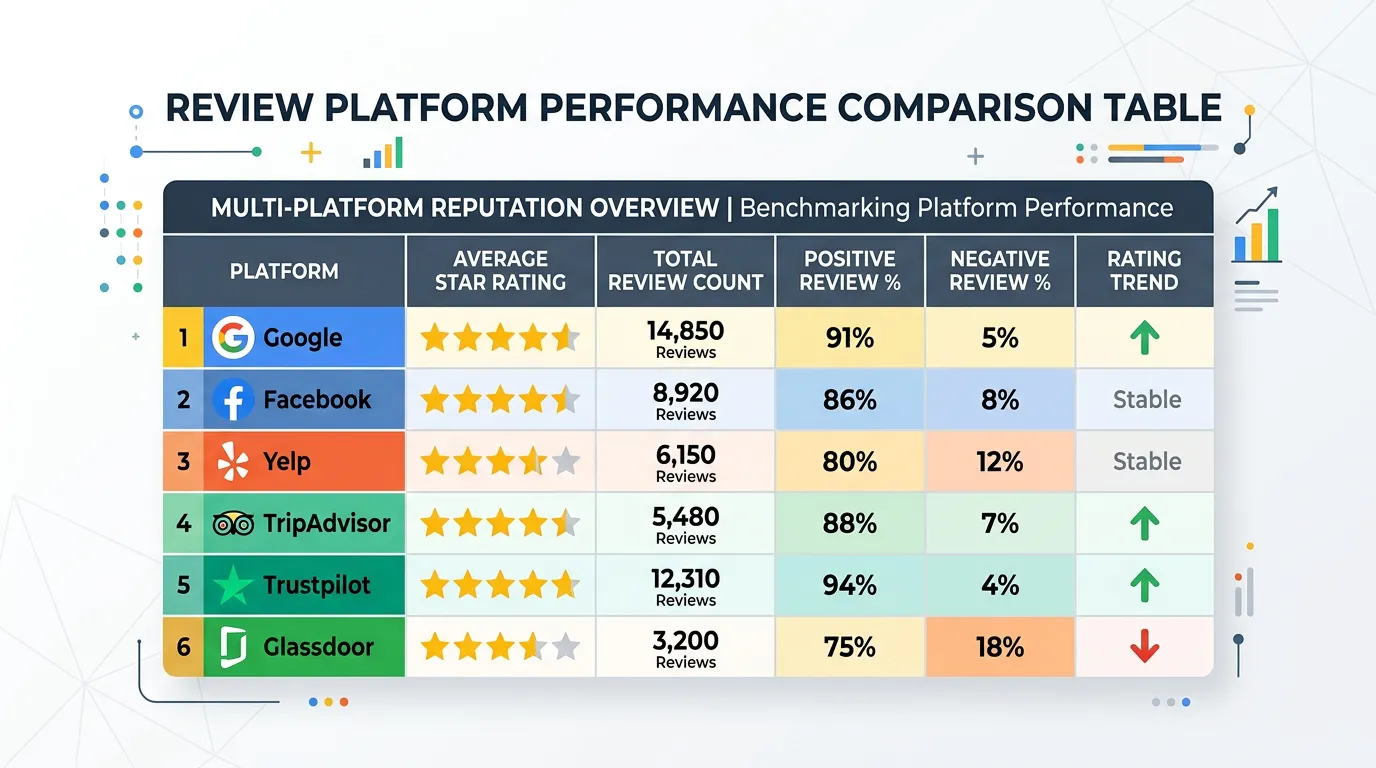
Every platform has different rules, especially Yelp
- Timeline
- Selection and claiming complete within 4 weeks
Call (714) 823-3164 or ask a question. Clear recommendations, even if we never work together.
Review platform management is the work of picking, claiming, and keeping up the review profiles that matter in your industry. Every platform has its own rules about asking for reviews, its own filters, and its own audience. Use one approach everywhere and you get poor results, and sometimes a penalty.
The problem
Businesses either put everything into Google and ignore the rest, or they spray requests across every platform the same way. Both cost money. A dental practice with no Healthgrades or Zocdoc presence is invisible to a large group of patients searching there. A restaurant style approach to Yelp, mass requesting reviews, gets those reviews pushed into the not recommended section where nobody sees them, and can earn a consumer alert on the profile. The rules are different everywhere and following the wrong one wastes the effort.
What it is
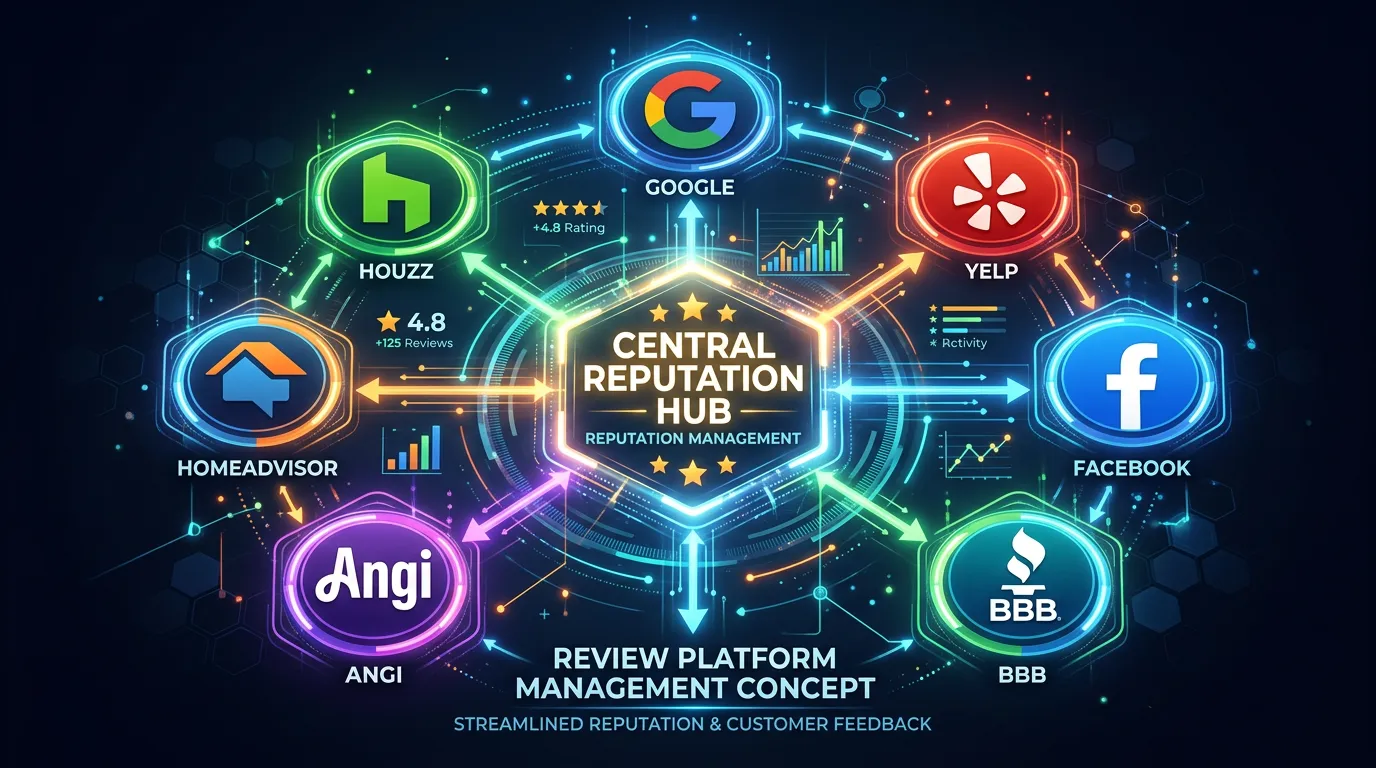
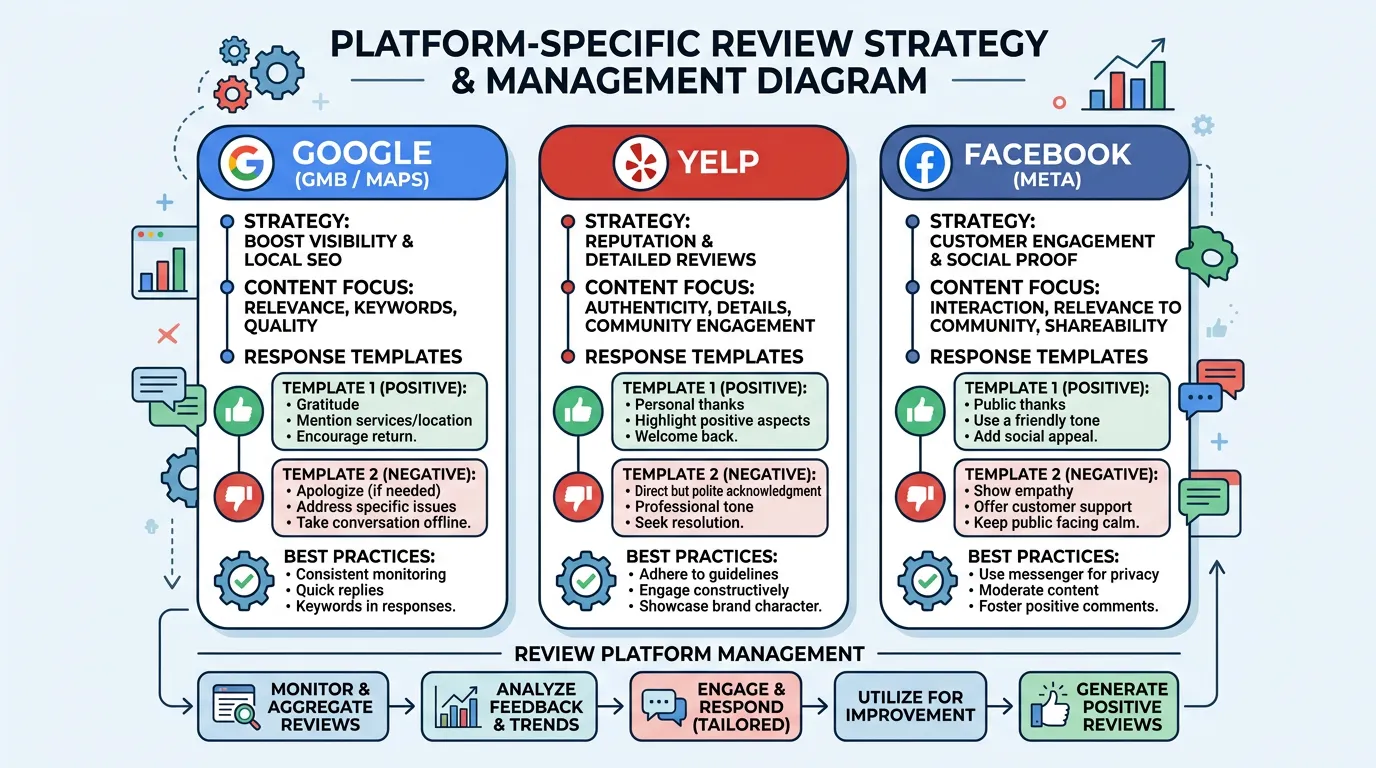
Platform management starts with picking the right platforms for your industry and your market. Then each profile gets claimed and filled in properly. Then you keep them up by each platform's own rules. Google allows you to ask for reviews directly. Yelp clearly discourages it, and it runs a recommendation filter that hides reviews from accounts it does not trust. So on Yelp the goal is to earn reviews from long standing Yelp users by making them aware of you, not by asking. BBB requires accreditation for some features, and it carries weight with older buyers and higher ticket purchases. Industry platforms each have their own quirks: Healthgrades and Vitals for medical, Avvo for legal, Caring.com for senior care, Angi and Porch for home services. Each profile also works as a citation and as a possible page one result for your business name.
Signs you need this
- You have 200 Google reviews and 3 on every other platform
- Your Yelp reviews are sitting in the not recommended section
- An industry directory shows an unclaimed profile with your business on it
- Your competitors appear on review sites you have never heard of
- Your BBB profile shows an old address or an unanswered complaint
What is included
- Platform selection recommendation with reasoning for each include or skip
- Profile claiming and full completion on every selected platform
- Photos, services, hours, and descriptions tailored to each platform
- Platform specific review generation approach, including a compliant Yelp strategy
- BBB accreditation guidance where the value justifies the cost
- Industry directory profiles matched to your trade
- Consistency check so name, address, and phone match across every profile
- Quarterly maintenance pass to update details and refresh photos
Our process
Choose the platforms
Week 1We look at where your competitors get reviewed, where your customers actually search, and which platforms rank for your business name. Then we recommend four to eight to work and a list to deliberately skip.
Claim and complete
Week 1 to 4Each profile gets claimed, verified where needed, and filled in completely: photos, services, hours, description, and licensing. Half completed profiles look abandoned and convert poorly even when they rank.
Set the rules per platform
Week 3 to 4We document what is allowed where. Direct requests to Google. No direct solicitation on Yelp, awareness only. Industry platforms follow their own guidelines. Staff get one page showing what to do and what to never do.
Balance the distribution
Ongoing, monthlyGoogle gets the largest share, but sending every customer to one platform leaves the others frozen in time. We rotate a portion of requests toward the second most important platform for your industry.
Quarterly maintenance
Every 3 monthsProfiles drift. Hours change, services change, photos age, and some platforms quietly add fields. Every quarter each profile gets reviewed and refreshed rather than left as it was on day one.
Realistic timeline: Selection and claiming complete within 4 weeks. Some industry platforms take 1 to 3 weeks to verify. Review distribution across platforms balances out over 3 to 6 months of steady requesting.
How a Platform Earns a Spot on Your List
There are dozens of review sites for any trade. Four to eight deserve your attention. This is the filter that gets you from one number to the other.
Most sites fail at the second step. If it never shows up when someone searches your business name, and your customers do not use it, a profile there is a chore with no payoff.
A Dental Office With Two Chairs, Picking Four Platforms
Say a two chair dental office in Chino wants to stop guessing which sites matter. Search the practice name in a private window. Whatever holds page one is already doing the platform management work, for better or worse.
For a practice like that, page one is usually Google, the practice website, Yelp, a Healthgrades page, and a Zocdoc or Vitals profile nobody ever claimed. Insurance directory listings often show up too, with hours from 2019 on them. Those are the platforms that matter for that practice, because those are the pages a patient actually reads before booking.
Run the same search for a roofer in Riverside and the answer changes. Page one there tends to be Google, Yelp, Angi, the BBB, and sometimes a Nextdoor thread. Same method, different list. Copying another industry's platform list is how a dental office ends up maintaining a Houzz profile and no Healthgrades page.
Yelp, Without the Wishful Thinking
Yelp is the platform owners argue about most, and pretending its rules match Google's wastes months of effort.
You cannot ask for Yelp reviews. Their recommendation software hides reviews from accounts with little history, which is exactly the kind of account a requested review comes from. Hidden reviews do not count toward your rating, and there is no appeal that works reliably. Businesses that push hard on Yelp requests often end up with forty reviews nobody can see and a warning on the profile.
What does work there is quieter. A complete profile with real photos, a window sticker and a badge on your site so active Yelp users know you are listed, and fast replies to Yelp messages, since your response time shows on the profile. Then let the platform work the way it wants to.
If a year of that produces no calls and no clicks, say so out loud. Some trades get almost nothing from Yelp, and the honest move is to keep the profile accurate and spend the effort where your buyers actually are.
What a Finished Profile Actually Has
A claimed profile is not a finished profile. Half completed listings look abandoned, and an abandoned profile with two old reviews does more harm than no profile at all.
At least ten real photos
Your trucks, crew, and work, not stock images
Categories chosen in the platform's own words
Not your internal service names
Hours, including holiday hours
Wrong hours turn into one star reviews
Services listed in plain language
What customers type, not your job codes
License and insurance numbers
Required in most trades and trusted by buyers
A description written for that platform
The same paragraph everywhere reads lazy
Owner and staff photos where allowed
People want to see who is coming to the door
Booking and payment links tested this quarter
A dead link is worse than no link