
Digital Marketing Strategy
Full Marketing Audits
Reviews every channel you run against what actually produces booked work
- Timeline
- Three to four weeks
Call (714) 823-3164 or ask a question. Clear recommendations, even if we never work together.
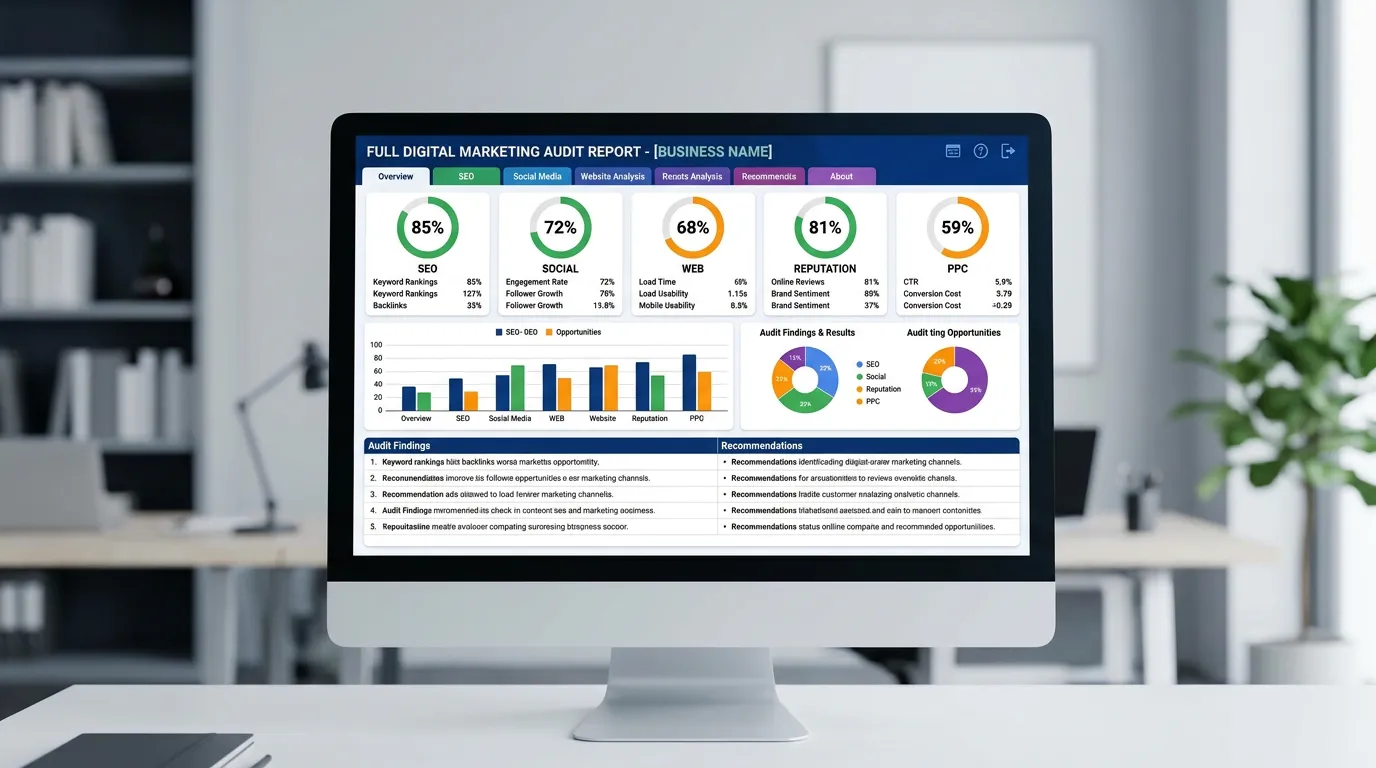
A full marketing audit is a structured review of everything a business now does to get customers. That covers the website, analytics, search visibility, ads, Google Business Profile, reviews, email, and lead follow up. It grades each area against what really produces calls. Then it gives you a ranked list of what to fix first.
The problem
Nobody has looked at the whole picture at once. The SEO vendor reports rankings. The ads vendor reports clicks and a conversion count that includes people who filled out a form twice. The web designer reports that the site looks fine. Each report is defensible on its own, and none of them answer the owner's actual question, which is whether the twelve thousand dollars going out every month is producing jobs. Meanwhile the things that quietly destroy results, calls that ring out at four thirty, a contact form that has been broken since a plugin update, a tracking number that was disconnected in March, sit outside every vendor's scope and get reported by nobody.
What it is
The audit looks at nine areas in one pass. Each one gets graded against a single standard: does this produce booked work. On the website we check structure, speed, mobile call paths, and whether forms work. We also check whether the pages that get traffic are the ones tied to profitable services. In analytics we look for duplicate events, missing call tracking, and unfiltered internal traffic. We also ask whether your conversions mean anything at all. Search visibility covers organic rankings, Search Console coverage, and map pack presence. Ads get an account level review of structure, search terms, negatives, wasted spend, and landing page match. The Google Business Profile gets checked field by field. Reviews get read, not counted, because what customers write matters more than the average score. Email and follow up get tested. We submit a real lead and time the response. Lead source analysis then takes your last 90 to 365 days of real customers and traces where they came from. That often contradicts what the dashboards claim. Everything lands in one findings document with a ranked fix list.
Signs you need this
- You cannot say which channel produced last month's jobs
- Multiple vendors report success while total lead volume is flat
- You suspect you are paying for something that stopped working months ago
- You are about to change agencies and want an independent baseline
- Your dashboards show growing conversions but revenue has not moved
What is included
- Website review covering structure, speed, mobile call path, and form function
- GA4 and Search Console configuration check with a list of tracking defects
- Organic and map pack visibility snapshot for your priority services and cities
- Ad account review including search terms, negatives, and wasted spend total
- Google Business Profile field by field completeness and accuracy check
- Review profile read across Google, Yelp, and industry sites with themes pulled out
- Mystery shop of your own lead process with response times recorded
- Lead source analysis tracing your last 90 to 365 days of real customers
- Findings document with a ranked fix list sized by effort and impact
Our process
Collect access and history
Week 1GA4, Search Console, ad accounts, Google Business Profile, email platform, and CRM or invoicing export. The customer export is the piece owners forget, and it is the one that answers where jobs actually come from.
Mystery shop your own business
Week 1We submit a form, call the main line during and after hours, and if you offer chat we use it. Response times get logged. This single step explains a surprising share of what looks like a lead volume problem.
Technical and channel review
Week 2 to 3Each channel gets worked through against a fixed checklist so nothing gets skipped because it looked fine at a glance. Defects get screenshots and dates attached so they are not arguable later.
Trace real customers to sources
Week 3Your customer list gets matched against call tracking, form records, and channel data. Where attribution is impossible we say so. The point is to find the gap between reported leads and paying customers, which is often large.
Rank and deliver findings
Week 4Findings get sorted into fix now, fix this quarter, and consider later, sized by effort and expected impact. Delivered as a document plus a recorded walkthrough so your team can revisit it without another meeting.
Realistic timeline: Three to four weeks. Access delays are the usual holdup, especially with ad accounts controlled by a former vendor. Businesses running five or more channels or multiple locations take five weeks.
How Each Area Gets Graded
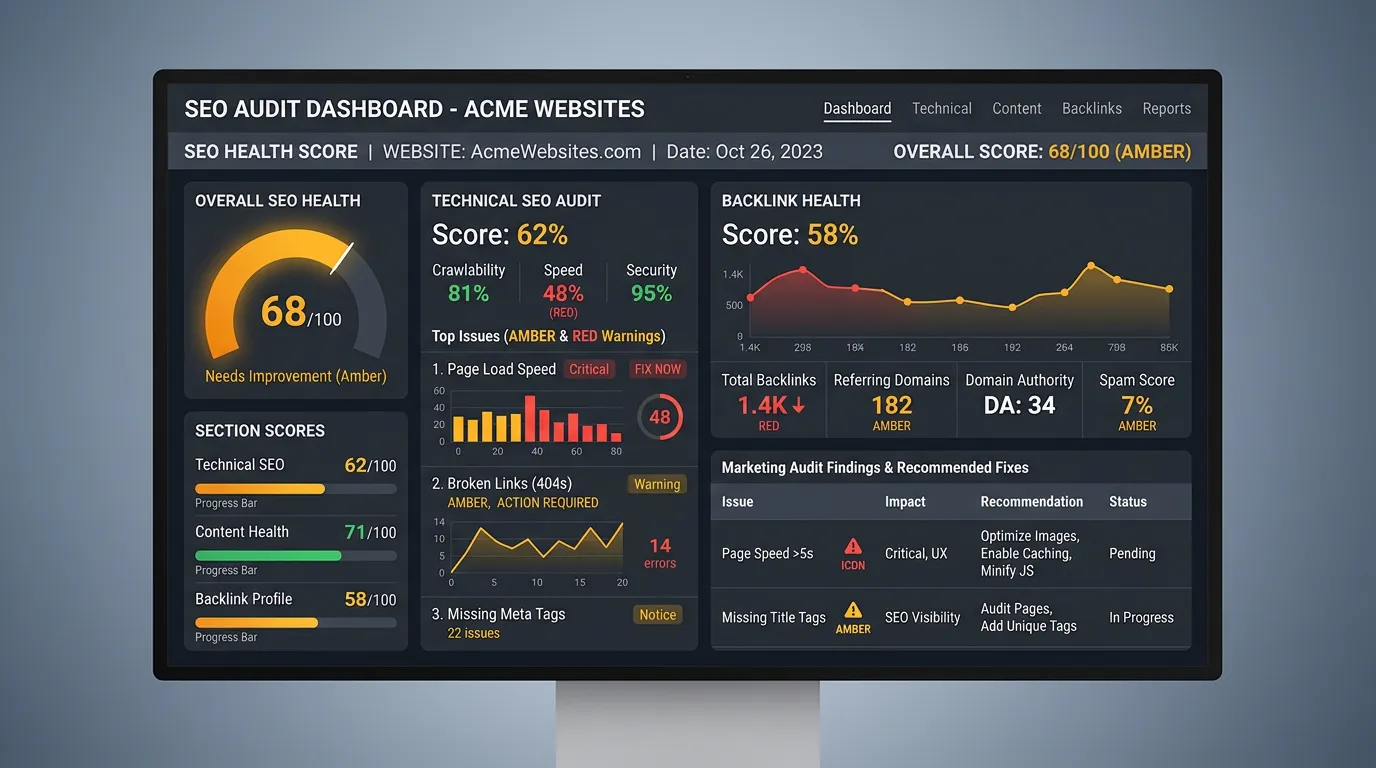
Every area is scored against one question: does this produce booked work. Here is what a pass looks like, and the fail we run into most.
| Area | What a pass looks like | The common fail we find |
|---|---|---|
| Website | Service pages load fast and call buttons work on a phone | Form emails route to a staff member who left |
| Analytics | One clean conversion per real lead, calls included | Every button click counted as a conversion |
| Organic search | You show up for your money services in your own city | Ranked for your own name and little else |
| Map pack | Profile shows in the top three near your address | Categories set once years ago and never checked |
| Paid ads | Search terms match the full marketing work you actually want | A third of spend on terms like free and cheap |
| Reviews | New reviews land steadily and the owner replies | Forty reviews, none in the past year |
| Lead follow up | Calls answered, quotes chased at least twice | Voicemail after five, quotes never chased |
Every fail gets a screenshot and a date attached, so it is not arguable three months later.
What the Mystery Shop Usually Turns Up
We call your main line at 8am, at noon, and at 6:40pm. We send a form on a Saturday. We time every reply. Nothing about this is clever. It is your own customer experience, measured with a stopwatch.
This part surprises owners more than anything else in the audit. A form that lands in a spam folder. A call answered on the ninth ring by someone who cannot book work. An after hours message giving a cell number that nobody carries anymore.
None of that shows up in a rankings report or an ads dashboard. It sits in the gap between vendors, so it belongs to nobody. Fixing it usually costs an afternoon and moves more revenue than a month of ad spend.
What to Have Ready Before Week One
Access delays cause almost every late audit. Gather these before the kickoff call and you save a week.
Read access to GA4 and Search Console
Viewer level is enough. We never need edit rights.
Read access to Google Ads and any other ad accounts
Access by email, not a shared password.
Manager access to your Google Business Profile
Manager level shows edit history and messages.
A customer export covering the last 12 months
Name, city, service, job value, and how they found you.
Call logs from call tracking or your phone provider
We need missed calls, not only answered ones.
A contact for whoever can touch the website
Only to confirm what a form does. No changes made.
The three competitors you actually lose bids to
Not the biggest names. The ones quoting against you.
Two Questions Owners Ask Once We Start
Can you audit one channel instead of everything?
What happens to the fix list after you hand it over?