Digital Marketing Strategy
Channel Mix Planning
Chooses channels based on how your customers actually buy
- Timeline
- Two to three weeks as a standalone piece, or built into the four to six week strategy engagement
Call (714) 823-3164 or ask a question. Clear recommendations, even if we never work together.
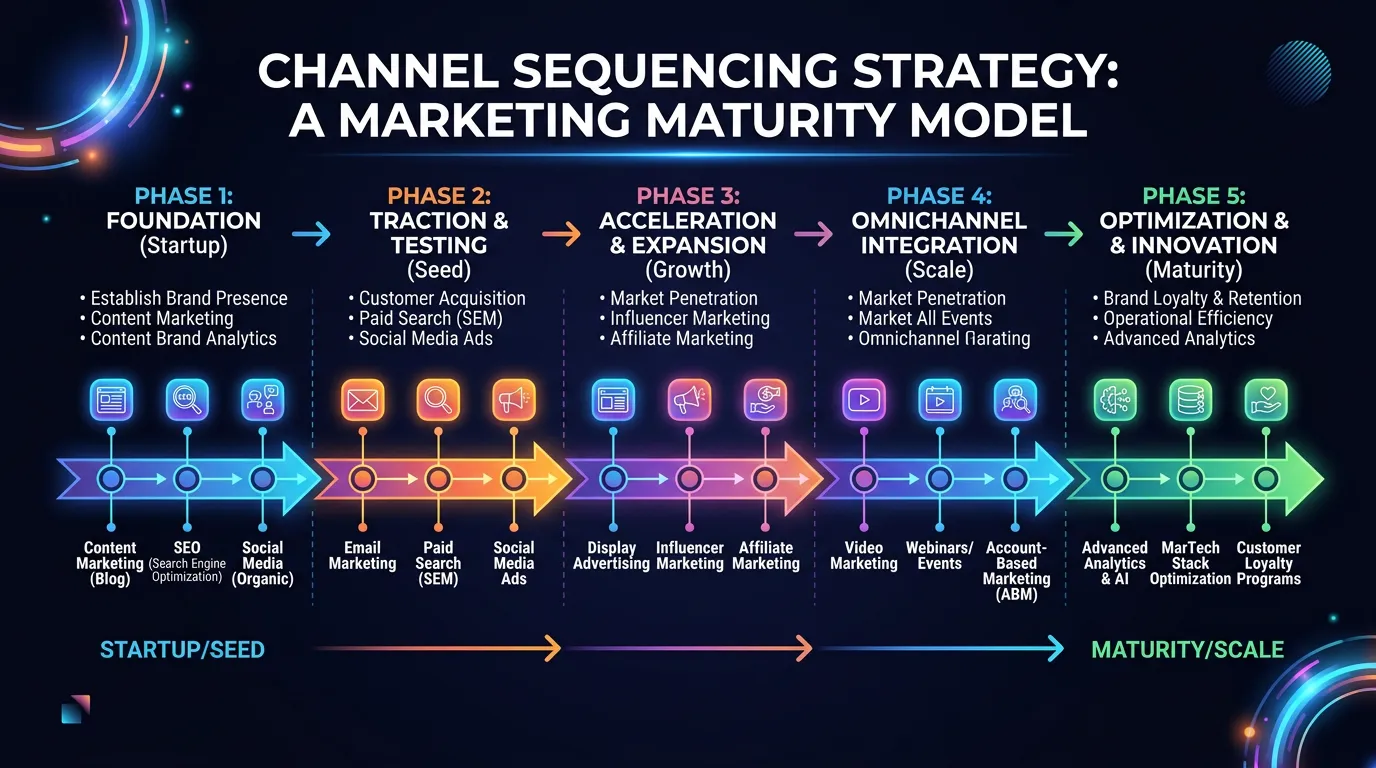
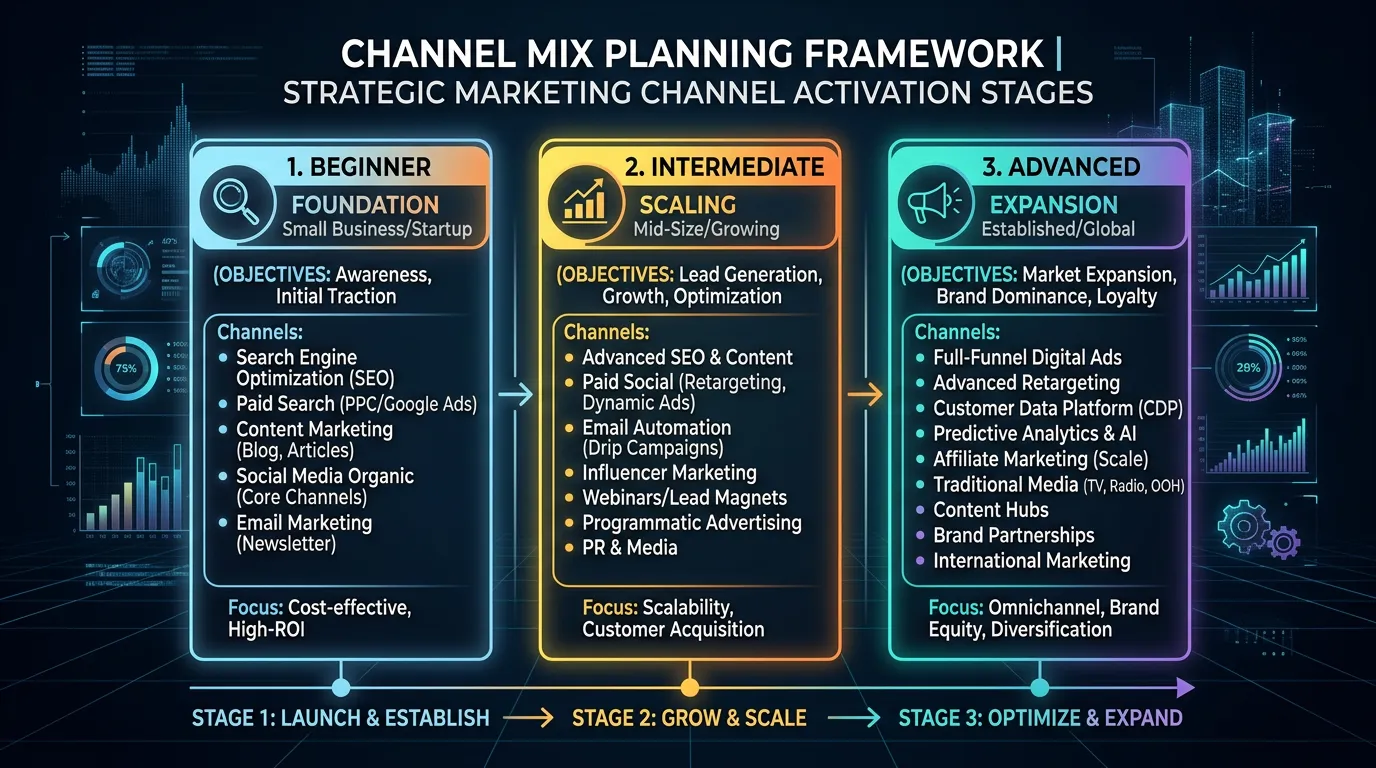
Channel mix planning decides which marketing channels a business should use and how much weight each one carries. It compares expected cost per lead, lead quality, and time to results across search, maps, paid ads, email, video, and referral. Then it matches that against how the customers you want actually buy.
The problem
Channel decisions usually get made by whoever pitched most recently or by copying a competitor. So a commercial plumbing company with a nine month sales cycle ends up buying Instagram ads, and an emergency water damage company that needs the phone to ring in ten minutes spends its budget on a blog. Both are working hard on the wrong surface. The mismatch is not obvious from inside, because every channel has a vendor who can show you a case study where it worked for somebody. What matters is whether it fits how your particular customers decide, how urgent the purchase is, and how long you can wait for a return.
What it is
Channel choice starts with buying behavior, not with channels. We map how your customers really decide. Is the need urgent or planned? Do they compare three companies or call the first one? Is a spouse or a committee involved? Is the decision driven by price, trust, or availability? Urgent needs that people search for point to capture channels: Google Search ads, map pack visibility, and Local Services Ads where the category qualifies. Planned and researched buying puts more weight on content, video, and remarketing, because the customer gathers information for weeks. In referral heavy categories, reputation and email to past customers beat new traffic. Then each candidate channel gets scored on four things. The first two are realistic cost per lead in your market and the quality of leads it tends to produce for your category. The other two are time to first meaningful result and how much management attention it takes. We also write down what has to be true for each channel to work, which is how you know when to stop. The output includes a plain do not do list, and that page is usually the most valuable one.
Signs you need this
- You are on five channels and cannot say which two matter
- A vendor is pushing a channel that does not match how your customers buy
- Your cost per lead varies wildly and nobody has compared channels directly
- You are entering a new service line and do not know where to start
What is included
- Customer buying behavior map by service line, urgent versus planned
- Channel scorecard rating cost per lead, quality, speed, and effort
- Recommended primary, secondary, and testing channels with weights
- Explicit do not do list with the reasoning for each exclusion
- Expected cost per lead ranges based on your market and category
- Time to first result estimate per channel, stated honestly
- Seasonality overlay showing when to push and when to hold back
- Prerequisites listed per channel so nothing launches half ready
Our process
Map how customers decide
Week 1We interview whoever answers the phone and read recent call recordings to learn what customers ask first, how many companies they contacted, and what settled it. This is more reliable than any persona exercise because it is what people actually said.
Score candidate channels
Week 1 to 2Each channel gets rated on cost per lead, lead quality for your category, time to result, and management burden. Scores use your market data where we have it and documented ranges where we do not, with the source noted.
Set weights and a testing reserve
Week 2Channels get sorted into primary, secondary, and test. Primary carries most of the budget and is expected to perform. Test channels get a small fixed amount and a defined success bar, so a test is a test and not a slow permanent leak.
Write the exclusions
Week 2 to 3Every channel we recommend against gets a written reason. That page saves you from the next cold call, and it gives you something specific to point at when someone on your team wants to try TikTok in the middle of your busy season.
Add prerequisites and seasonality
Week 3Each recommended channel gets a list of what must exist before it launches, plus a calendar view of when demand rises and falls in your category so spending lines up with when people are actually buying.
Realistic timeline: Two to three weeks as a standalone piece, or built into the four to six week strategy engagement. Channel weights should be revisited every six months, and immediately if your cost per lead on a primary channel moves more than about thirty percent in either direction.
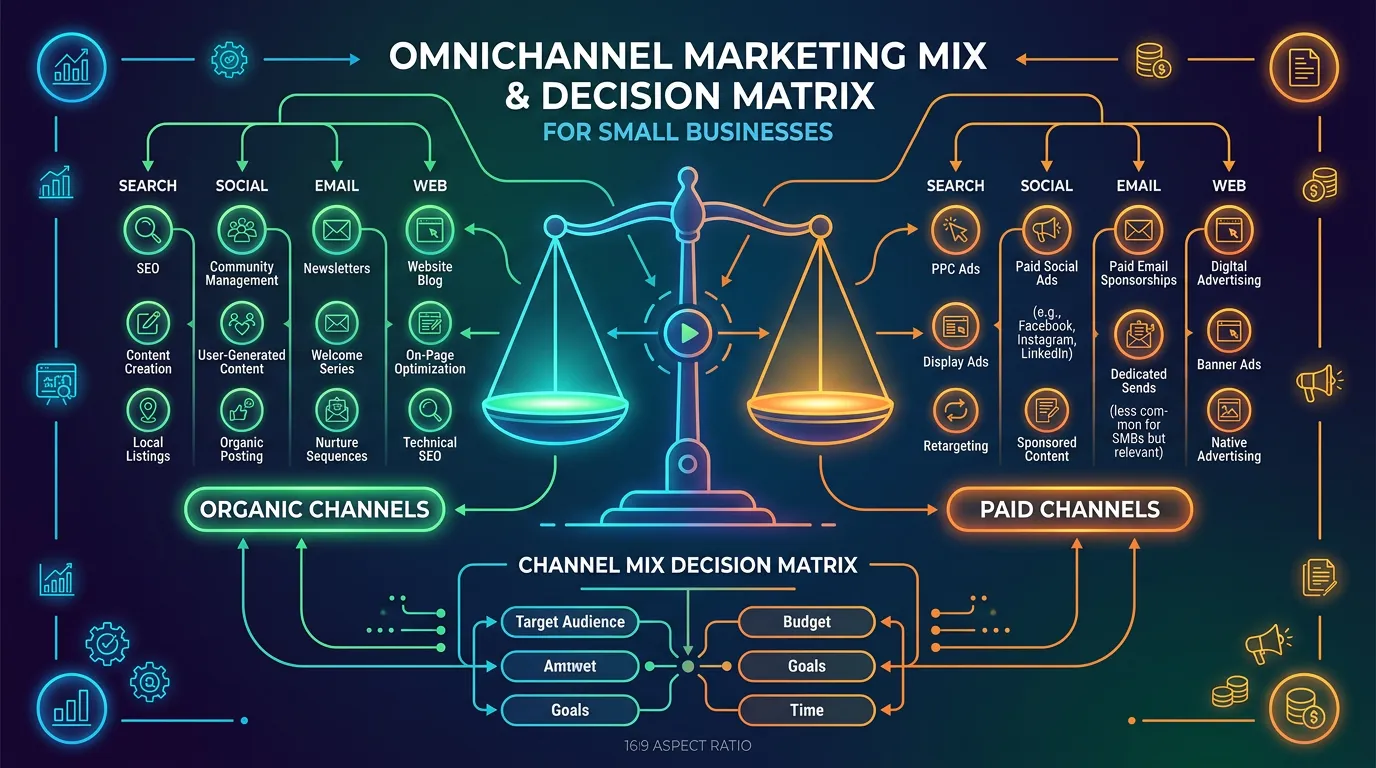
Channel Scorecard for a Local Service Business
Rough starting points for Southern California service work. Your own account data replaces these as soon as we have it.
| Channel | Time to first lead | Effort to run | Best fit |
|---|---|---|---|
| Google Business Profile and maps | 2 to 8 weeks | Low, weekly touch | Anyone serving a defined area |
| Paid search | Days | High, weekly checks | Urgent work, cash now |
| Local Services Ads | 1 to 3 weeks | Low once approved | Trades that pass screening |
| Service pages in organic search | 3 to 9 months | Medium, monthly | Planned, researched buys |
| Email to past customers | Days | Low, monthly | Repeat work and referrals |
| Job photos and short video | Months | Medium, ongoing | Proof, not lead volume |
| Broad social and display | Months | Medium | Rarely worth it early on |
Time to first lead is not time to a steady cost per lead. Budget patience for both.
Urgent Buyers and Planned Buyers
Same trade, two different customers. They do not find you the same way, so they should not get the same budget.
Most companies serve both. The mix should show which one actually pays the bills.
Running a Channel Test Without Bleeding Money
A test is a question with a deadline. Most channels people regret were tests that nobody ever closed.
Do this
- Write the success bar before the first dollar goes out
- Set a fixed budget and a fixed window of 60 to 90 days
- Judge it on qualified leads, not clicks or impressions
- Run one test at a time so you can read the result
- Put the stop date on a calendar with a reminder
Not this
- Do not test a channel you could not staff for a year
- Do not launch a test during your busiest six weeks
- Do not extend a test because the last week looked better
- Do not fund a test below what the channel needs to learn
- Do not let the vendor selling it grade their own test
What Shifts Channel Weights in Southern California
Distance is the quiet factor here. A company in Chino can reach Riverside, Anaheim, and parts of Los Angeles County on a map. In traffic at 4pm, those are three different businesses with three different profit margins.
Map visibility follows your address far more than your stated service area. A wide radius often means you show up weakly everywhere instead of strongly somewhere. Paid search does not care about your address, which is why it carries more weight for companies covering a lot of ground.
Season moves weights inside a single year. February rain moves roofing calls. A September heat wave moves HVAC. We build the spend plan month by month instead of splitting the year into twelve equal parts.
Language belongs in the mix too. In many neighborhoods here a real share of searching happens in Spanish. If your team can serve those callers well, that is a channel decision, and usually a cheap one.
The do not do list is the page in a channel plan that saves you the most money.