Content Marketing
Content Strategy for Service Businesses
Decides the topics before any writing starts
- Timeline
- Two to three weeks to produce the content strategy
Call (714) 823-3164 or ask a question. Clear recommendations, even if we never work together.
Content strategy is deciding what to publish before anyone writes a word. It names who each piece is for and where it fits in the buying process. It also names how you will know if a piece worked. It replaces the common habit of posting whatever topic seemed interesting that week and hoping search traffic follows.
The problem
Content usually fails at the planning stage, not the writing stage. A business starts a blog, publishes for four months, then stops because nothing happened. Looking back, the topics were chosen by whoever had an idea on Monday. Half were too broad to ever rank. Half were too far from a buying decision to matter. None connected to the pages that take conversions. The writing quality was fine. The plan did not exist, so the work had no direction and no way to be judged.
What it is
Content strategy starts with two inputs, combined: what people search for, and what your customers actually ask. We pull query data from Google Search Console, Ahrefs or Semrush, People Also Ask boxes, Reddit threads, and review complaints about your competitors. Then we interview the people who answer your phone and run your estimates. Every possible topic gets scored four ways: search demand, buying intent, how hard it is to rank, and how well you can answer it from real experience. What survives becomes a ranked topic list, sorted by buying stage. Each piece on that list gets a format, a target query, a word count, and a success metric. The deliverable is a working document, not a slide deck.
Signs you need this
- You have a blog with 20 posts and cannot name one that brought in a customer
- Topic selection currently happens in a Monday meeting with no data
- Your competitors rank for cost and comparison searches and you do not
- You are about to hire a writer and have no brief to hand them
- Search Console shows impressions for queries you never intentionally targeted
What is included
- Search demand research across Google Search Console, Ahrefs, and People Also Ask
- Sales call question inventory taken from your phone staff and estimators
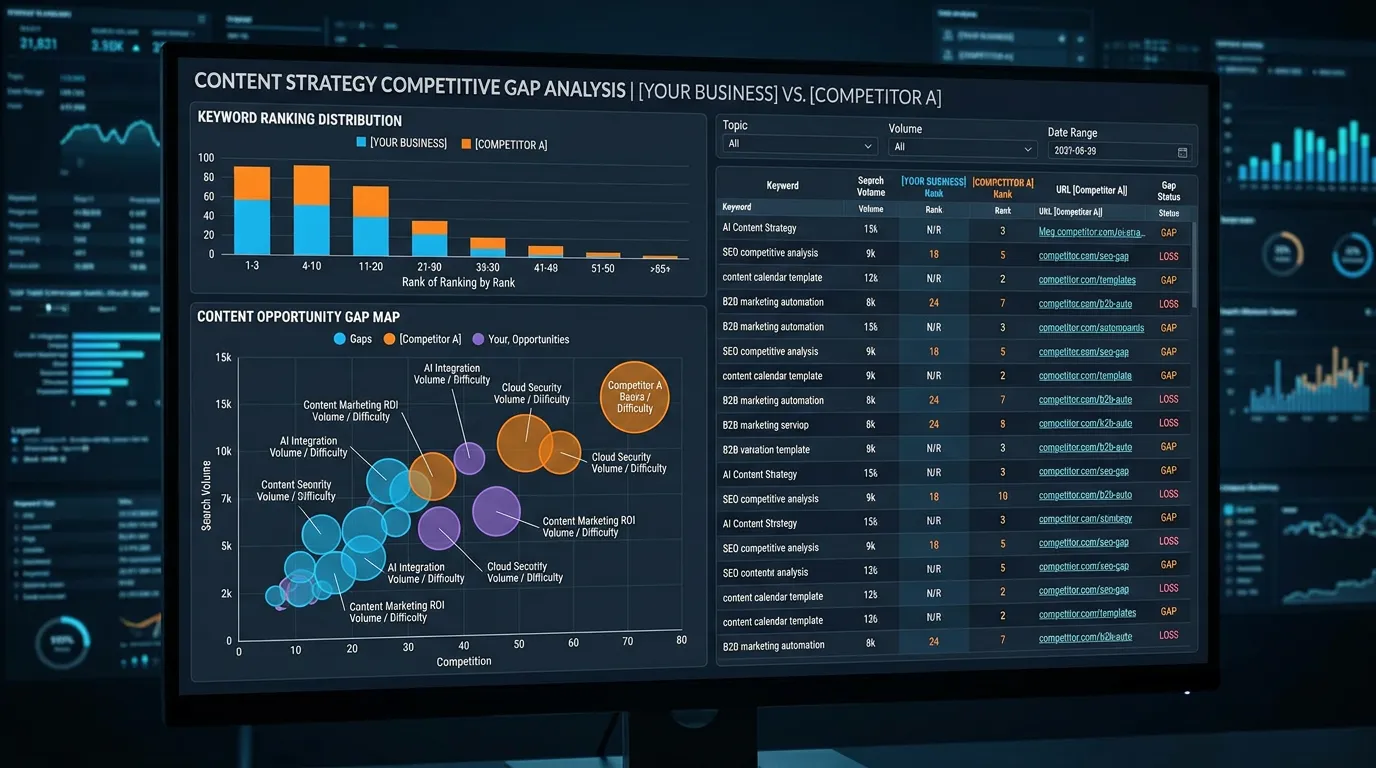
- Competitor content gap analysis showing what they rank for and you do not
- Scored topic list ranked by intent, demand, difficulty, and your ability to answer
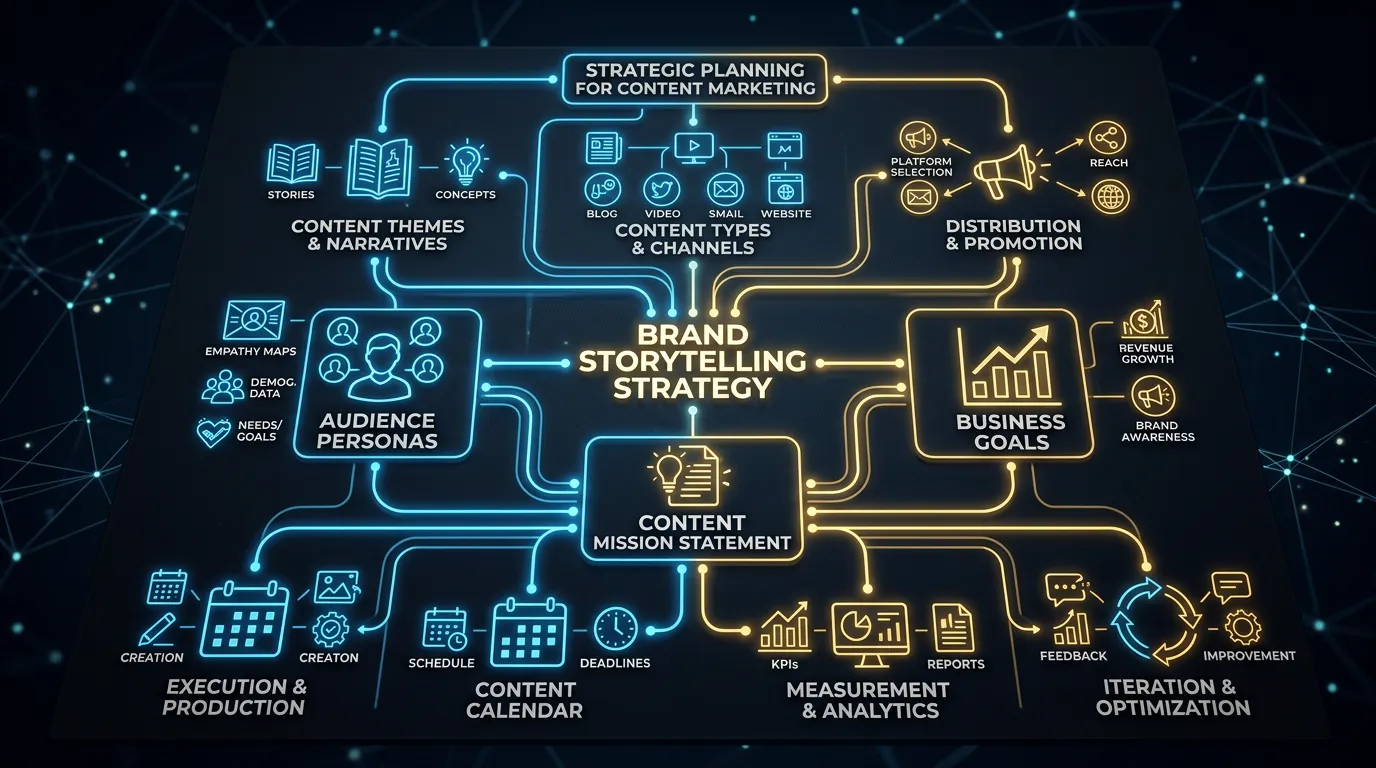
- Buying stage map placing each topic at awareness, research, comparison, or decision
- Format spec for each topic: cost guide, explainer, comparison, checklist, or case story
- Publishing cadence matched to your budget and your subject matter availability
- Measurement plan naming one primary metric per content type
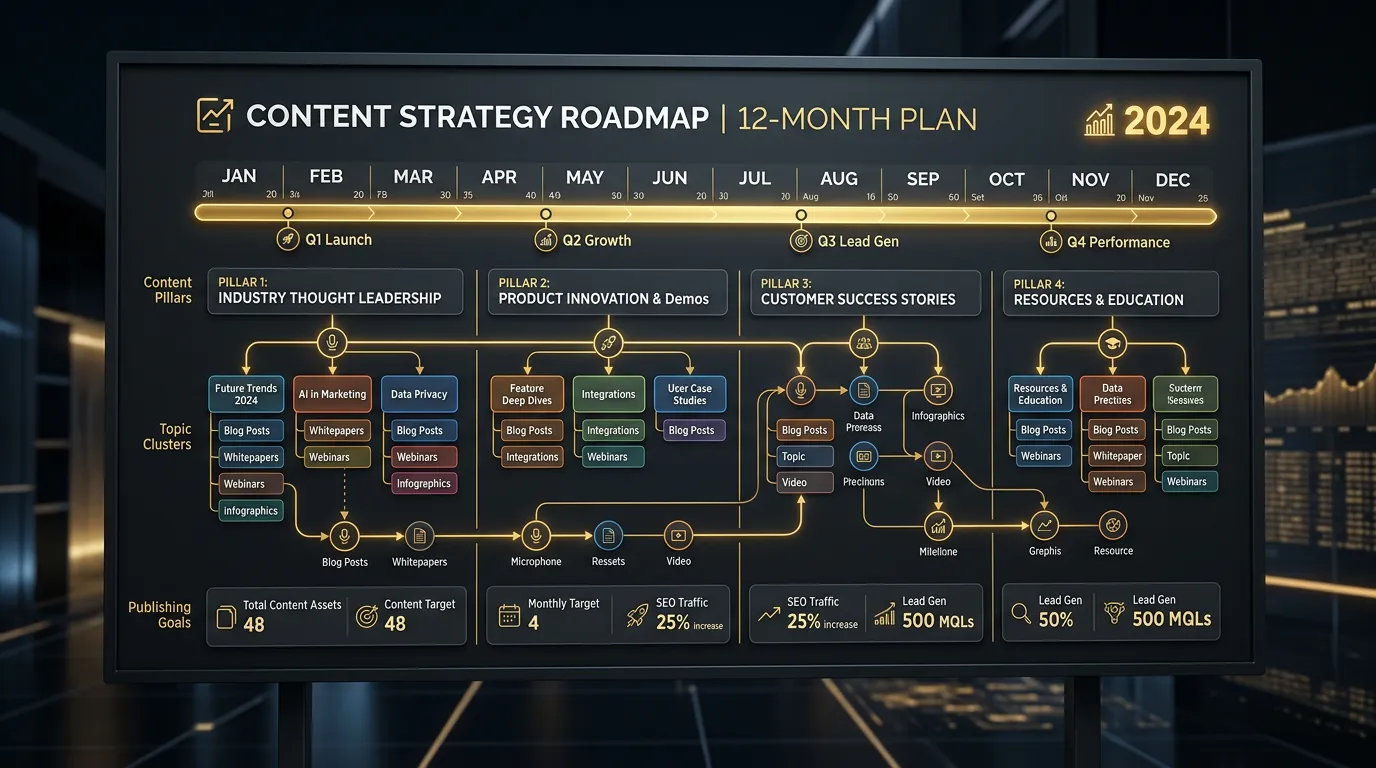
- Twelve month roadmap sequencing clusters in production order
Our process
Demand Research
Week 1We build a query set from Search Console impressions you already get, keyword tools, and the autocomplete and People Also Ask boxes for your core services. Impressions without clicks are the fastest wins because Google already thinks you are relevant.
Sales Input Interviews
Week 1 to 2Two or three short calls with your office staff and estimators. We are listening for the questions they repeat, the objections that stall deals, and the misunderstandings that waste truck rolls.
Gap and Difficulty Scoring
Week 2Each topic gets scored against what already ranks. If the first page is filled with national sites that have thousands of links, we say so and pick a narrower angle you can actually win.
Sequence and Assign
Week 2 to 3Topics get ordered by expected business impact, grouped into clusters, and assigned a format, target query, and word count. Comparison and cost topics usually go first because they attract shoppers.
Set the Scoreboard
Week 3We define what success looks like per format. A cost guide is judged on assisted conversions. A definition page is judged on impressions and featured snippets. Judging every piece by leads alone kills useful top of funnel work.
Realistic timeline: Two to three weeks to produce the content strategy. It then guides roughly twelve months of publishing and gets reviewed every quarter against actual performance.
How we score a topic before it makes the list
Every candidate topic gets four scores. A topic has to do well on all four, not perfectly on one.
| What we score | The question we ask | Scores high when | Scores low when |
|---|---|---|---|
| Buying intent | Is this person close to hiring? | Cost, quote, or near me searches | History and definition topics |
| Search demand | Does anyone type this? | 50 or more searches a month | Under 10, with no related terms |
| Difficulty | Can we realistically rank? | Local sites hold the first page | National brands own every spot |
| Your expertise | Can you answer this better? | Your crew does the work weekly | You would be guessing too |
| Path to a sale | Where does the reader go next? | Links to a service you sell | Dead ends with no next step |
A topic that scores low on expertise gets cut even when demand looks great. Those are the pages that end up reading like everyone else's.
Two topics that look the same on a keyword list
Say a roofing company has two candidate topics. One is roof types explained. The other is tile roof repair cost in Chino. A keyword tool shows the first one with ten times the volume, so most plans pick it.
The second one wins. Nobody searching roof types is close to a decision. They are reading. The person typing a repair cost with a city name has water coming in and two quotes to compare. That page can carry real price bands and link straight to the repair service page.
This is the trade most plans get backwards. Volume looks like progress on a report. Intent is what shows up on the phone. We usually build the first six months around cost, comparison, and problem topics, then add the broad explainers once the money pages are covered.
Finding topics without opening a keyword tool
The best topics come from people, not software. Here is what works and what wastes a year.
Do this
- Write down every question your front desk repeats for two weeks
- Read your own three star reviews for what confused people
- Note what your estimators explain twice on every appointment
- Pull queries from Search Console that get impressions and no clicks
- Write the page that filters out the jobs you keep turning down
Not this
- Do not pick a topic just because a competitor ranks for it
- Do not chase big volume on a term a national site owns
- Do not count hiring posts and holiday greetings as content
- Do not aim two different pages at the same search
- Do not approve a topic nobody on your team can add detail to
More on the planning stage
Who from my team needs to be in the interviews?
What if a competitor already covers every topic on my list?
Do I still need a content strategy if I already have 50 blog posts?