
Senior Care
Digital Marketing for Home Health Care
Case managers and physician offices drive most volume
Call (714) 823-3164 or ask a question. Clear recommendations, even if we never work together.
Home health marketing is mostly business to business. Referrals come from hospital case managers, skilled nursing facilities, and physician offices. Your website exists to prove you are credible and easy to work with. Star ratings, fast intake, and clear service area maps matter more than ad spend.
Jump to a section
- What usually goes wrong
- Which channels matter
- Seasonality
- What we measure
- Common concerns
- Where we start
- The 60 second check a case manager does
- What each referral source needs from you
- Where referrals leak before the first visit
- Summer is the build season
- Marketing inside the rules that govern home health
- Questions
What usually goes wrong
- Referral volume rests on a handful of case managers who change jobs without warning
- You cannot pay for referrals, so the usual sales playbook is off the table
- Families confuse you with non medical home care and call asking for help with laundry
- Your public star rating shapes referral decisions before anyone speaks to you
- Intake takes too long, so a facility sends the patient to whoever can start tomorrow
- Reimbursement pressure squeezes margin while nursing and therapy wages keep climbing
- Physician offices do not know which of your service lines they are able to order
What usually makes an owner start looking
- A hospital or skilled nursing facility narrows its preferred provider list and you are not on it
- A community liaison leaves and takes a large piece of weekly referral volume
- Your quality star rating improves and nothing online reflects it
- You expand into a new county where no referral source knows your name
- Admissions fall for two straight months with no clear explanation
- You launch a specialty program such as cardiac, wound care, or fall prevention
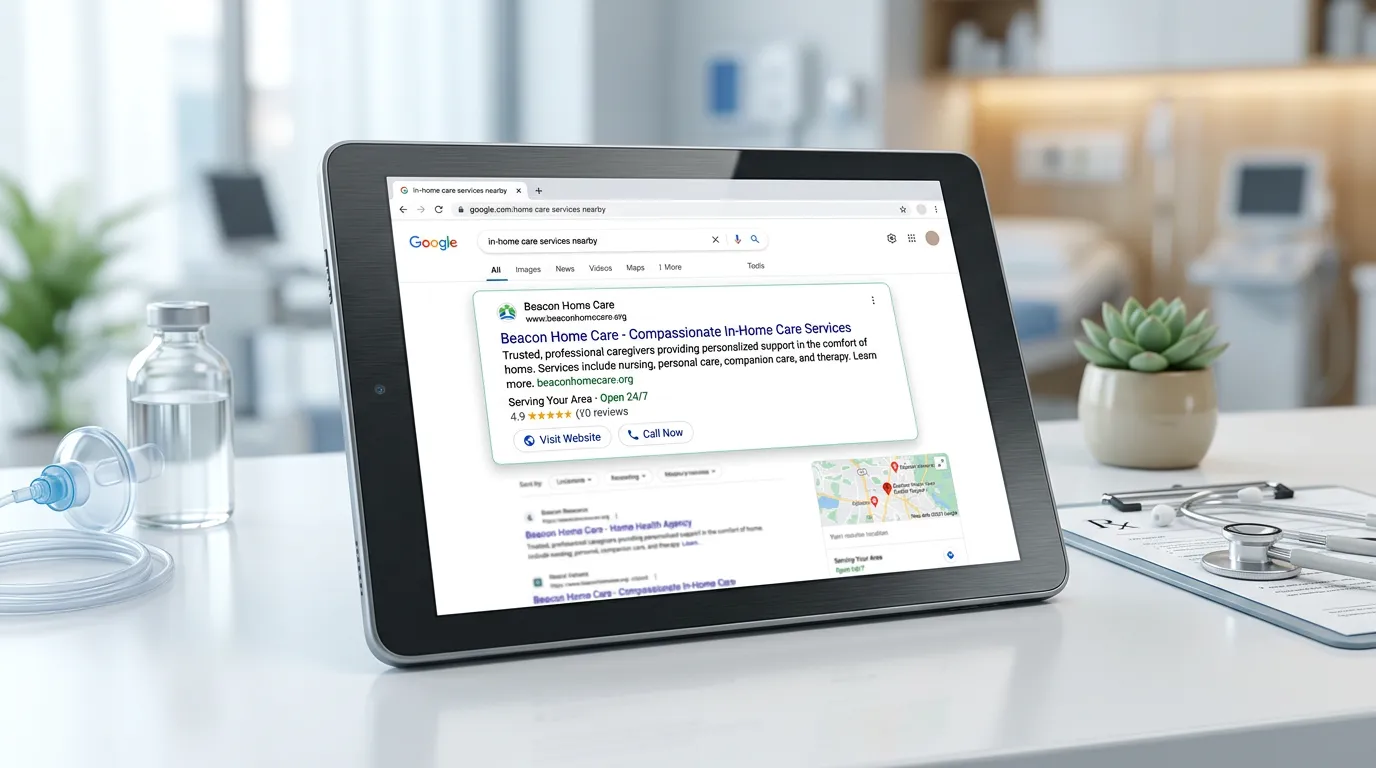
Which channels actually matter
Not every channel deserves the same weight for home health care. This is how we would prioritise.
| Channel | Weight | Why |
|---|---|---|
| Web Design and Development | Primary | A case manager opens your site on a hospital computer with a patient waiting. Service lines, covered counties, intake phone number, and a referral form have to be findable in seconds. |
| Content Marketing | Primary | Discharge planning guides, condition specific program pages, and clear explanations of what Medicare covers make you useful to referral sources and to families at the same time. |
| Local SEO | Secondary | Families and physician staff still search home health plus a city. Coverage pages for each county and city you are licensed to serve catch that traffic. |
| Reputation Management | Secondary | Reviews do not drive referrals the way they do in retail, but a page full of one star reviews will cost you a spot on a preferred provider list. |
| Technical SEO | Supporting | Structured data, fast pages, and clean indexing help your service lines appear in search features and AI answers when someone asks who provides home health in an area. |
Seasonality
Referrals track hospital and skilled nursing discharge volume. Respiratory season from December through February brings the heaviest admission counts in Southern California. Elective joint replacements cluster in late winter and spring, which feeds therapy heavy episodes. Summer is usually the quietest stretch. That makes it the right time to build referral relationships and publish content for the next busy season.
What we measure
Admissions per month by referral source
Referral to start of care conversion rate
Hours from referral received to first visit
New referral sources added per quarter
Episode volume by service line
Concerns we hear
All our referrals come from hospitals. A website will not change that.
Case managers check you online before handing your name to a family, and the family checks again before agreeing. A site that clearly states your counties, service lines, and intake hours removes the reasons someone picks a different agency at the last minute.
We cannot advertise like a retail business. There are rules.
Correct, and we work inside them. No promises about outcomes, no patient details without written authorization, and nothing that could look like payment for referrals. Education and clear service information are both allowed and effective.
Our marketing is our liaisons in the field.
Keep them and give them better tools. A one page program sheet, a referral form that works on a phone, and content they can leave behind make every visit count for more than a box of donuts.
Nobody searches for home health care.
Families do, especially adult children arranging care from out of state. Volume is lower than consumer services, but intent is very high and a single episode is worth many times a typical local service call.
We are already at capacity for nurses.
Then recruiting is the campaign. The same local search work and careers page that fill patient inquiries fill nursing and therapy applications, and we can hold admissions marketing until staffing catches up.
Where we would start
The services that move the needle fastest for home health care.
Web Design and Development
Fast, accessible websites built to turn visits into calls.
Web Design and DevelopmentReputation Management
Generate reviews on purpose and protect the rating you have.
Reputation ManagementGenerative Engine Optimization
Get named when someone asks an AI who to call.
Generative Engine Optimization
Where we serve this industry
The 60 second check a case manager does
A case manager has a patient waiting and four agencies to choose from. Your website gets about a minute. These are the things they need without scrolling twice.
Every county and city you serve
A list, not a map image. Staff copy and paste city names.
Service lines in plain words
Nursing, physical therapy, occupational, speech, social work, aide.
Intake number at the top of the page
Not in the footer and not behind a contact page.
Intake hours, weekends included
Say what happens to a Friday afternoon referral.
Three ways to send a referral
Phone, secure fax, and a form that works on a phone.
Which insurance types you accept
Medicare, managed plans, and the networks you are in.
How fast you start care
A real number for time to first visit, and then hit it.
A named intake contact
People send referrals to people, not to companies.
What each referral source needs from you
Five audiences read the same website for five different reasons. Most home health sites are written for only one of them.
| Referral source | What they are deciding | What actually convinces them | Where they check |
|---|---|---|---|
| Hospital case manager | Who can start before the bed is needed | Time to first visit and weekend intake | Your site, on a hospital computer |
| Skilled nursing discharge planner | Who will not send the patient back | Your quality rating and readmission focus | The rating first, then your program pages |
| Physician office scheduler | What their doctor is able to order | A clear page on eligibility and how orders are placed | A search, or the sheet your liaison left |
| The patient's family | Whether this agency is real | Reviews, staff names, and a phone that gets answered | Search and reviews, usually at night |
| Care manager or placement advisor | Who makes them look good to the family | Coverage area and how you communicate | Their own short list, then your site |
Give each of these a path from the home page in one click, with the words they use, not the words you use.
Where referrals leak before the first visit
Referral volume is only half the number. The other half is how many referrals turn into a start of care, and where the rest go.
Time each step for one week. The slowest step is usually staffing, and it is usually not a marketing problem.
Summer is the build season
Home health volume follows discharges. In Southern California the heaviest stretch runs December through February, when respiratory illness fills beds. Joint replacements add therapy heavy cases in late winter and spring.
That makes June through August the quiet months, and quiet is when the work gets done. Pages take four to six months to earn a position. A county page published in July is ranking by the time the December wave arrives.
Use the lull for three things. Publish the service line pages you never had time for. Visit referral sources when you do not need anything from them. Fix the intake handoff that slows you down when you are busy.
Agencies that market only when admissions drop are always about six months late. The fix is boring. Build in the slow season and collect in the busy one.
Marketing inside the rules that govern home health
Home health sits under rules retail businesses never think about. Most of it comes down to two ideas: do not pay for referrals, and do not share patient information.
Do this
- Give referral sources education and tools they can use.
- Get written authorization before any patient story, photo, or quote.
- Describe what a program includes and who qualifies for it.
- Publish your service area, intake hours, and referral process in full.
- Keep a dated record of who approved each page.
Not this
- Do not offer anything of value in exchange for referrals.
- Do not promise an outcome, a recovery time, or a readmission result.
- Do not name a facility as a partner without written permission.
- Do not post a review that includes a patient's condition.
- Do not let a vendor run ads for you without reading the copy first.