Senior Care
Digital Marketing for Respite Care
Almost nobody searches the word respite by name
Call (714) 823-3164 or ask a question. Clear recommendations, even if we never work together.
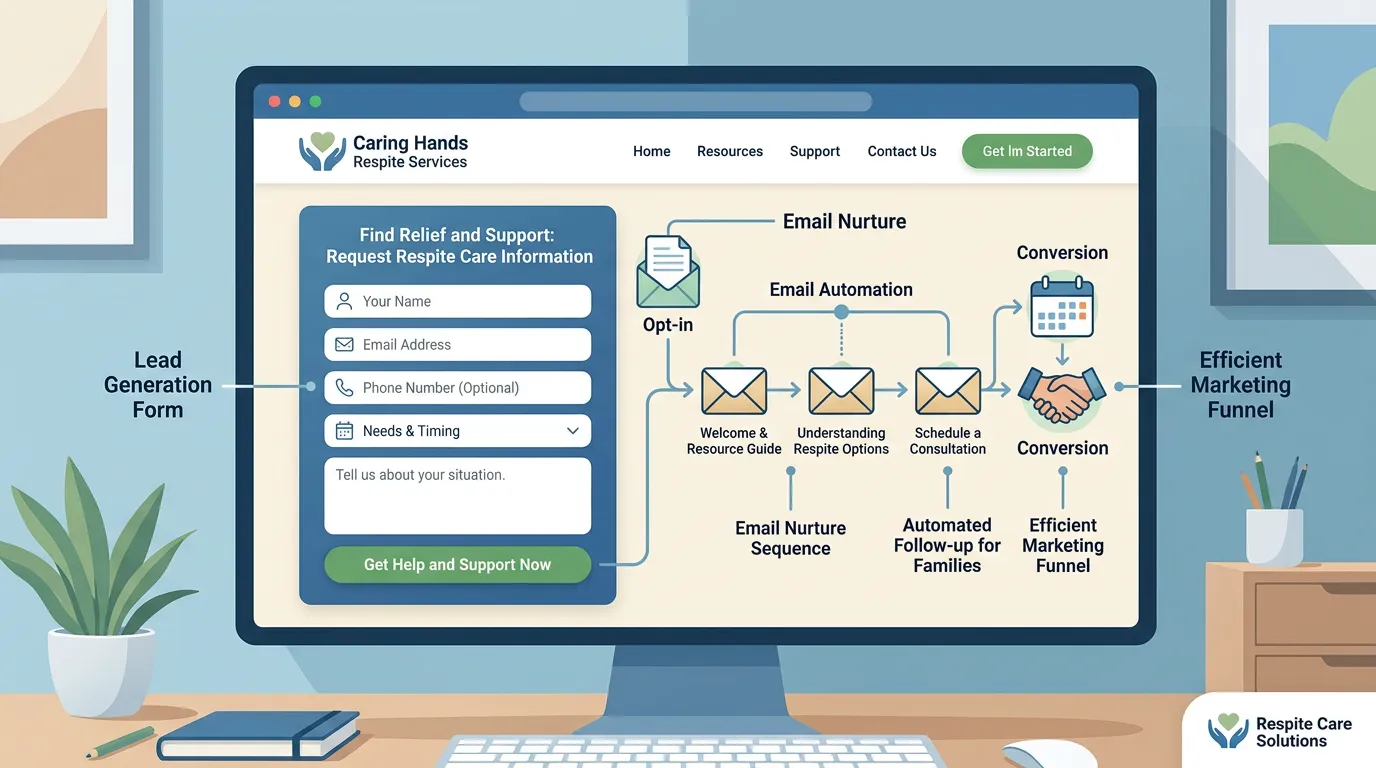
Respite care marketing has to explain the product before it can sell it. Most family caregivers have never used the word respite. They search for things like help caring for my mom for a week. Content that names the problem, plus easy short term booking, turns worn out caregivers into first time clients.
Jump to a section
- What usually goes wrong
- Which channels matter
- Seasonality
- What we measure
- Common concerns
- Where we start
- What families type when they need respite
- The funding most respite providers never mention
- A respite marketing year
- Building a short stay a family will actually book
- Turning four days into four months
- Questions
What usually goes wrong
- Families do not know the word respite, so nobody searches for what you actually sell
- Bookings are short, so revenue per client is small while the sales work is the same as a long case
- Requests arrive with two days notice and staffing them wrecks the schedule
- Family caregivers feel guilty about needing a break and talk themselves out of calling
- Short stays leave empty beds or unassigned hours the moment they end
- Funding is confusing because coverage through veterans benefits, state programs, or a long term care policy varies by family
- One rough short stay costs you the long term client that stay could have become
What usually makes an owner start looking
- A hospital or caregiver support group asks whether you offer short term relief and you have nothing to hand them
- Summer and holiday travel requests come in and there is no page to send anyone to
- You have open capacity that a full time client cannot fill this month
- You want a low commitment first step that leads into ongoing care
- A veterans service organization or a respite care manager asks about short stay options
- A competitor starts advertising short term stays in your city
Which channels actually matter
Not every channel deserves the same weight for respite care. This is how we would prioritise.
| Channel | Weight | Why |
|---|---|---|
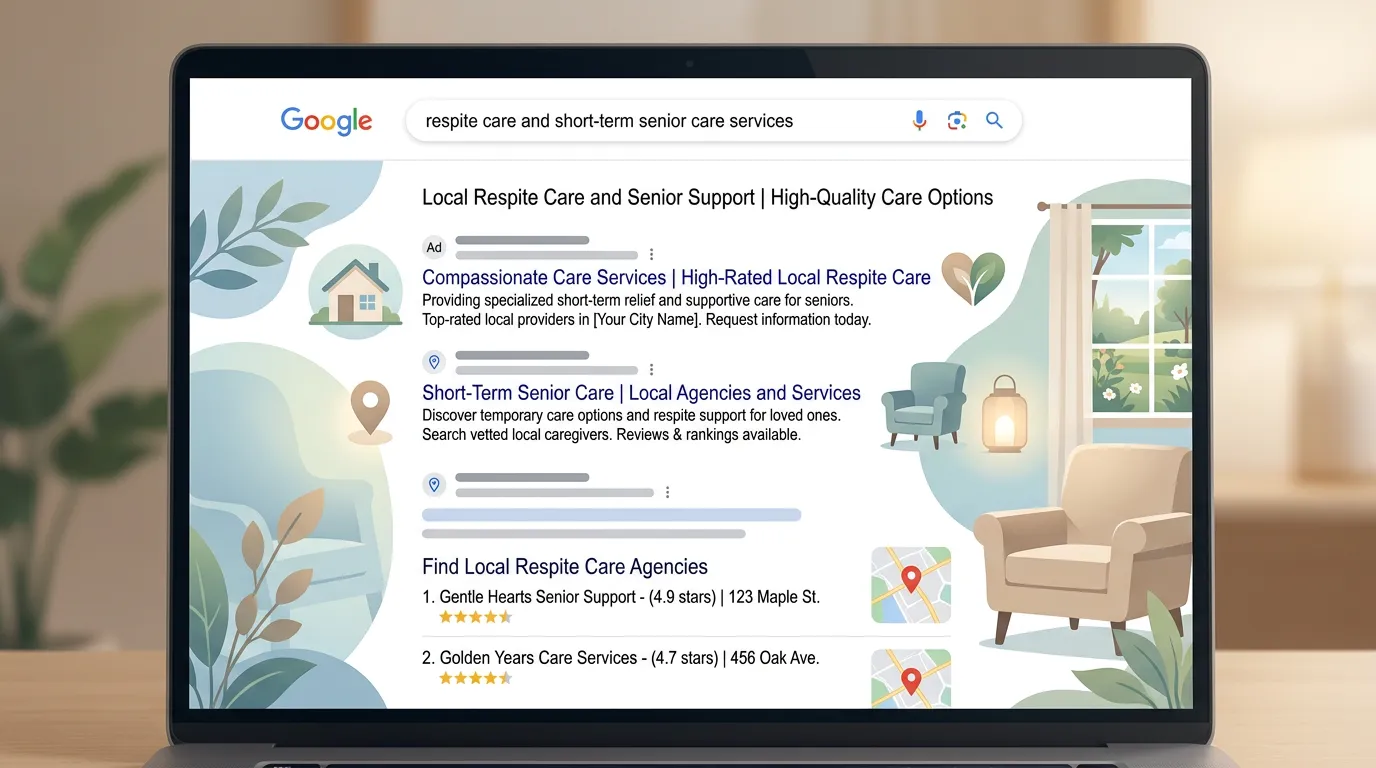
| Content Marketing | Primary | Most families search the problem, not the respite care service. Pages about caregiver burnout, taking a vacation while caring for a parent, and what a short stay costs are what get found. |
| Local SEO | Primary | Short term care searches are local and urgent. A profile and city pages that list respite as a service put you in results when a family finally looks. |
| Email and Marketing Automation | Secondary | Reminders sent before summer and the holidays reach families who thought about a break in March and never did anything about it. |
| Pay Per Click Advertising | Secondary | Small budgets timed to the weeks before travel periods capture demand that only exists for a few months a year. |
| Social Media Marketing | Supporting | Caregiver support communities are active on social platforms, and genuinely helpful posts reach people who would never click an ad. |
Seasonality
This is the most seasonal service in senior care. Two stretches create most short term requests: summer travel from June through August, and the holidays from late November through the new year. Those are the weeks when family caregivers leave town. Spring break weeks add a smaller bump. Southern California also brings requests during wildfire evacuations and long heat waves. That is when a home stops being safe for an older adult.
What we measure
Short term bookings per month
Share of respite clients who convert to ongoing care
Average length of a respite booking
Cost per booked short stay
Capacity utilization during peak travel weeks
Concerns we hear
Respite is too small a service to advertise.
Treat it as the front door. A family that trusts you with four days often comes back for ongoing care, and the marketing that sells the short stay is the same marketing that sells everything else you offer.
We cannot staff short notice requests.
Then we market with lead times built in. Stated booking windows, minimum notice, and seasonal reminders sent weeks ahead change who calls and when, which is what makes the schedule manageable.
Families do not want to admit they need a break.
That is exactly why the content has to name the feeling first. Pages that start with how tired caregivers actually are, then explain the option, convert far better than a service list ever will.
There is no search volume for respite care.
There is very little for the word itself. There is real volume for the questions around it, and those are the pages we build. We track calls from each page so you can see whether the traffic is worth anything.
We already fill our schedule with full time clients.
Then respite fills the gaps and feeds the pipeline. Short stays cover weeks an ongoing client cannot, and they give new families a low risk way to try you before committing to anything larger.
Where we would start
The services that move the needle fastest for respite care.
Email and Marketing Automation
Follow up every time, without anyone remembering to.
Email and Marketing AutomationPay Per Click Advertising
Paid traffic that produces calls instead of clicks.
Pay Per Click AdvertisingSocial Media Marketing
Social proof that supports the sale instead of random posting.
Social Media MarketingGoogle Business Profile Optimization
Turn your profile into the strongest lead source you own.
Google Business Profile Optimization
Where we serve this industry
What families type when they need respite
Build pages around the situation, not the respite care service name. Here are five situations, the words people actually use, and when each one shows up.
| What the family is living through | What they actually type | Page that catches it | When it peaks |
|---|---|---|---|
| A trip is booked and nobody can stay with Dad | care for my dad while I travel | A short stay page written for travel weeks | May through August |
| The main caregiver is having surgery | someone to stay with my mom for a week | A short notice and recovery page | All year, no season |
| Burned out and cannot say it out loud | caregiver burnout help | A page that names the feeling before the respite care service | January and February |
| A parent is coming home from the hospital | short term care after hospital stay | A transition page with a clear start date | December through March |
| A child with special needs and no break | respite hours for my son | A page on funded respite hours and who to ask | Summer and school breaks |
Only one of these five uses the word respite. Write for the sentence, not for the industry term.
The funding most respite providers never mention
Families ask what it costs before they ask anything else. A good number of them already have money available for this and have no idea.
Three sources come up over and over in California. A long term care policy often includes a respite benefit the policyholder never read. Veterans and surviving spouses may have benefits that can pay for help at home. Families of a child or adult with a developmental disability may qualify for respite hours through a regional center.
You are not a benefits advisor and should not act like one. Write one short page per source. Explain what it is, who tends to qualify, and exactly who to call to find out. Link to the official program page and stop there.
These pages get little traffic and produce very good calls. A family that learns from you how to pay for respite care usually books that care with you.
A respite marketing year
This is the most seasonal service in senior care, so the calendar does most of the work. Publish months before the demand, not during it.
Families plan a July trip in March. If your page goes up in June, you missed the booking.
Building a short stay a family will actually book
Short stays fall apart on logistics, not on price. Decide all of this before you advertise anything, then put every answer on the page.
A minimum you can live with
Three days or a week. Pick one and publish it.
A day rate, not only an hourly rate
Families budget a trip in days, so quote it in days.
Your booking window
Say how much notice you need, and what happens with less.
A short notice path
Some requests come two days out. Decide now what you accept.
A meeting before the stay
Thirty minutes with the caregiver removes most of the fear.
One page of what to leave behind
Medications, routines, doctors, and the neighbor's phone number.
A written cancellation policy
Trips change. Say what happens to the deposit when they do.
A deposit that holds the dates
Without one your calendar is a wish list, not a schedule.
Turning four days into four months
The short stay is the audition. Most providers hand the client back and never follow up, which throws away the entire point of doing it.
Do this
- Send a short written summary of the stay to the family.
- Note gently what you saw: meals skipped, sleep, and mobility.
- Ask on day three whether they want the same caregiver again.
- Follow up two weeks later, once everyone has settled back in.
- Track how many short stays turn into ongoing clients.
Not this
- Do not swap caregivers halfway through a four day stay.
- Do not upsell ongoing care during the stay itself.
- Do not let an invoice be the last thing they hear from you.
- Do not treat a short stay as filler work for your newest caregiver.
- Do not lose the family's contact details when the booking closes.