Senior Care
Digital Marketing for Alzheimers and Dementia Care
Long research phase, then a sudden decision
Call (714) 823-3164 or ask a question. Clear recommendations, even if we never work together.
Dementia care marketing is education first. Families spend months learning what is happening to a parent before they price a single service. Then they move within days after a wandering incident or a hospital visit. Clear content about stages, safety, and cost keeps you present through the research. It also keeps you reachable during the crisis.
Jump to a section
- What usually goes wrong
- Which channels matter
- Seasonality
- What we measure
- Common concerns
- Where we start
- What families search at each stage
- The 90 days after a family tours and goes quiet
- Four videos worth making, and what goes in each
- The referral map most providers never build
- Proving you specialize instead of saying it
- Questions
What usually goes wrong
- Families wait until a crisis, so the first call arrives at the hardest possible moment with no relationship built
- Guilt slows the decision, and many families who tour never call back
- Behaviors like sundowning and exit seeking frighten families away from every option they look at
- Staff need dementia specific training that costs money before a single new resident or client arrives
- Every competitor in your market claims to be a memory care specialist with nothing to back it up
- Adult children disagree with each other and the decision stalls for months
- Search results are crowded with national directories and lead sellers instead of actual providers
What usually makes an owner start looking
- An emergency room visit or a wandering incident forces a family decision within days
- You complete a dementia care certification or training program and want it recognized
- You open or renovate a secured memory care neighborhood
- Referrals from a neurologist or a memory clinic slow down
- Occupancy or client hours in the memory program lag the rest of the business
- A competitor starts advertising a memory program in your city
Which channels actually matter
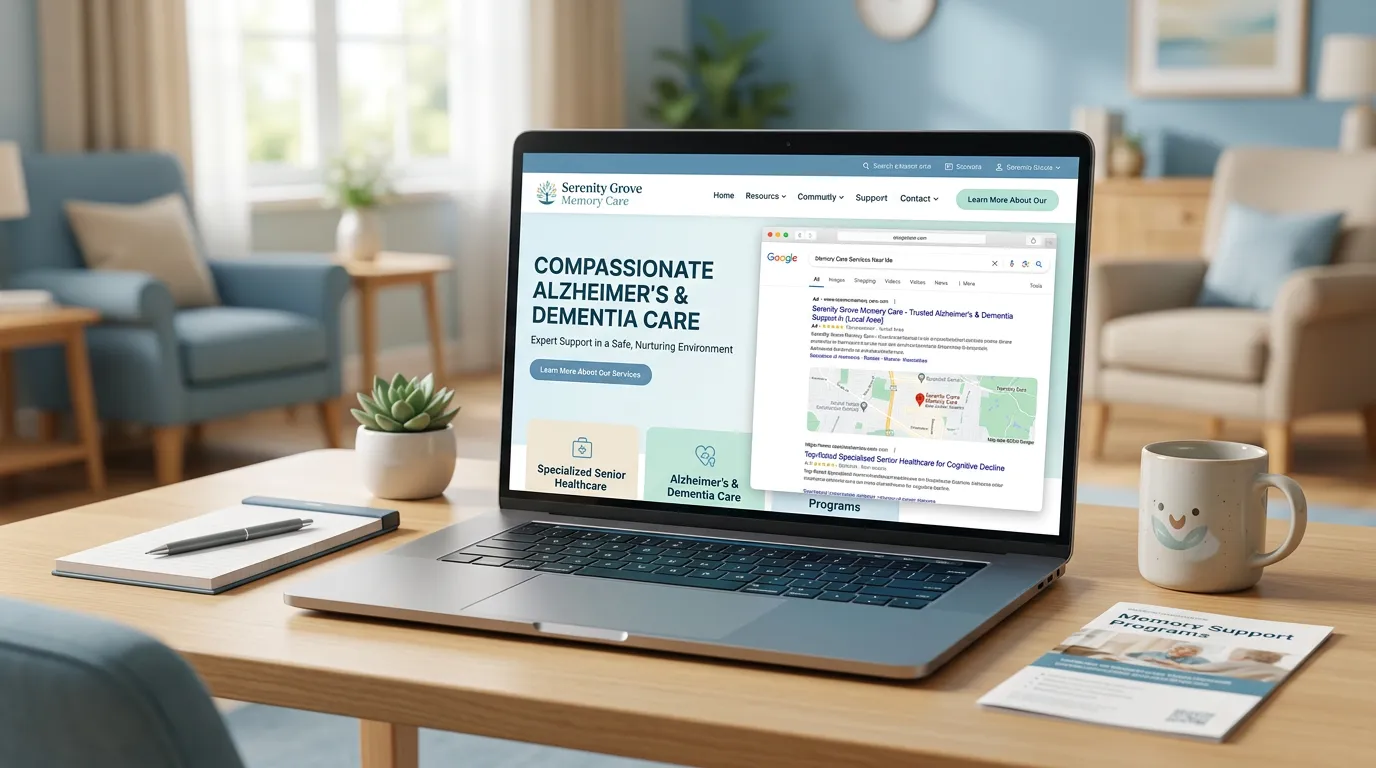
Not every channel deserves the same weight for alzheimers and dementia care. This is how we would prioritise.
| Channel | Weight | Why |
|---|---|---|
| Content Marketing | Primary | Stage by stage guides, home safety checklists, and honest cost explanations are how families find you during the months of research before they call anyone. |
| Local SEO | Primary | Memory care near me and dementia care plus a city name are the searches that produce inquiries. City level pages and a strong profile decide who gets found. |
| Video Marketing | Secondary | A short walkthrough, or a caregiver explaining how the team handles sundowning, does more for a frightened family than three pages of text. |
| Generative Engine Optimization | Secondary | Families now ask AI assistants what the stages of dementia are and who provides care nearby. Clean, well structured answers are what get your name mentioned. |
| Reputation Management | Supporting | Reviews written by adult children about how staff handled a hard day are exactly the proof other families are looking for. |
Seasonality
The pattern follows family visits. Holiday gatherings from Thanksgiving through the new year expose changes that phone calls hide. Inquiry volume then rises sharply in January and February. June is Alzheimer's and Brain Awareness Month, which drives a second wave of searching and local events. Southern California heat waves add urgency. Wandering outdoors in triple digit weather turns a worry into an emergency.
What we measure
Memory care inquiries per month
Inquiry to tour or in home assessment rate
Days from first contact to move in or start of care
Occupancy or billable hours inside the memory program
Calls generated from dementia education pages
Concerns we hear
This is too emotional a decision for marketing to influence.
Marketing does not make the decision. It makes sure that when a family finally starts looking, your explanation of what happens next is the clearest one they find. That is usually what earns the first call and the first tour.
We do not want to look like we profit from a disease.
Then we lead with useful information and never with urgency tactics. Guides, checklists, and honest pricing help families whether they choose you or not. That posture is also what builds trust with the families who do choose you.
Everyone advertises memory care. We will get lost.
Most of it is generic. Naming your training program, your staff to resident ratio, your security setup, and how you handle specific behaviors sets you apart within one paragraph, because almost nobody else bothers.
Our referrals come from doctors and support groups.
Keep feeding those. Families still verify online after a recommendation, and support group members search for answers between meetings. Good content reaches them exactly there, months before a referral would.
We tried leads from a directory site and they were cold.
Directories sell the same inquiry to several providers and keep the relationship for themselves. We build search visibility you own, so the family lands on your page first and calls you directly.
Where we would start
The services that move the needle fastest for alzheimers and dementia care.
Generative Engine Optimization
Get named when someone asks an AI who to call.
Generative Engine OptimizationReputation Management
Generate reviews on purpose and protect the rating you have.
Reputation ManagementWeb Design and Development
Fast, accessible websites built to turn visits into calls.
Web Design and Development
Where we serve this industry
What families search at each stage
A family moves through five rough stages before they call anyone. Each stage has its own search, and each search needs its own page.
| Where the family is | What they say to each other | What they type into search | The page that catches it |
|---|---|---|---|
| Something is off | She repeats herself and forgets names | early signs of dementia or normal aging | A plain page on early signs and when to see a doctor |
| Just diagnosed | The doctor said mild cognitive impairment | what are the stages of dementia | A stage by stage guide with what comes next |
| Home is getting hard | He got out the front door at night | how to stop a dementia patient from wandering | A home safety page that also shows your secured setup |
| The caregiver is worn out | I cannot keep doing this by myself | memory care cost per month near me | An honest cost page with a real range |
| Crisis week | The hospital says she cannot go home | memory care openings in my city | A page on who to call today and what happens next |
Most providers build only the last row. The first four are where the relationship is actually won.
The 90 days after a family tours and goes quiet
Silence after a tour almost never means no. It usually means the adult children have not agreed yet. Plan for that instead of guessing.
Every touch is useful whether they choose you or not. That is what keeps it from feeling like sales pressure.
Four videos worth making, and what goes in each
Video helps here more than anywhere else in senior care. Keep each one under two minutes, shoot on a phone with a clip on microphone, and skip the music. Honesty beats polish.
The walkthrough
Front door to a resident room, no cuts, no stock footage.
Sundowning, answered
One staff member explaining what the team does at 4 pm.
A day, hour by hour
Wake up, meals, activities, and the evening routine.
How families stay involved
Visits, calls, and how you tell them about a bad day.
Written permission first
Nobody appears on camera without signing for it.
Captions on every video
Most adult children watch with the sound off at work.
The referral map most providers never build
Dementia referrals come from a small and very specific group of people. Most providers know two of them well and ignore the rest.
The list is short. Neurologists and memory clinics. Hospital social workers. Adult day programs. Elder law attorneys who handle conservatorships. Geriatric care managers. Local Alzheimer's support groups and the volunteers who run them.
Each one wants something different. An attorney needs your cost tiers so a family can plan. A support group leader wants a speaker, not a sales pitch. A neurology office wants one page it can hand a family during a five minute visit.
Build the pages first, then the relationships. A referral source who can text a link does far more for you than one who took a brochure and lost it.
Proving you specialize instead of saying it
Every provider in your city claims memory care experience. Specifics are the only thing that separates you, and they take about one paragraph.
Do this
- Name your training program and the hours each staff member completes.
- Publish your staff to resident ratio for days and for nights.
- Describe your doors, alarms, and outdoor space in plain words.
- Say what a hard afternoon looks like and how the team responds.
- Say clearly what you cannot safely handle.
Not this
- Do not use the word specialized with nothing behind it.
- Do not fill the page with garden photos and no people.
- Do not use fear or countdown language on a family in crisis.
- Do not promise that a behavior will stop.
- Do not compare yourself to a named competitor in writing.