
How To Articles
How Video Marketing Works, From Filming to a Phone Call
Four jobs, in order. Get served, hold attention, answer the fear, ask for the next step. Break one and the video stops earning calls.
Call (714) 823-3164 or ask a question. Clear recommendations, even if we never work together.
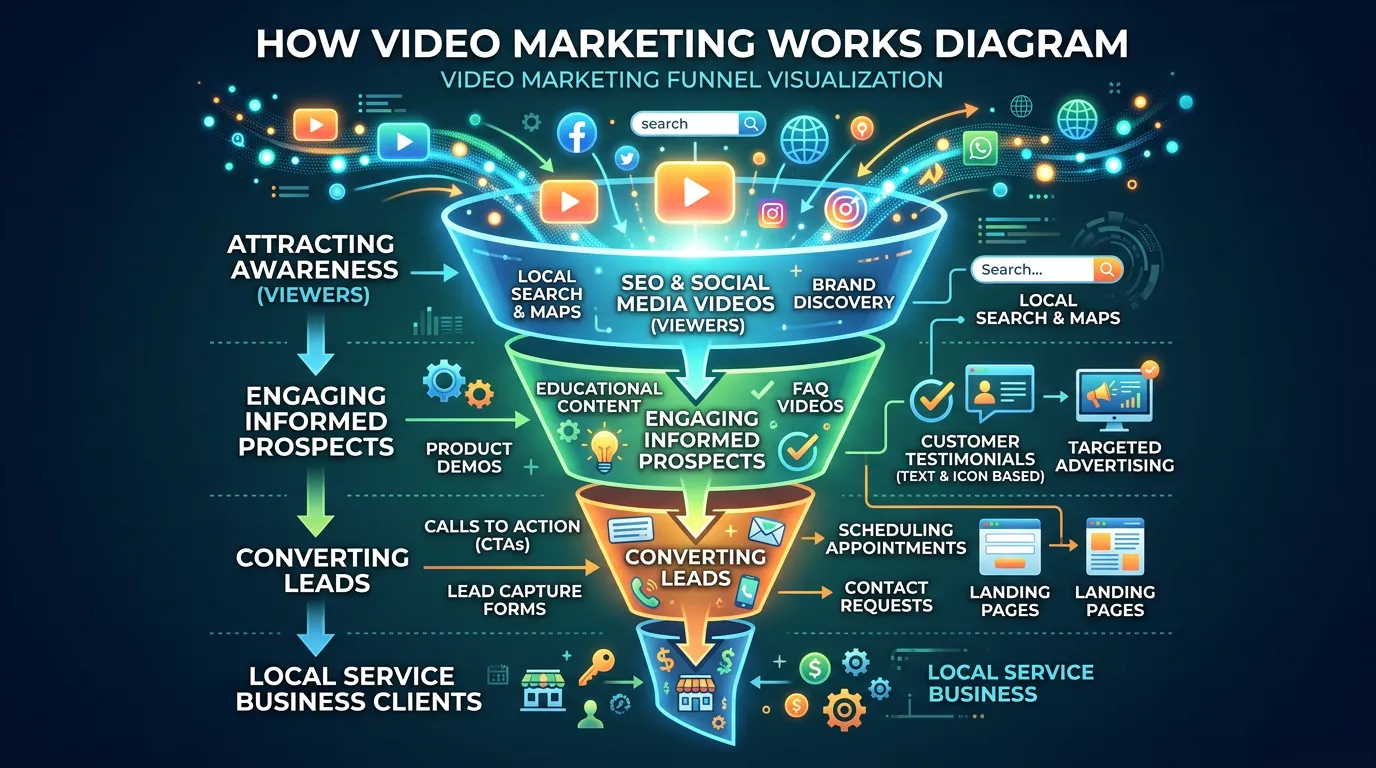
Video marketing works by doing four jobs in order. A clip gets served to someone, it holds their attention past the first few seconds, it answers the question they were worried about, and it points them to a next step. Break any one link and the video stops producing calls.
Jump to a section
- What Video Does That Text Cannot
- The Four Jobs Every Business Video Has to Do
- Pull, Push, and Why One File Does Not Fit Everywhere
- How a Viewer Decides in the First Few Seconds
- How Platforms Decide Who Sees It
- How to Tell Whether Video Is Actually Working
- When Video Is Not the Right Spend Yet
- From Served to Called, and Where It Breaks
- What Each Type of Video Is For
- Habits That Make Video Pay, and Ones That Waste It
- Two Things Owners Ask Before Booking a Shoot
- Questions
What Video Does That Text Cannot
Text makes a claim. Video shows the thing. That gap is the whole reason video works, and it matters most when the buyer is nervous. A homeowner reading that your crew is careful and clean has to take your word for it. The same homeowner watching a tech lay floor protection down before carrying a water heater through a hallway does not. They saw it happen. So video pays off hardest where the job is costly, invisible once it is finished, or hard to picture. Repipes, roof tear offs, crown work, collision repair. The customer cannot inspect the video marketing work once it sits behind a wall. What they can inspect is you. There is a second effect owners notice long before any report shows it. Estimate calls get shorter. The five questions that used to eat ten minutes are already answered, so the call starts further along. That is real money even if nothing ever ranks. The tradeoff is honest. Video costs more to make than a paragraph, and a weak video does more harm than no video at all. Shaky footage with muddy sound reads as careless, and people will apply that judgment to your work.
The Four Jobs Every Business Video Has to Do
Video marketing is not one switch that works or fails. It is four jobs in a chain. Get served. Hold attention. Answer the fear. Ask for the next step. The first job is getting in front of a real buyer. That happens three ways. Someone searches for the question your video answers, a platform pushes it into a feed, or you pay to put it in front of a chosen audience. The second job is holding attention past the opening. Most viewers decide in a few seconds, and a spinning logo spends all of them saying nothing. The third job is answering what the buyer is actually worried about. That is rarely your history or your values. It is price, mess, time off work, and whether the person at the door knows the job. The fourth job is asking. A video that fades to black leaves the viewer with no instruction. Tell them to call, to book, or to read the page under the player. Each job depends on the one before it, which is why the order matters when something is not working. Find the earliest broken link and fix that one.
Pull, Push, and Why One File Does Not Fit Everywhere
The same video does not belong in every place. What changes is how the viewer arrived. Pull is when someone went looking. They typed a question into Google or YouTube and clicked your result on purpose. These viewers are patient. A four minute walkthrough of a sewer camera inspection is fine here, because they asked for exactly that. Push is when the video lands in front of someone who was not looking. Feeds, ads, and the media panel on your Google Business Profile all work this way. Patience there is close to zero. Push video needs a short runtime, a first frame with something happening in it, and captions, because the sound is off. Your own website is the middle case. A visitor on your service page is interested but not convinced. They do not need the problem explained. They need proof that you in particular are safe to call. A customer story or a walk through your real process fits that better than anything clever. Decide where a video will live before you film it. One file stretched across all three places usually ends up too long for the feed and too thin for the page.
How a Viewer Decides in the First Few Seconds
Assume the sound is off. In feeds it almost always is, and on many phones video starts muted by default. That single fact changes how you open. Words on screen in the first two seconds do more work than any line of narration, so burn the captions in rather than trusting the platform to add them. Open on the problem, not on yourself. A hand pointing at a rusted fitting beats a man in a polo saying hello and welcome to our channel. Movement holds a thumb better than a still shot, so start with something in motion. Faces help too, because people look at faces before anything else on a screen. Say what the viewer gets, early. If the video shows what a slab leak repair looks like, put that on screen in words in the opening seconds. Do not save it for the middle. There is no reward for a build up. The fastest test is to mute your own video and watch the first ten seconds. If you cannot tell what it is about, neither can a stranger, and they will not turn the sound on to find out.
How Platforms Decide Who Sees It
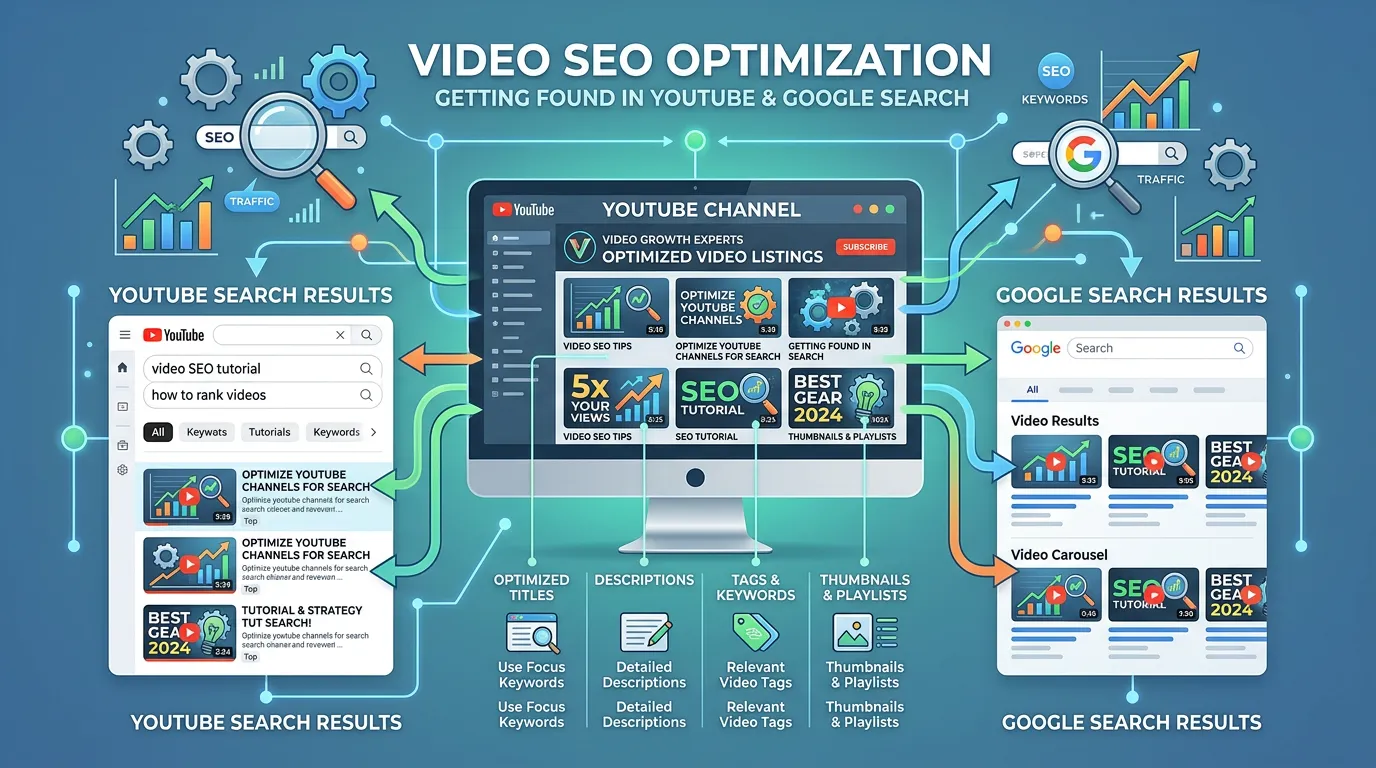
Every platform runs the same rough test. It shows your video to a small group and watches what they do. If they keep watching, it shows it to more people. If they swipe away, it stops. That is most of the machinery, and it explains a lot. It means the thumbnail and the first line carry more weight than the rest of the file put together, because they decide whether the test starts at all. It also means a video that holds a small audience to the end can beat a flashier one people abandon. Watch time and retention move things. Likes mostly do not. For a local business this cuts both ways. Your real audience might be twenty thousand households, so no feed is going to hand you a million views, and it should not. Reach was never the goal. The goal is the right few hundred people at the moment they are choosing. Search works a bit differently from feeds. There, the question in your title has to match the question typed. A video called Company Overview matches nothing anyone searches. One called What Happens During a Slab Leak Repair matches a real question, and keeps matching for years.
How to Tell Whether Video Is Actually Working
Pick the measures before you film, not after. Four are enough for most businesses. Play rate is the share of page visitors who press play, and it tells you whether the thumbnail and the placement are doing their job. Retention is how far the average viewer gets. Watch where the line drops and go look at what happens at that moment. Page behavior is the third. Compare the same service page before and after the video went on it, using time on page and form fills, and note the date it went live so you have a clean split. The fourth is the one that pays the bills. Ask new callers what made them call. Half will not remember. The ones who say they watched the video about the roof tear off are telling you which video to make next. Set up calls and form submits as tracked events so a lead ties back to a source. Then give it time. Watch time and play rate move in weeks. Calls and search results move over months. Judging a video library at four weeks is how good work gets killed early.
When Video Is Not the Right Spend Yet
Video multiplies what you already have. It does not create it. So there are cases where the money belongs somewhere else first. If your website does not turn visitors into calls, adding video puts a nicer film in front of a locked door. Fix the page, the offer, and the phone number first. If you have eleven reviews and your closest competitor has four hundred, that gap decides more sales than any video will, and reviews are cheaper to build. If nobody answers the phone during the day, or nobody calls a form fill back for two days, stop. Every video you make will feed a leak. Video also fits poorly where price is the only thing being compared. If customers pick on cost alone and never open a website, spend on the channel where the price is shown. None of this is permanent. Once the page converts, the reviews are steady, and the phone gets answered, video is often the next best thing to buy, because it makes all three work harder.
From Served to Called, and Where It Breaks
Each step depends on the one before it. Find the first step that fails and fix that one.
A perfect ending cannot save a video nobody watched past the third second.
What Each Type of Video Is For
Five formats cover almost everything a service business needs. The job column is the part people skip.
| Video | Best home | Length | Job it does |
|---|---|---|---|
| Service explainer | The matching service page | 60 to 120 sec | Removes the main worry |
| Customer story | Service page and ads | 60 to 90 sec | Proves you did it before |
| Meet the crew | Home page and profile | 30 to 60 sec | Answers who enters my house |
| Job site clip | Profile and social feed | Under 30 sec | Shows the work is real |
| Ad cut | Paid placements | 15 to 30 sec | Stops the scroll and asks |
One shoot day can produce all five, because the footage overlaps far more than the finished cuts suggest.
Habits That Make Video Pay, and Ones That Waste It
None of these cost more to do. They change what you get back from the same shoot day.
Do this
- Name the video after a question a customer actually asks
- Burn captions into every clip that will play in a feed
- Put the video on the page that sells the video marketing service it explains
- Film extra footage of the video marketing work while the crew is already there
- Write down the date each video went live so you can measure it
Not this
- Do not open with a logo animation or a greeting
- Do not post the same cut everywhere without trimming it
- Do not judge a local video by its view count
- Do not script a customer testimonial word for word
- Do not end a video without telling the viewer what to do
Two Things Owners Ask Before Booking a Shoot
What do I film if my work happens inside a wall?
Do the videos need to look expensive?
Would rather we handled it?
This article covers how to do the work yourself. If you would rather have it done for you, that is what our video marketing service is.
Video Marketing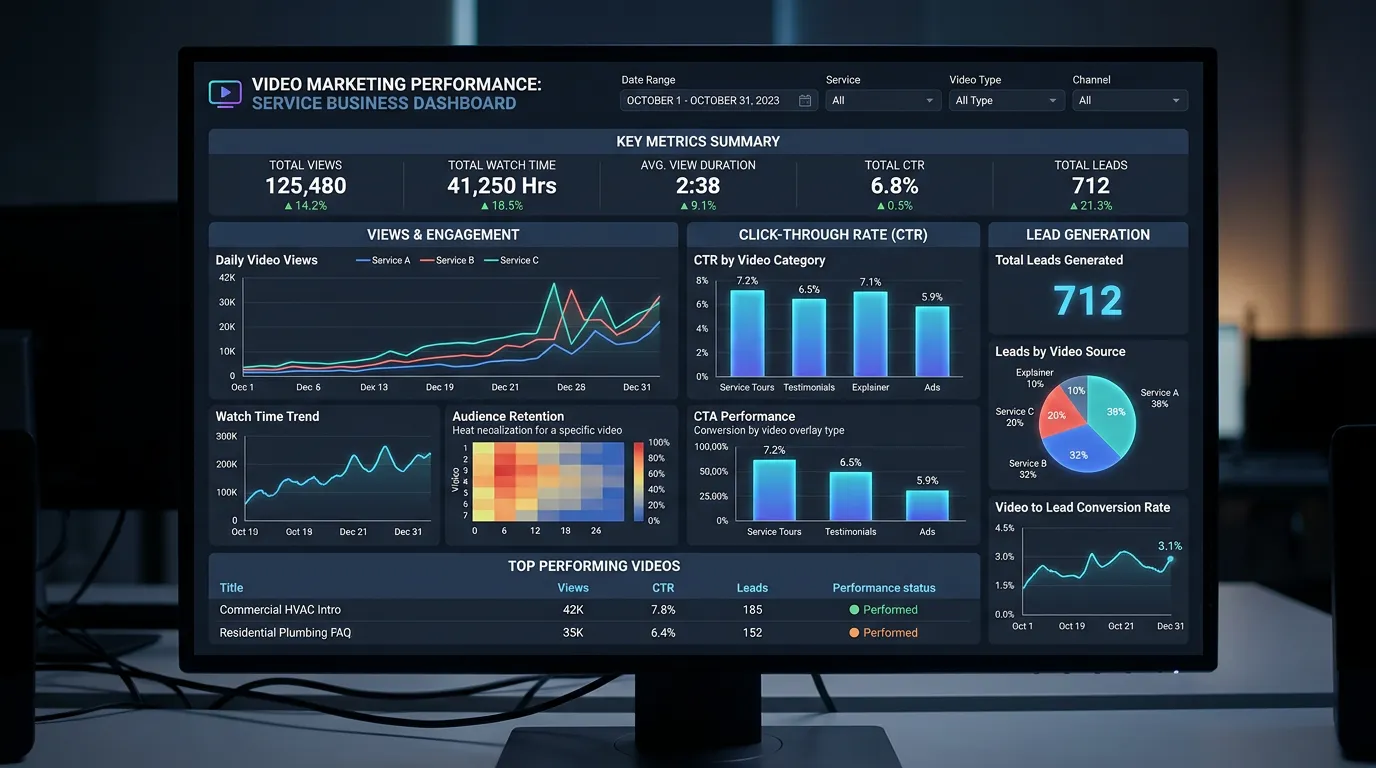
Frequently asked questions
Do I need a YouTube channel for this to work?
How many videos should a small business start with?
Where does the first video belong if I only make one?
How long before video brings in calls?
Sources
- Video SEO best practices(opens in a new tab) Google's own guidance on making video findable, including titles, thumbnails, and giving each video a page it lives on.
- Video structured data(opens in a new tab) VideoObject markup is how a page tells search engines what the embedded video is about and where it starts.
- Add photos and videos to your Business Profile(opens in a new tab) Google's rules for the video you can add to a Business Profile, which is one of the push placements described above.