
FAQ and Problem Solution Articles
Why Your Videos Are Not Bringing In Any Calls
Five failure points, three numbers that tell them apart, and the fix that costs the least to try first.
Call (714) 823-3164 or ask a question. Clear recommendations, even if we never work together.
Video usually fails at one of five points, not all of them. Nobody is served the video, viewers leave in the first seconds, it answers a question nobody asked, it never asks for anything, or it is working and you are reading the wrong number. Three free numbers tell you which one you have.
Jump to a section
- Start by Naming Which Failure You Have
- Failure One: Uploaded, Not Distributed
- Failure Two: They Leave in the First Five Seconds
- Failure Three: It Answers a Question Nobody Asked
- Failure Four: The Video Never Asks for Anything
- Failure Five: It Works and You Are Reading the Wrong Number
- What to Change First, and How Long to Wait
- Where Viewers Fall Out
- Symptom, Cause, and the First Thing to Change
- Check These Before You Blame the Video
- Questions After a Disappointing First Video
- Questions
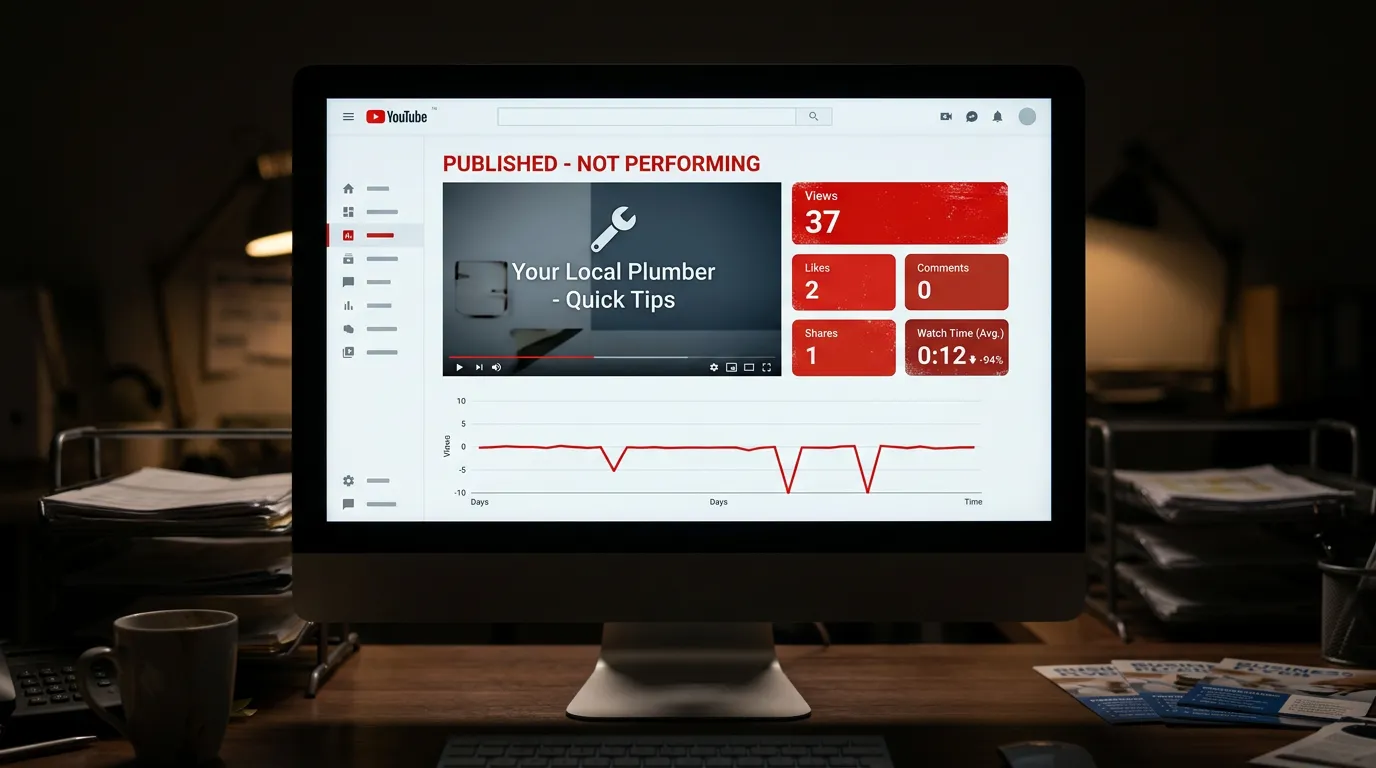
Start by Naming Which Failure You Have
Video rarely fails everywhere at once. It fails at one point, and the fix depends on which point. Three numbers separate them, and you can get all three for free. First, reach. How many people were shown the video at all. Second, watch through. How far the average viewer gets before leaving. Third, action. Calls, forms, or bookings that came after someone watched. Read them in that order. Low reach with decent watch through is a distribution problem, not a video problem. Good reach with a drop in the first seconds is an opening problem. Good watch through and no calls is either a topic problem or a missing ask. Write the three numbers down for each video before you change anything. Most owners skip this step and go straight to filming something new, which is the most expensive possible guess. The rest of this article walks the five failures in the order they happen. Find your earliest one. Fixing a later failure while an earlier one is still live will not change the result, and it will convince you that video does not work for your trade.
Failure One: Uploaded, Not Distributed
The most common failure is the quietest. The video exists, it sits on a channel, and almost nobody was ever shown it. Uploading is not distribution. Platforms do not go looking for your video, and a new channel with no history gets a very small first test audience. Fix it by placing the video by hand in the spots you already control. Embed it on the matching service page. Add a short version to your Google Business Profile, keeping it under thirty seconds and under seventy five megabytes so it does not disappear later. Send it in your next email. Put a link in your quote follow up, since a homeowner comparing three bids will watch it. Then, if reach still matters, pay for it. A small budget behind a video ad puts it in front of a chosen audience today rather than hoping a feed does it for free. This is also the moment to check the boring things. Is the video public rather than unlisted. Is it embedded on a page that actually gets visitors. Does the player load on a phone. Broken embeds are more common than anyone admits.
Failure Two: They Leave in the First Five Seconds
If the video gets shown and nobody stays, the opening is the problem, not the content. Look at the retention graph. A cliff in the first five seconds is the clearest signal in all of video. Three causes account for most of them. The first is a slate. A logo animation, a title card, or a greeting spends the only seconds you had. Cut them. Start on the problem, already in motion. The second is sound. Most feed views happen muted, so a video that only makes sense with audio makes no sense at all. Burn captions in and put a line of text on screen in the first two seconds. The third is a promise that does not match. If the thumbnail or title says one thing and the first ten seconds show another, people leave, and the platform learns to stop showing it. Test your own opening with the sound off. If a stranger cannot tell what the video is about in five silent seconds, the opening is not finished. That one change often does more than a reshoot.
Failure Three: It Answers a Question Nobody Asked
Some videos are well made and simply about the wrong thing. Company overviews, anniversary posts, and clips about your values all sit here. They are pleasant and they match nothing a customer is thinking about. Buyers arrive with fear, not curiosity. Will this cost more than the estimate. How long will my house be torn up. Will a stranger be in my bathroom for a day. Will the repair hold up in five years. Videos that answer those get watched. Getting the list is not hard. Ask whoever answers your phone for the five questions they repeat every week, then film those five, one video each, using the customer's own words in the title. A video called What a Slab Leak Repair Looks Like matches a real search. Our Story matches nothing. There is a second version of this failure. The topic is right and the stage is wrong. A deep technical explainer served to a cold feed audience will lose, while the same video on a service page does well, because those visitors already asked the question.
Failure Four: The Video Never Asks for Anything
Plenty of videos hold attention to the end and then just stop. No instruction, no number, no next step. The viewer feels informed and does nothing, which looks exactly like failure in your reports. Say the ask out loud and put it on screen. One ask, not four. If the video lives on a service page, the ask is the form or the button right below it, and the video should point at it. If it lives on YouTube, put the link in the description and say it in the last ten seconds. If it is a feed clip, ask for the smallest step available, like a comment or a saved post, since a stranger will not call from a first view. Placement counts as an ask too. A video buried at the bottom of a long page never reaches the people who left halfway. Move it up on the pages that matter. Then check the obvious. If the phone number in the video is old, or the page it points to no longer exists, that is your whole problem.
Failure Five: It Works and You Are Reading the Wrong Number
This one wastes good work. A service page video watched by sixty serious buyers in your city can look like a failure next to a clip with twelve thousand views from three states away. Views are not the product. Calls are. So check a few things before you call a video dead. Look at where the viewers are. If most of your reach sits outside your service area, the video may be fine and the targeting wrong. Compare the page it lives on against the same page before the video went live, using form fills and time on page rather than raw traffic. Set up calls and form submits as tracked events so a lead can be tied back to a source. Then allow for the part no report shows. Video often works before the click. Somebody watches your explainer, decides you are the safe choice, and calls the number on your truck a week later. That call gets written down as word of mouth. Asking new callers what they saw is the cheapest fix for that blind spot.
What to Change First, and How Long to Wait
Work in the order of the failures. Distribution first, because it is the cheapest to fix and nothing else matters while nobody is being shown the video. Then the opening, which usually means a trim rather than a reshoot. Then the ask, which is often one line of text. Only after those three should you consider filming something new. Change one thing at a time. If you swap the thumbnail, retitle the video, and recut the opening in the same week, you will never learn which one worked. Give each change four to six weeks before you judge it, and longer for anything that depends on search. There is one exception. Paid video ads report fast, so an opening test can be settled in days on a small budget. That makes ads a useful place to learn which hook works before you rebuild the rest. If you have done all of it and the numbers still will not move, the honest answer may be that the video is not the problem. A page that does not convert, or a thin review profile, will hold everything back.
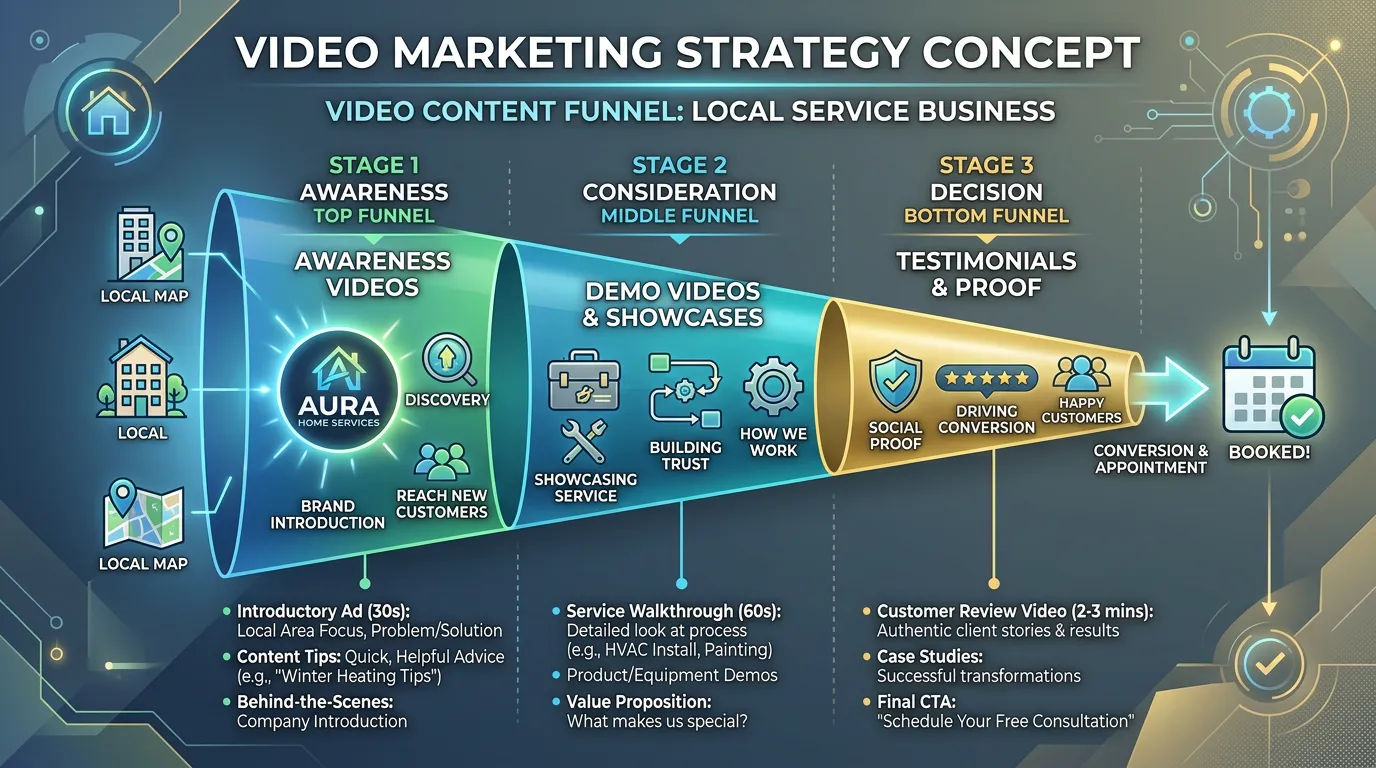
Where Viewers Fall Out
Four checkpoints. Find the one where your numbers collapse and start there.
A wide gap between shown and played is a thumbnail problem. A gap between held and acted is a missing ask.
Symptom, Cause, and the First Thing to Change
Match what you see in the reports to the change that costs the least to try.
| What you see | Likely cause | Change this first | Time to read it |
|---|---|---|---|
| Almost no views | Uploaded, never placed | Embed and post it by hand | 2 to 4 weeks |
| Big drop at five seconds | Slate or silent opening | Cut the intro, add captions | 2 to 4 weeks |
| Watched, but no calls | No ask at the end | Add one clear next step | 4 to 6 weeks |
| Views far from home | Wrong audience or topic | Local wording and targeting | 4 to 6 weeks |
| Profile video vanished | Failed a length or size limit | Re export under the limits | Within days |
Only one row here needs a camera. The other four are fixed at a desk in an afternoon.
Check These Before You Blame the Video
Seven quick checks. Any one of them can explain a video that looks dead in the reports.
Is the video set to public?
Unlisted videos are never served to anyone.
Does the player load on a phone?
Open the page on cellular, not office wifi.
Is it on a page people visit?
Check the page has traffic before blaming the clip.
Are captions burned into the file?
Platform captions stay off for many viewers.
Does the title match a real question?
Say it out loud the way a customer would.
Is there one clear ask?
On screen and spoken, not just in the description.
Is the phone number still current?
Old numbers survive inside videos for years.
Questions After a Disappointing First Video
Should I delete a video that got no views?
My competitor posts every day and I cannot keep up. Does that matter?
Would rather we handled it?
This article covers how to do the work yourself. If you would rather have it done for you, that is what our video marketing service is.
Video Marketing
Frequently asked questions
Most of my views come from outside my service area. Can I fix that?
Is my industry just wrong for video?
Bad audio ruined my first attempt. Is that footage wasted?
How many videos before I can judge whether this works?
Sources
- Video SEO best practices(opens in a new tab) Google's guidance on giving each video its own page, a clear title, and a thumbnail, which is what fixes the distribution failure.
- Add photos and videos to your Business Profile(opens in a new tab) The length and file size limits for Business Profile video, which explain why some uploads look fine and then disappear.
- Google Analytics 4 events guide(opens in a new tab) Recording calls and form submits as events is how a lead gets tied back to the page a video sits on.