
Foundational Guides
How Much Local SEO Costs, and What Moves the Number
What local SEO actually costs, how it is priced, and the specific things that move a quote up or down before you sign.
Call (714) 823-3164 or ask a question. Clear recommendations, even if we never work together.
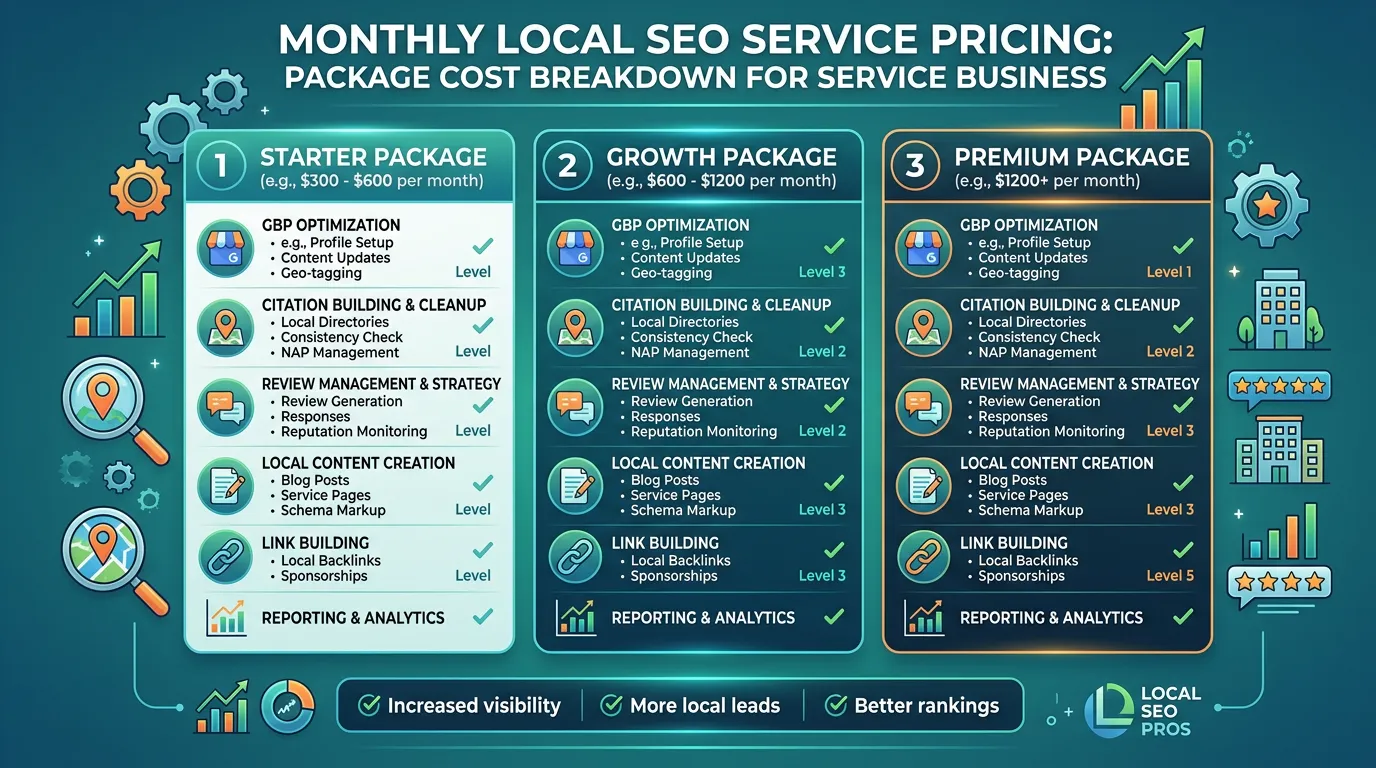
Local SEO is usually sold as a monthly retainer. Most single location service businesses see quotes between about 500 and 2,500 a month, with multi city and multi location work running higher. The number is driven by how many cities you compete in, how crowded your trade is, and how much cleanup your site and listings need.
Jump to a section
- What You Are Actually Buying
- The Three Ways Local SEO Gets Priced
- What Pushes a Quote Up
- What Pulls a Quote Down
- The Costs Nobody Puts in the Proposal
- Work Out Your Break Even Before You Sign
- Rough Market Ranges by Scope
- Cheap Local SEO Is Not a Discount, It Is a Different Product
- How to Read a Local SEO Proposal
- What a Fair Proposal Spells Out
- Questions
What You Are Actually Buying
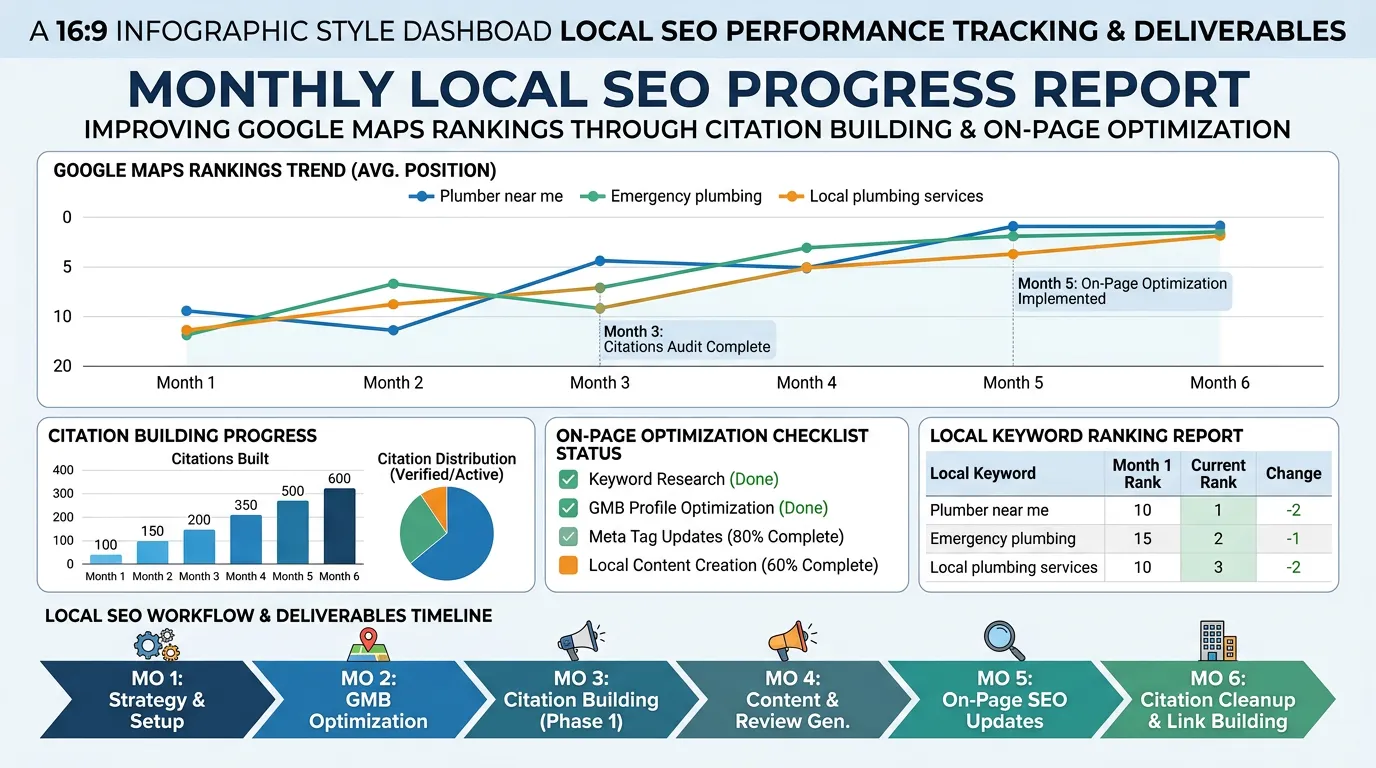
A local SEO invoice is not a payment for rankings. It is a payment for hours and tools, and the rankings are what those hours aim at. That difference tells you what to compare. Ask any provider how the monthly hours split and you learn more than any package name tells you. On a typical single location program the hours go to a short list of jobs: managing the Google Business Profile, writing or fixing pages, cleaning up listings, earning local links and mentions, watching the data, and reporting back. Software sits underneath all of it. Rank tracking, call tracking, and listing tools cost money every month whether you pay for them directly or they are baked into the fee. The mix should shift over time. Month one is heavy on audit and cleanup. Month four is heavy on content and outreach. Month twelve should be mostly maintenance with a smaller number of new pages. If a provider bills the same hours for the same tasks in month twelve as in month one, ask what changed. Something should have.
The Three Ways Local SEO Gets Priced
Almost every quote you see is one of three shapes. The monthly retainer is the common one. You pay a set fee and the provider works a set scope each month. It fits ongoing work, because reviews, links, and content need repetition to matter. Retainers for a single location service business commonly run from around 500 at the low end to about 2,500, and multi location or crowded market work goes above that. The second shape is a one time project. An audit, a listing cleanup, or a batch of pages gets quoted as a fixed fee, often somewhere between 1,000 and 5,000 depending on size. Projects work when you have staff who will keep the work going afterward. Without that, an audit turns into a document nobody opens. The third shape is hourly consulting, usually somewhere between 100 and 250 an hour. That fits an owner who will do the work but wants direction, or a business with one specific problem to solve. Be careful with per lead pricing in local SEO. It sounds fair, but the arguments over which calls counted never end.
What Pushes a Quote Up
Two businesses in the same trade can get quotes that differ by triple. That is usually scope, not greed. The biggest driver is how many cities you want to show up in, because each one needs its own page, its own local links, and often its own review push. Competition is second. A market where the top three all hold several hundred reviews and ten years of links takes more work than one where the leader has forty. The condition of what you already own is third. A site with no service pages, no headings, and a phone number saved as an image needs fixing before anything else pays off, and that repair is real work that shows up in the price. One more driver is how much reporting you want. Grid rank scans across a whole service area, call recordings, and a monthly review call all take real time, and time is what you are buying. A quarterly email costs less than a monthly walkthrough, and both are honest choices.
- More cities. Each one is another page, another set of links, another local push.
- More locations. Every location is its own profile, review stream, and page.
- Crowded trades. Injury law, HVAC, and dental in dense areas cost more everywhere.
- A site that needs rebuilding before good content can go on it.
- A wide review gap between you and the current top three.
- A recent move, rebrand, or site migration that left broken listings behind.
What Pulls a Quote Down
The same logic runs the other way, and some of it is in your hands. A business that wants one city, has a clean site, and already collects reviews needs far fewer hours than one starting from a mess. Doing part of the work in house is the biggest single lever you control. Photos, review requests, and answering questions on your profile cost you time instead of money, and they are among the highest value tasks on the list. Longer commitments sometimes lower the monthly rate, but be careful about signing twelve months with someone you have never worked with. A three month start with a clear scope tells you more than a discount does.
- One city and one location instead of a whole county.
- A site that is already fast, indexed, and organized by service.
- Reviews you already collect on your own, at a steady pace.
- Staff who can take job photos and send review requests.
- No page build needed, only edits to pages that already exist.
- A trade or city where the current top three are not far ahead of you.
Work Out Your Break Even Before You Sign
The right question is not whether a price is high. It is how many jobs it takes to cover it. Take your average job value, then the share of calls you turn into work. Here is a hypothetical: a plumbing company with a 450 average ticket that books about half its calls needs roughly five extra calls a month to cover a 1,000 fee. That is a number an owner can judge in about a minute. Run the same math with your own figures and the decision stops being a guess. Then add lifetime value if your trade has repeat work. A dental practice measures a new patient over years, not one visit, so the break even can be a fraction of one new patient a month. A roofer who sees each customer once every twenty years cannot use that math. Last, set a time frame you can actually fund. This work does not pay back in month one, and Google itself says no one can guarantee a ranking. If you cannot fund six to nine months of the fee without the extra work arriving, run ads for a season and start this later.
Rough Market Ranges by Scope
Ranges you will see quoted around Southern California. Treat them as a sanity check, not a price list.
| Scope | Common monthly range | What that usually covers | Where it falls short |
|---|---|---|---|
| Do it yourself | Your time, plus tools | Profile, reviews, a few pages | Stalls on listings and links |
| Budget plans | Under 500 | Automated listings and reports | Little real page or link work |
| One city, one location | 500 to 1,500 | Profile, pages, reviews, links | Thin for crowded trades |
| Several cities | 1,500 to 3,500 | City pages and wider link work | Needs a year to show fully |
| Multi location | Priced per location | Each profile and page managed | Cost scales with locations |
The gap between the second and third rows is where most disappointment lives. Under 500 a month rarely buys a person.
Cheap Local SEO Is Not a Discount, It Is a Different Product
A 300 a month plan is not the same service at a lower price. It is a different service. At that budget nobody is writing your pages or emailing a supplier to ask for a link. The math does not allow it.
What you usually get is software output. Your details get pushed to a directory network, a report gets generated, and a post or two goes up on the profile. Some of that has mild value. None of it is the part that moves a crowded market.
The real cost is not the wasted fee. It is the six months you spent believing local SEO does not work for your trade. That belief is far more expensive than the money was.
There is a fair version of a small budget. Pay someone once for the setup, then run the profile and the review requests yourself. That splits the work by who is best placed to do it. What does not work is a low monthly fee for a job that needs a person, followed by a year of waiting to find out nobody was doing it.
How to Read a Local SEO Proposal
Two proposals can look identical and mean completely different things. These questions separate them.
Do this
- Ask for counts. How many pages, how many listings, how many outreach emails per month.
- Ask who owns the website, the profile, and the tracking numbers if you leave.
- Ask what happens in month seven, once the setup work is finished.
- Ask to see a real monthly report with the client name removed.
- Ask which ranking factor each task is meant to move, and why.
Not this
- Do not buy the package with the longest task list. Ten shallow tasks lose to three deep ones.
- Do not accept rankings as the only number reported. Calls and booked jobs are the point.
- Do not sign a twelve month term with a provider you have never worked with.
- Do not let anyone replace your real phone number on the profile with a tracking number.
- Do not pay extra for a guarantee of position one. Google says plainly that nobody can promise it.
What a Fair Proposal Spells Out
If a quote is missing more than two of these, get answers before you compare prices.
A named list of cities
Which towns, in what order, and why those ones.
A page count for the first ninety days
How many new pages, how many rewrites.
Who does the writing
A person, a team, or a tool. Ask for a sample.
The listing sites included
An actual list, not the words major directories.
How reviews get requested
The system, who sends it, and when it fires.
What reporting arrives and when
Format, day of month, and who walks you through it.
Exit terms in plain words
Notice period, and what you keep on the way out.
Would rather we handled it?
This article covers how to do the work yourself. If you would rather have it done for you, that is what our local seo service is.
Local SEO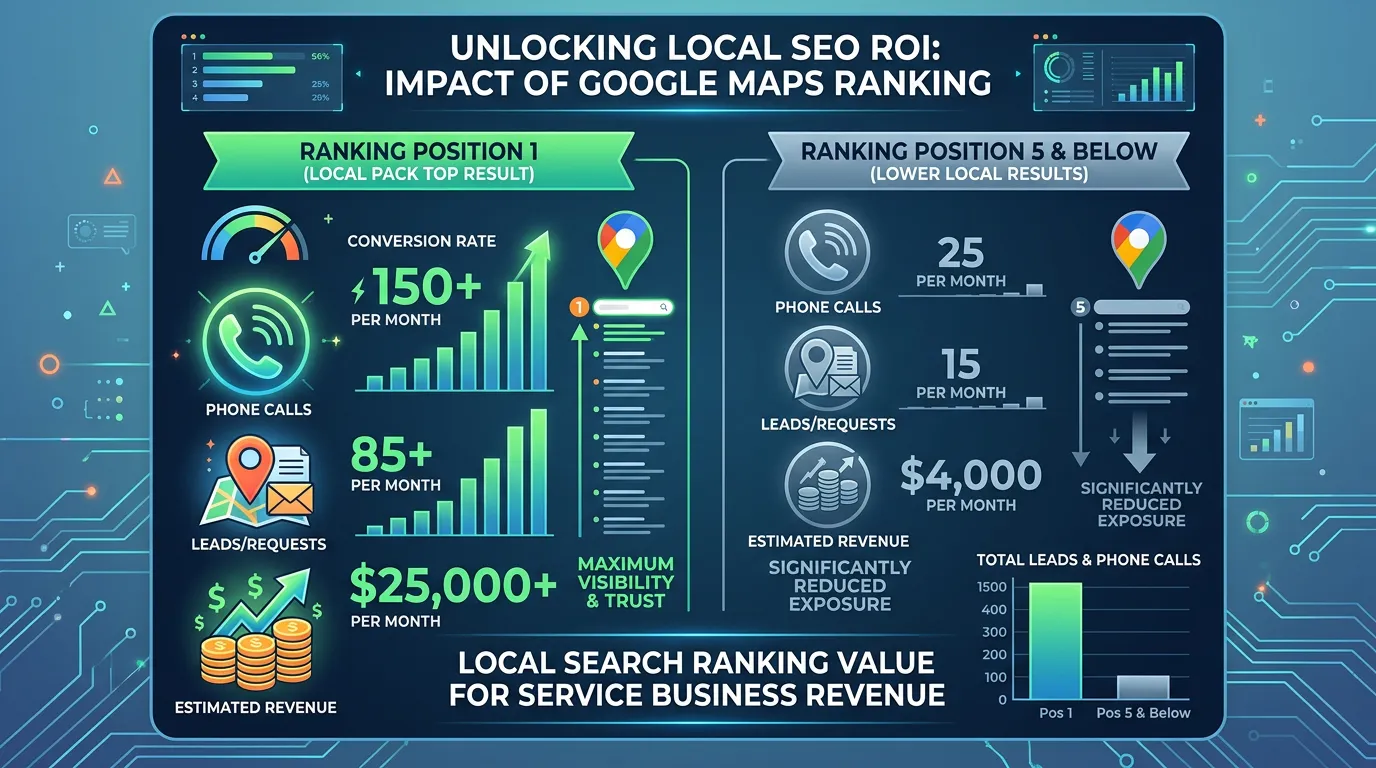
Frequently asked questions
Is local SEO cheaper than Google Ads?
Why do agencies not publish their prices?
Do I have to sign a long contract?
What is a reasonable first year budget?
Sources
- Google Search Central: Do you need an SEO?(opens in a new tab) Google states that no one can guarantee a number one ranking and warns about SEOs who claim to, which is why pricing should be tied to work rather than positions.
- Google Business Profile Help: Tips to improve your local ranking on Google(opens in a new tab) Names the factors any paid local SEO work has to move: relevance, distance, and prominence.
- Google Search Central: Local Business (LocalBusiness) structured data(opens in a new tab) Structured data is a defined technical deliverable, which is why it should appear as a named line item rather than a vague optimization charge.