Video Marketing
Video Script Development
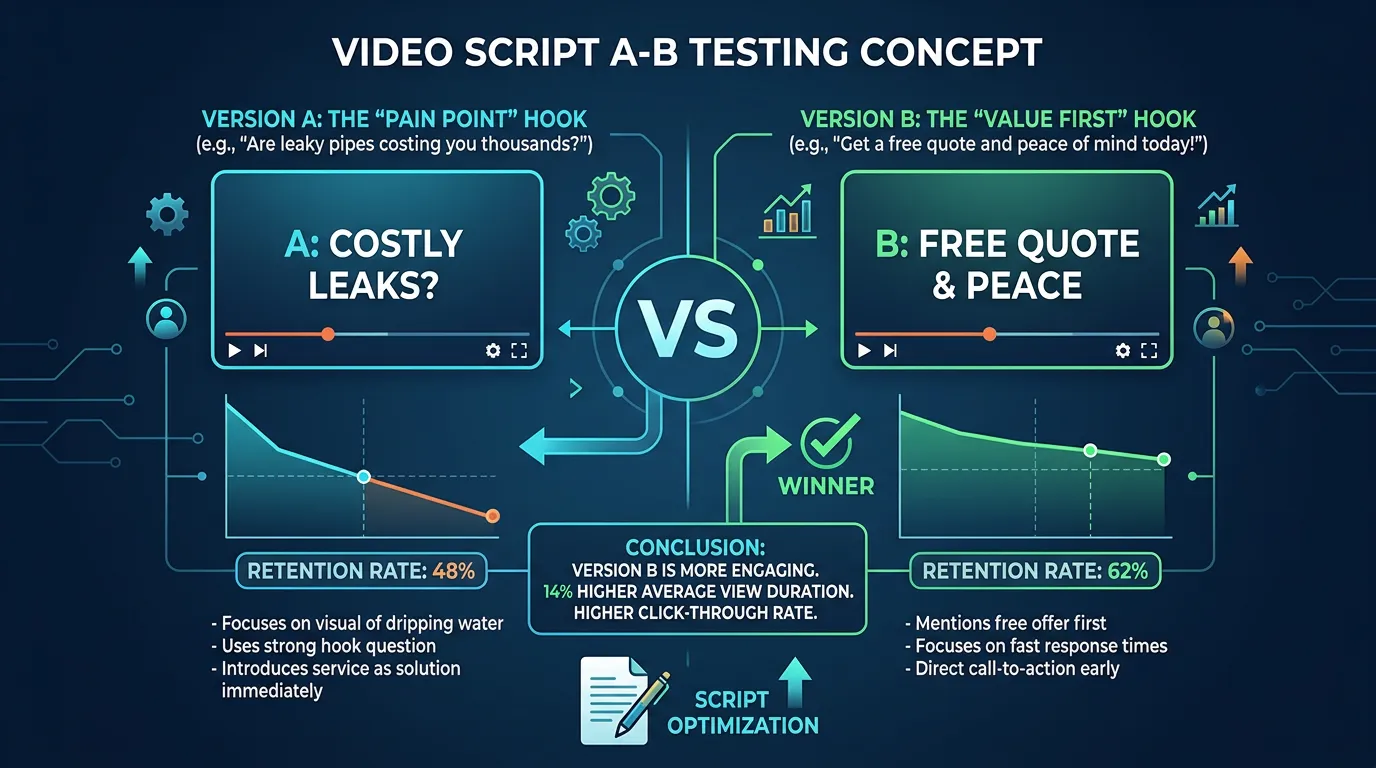
Hook written first, because the first five seconds decide everything
- Timeline
- Two to three weeks for a batch of four to six scripts, including the read through revision
Call (714) 823-3164 or ask a question. Clear recommendations, even if we never work together.
Video script development is writing what gets said on camera, including the hook, the structure, and the exact wording. Explainers get a full script. Customer stories get interview questions instead. Good scripts sound like a person talking, not a brochure being read, and they hold attention in the first five seconds.
The problem
Two script failures show up constantly. The first is the brochure script, where an owner reads formal marketing language and every sentence sounds unnatural because nobody speaks that way. The second is no video script at all, where someone says just talk naturally and the result is eleven minutes of rambling that takes an editor four hours to salvage into 90 usable seconds. Both waste the most expensive resource in video, which is the shoot day. Fixing it later in the edit costs more than writing it properly beforehand.
What it is
Video script development produces the words and the plan for saying them. For explainers we write a full script built on a proven shape. It opens with a hook in the first five seconds. Then comes the problem in the customer's words, the answer, the proof, and one clear next step. We write it out loud, with contractions and short sentences. Then we read it back with you and cut anything you would not naturally say. For customer stories we do the opposite. There is no video script, just a question set built to get specific answers instead of the word great. Every script ships with a shot list, so nobody is deciding camera angles while a crew waits.
Signs you need this
- Your last video took six hours to shoot and produced two usable minutes
- You sound stiff on camera and blame yourself rather than the video script
- Customer testimonials on your site all say some version of they were great
- Nobody knows what to film once the camera is set up
- Your videos take a long time to get to the point
What is included
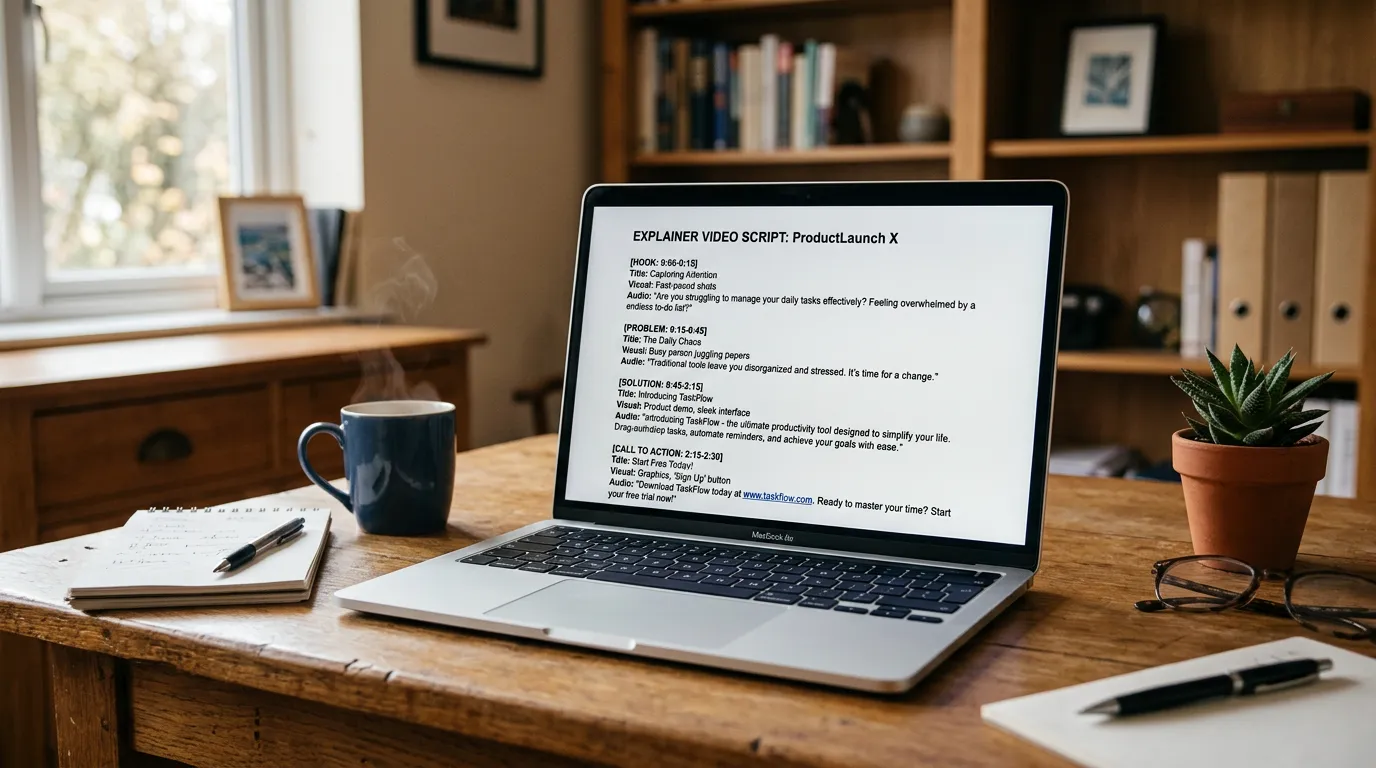
- Full written scripts for explainer and service videos
- Hook options for the first five seconds, usually three per video
- Read through pass where wording gets adjusted to how you actually speak
- Interview question sets for customer and staff stories
- Follow up prompts to pull specifics out of vague answers
- Shot list pairing each script section with what the camera should capture
- B roll list so the editor has footage to cut to when a take runs long
- Teleprompter formatted version with line breaks for natural breathing
- On camera prep notes covering pacing, eye line, and what to wear
Our process
Voice Capture
Days 1 to 4We record a short conversation where you explain the service to us as if we were a customer. That recording becomes the source for the video script, which is why the finished version sounds like you.
Hook Drafting
Days 4 to 8We write three opening options per video and pick the one that names the viewer's actual problem fastest. Videos lose most of their audience in the first five seconds, so this gets disproportionate attention.
Full Draft
Week 2The body gets written in short spoken sentences with the proof and the call to action built in. Anything a competitor could say word for word gets cut and replaced with a specific detail only you can claim.
Read Aloud Revision
Week 2 to 3You read the video script out loud on a call. Every phrase that trips you gets rewritten. This step is short and it is the difference between a natural delivery and a stiff one.
Shot List and Prep Pack
Week 3We pair each script section with a shot, list the extra footage the editor will need, format the teleprompter version, and send prep notes so shoot day starts on time.
Realistic timeline: Two to three weeks for a batch of four to six scripts, including the read through revision. Interview question sets are faster, usually one week.
The Shape a Working Explainer Follows
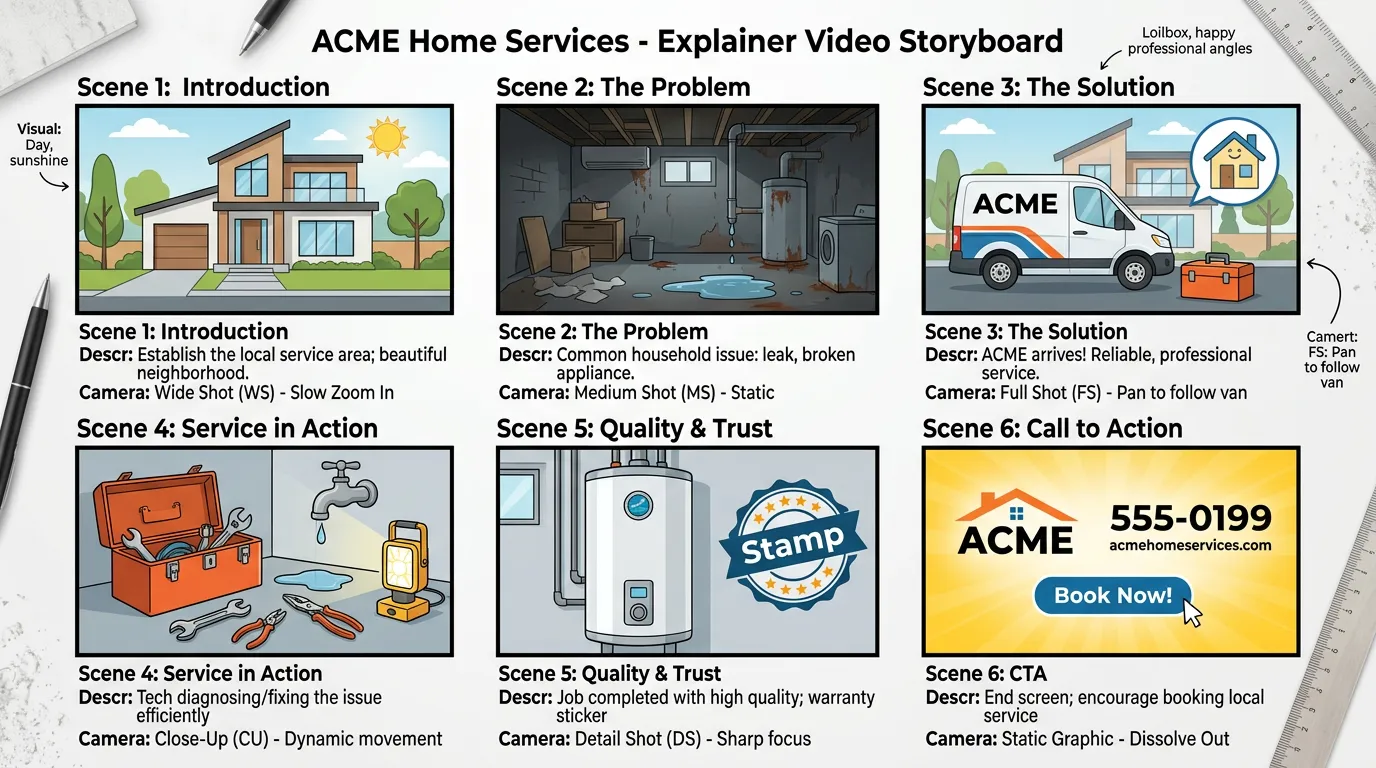
Almost every explainer that holds attention uses the same five parts in the same order. Skipping a part is what makes a video feel long.
Five parts, roughly 140 spoken words, about one minute on screen.
Writing Lines a Real Person Can Say
The test for every line is simple. Could you say it to a customer standing in their driveway without feeling strange?
Do this
- Write with contractions, the way you talk at a counter
- Keep sentences under fifteen words so nobody runs out of breath
- Use the word your customers use, even when it is not the technical one
- Include one detail a competitor cannot copy, like your typical arrival window
- Read every draft out loud before anyone approves it
Not this
- Do not open with your company name or how many years you have been around
- Do not write a sentence you would never say to someone's face
- Do not stack three ideas into one line, because it falls apart on take four
- Do not end with call us today for all your plumbing needs
- Do not put a dollar amount on screen that you cannot keep true for a year
Getting a Real Answer Out of a Nervous Customer
The question that ruins testimonials is were you happy with the work. It gets you the word great, and great proves nothing. Ask about the before instead. What was happening in the house that made you pick up the phone? People describe the water on the floor, the cold bedroom, the second opinion they did not trust. That is the part other buyers recognize.
The second trick is silence. Most people give a short answer, then fill the gap with the useful part if nobody interrupts. Count to three before asking the next question. Follow up with what did you expect to happen, or what surprised you, and you get specifics instead of adjectives.
Plan for the ratio. Twenty to thirty minutes of interview usually yields sixty to ninety good seconds. That sounds wasteful and it is not. We ask the same thing three ways because the third answer is almost always the clearest, and we never send the customer the questions written out, since a rehearsed answer sounds exactly like a script.
How Much Script Fits in Each Runtime
Write to the clock, not to the page. Here is what actually fits once someone says it out loud at a normal pace.
| Finished length | Words to write | What fits inside it | Best used for |
|---|---|---|---|
| 6 seconds | About 15 | One line and your name | Bumper ads |
| 15 seconds | About 35 | A hook and a single point | Vertical clips and short ads |
| 30 seconds | About 70 | Problem, fix, one ask | Profile video and feed ads |
| 60 seconds | About 140 | The full five part shape | Service page explainers |
| 2 minutes | About 280 | Two examples plus proof | Pricing and process pages |
| 6 minutes | About 850 | A full how to walkthrough | YouTube search videos |
Counted at 130 to 150 words a minute. Take ten percent off when you are showing something with your hands.