Video Marketing
Video Creative for Paid Advertising
Message in the first three seconds or the ad is wasted
- Timeline
- Two to four weeks to produce a full ad family from existing footage
Call (714) 823-3164 or ask a question. Clear recommendations, even if we never work together.
Video for ads is creative built for paid placements, not organic feeds. It puts the message up front, because viewers can skip after five seconds on YouTube and scroll past instantly on Meta. Each placement needs its own length and aspect ratio. Every version gets judged on cost per lead.
The problem
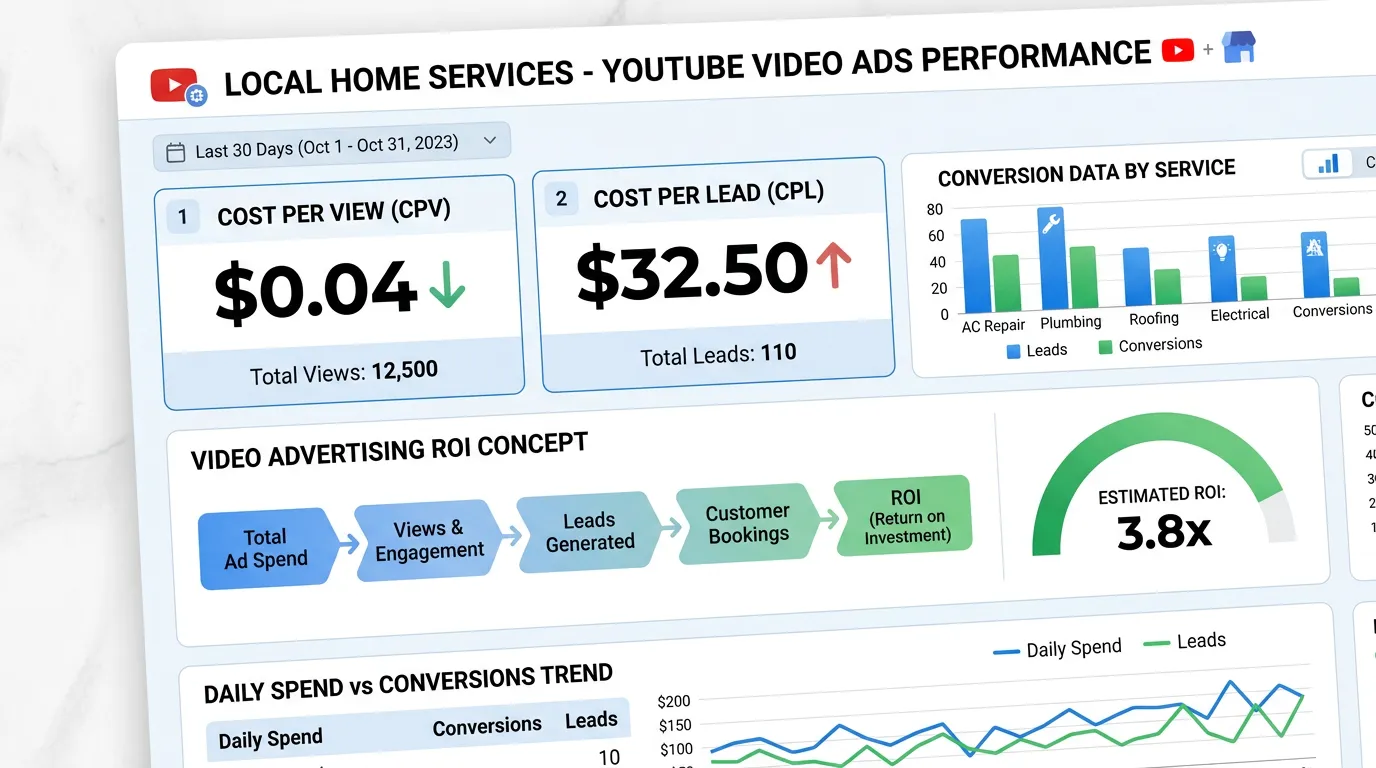
Most businesses running video ads are running the wrong asset. They take the two minute brand film from the website and upload it as a YouTube ad. It opens with a logo animation and slow drone footage over music, which means the entire first five seconds, the only part a skipping viewer will ever see, contains no information at all. The skip rate is brutal, the cost per view looks fine, and no leads arrive. The video was not bad. It was built for someone who already chose to watch, and an ad viewer never made that choice.
What it is
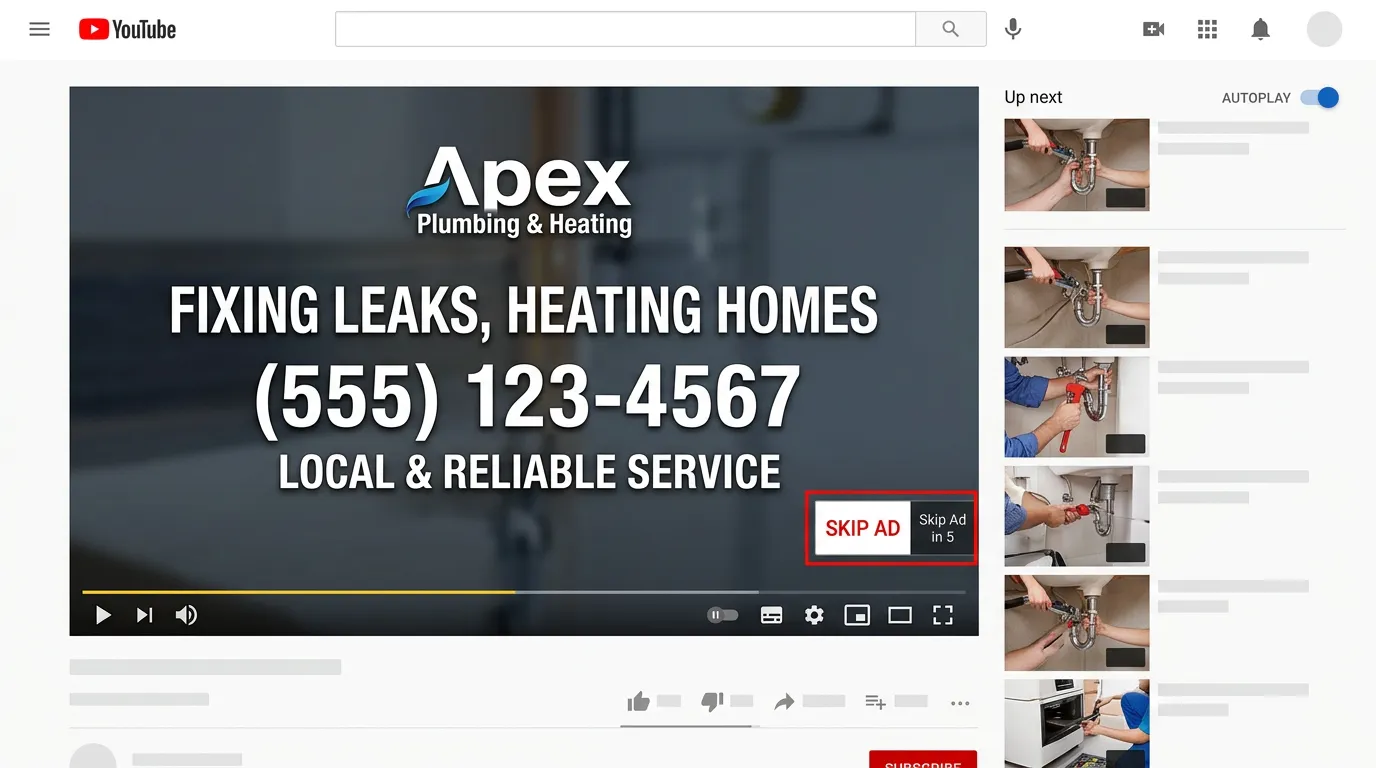
Ad creative follows different rules from organic video. The first three seconds must name the problem and show the brand, because you pay whether or not they stay. Different placements need different assets. Skippable in stream ads on YouTube run 15 to 60 seconds, with everything essential up front. Bumper ads are exactly six seconds and cannot be skipped. In feed and Shorts placements are vertical. Meta placements need square and vertical with captions burned in, because most people watch with the sound off. We produce a family of ad cuts from one shoot. Then we test hooks against each other and keep the version that produces the cheapest lead.
Signs you need this
- You are running your website brand video as a YouTube ad
- Your video ads open with a logo animation before any message
- Your ad has one version and it has been running for six months
- Your video ads have no captions and no phone number on screen
- Cost per lead from video is worse than from static image ads
What is included
- Hook variants for the first three seconds, usually three to five per concept
- Skippable in stream cuts at 15 and 30 seconds with the offer front loaded
- Six second bumper versions for reach and reinforcement
- Vertical 9 by 16 cuts for Shorts, Reels, and Stories placements
- Square 1 by 1 versions for feed placements
- Burned in captions on every cut, since most views happen muted
- Text overlay with your phone number and service area on screen
- End card with a clear next step and a call to action button design
- Creative test plan pairing each variant with a measurable cost per lead
- Monthly creative report showing which hook and which length won
Our process
Offer and Audience Definition
Days 1 to 5We decide what the ad is asking for before we cut anything. An ad for people who have never heard of you needs a different opening than a remarketing ad for someone who visited your pricing page last week.
Hook Production
Week 1 to 2We produce three to five different openings for the same body, each naming a different pain or benefit. The hook is the variable that moves results most, so it gets tested before anything else.
Placement Cuts
Week 2 to 4One concept becomes a family of assets: 30 second and 15 second horizontal, six second bumper, vertical, and square. Each is cut for its placement rather than cropped from a single master file.
Launch and Hook Test
Week 4 to 8Variants run against each other with equal budget until each has enough impressions and conversions to judge. We look at cost per lead and at the retention curve to see exactly where viewers dropped.
Refresh Before Fatigue
Every 6 to 10 weeksVideo ad creative wears out faster than search ads, especially on remarketing where the same people see it repeatedly. We watch frequency and cost per lead and refresh the hook before performance decays.
Realistic timeline: Two to four weeks to produce a full ad family from existing footage. Four to eight weeks of running before a hook test is readable. Creative refresh every six to ten weeks.
What Each Second of a 30 Second Ad Has to Do
You pay for the first five seconds whether or not anyone stays. So the ad is built backward from that fact.
If someone skips at five seconds, they should still know who you are and what you fix.
Cut Specs by Placement
One concept becomes a family of files. Each placement gets its own cut, framed for its own shape.
| Placement | Length | Shape | Sound |
|---|---|---|---|
| YouTube skippable in stream | 15 or 30 seconds | 16 by 9 | Often on, caption it anyway |
| YouTube bumper | Exactly 6 seconds | 16 by 9 | Assume off, one line of text |
| YouTube Shorts and in feed | Under 30 seconds | 9 by 16 | Assume off |
| Facebook and Instagram feed | 10 to 20 seconds | 1 by 1 or 4 by 5 | Assume off |
| Reels and Stories | Under 15 seconds | 9 by 16 | Assume off, keep text away from the edges |
Cropping one wide master file for every placement is why so many ads have words running off the frame.
Testing Hooks Without Burning the Budget
Local budgets are small, so a sloppy test tells you nothing and costs a month. These rules keep a test readable.
Do this
- Change one thing at a time, and make it the first three seconds
- Give each version the same budget and the same audience
- Wait until you have enough leads to judge, not enough views
- Keep the losing hooks, because they often win later with a different audience
- Write down which one you expect to win before you launch it
Not this
- Do not stop a test after two days because one version jumped ahead
- Do not run five separate concepts at once on a local budget
- Do not judge by view rate, which rewards ads nobody skips and nobody acts on
- Do not change the landing page while a creative test is running
- Do not let the person who appears in the video pick the winner
When Creative Wears Out and What to Do About It
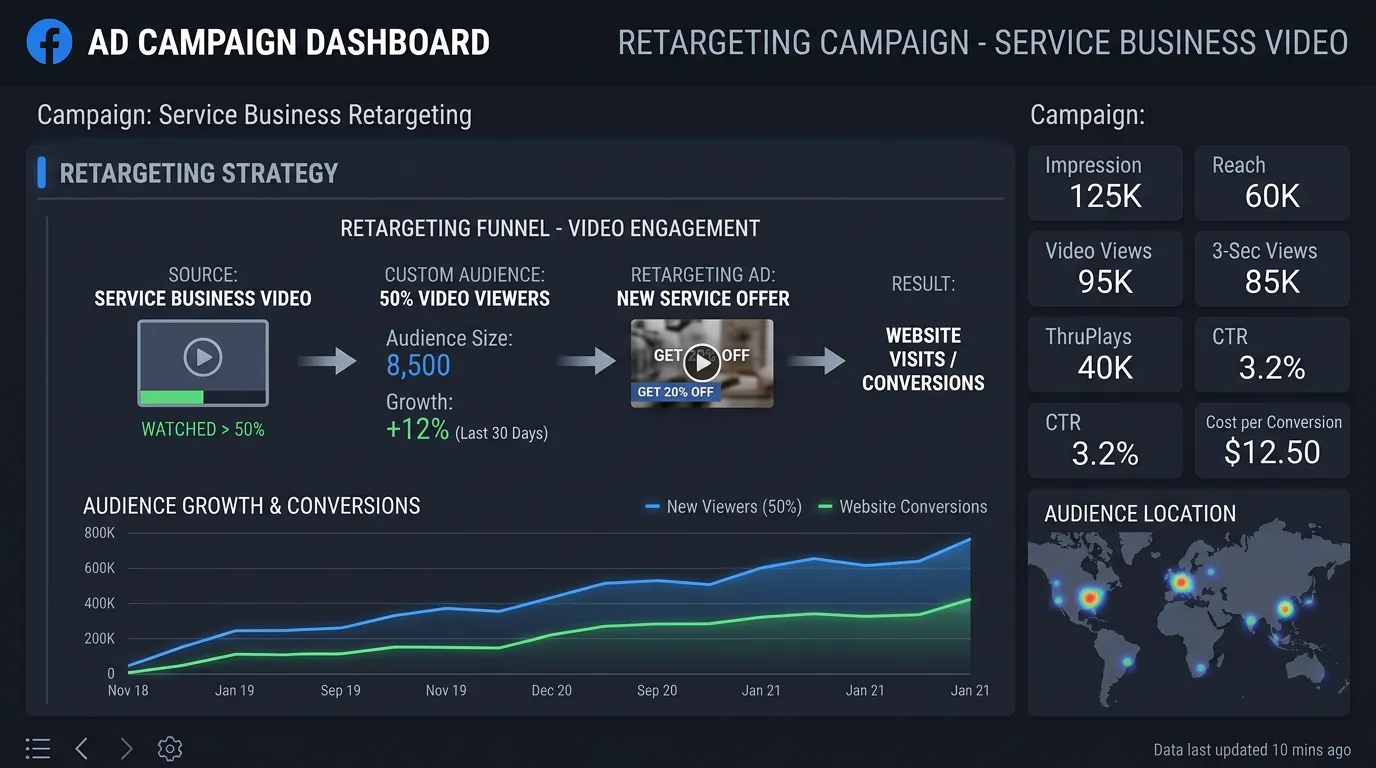
Video ads age faster than search ads, and they age fastest in a small service area. If your remarketing pool is a few thousand people, everyone in it can see the same ad several times within a few weeks. What felt fresh on day one starts to feel like a jingle they cannot get away from.
The signs are consistent. Frequency climbs, click through rate slides, and cost per lead drifts up while nothing about your targeting changed. Watch those three together. Any one of them alone can move for other reasons, but all three at once means the creative is tired.
The fix is almost never a new shoot. Swap the first three seconds and keep the body. A new hook on existing footage takes a day of editing and often resets performance for another month or two. Save a full production for a real change: a new service, a new season, or an offer that needs footage you do not already have.