Social Media Marketing
Social Media Advertising Support
Creative built from real jobs, not stock or boosted posts
- Timeline
- Tracking and audiences in weeks 1 to 3, first creative live by week five
Call (714) 823-3164 or ask a question. Clear recommendations, even if we never work together.
Social advertising support is the creative and setup work behind paid campaigns on Facebook and Instagram. That means ad images and video built from your real jobs, audience definitions, pixel and conversion tracking, and testing. It supports your paid campaigns. It does not replace search advertising, where people usually have higher intent.
The problem
The boost button is the most expensive mistake in local advertising. An owner boosts a post for 40 dollars, gets 3,000 impressions and two likes from people three states away, and concludes Facebook ads do not work. Or an agency runs ads with stock photography and a headline about trusted quality service, targeting everyone within 25 miles aged 25 to 65, with no pixel installed and no conversion tracking, so the report says reach and frequency and nothing about leads. Social ads fail for local service businesses when the creative is generic, the audience is untargeted, and nothing is measured past the click.
What it is
This is the production and setup side of paid social. It runs alongside your paid campaign management. Creative comes from real work: a before and after carousel from an actual job, a 20 second vertical video of a technician explaining a common failure, or a customer testimonial clip. Audiences get built properly too. We upload customer lists for remarketing and lookalikes, retarget website visitors through the Meta pixel, and target a tight local radius around the zip codes you really serve. Tracking gets checked before spending starts. The pixel is installed, conversion events are firing, and the Conversions API is connected where possible, because browser tracking has become unreliable. Then we test creative in small batches. On social, the creative usually decides performance more than the targeting does.
Signs you need this
- Your social ads are boosted posts with no conversion tracking
- Ad reports show impressions and reach but never leads
- You are running stock images that look like every competitor ad
- Targeting includes areas you do not or will not serve
- The same ad has been running unchanged for three months and results are declining
What is included
- Ad creative produced from real job photos and footage, in feed and vertical formats
- Multiple headline and primary text variations per creative concept
- Meta pixel installation verified with Events Manager and the Pixel Helper
- Conversions API setup where your site platform supports it
- Conversion event configuration for calls, forms, and bookings
- Custom audiences from customer lists, website visitors, and video viewers
- Lookalike audiences built from your best customers, not all leads
- Local radius and zip code targeting matched to your true service area
- Retargeting campaign structure for people who visited but did not contact you
- Creative testing schedule with a defined rotation and refresh cadence
Our process
Verify Tracking First
Week 1 to 2Pixel, events, and Conversions API get installed and confirmed firing before a dollar is spent. Running ads without verified tracking means paying for data you cannot read, which is the most common way budget disappears.
Build Audiences
Week 2 to 3Customer list uploads, website retargeting, and a tight local radius get set up. Broad targeting works better than it used to, but not when a quarter of your reach lives outside the area you serve.
Produce Real Creative
Week 2 to 5Three to five concepts get built from actual jobs, each in feed and vertical versions with several headline variations. Stock imagery is avoided because it looks like every other ad and people scroll past it.
Launch Small and Read
Week 5 to 7Campaigns start with enough budget to exit the learning phase but not enough to lose money learning. We watch cost per lead and quality, not click through rate, which can look great while producing nothing.
Rotate Before Fatigue
Ongoing, every 4 to 6 weeksLocal audiences are small, so creative burns out faster than in national campaigns. When frequency climbs and cost per lead rises, new creative goes in. This is the recurring work that keeps social ads viable.
Realistic timeline: Tracking and audiences in weeks 1 to 3, first creative live by week five. Meaningful performance data after 3 to 4 weeks of spend. Creative refresh needed every 4 to 6 weeks in local markets.
Where social ads fit the buying path
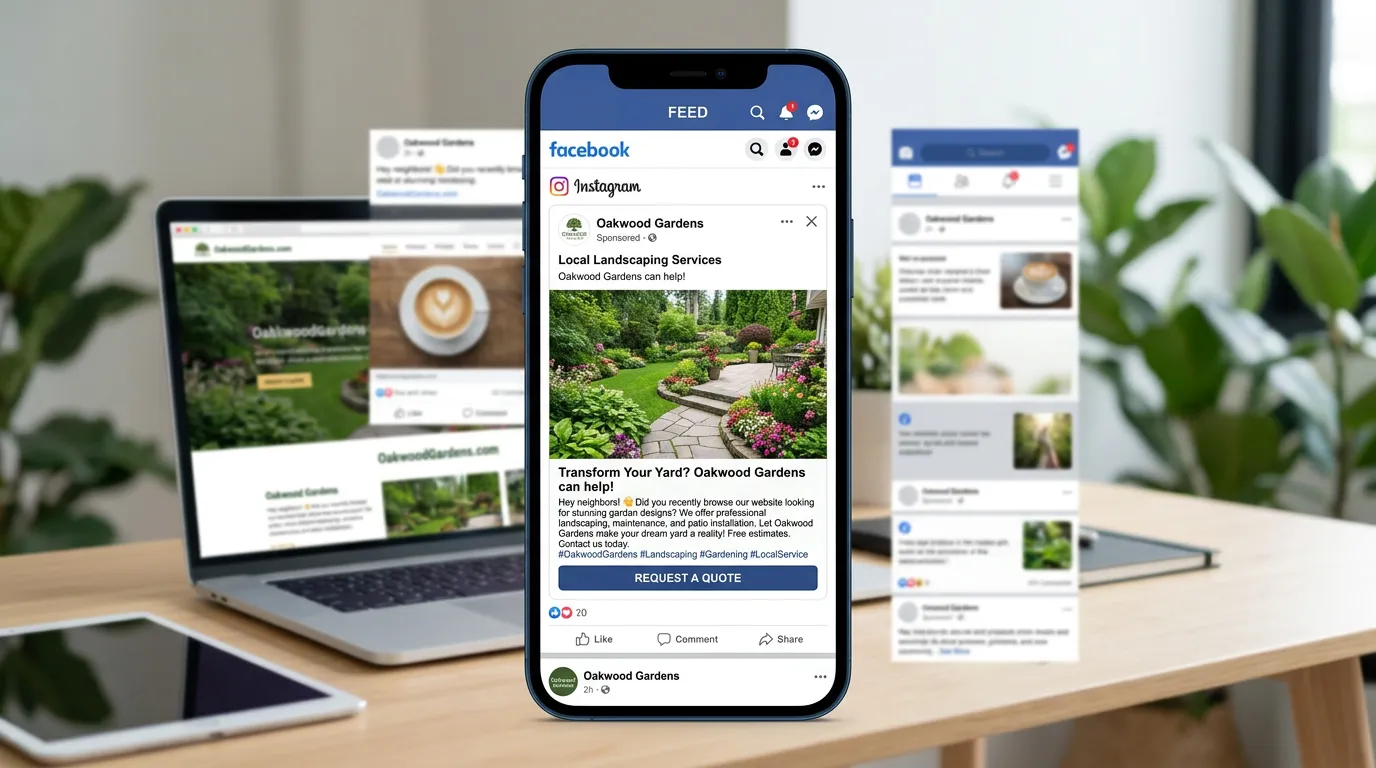
Search ads catch people who already decided to look. Social ads start earlier, so the path has more steps.
In most local accounts the cheapest leads come from the last two stages. That only works if tracking was right before the spend started.
Tracking checklist before the first dollar
We run this list before any campaign turns on. Skipping it is how a month of budget turns into numbers nobody can read.
The pixel fires on every page
Check the home page, a service page, and the thank you page with the Meta Pixel Helper.
One pixel, not three
Past agencies leave pixels behind. Duplicates double count leads and make your cost per lead look better than it is.
The lead event fires on the right thing
Use the thank you page or the form success event. Never the button click, which counts people who never submitted.
Calls get tracked too
Put a tracked number on the landing page. Plenty of social leads call instead of filling anything out.
Conversions API is connected
Browser tracking gets blocked often now. Sending events from the server recovers part of what goes missing.
Your domain is verified
Meta requires it before you can control which events on your own site you optimize toward.
A test lead went all the way through
Submit a real form and watch it land in Events Manager before launch day.
Links carry UTM tags
So the same lead appears in your analytics and your CRM, not only inside Meta.
Ad formats and the job each one does
The format follows the job you are asking the ad to do. Using one format for everything is the most common waste we find in a local account.
| Format | Best used for | What it needs | Usual length |
|---|---|---|---|
| Before and after carousel | Remodeling, landscaping, auto body | Matched camera angles | 3 to 5 cards |
| Vertical explainer video | Cold reach, common failures | Captions burned in | 15 to 45 seconds |
| Customer testimonial clip | Retargeting past site visitors | Written permission | 20 to 60 seconds |
| Single image with an offer | Seasonal tune ups and checks | A real photo, not stock | One image |
| Owner or crew introduction | Care and relationship trades | Someone who can talk | 30 to 60 seconds |
Every one of these should come from work you actually did. Stock images are the fastest way to look like the four other ads in the same feed.
Reading the numbers after three weeks
The first honest read comes after about three weeks of steady spend, or around 50 tracked leads if you get there sooner. Before that the numbers bounce too much to mean anything.
We look at cost per lead first, then lead quality from your CRM, then frequency. A campaign with a great cost per lead and junk leads is worse than one that costs more and books jobs.
Frequency is the early warning. In a service area with 60,000 households, the same people see your ad over and over within a few weeks. When frequency climbs past about three and cost per lead rises with it, the creative is tired. That is not a broken campaign, and rebuilding the targeting will not fix it.