Social Media Marketing
Social Media Content Creation
Real job photos beat stock imagery consistently
- Timeline
- Capture system and voice guide in the first two weeks
Call (714) 823-3164 or ask a question. Clear recommendations, even if we never work together.
Social media content creation is producing the actual posts on a set schedule: photos, short videos, graphics, and captions. For service businesses the main raw material is real job documentation from the field. So the social media work starts with a system for capturing photos, not with a design tool.
The problem
Content runs out. The first month is fine because there are three good job photos saved on someone's phone. By month two it is stock images of smiling people in hard hats and captions about the importance of quality workmanship. Nobody engages, because nobody believes it, and the posts could belong to any company in any state. The underlying issue is supply. Finished jobs happen every week and produce nothing publishable, because no one asked the crew for photos, told them what to shoot, or made it easy to send.
What it is
Content creation for a service business is a production line fed by the field. We set up a simple capture routine. Crews use one shared album or text thread. They take three specific shots on every job, before, during, and after. They add one note about what the problem turned out to be. Then we batch. Once a month we turn that raw material into four to six weeks of posts. That means edited photos, short vertical clips with captions burned in, simple graphics for tips or seasonal reminders, and captions written in your voice. Everything gets scheduled, so posting does not depend on someone remembering. Sometimes you need a shoot day for higher production video or team photos. We plan those into the calendar instead of improvising.
Signs you need this
- You are posting stock photos because you have no real job images
- Your last several captions could describe any company in your trade
- Crews finish good looking work every week and none of it gets documented
- Posting happens in bursts whenever someone remembers
- You have video footage sitting on a phone that has never been used
What is included
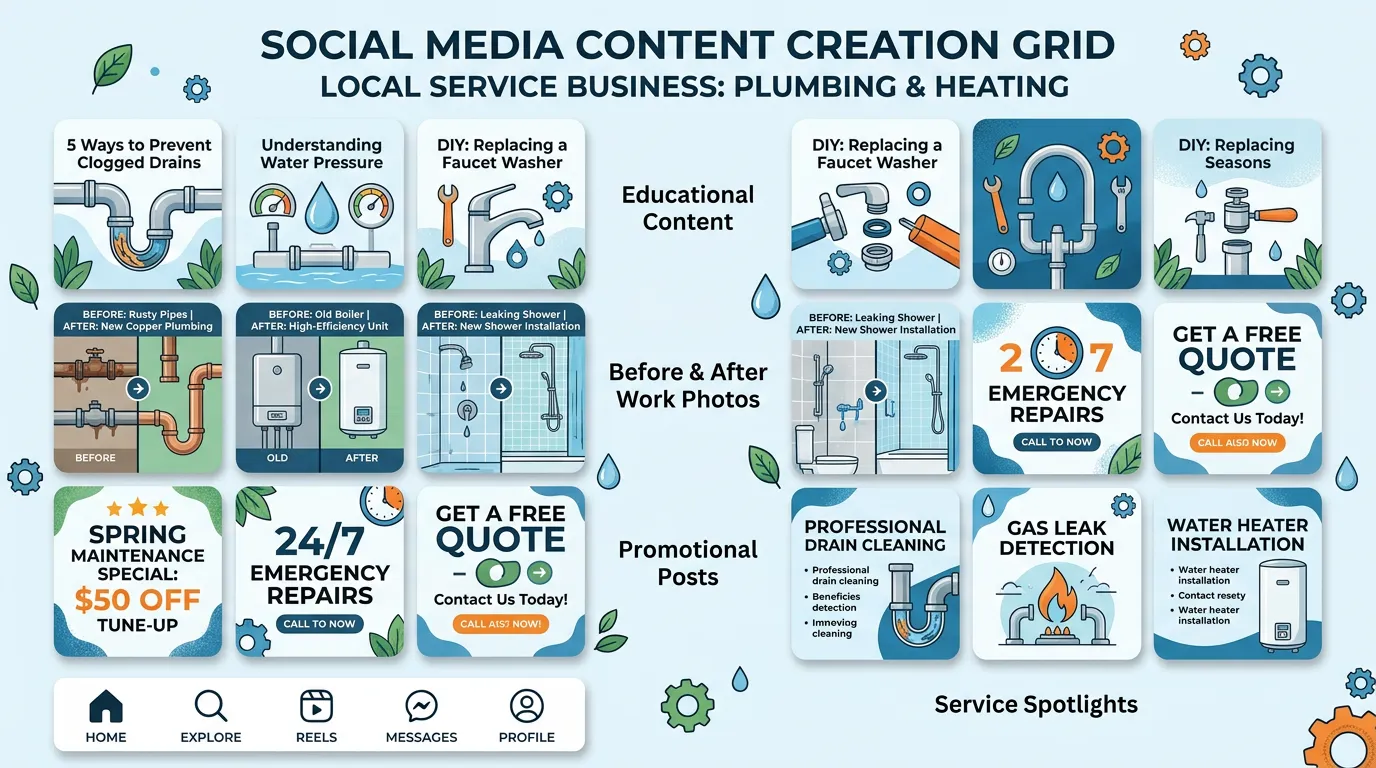
- Field capture routine with a three shot standard and a simple submission method
- Crew training card showing exactly what to photograph and what to avoid
- Monthly batch production of four to six weeks of posts
- Photo editing including cropping, color correction, and light branding
- Short vertical video clips with burned in captions for Reels and Stories
- Simple graphics for seasonal reminders, tips, and service announcements
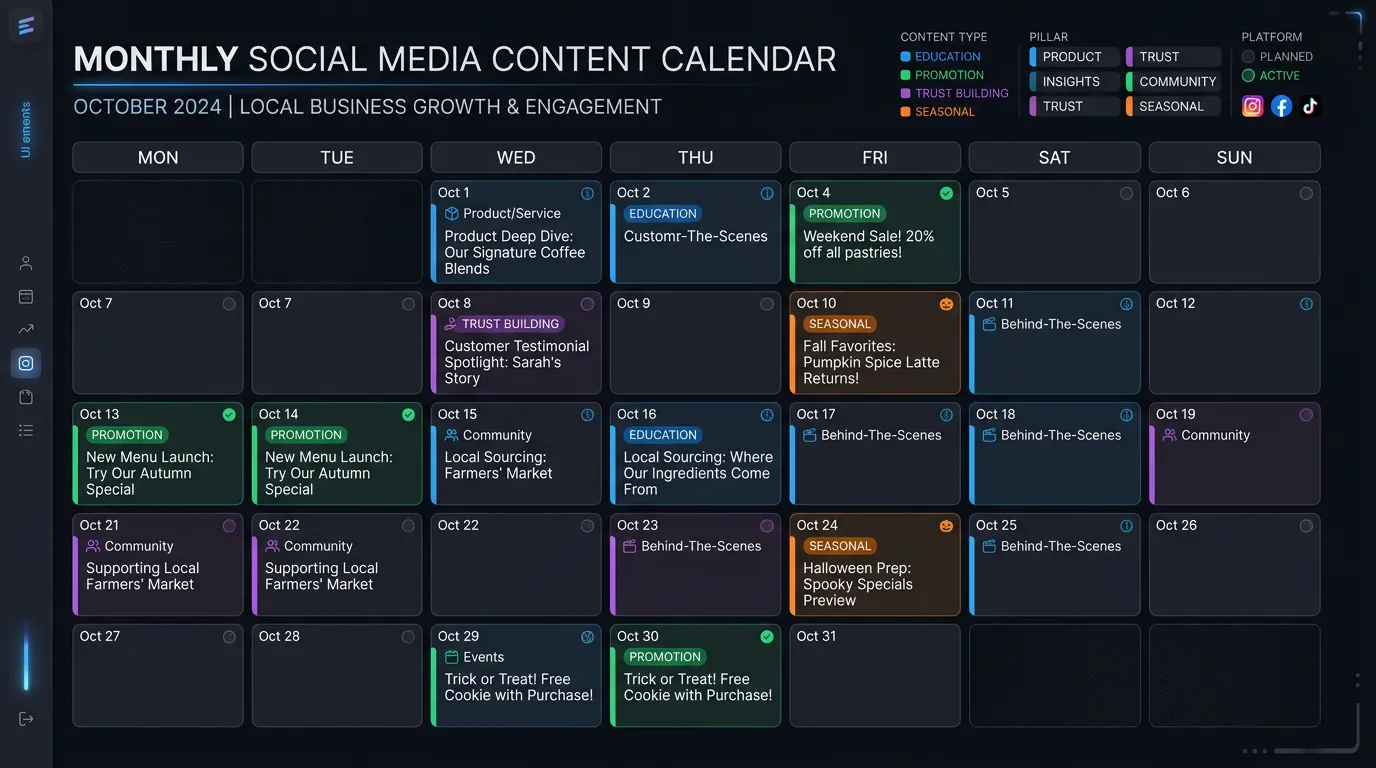
- Captions written in your voice with a defined mix of proof, education, and personality
- Scheduling into Meta Business Suite or your preferred scheduling tool
- Customer permission checklist and privacy rules for job photos
- Content bank of approved evergreen posts for weeks when jobs are slow
Our process
Set the Capture Routine
Week 1 to 2Crews get a card with three shots to take on every job and one place to send them. We keep it to under 60 seconds of extra work per job, because anything longer stops happening within two weeks.
Define the Voice
Week 2We write a short style guide from how you actually talk: reading level, whether you use humor, what you never say. Then every caption gets checked against it so posts sound like one company and not four freelancers.
Batch Produce Monthly
Ongoing, monthlyOne production session per month turns the raw field material into a month of finished posts. Batching is what makes consistency possible, since nobody creates good content at 4pm on a busy Friday.
Cut Vertical Clips
Ongoing, monthlyJob footage gets cut into 15 to 45 second vertical clips with captions burned in, because most people watch with sound off. One good five minute job video usually yields three or four usable clips.
Schedule and Fill Gaps
Ongoing, monthlyPosts get scheduled a month ahead. A bank of approved evergreen content covers slow weeks so the feed never goes silent while waiting for a photogenic job to happen.
Realistic timeline: Capture system and voice guide in the first two weeks. First full batch published in week three. Steady monthly batching after that, with photo supply usually stabilizing around month two.
From finished job to scheduled post
Content stops being a scramble when the path from the truck to the feed is the same every week.
The weak link is almost always the first box, which is why we hold it to 60 seconds of extra work per job.
The three shot standard your crews get
This is the card that lives in the glove box. Every item on it takes seconds, and together they decide whether a month of posts exists.
Wide shot before any tools come out
Stand back far enough to show the whole area, not just the failed part.
Close shot while the work is happening
Hands and tools in frame. This is the shot that proves a person did it, and the one crews skip.
Wide after shot from the same spot
Same angle, same distance as the before shot. Matching angles is what makes a before and after readable.
One sentence about what actually failed
Texted with the photos is fine. That sentence usually becomes the caption.
Clean the frame first
Coil the hose, move the drop cloth, pick up the packaging. Ten seconds of tidying makes the social media work look twice as good.
Check the background
No house numbers, no mail, no license plates, no family photos on the wall.
Keep the light behind you
Shooting toward a window or the sun turns the whole photo dark. Turn around.
Send it before you leave the site
Photos that wait until Friday do not get sent.
What actually happens on a batch day
One session a month turns raw field material into finished posts. A normal batch starts with 40 to 80 photos and 10 to 20 minutes of clips from the past four weeks.
Maybe a third of it is usable. Blurry shots, dark shots, and anything with a customer's mail in frame get cut first. What is left gets cropped for each format and paired with a caption built from the crew's note about the job.
Video works the same way. A five minute walkthrough usually yields three or four clips between 15 and 45 seconds. Captions get burned in, since most people watch with the sound off.
The output is four to six weeks of posts in one calendar you approve in a single sitting. That one approval step is what keeps the queue moving during a busy month.
Why most captions fail
A caption fails when it could belong to any company in your trade. The fix is detail only you have. The age of the unit, the part that was discontinued, the odd thing behind the wall.
Length matters less than the first line. Facebook and Instagram hide the rest behind a tap, so the opening sentence has to earn it. Lead with the problem, not with the company name.
We also keep a short list of words your company does not use. Most owners have two or three, and they are usually the phrases that sound like a brochure instead of a person.