Social Media Marketing
Social Media Platform Strategy
Chooses one or two platforms and formally drops the rest
- Timeline
- Two to three weeks to research and decide
Call (714) 823-3164 or ask a question. Clear recommendations, even if we never work together.
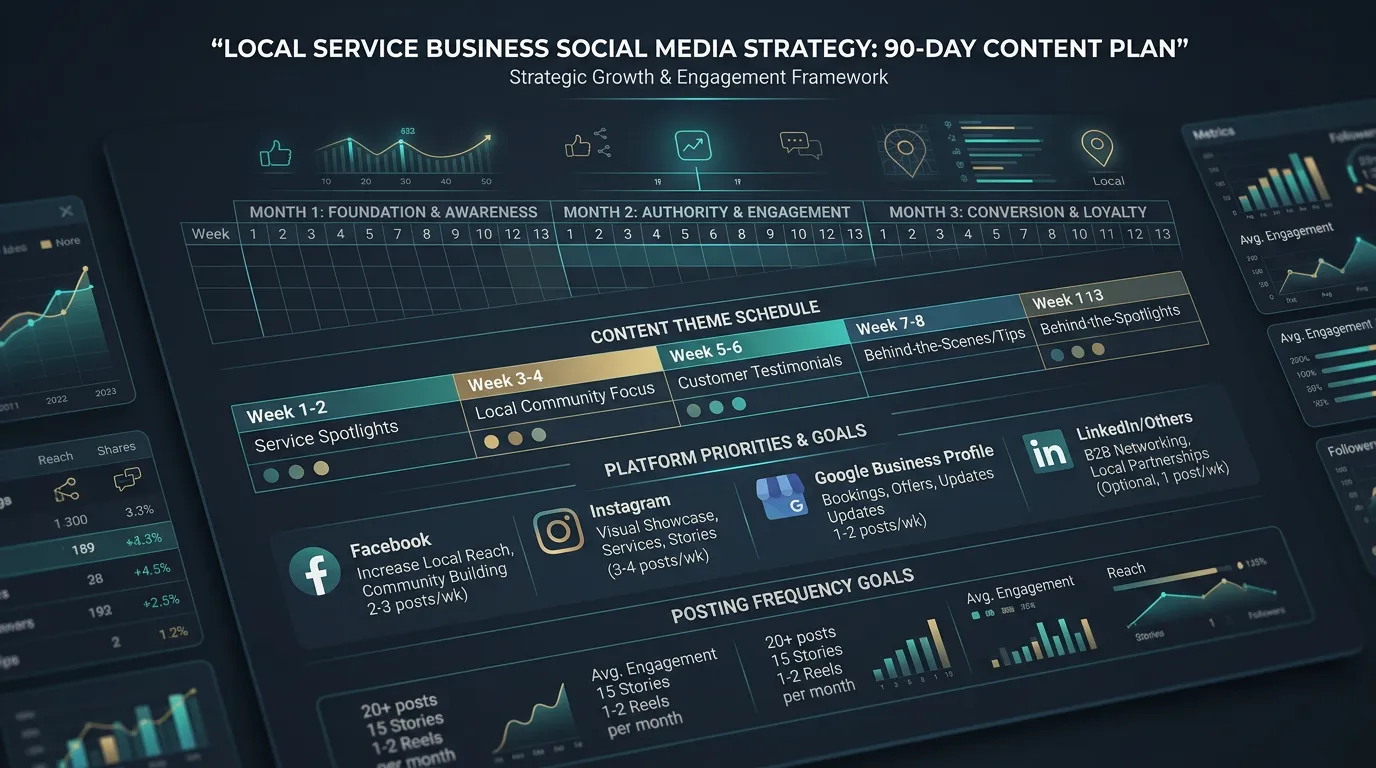
Platform strategy is deciding which social networks your business will use and which it will ignore. It also sets how often you post on each one and who does the social media work. It stops the common failure of running five thin profiles instead of one good one. You settle it before any content gets made.
The problem
A business signs up for everything because a consultant said to be everywhere. Now there is a Facebook page, an Instagram, a Twitter account, a TikTok, a LinkedIn, a Pinterest, and a YouTube channel. Five are empty. Two get the same photo cross posted with the same caption. A prospect finds the abandoned Twitter account from 2021 and wonders if the company is still operating. Nobody ever asked whether a 62 year old homeowner in Chino Hills replacing a furnace is spending time on TikTok. Effort spread across seven platforms produces nothing on any of them.
What it is
Platform strategy is a short document that makes real decisions. First we look at who actually buys from you: their age, how they found you, and what apps they use. That comes from your customer list, not from general statistics. We check where your competitors are and, more useful, where they are absent. Then we weigh each platform against what you can keep up. Who takes the photos, who writes, who replies, and how many hours a week does that add up to? Platforms that survive get a set posting rhythm, a content mix, and a named owner. The rest get closed, or parked with a clean profile that points people to where you are active. An abandoned profile is worse than no profile, so the shutdown plan is part of what we hand you.
Signs you need this
- You have profiles on five or more platforms and post regularly on none
- Your newest post on some accounts is more than a year old
- The same image and caption get pushed to every platform automatically
- Nobody can say why you are on a given platform
- You are considering TikTok because a competitor started posting there
What is included
- Customer profile built from your actual client list, not general demographics
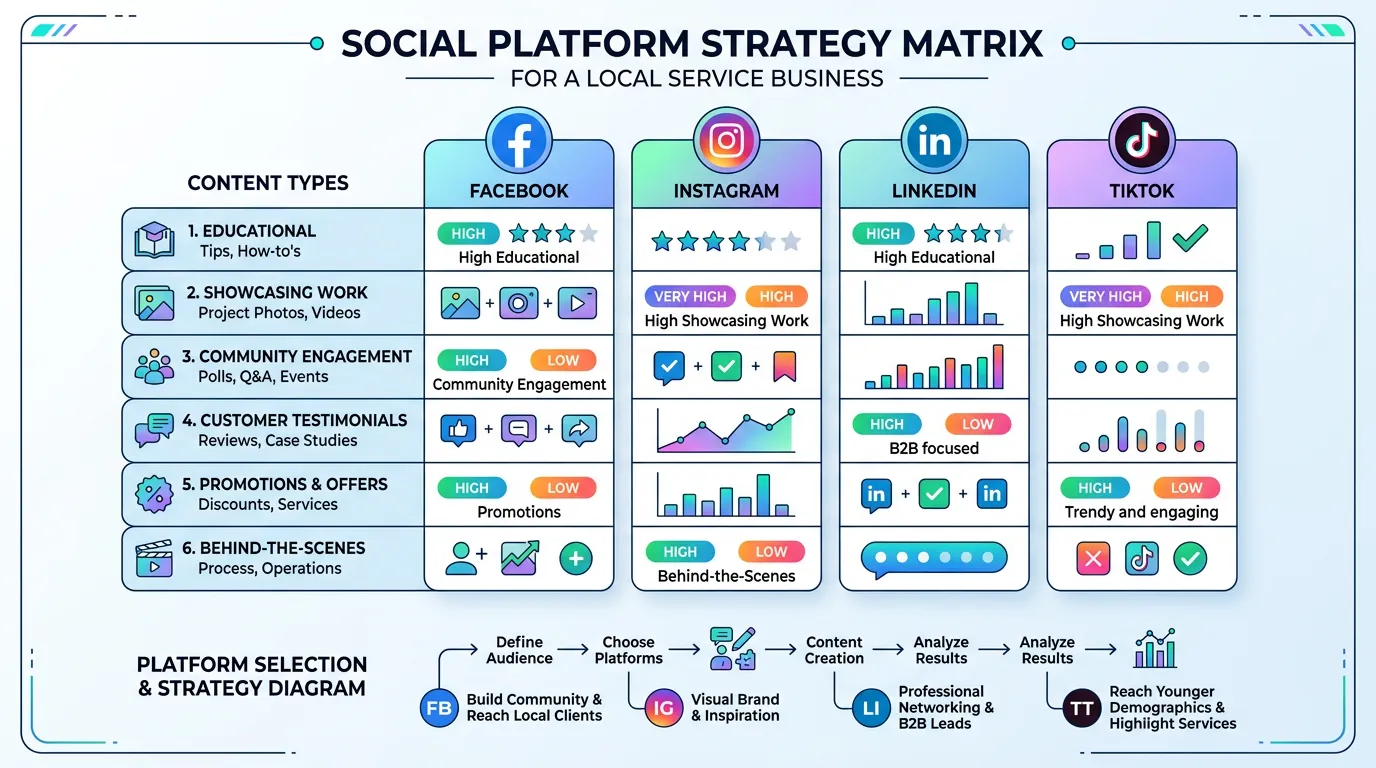
- Platform by platform fit assessment with a recommendation and a reason
- Competitor presence review showing where they are strong and where they are absent
- Resource reality check estimating weekly hours per platform
- Chosen platform list with cadence, content mix, and named owner
- Shutdown or park plan for platforms you are dropping
- Profile optimization checklist per active platform
- Cross posting rules stating what gets reused and what must be native
- Review trigger defining when to reconsider a platform decision
Our process
Look at Real Customers
Week 1We pull age ranges, neighborhoods, and how recent customers found you from your CRM and review history. Platform decisions made from your own buyer data hold up better than ones made from an industry article.
Scan the Competition
Week 1 to 2We check what your five closest competitors do on each platform, how often, and how much engagement they actually get. An empty local group is often a better opportunity than a crowded Instagram feed.
Count the Hours
Week 2Each platform gets an honest weekly time estimate covering content, posting, and replies. The plan then gets cut to fit the hours available. Plans that assume time nobody has fail in the second month.
Decide and Write It Down
Week 2 to 3Two platforms in, the rest out, with reasons recorded so the decision does not get relitigated every quarter when someone reads an article about a new app.
Close the Dead Profiles
Week 3Abandoned accounts either get a final post pointing to the active platform and clean profile information, or get deleted. Leaving a page last updated in 2021 visible costs you trust with anyone who checks.
Realistic timeline: Two to three weeks to research and decide. The strategy holds for about a year and gets reviewed if your customer mix changes or a platform materially changes how it works.
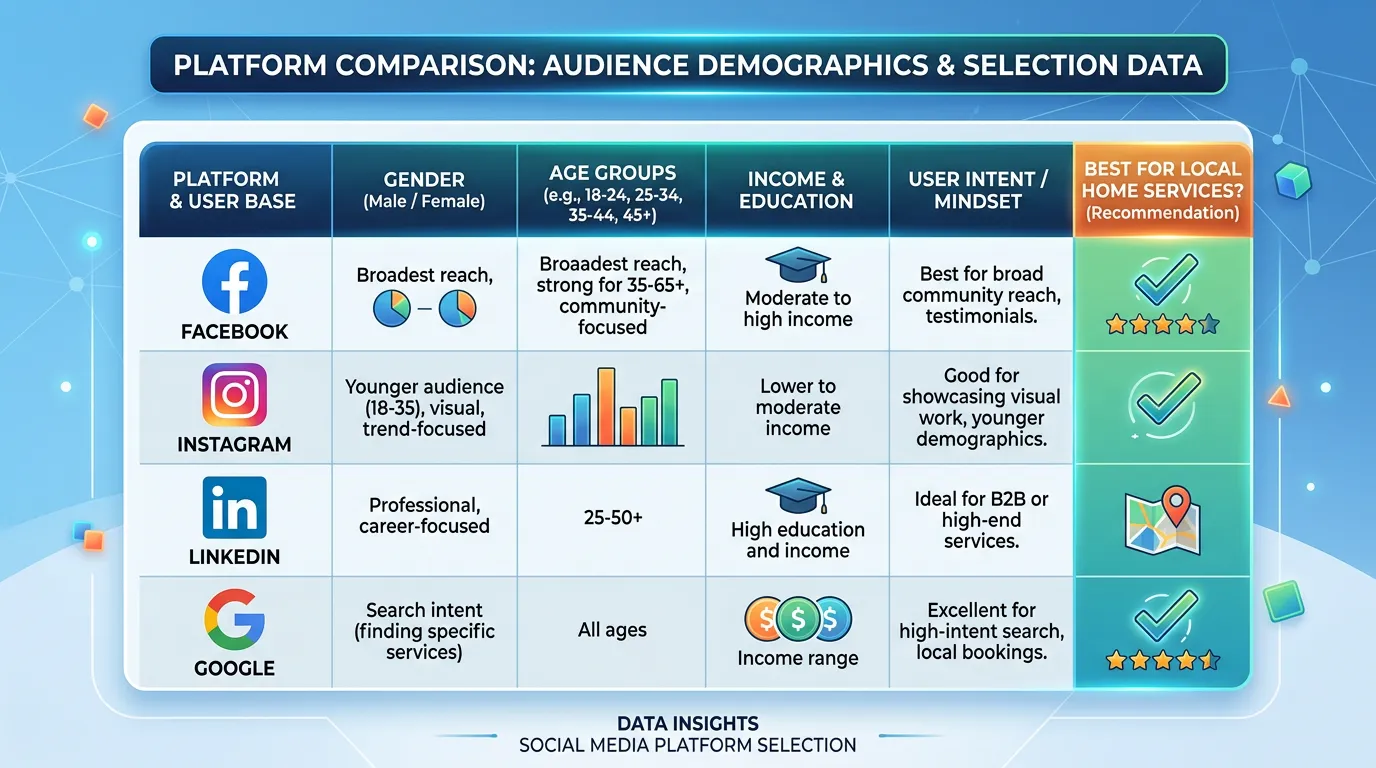
Platform fit and what each one costs in time
This is the starting point we bring to the first meeting. Your own customer list can override any row in it.
| Platform | Good fit | Weak fit | Hours a week |
|---|---|---|---|
| Homeowners over 45, local groups | Companies selling only to businesses | 2 to 4 | |
| Remodeling, landscaping, pools, auto body | Emergency repair trades | 3 to 5 | |
| Nextdoor | Tight service areas, neighborhood work | Commercial or regional only work | 1 to 2 |
| Property managers, builders, referral pros | Residential only companies | 1 to 3 | |
| TikTok | An owner who likes being on camera | Anyone who needs someone else to film | 4 to 6 |
| YouTube | Longer explainers and ad hosting | Companies with no video habit yet | 3 to 6 |
The hours cover content, posting, and replies. It is the reply half that surprises people, because it never batches.
Read your own invoices before you argue about apps
Pull the last 100 paid invoices. Sort them by zip code, by how the job came in, and by roughly how old the customer is. Patterns show up in about an hour.
One pattern shows up almost every time. Most revenue comes from four or five zip codes, not the whole 25 mile radius. That changes which local groups matter and how the Nextdoor service area gets set, not just ad targeting.
The other useful column is how they found you. If 70 of those 100 jobs came from search and word of mouth, social media has a support job here, not a lead job. Decide that before you decide a posting schedule.
Choosing platforms and closing the rest
These decisions rarely go wrong over which app is popular. They go wrong over time nobody has.
Do this
- Count reply time, not just posting time, in every hour estimate
- Name one person who owns each active platform, by name
- Look for where competitors are absent, since an empty local group beats a crowded feed
- Write down the reason you skipped a platform so the choice holds
- Set a review date about a year out
Not this
- Do not add a platform because one competitor posted there twice
- Do not keep a page half alive with a post every four months
- Do not push the same caption to every account automatically
- Do not judge a platform before three months of real effort
- Do not delete an old account before checking it for reviews and followers
Questions that come up after the decision
What if the platform we picked changes how it works?
Can we start with one platform and add a second later?
Does having fewer profiles hurt us in search?