Generative Engine Optimization
AI Search Visibility Strategy
Measures where you appear in AI answers before anyone changes anything
- Timeline
- Three to four weeks from kickoff to the delivered plan
Call (714) 823-3164 or ask a question. Clear recommendations, even if we never work together.
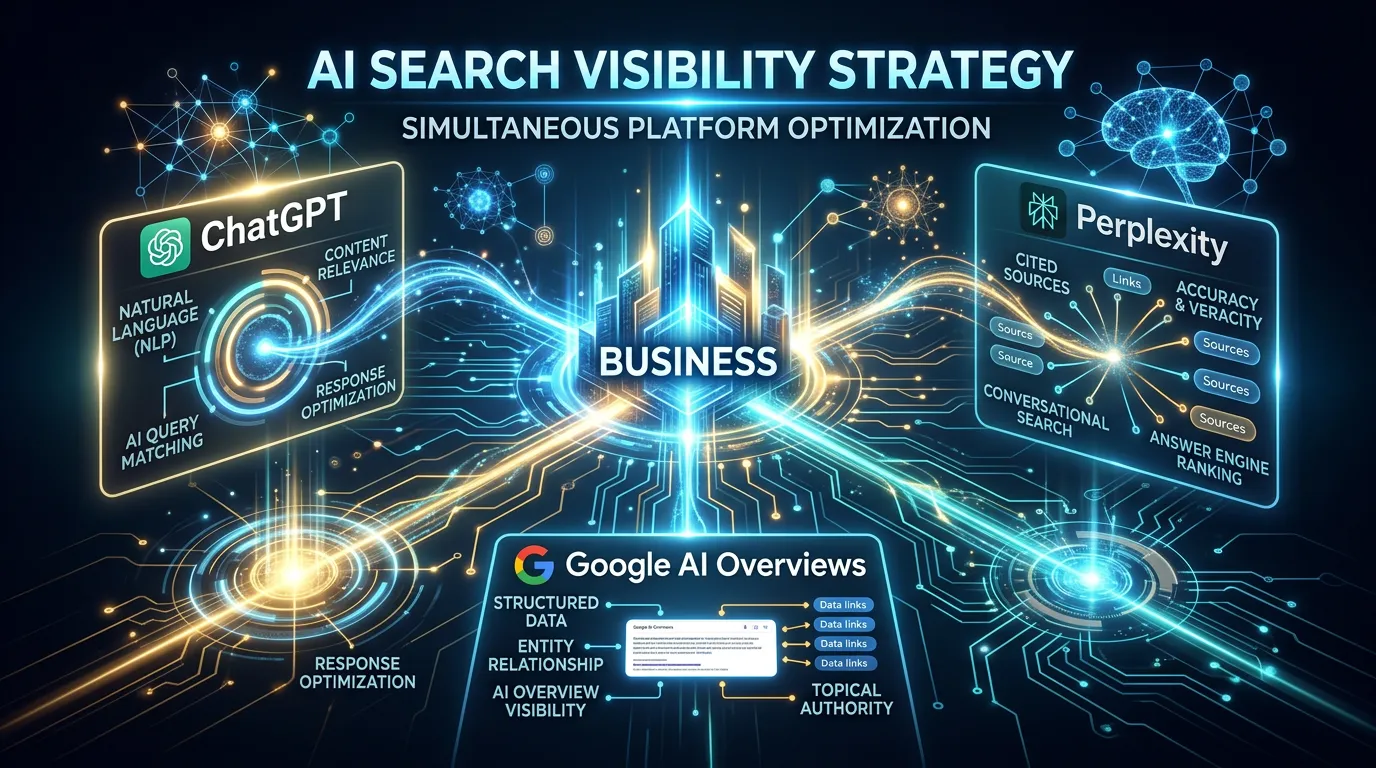
An AI search visibility strategy is a plan for getting your business named in AI generated answers. It starts by testing the real questions your customers ask across ChatGPT, Gemini, Perplexity, and Google AI Overviews. We record who gets named and which sources each answer cites. Then we rank the gaps worth closing first.
The problem
Most GEO projects start with somebody guessing. They read an article about optimizing for AI, add a FAQ block to the homepage, and hope. Nobody checked what ChatGPT says about their category first, so nobody knows whether the problem is that the model has never heard of the business, that it knows the business but ranks three competitors higher, or that it is citing an outdated directory listing with the wrong phone number. Those three problems have completely different fixes, and picking the wrong one wastes a quarter.
What it is
This is the research and planning layer. We start by building the prompt set, which is harder than it sounds. People talk to AI in full sentences, with far more context than they type into a search box. So we pull real phrasing from your call recordings, your contact form messages, and GA4 AI search terms. We also use the questions your techs get asked on site. From that we write 30 to 60 prompts across four types: direct hire questions, comparison questions, problem diagnosis questions, and price or process questions. Each prompt runs against ChatGPT, Gemini, Perplexity, and Google AI Overviews. We log the businesses named, the order they appear in, and every cited URL. That citation log is the most useful piece of the whole project. It tells you exactly which websites carry the most weight in your category. From there we score the gaps two ways: how commercial the question is, and how hard the gap looks to close. The plan gets written in that order.
Signs you need this
- You have never checked what ChatGPT says when asked about your category
- A competitor keeps getting mentioned by customers who found them through AI
- Your organic traffic is down but rankings look unchanged
- You are about to spend money on GEO and have no baseline to judge it against
What is included
- Prompt set of 30 to 60 questions sourced from real customer language
- Baseline results across four engines with screenshots for the record
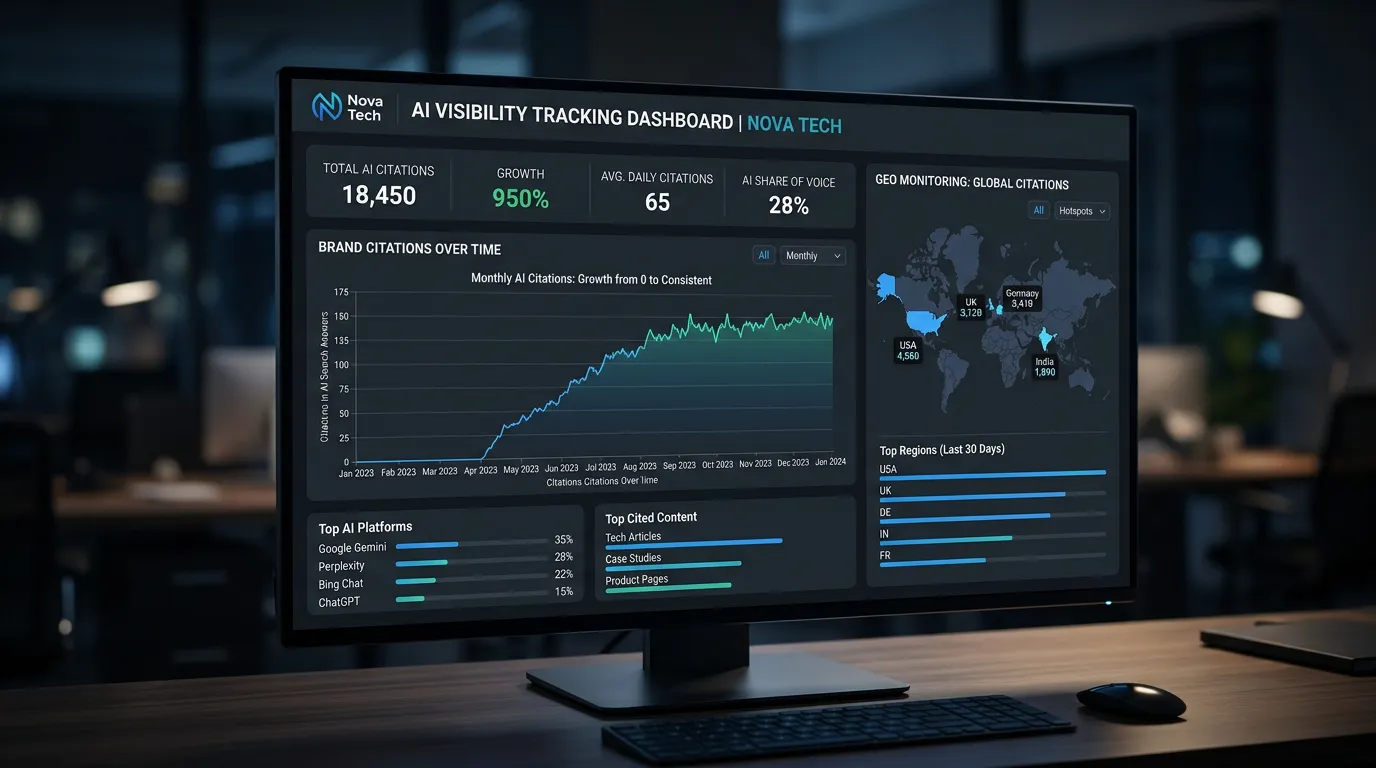
- Share of voice count showing how often you are named versus competitors
- Cited source inventory listing every URL the engines quoted in your category
- Gap analysis grouped by cause: unknown, outranked, or misrepresented
- Competitor profile showing why the named businesses get chosen
- Ranked action plan with owner and rough effort per item
- Recorded walkthrough of the findings with your team
Our process
Mine real customer language
Week 1We read contact form submissions, listen to twenty or more inbound calls, and pull GA4 and AI search Console queries. AI prompts are conversational, so the phrasing has to come from how people talk, not from a keyword tool export.
Build and run the prompt set
Week 1 to 2Prompts get grouped into hire, compare, diagnose, and price categories, then run against ChatGPT, Gemini, Perplexity, and Google AI Overviews. Results get captured with screenshots so the baseline is defensible six months from now.
Log the cited sources
Week 2Every URL the engines reference gets recorded and counted. Patterns show up fast: one trade directory carrying most of the citations, a Reddit thread quoted constantly, a competitor blog post that has become the default answer for a common question.
Diagnose each gap
Week 3Missing mentions get sorted by cause. Unknown means the engines have no reliable data about you. Outranked means they know you but prefer others. Misrepresented means they cite stale or wrong information about your business, which is the fastest gap to fix.
Write and present the plan
Week 3 to 4Actions get ranked by commercial value of the prompt and estimated difficulty. You get the plan, the raw data, and a recorded walkthrough so anyone on your team can pick it up later without a meeting.
Realistic timeline: Three to four weeks from kickoff to the delivered plan. Businesses with several service lines or multiple locations take closer to five weeks because the prompt set grows and every added engine multiplies the testing time.
How a customer question becomes a ranked action item
The strategy is a pipeline. Nothing lands on the plan until it has come out the far end of it.
Skipping the first step is the usual mistake. Prompts pulled from a keyword tool do not match how people talk to a chatbot.
Three reasons an AI answer leaves you out
Every missing mention has a cause, and the cause decides the fix. This sorting is the whole point of week three.
| Cause | What the answer looks like | How we confirm it | Rough time to fix |
|---|---|---|---|
| Unknown | Names three competitors, never you | Your name in quotes returns almost nothing off your own site | 3 to 6 months |
| Outranked | Names you last, or only when asked again | You appear, but the cited sources all favor others | 2 to 4 months |
| Misrepresented | Old phone number, closed address, wrong service | A stale listing or article is the source being cited | 2 to 8 weeks |
| No question yet | A generic answer that names no business at all | Nobody in your category has a page that answers it | 4 to 10 weeks |
Misrepresented is the best news on this list. Wrong data is far quicker to correct than missing data is to build.
What makes a baseline worth re-running next year
A baseline only helps if a different person can repeat it exactly. These details are what make that possible.
Prompt wording frozen in writing
Small edits change results, so any change gets logged with a date.
Screenshots with the date visible
A claim about February needs proof captured in February.
The same location setting every run
Local answers move with the location the tool assumes.
Clean sessions, no logged in account
Chat history nudges answers toward what you looked at before.
Every cited URL recorded, not just the winners
The source list ends up more useful than the mention count.
Two runs per prompt on different days
Anything that disagrees gets flagged as unstable.
One sheet, one owner
Data spread across four tools stops getting updated by month three.
Reading the results without fooling yourself
One run of one prompt is weak evidence. These models pick words with some randomness built in, so the same question can return a different list an hour later. Treat a single result as a hint.
Patterns are the real signal. If you are named in two of twelve hire prompts across all four engines, that is a finding worth acting on. If you slipped out of one answer this week, that is weather.
We also read the shape of the answer, not just the names in it. An answer that lists businesses is a different opportunity than one that explains how to choose and links to a guide. The second one means the winning move is content, not listings.