
Content Marketing
Content Optimization for Search
Improves pages you already own instead of writing new ones
- Timeline
- First batch of fixes ships in weeks 3 to 6
Call (714) 823-3164 or ask a question. Clear recommendations, even if we never work together.
Content optimization for search is improving pages you already published so they rank higher and convert better. Nothing new gets written. The content optimization work covers matching search intent, deepening thin sections, and fixing titles and headings. It also covers rebuilding internal links and refreshing pages whose rankings have slipped.
The problem
Most sites have more value sitting in old pages than in anything they are about to write. A page that has been on position 12 for a year is three or four fixes away from the first page, and nobody is looking at it. Another page ranked well in 2022 and has slid every quarter since, because a competitor published something deeper and the pricing in the article is now two years out of date. Meanwhile the content budget goes entirely to new pieces, so the library keeps growing and the average page keeps getting weaker.
What it is
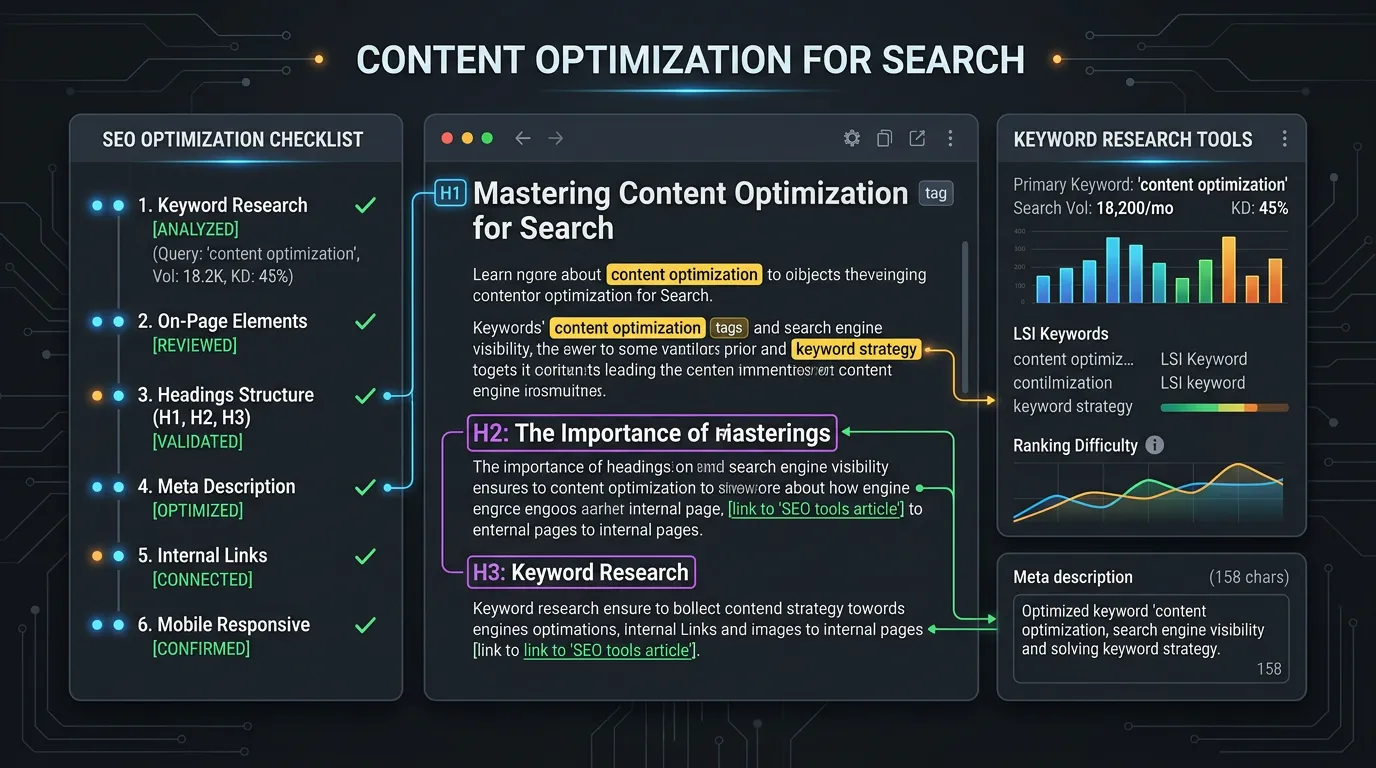
Content optimization starts with a data pass, not an opinion. We pull every page from Google Search Console with its impressions, clicks, average position, and query set. Then we check GA4 for entrances and conversions. Pages ranking 5 to 20 with real impressions become priority one, because small improvements there produce the biggest click gains. For each page we check intent match against what actually ranks. We find the subtopics the top results all cover and you are missing. Then we rewrite titles and meta descriptions for clicks, deepen thin sections, add or update schema, and rebuild the internal links pointing in. Pages that have slipped get a full refresh with current pricing, current products, and current examples. We measure each batch after 45 to 60 days before moving on.
Signs you need this
- Organic traffic is lower than it was a year ago with no obvious cause
- Search Console shows many pages with high impressions and very few clicks
- Several pages sit on positions 8 to 15 and never move
- Your articles reference prices, products, or rebates that are out of date
- You keep publishing new content while old content is never touched
What is included
- Full page inventory with impressions, clicks, position, and conversions per URL
- Priority list of pages ranking 5 to 20 with meaningful impression volume
- Intent match review comparing your page against what currently ranks
- Subtopic gap list per page taken from the top ranking results
- Rewritten title tags and meta descriptions aimed at click through rate
- Section rewrites and expansions where content is thin or outdated
- Updated pricing, product references, and code or regulation mentions
- Internal link rebuild pointing existing pages at the priority targets
- Schema additions or corrections including FAQ and Article markup
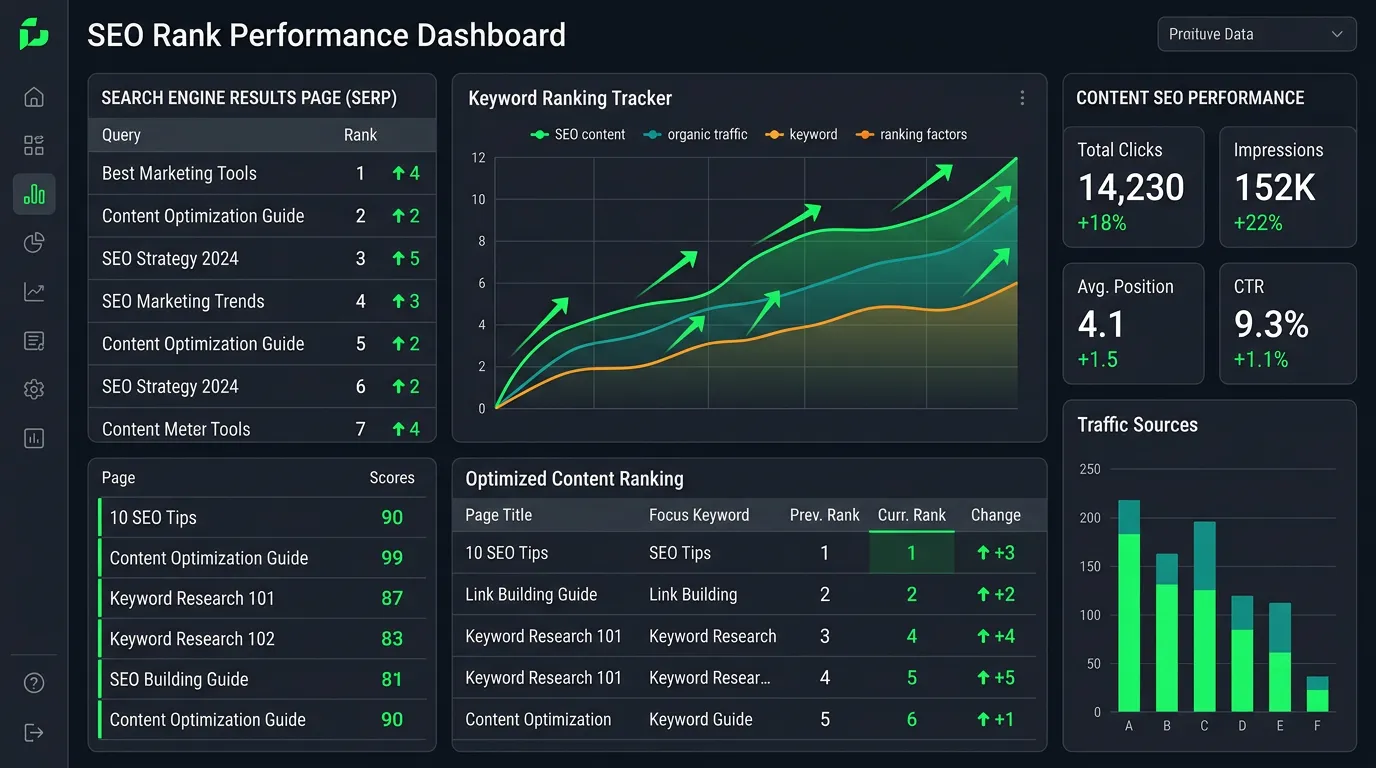
- Before and after tracking on position, clicks, and conversions per batch
Our process
Pull the Data
Week 1We export sixteen months of Search Console query and page data, join it to GA4 entrances and conversions, and rank every URL by opportunity. This step alone usually surfaces ten pages the client forgot existed and two that quietly earn leads.
Diagnose Each Priority Page
Week 1 to 3For every target we compare the page against the current top five results and name the specific gap: wrong format, missing subtopics, outdated numbers, weak title, or no internal links. Vague findings produce vague fixes.
Fix in Batches
Week 3 to 6We work eight to twelve pages at a time so results can be attributed. Fixing 60 pages at once means never knowing which change did what, which matters when you decide where the next budget goes.
Rebuild the Links
Week 5 to 7Optimized pages get internal links from relevant existing content with descriptive anchor text. On older sites this is frequently the single change that moves a page from position 11 to the first page.
Wait and Measure
Ongoing, every 45 to 60 daysWe hold each batch for 45 to 60 days and compare position, click through rate, and conversions before and after. Changes that lost ground get rolled back, which is only possible because batches stayed small.
Realistic timeline: First batch of fixes ships in weeks 3 to 6. Ranking response typically appears 3 to 8 weeks after each batch. A full optimization program on a 60 page site runs about 6 months.
What to do with a page based on where it ranks
Position tells you what kind of fix a page needs. Treating a page at 40 like a page at 8 burns months for nothing.
| Position | What it usually means | The fix | Time to see movement |
|---|---|---|---|
| 1 to 4 | Working already | Improve the title for clicks only | 1 to 3 weeks |
| 5 to 10 | Close, missing depth | Add missing subtopics and internal links | 3 to 6 weeks |
| 11 to 20 | Right topic, weak page | Rewrite for intent, expand thin sections | 4 to 8 weeks |
| 21 to 50 | Wrong format or too thin | Rebuild it or fold it into a stronger page | 2 to 4 months |
| Past 50 | Not really a content problem | Needs links, authority, or a new angle | Often not worth it |
Pages sitting at 5 to 20 get the budget first. Moving one spot at position 8 wins more clicks than moving ten spots at position 40.
The page with impressions and no clicks
Search Console will show pages with thousands of impressions and hardly any clicks. People see you in the results and pick someone else. That is a title problem, not a ranking problem.
The usual causes are a dull title, a title so long it gets cut off, a meta description that repeats the title word for word, or a promise the page does not keep. Each one is about an hour of work per page.
Write the title for someone scanning ten blue links. Put the number in it when you have one. Name the city when the search is local. Then leave it alone for three weeks and compare the click through rate before and after, because changing two things at once tells you nothing.
What a real refresh changes on an old page
A refresh is not a date change. This is what we actually touch on a page that has been sliding for a year.
Every price, fee, and rebate figure
Old numbers are the fastest way to lose a reader.
Product and brand names
Half the models named in a 2022 post are gone.
Sections the current top results have and you do not
That gap is usually why the page slipped.
The opening paragraph
Move the direct answer into the first 60 words.
Screenshots and photos
Old software screens date a page instantly.
Links out to pages published since
The page should point at your newer work.
Any code, permit, or rebate reference
California rules change more often than most.
The visible date, last of all
After the content changed, not instead of it.
The average page on your site gets a little weaker every month you leave it alone, and nothing on your dashboard tells you that is happening.
More on working with old pages
Will editing a page that ranks well make it drop?
Should I update the old page or write a new one?