
How To Articles
What a Marketing Consultant Actually Does All Month
The four jobs hiding inside the title, what the first ninety days should look like, and how to tell good advice from expensive agreement.
Call (714) 823-3164 or ask a question. Clear recommendations, even if we never work together.
A marketing consultant advises. They read your numbers, check the work your vendors send, and help you decide what to spend next. They do not run the ads or build the pages. The job is judgment, not production. Most work on a monthly call plus quick answers in between.
Jump to a section
- The Four Jobs Hiding Inside the Title
- Consultant, Agency, Fractional CMO, or Coach
- What a Real First Ninety Days Looks Like
- What Happens on the Monthly Call
- What a Consultant Will Not Do
- How to Tell If the Advice Is Any Good
- When You Should Skip It Entirely
- Who Does What, and What You Are Really Buying
- The First Ninety Days of a Real Engagement
- Getting Your Money's Worth From an Advisor
- Two Things Owners Ask on the First Call
- Questions

The Four Jobs Hiding Inside the Title
Marketing consultant is a loose title, so it helps to split the work into four jobs. The first is diagnosis. Somebody looks at where the money goes, where leads come from, and what happens to a lead after it lands. That sounds basic. Most owners have never seen those three things on one page at the same time. The second job is decision support. A proposal arrives Thursday and wants an answer Monday. A rep calls about a listing service that sounds official. Someone who already knows your close rate can answer that in ten minutes. Without them, the default is yes to whoever sounds most certain. The third job is vendor oversight. Reports get read by a person who knows what the numbers mean, and who can tell busy work from real work. The fourth job is teaching. Over a year you learn to read your own reports, and your office manager learns which questions to ask. That part outlasts the engagement. A good marketing consultant is trying to become less necessary. Not everyone does all four well. Ask which of the four you are buying before you sign, because someone strong at diagnosis and weak at oversight is a fine choice for a one time review and a poor choice for a year.
- Diagnosis: what is actually happening with money, leads, and follow up
- Decision support: fast answers when something needs a yes or a no
- Vendor oversight: somebody who reads the report properly
- Teaching: you and your staff learn to run it without help
Consultant, Agency, Fractional CMO, or Coach
These four titles get used as if they mean the same thing. They do not. An agency does the work. You hand over a channel, they run it, and you get deliverables: pages, ads, posts, reports. A marketing consultant never touches the channel. You keep your vendors and your staff, and the marketing consultant helps you steer them. A fractional CMO sits closer to the agency end. They take real authority, own the plan, manage vendors directly, and often join your team meetings. That costs more, and it earns its price when you have several people and nobody leading them. A coach works on you, not on the marketing. Coaching is about habits, confidence, and how you make choices. It can be useful, and it is a different product. There is a fifth kind nobody names honestly, which is the free consultant. That is a salesperson running a needs assessment. The advice is often real, and it stops where their service list stops. Nobody at a paving company recommends concrete. That is not dishonesty, it is the shape of the arrangement, and it is why paid advice can end up cheaper than free advice. The test is simple. Ask what they would tell you to do if it meant less money for them, then listen for whether the answer is specific.
What a Real First Ninety Days Looks Like
Here is the shape of a normal start, so you can tell when steps are being skipped. The first two weeks are collection. Read access to analytics, the ad accounts, the Google Business Profile, call tracking if you have it, and twelve months of vendor invoices. Then a long session about the business itself. Job values, close rate, busy season, which services you actually want more of, and which ones you take only because the phone rang. Weeks three through six are watching. This part gets skipped often, and skipping it is the tell. Advice given in week one is advice about a business nobody has met. A month of watching shows the pattern: which vendor report arrives late, what happens when the phone rings at four on a Friday, whether the estimate follow up ever goes out. By week six you should get something in writing. Not a slide deck. A short document saying what the numbers are now, what looks broken, what looks fine, and what order to fix things in. Then the monthly rhythm starts. If ninety days pass and you have never seen a written baseline, you did not hire a marketing consultant. You hired somebody to agree with you once a month, which is a pleasant and expensive habit.
What Happens on the Monthly Call
A good call is boring and the same every time. That is the point. It opens with the same numbers in the same order, so you see change instead of hunting for it. Five to eight numbers is plenty: spend by channel, leads by channel, how many became booked work, cost per booked job, and one or two that matter to your trade. A roofer might watch storm season calls. A dental office might watch new patient exams. Next, last month's decisions get closed out. Did the agreed thing happen. If not, why not, and is it still worth doing. Owners dread that section, and it is the one that makes the whole arrangement work. Then whatever you brought: a proposal, a report that reads wrong, a rep who keeps calling, a question about raising budget for summer. Then, and this matters, no more than two actions for the next month. A shop with three vans and one office manager can finish one thing well. Give them four and they finish none and feel behind on all of them. Notes go out the same day, in writing, with a name and a date on each action. If your calls end with a friendly summary and no assignments, nothing changes, and you will not notice for about eight months.
What a Consultant Will Not Do
The limits are the part people learn late. A marketing consultant will not build the page, write the ad, or post to your Instagram. If they start doing that, the advice quietly stops, because the person checking the work is now the person doing it. That is the most common way these arrangements go bad, and it usually happens by drift rather than by decision. A marketing consultant will not make the call for you. They can say what they would do, why, and show the numbers behind it. You still sign. That feels like a dodge right up until the first time an outside opinion saves you from a contract you were about to sign out of politeness. A consultant will not promise a ranking or a lead count. Google says plainly that nobody can guarantee a top spot, and anyone who does is telling you something about themselves. A consultant will not fix a business problem wearing a marketing costume. If you close two of every ten quotes, more leads make the problem bigger. A good advisor says that out loud in month two, even though it means recommending less work instead of more. And they cannot supply urgency. If nobody on your side has an hour a month, advice piles up and nothing moves.
How to Tell If the Advice Is Any Good
Judge advice the way you judge a diagnosis, not the way you judge a haircut. First, does it make predictions. Vague advice can never be wrong. Specific advice can. If somebody says leads should rise once you fix the intake gap, and names a rough size and a date, you can check that later. Write the prediction down. Second, does it change. A marketing consultant saying the same thing in month one and month seven is not reading anything. Third, does it ever cost them money. The clearest signal is the first time you hear do not buy this, or your current vendor is doing fine, keep them. Advice that always ends in more spending is a sales pitch with a calendar invite. Fourth, can you now read your own reports. After six months you should open the ads account and be able to say something true about it. If you still need a translator, that was talking, not teaching. Fifth, is there a record. Somewhere there should be a list of what was considered, what was chosen, and what was rejected and why. That list is what stops the same idea coming back every spring with a new salesperson attached. If nobody keeps it, you are relearning your own history once a year.
When You Should Skip It Entirely
Plenty of businesses should not hire one. If your marketing is one thing, do that one thing well and save the money. A single owner with a Google Business Profile and word of mouth does not need a monthly call. They need reviews and a phone that gets answered. If nobody on your side can act, skip it too. Consulting turns into decisions, and decisions need a person with an hour and some authority. If that person does not exist yet, free them up first. If you have never done any marketing at all, a one time plan is usually the better buy. Pay once for direction, execute for six months, then talk about ongoing help. Paying monthly to be advised about work that has not started is backwards. If money is tight, put it into the work rather than into advice about the work. Advice is a multiplier, and multiplying zero gives you zero. And if what you really want is for somebody to take it off your plate, say so and hire an agency. There is nothing wrong with wanting the work done. Buying advice when you wanted a contractor ends with both sides annoyed by month four.

Who Does What, and What You Are Really Buying
Four roles get sold with similar words. This is the honest split, so you can match the role to the problem you actually have.
| Role | What you buy | Typical commitment | Where it falls short |
|---|---|---|---|
| Consultant | Decisions and oversight | Monthly call, month to month | Nothing gets built for you |
| Agency | Work done in one channel | Retainer, often 6 to 12 months | They also grade their own work |
| Fractional CMO | Someone running the plan | Set days per month, longer term | Costs more than most shops need |
| In house marketer | Full time hands and time | A salary plus tools | One junior person cannot do it all |
| Coach | Better habits and confidence | Weekly or monthly sessions | Does not read your ad account |
Most disappointment comes from buying row one when you wanted row two. Decide first whether your bottleneck is decisions or hands.
The First Ninety Days of a Real Engagement
If your start looked nothing like this, that is worth raising on the next call.
The watching step is the one that gets cut, and cutting it is why so much advice sounds generic.
Getting Your Money's Worth From an Advisor
The arrangement works or fails on your side as much as theirs. These habits decide which.
Do this
- Send the proposal before you sign it, not after.
- Give read access on day one so nobody guesses at numbers.
- Bring your real close rate, even when it is embarrassing.
- Pick two actions a month and finish them.
- Ask for predictions in writing so they can be checked later.
Not this
- Do not ask for advice and then buy from whoever called last.
- Do not hide a vendor relationship. It wastes the whole review.
- Do not let advisory work drift into them doing the work.
- Do not judge month one. Nobody knows your business yet.
- Do not accept a summary with no names and no dates on it.
Two Things Owners Ask on the First Call
Will they just tell me to spend more?
Do I need a long contract for advice?
Would rather we handled it?
This article covers how to do the work yourself. If you would rather have it done for you, that is what our marketing consulting service is.
Marketing Consulting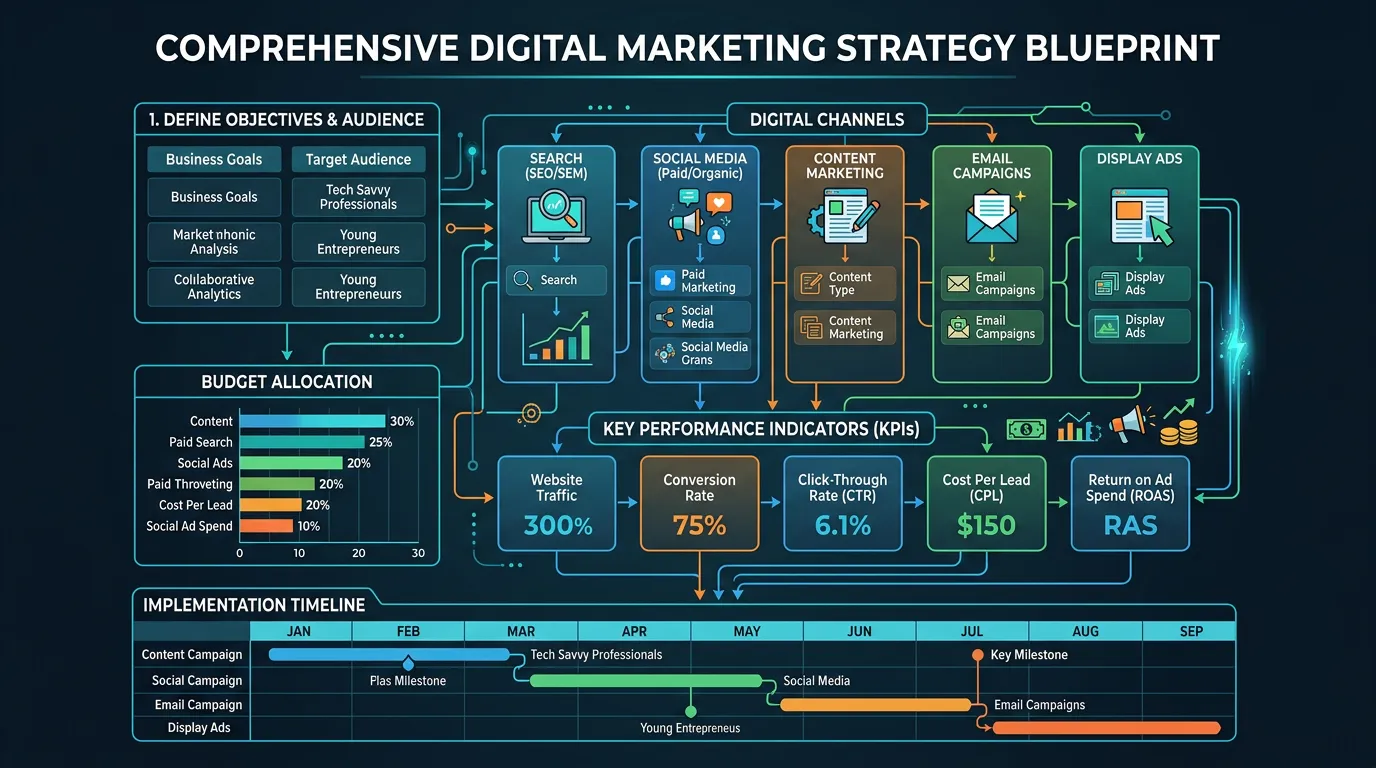
Frequently asked questions
Is a marketing consultant the same as a fractional CMO?
How often should we actually talk?
Can a marketing consultant work with the agency I already have?
What do I have to hand over for this to work?
How long before it is worth the money?
Sources
- Google Search Central: Do you need an SEO?(opens in a new tab) Google sets out what to ask a marketing vendor before hiring, including scope, reporting, and contract terms, and warns against anyone guaranteeing rankings.
- Google Search Central: Google Search Essentials(opens in a new tab) Google sets out the technical requirements, spam policies, and best practices a page has to meet to be eligible to appear in Search.
- Google Analytics 4 events guide(opens in a new tab) Form fills, calls, chats, and bookings are recorded as GA4 events, which is how a lead gets tied back to a traffic source on a monthly review.