
FAQ and Problem Solution Articles
Why Your Marketing Agency Is Not Working, and How to Check
A thirty day check that tells you whether the agency is the problem, the brief is the problem, or the leads are dying inside your own office.
Call (714) 823-3164 or ask a question. Clear recommendations, even if we never work together.
Most of the time the agency is not the whole problem. Leads often arrive and die inside the business, or nobody agreed what a lead was. Before you fire anyone, count leads by channel for six months, track what happened to each one, and read the reports with real questions.
Jump to a section
- First, Check Whether Leads Are Dying Inside Your Business
- Agree What Counts as a Lead Before You Judge Anyone
- Read the Report You Already Have, the Right Way
- A Bad Brief Beats a Bad Agency More Often Than You Think
- The Wrong Service for Where You Are
- How Long Is Long Enough, by Channel
- Fix It, or Switch Without Losing Your Assets
- The Thirty Day Check Before You Decide Anything
- Symptom, Likely Cause, and What to Check
- The Conversation to Have Before You Fire Anyone
- Before You Send the Cancellation Email
- Questions

First, Check Whether Leads Are Dying Inside Your Business
This is the uncomfortable place to start, and it is where the answer sits surprisingly often. Pull the last ninety days of calls from your phone system or call tracking. Count how many rang out, went to voicemail, or got answered after five rings. Then check the missed ones for callbacks. Do the same with form fills and web chats. How long between the form arriving and somebody replying. Not the average. The worst ones. Then check quotes. How many people got a written estimate, and how many of those got a follow up after a week. If a quarter of your calls go unanswered during the day, no agency on earth can fix your lead count. They can only make the phone ring more, and it will ring out more. This part is not the agency's job and it is not their fault, but it is the first thing an outside reviewer should look at, because everything downstream is measured against it. Fix intake before you judge the traffic. If it turns out intake is clean, you have learned something valuable. You now know the problem really is upstream, and the rest of this check gets much faster.
Agree What Counts as a Lead Before You Judge Anyone
Half of all agency disputes come down to counting. Your agency reports sixty leads. You saw maybe fifteen worth having. Both of you are telling the truth, because you are counting different things. Their sixty probably includes every form fill, every call over thirty seconds, every chat, and every direction request. Your fifteen means people who wanted work done in your service area at a price you charge. Write the definition down before the next call. A lead is a real person, in your area, asking about a service you sell, with contact details. Wrong numbers, job applicants, supplier calls, and people three counties away do not count. Then insist that both sides report against that definition. Once it is written, one of two things happens. Either the number drops and everyone can finally see the real picture, or the agency resists writing it down, which is its own answer. This one step resolves more agency arguments than any audit. It is also the step that gets skipped, because it feels too obvious to be worth an hour.
Read the Report You Already Have, the Right Way
Most monthly reports are built to be looked at, not read. Impressions, reach, and clicks all go up and to the right without much meaning attached. Ask three questions of any report and it changes character fast. First, what is the definition of this number and where does it come from. If nobody can say, the number is decoration. Second, what would this look like if the work was not working. A metric that only ever moves one direction is not a measurement. Third, which of these numbers connects to a booked job. For ads, ask for the search terms report rather than a summary. That shows the actual searches that triggered your ads, which is how you tell a traffic problem from a page problem. For local visibility, remember that Google names relevance, distance, and prominence as what drives local results, so a business that moved or serves a wide area has a structural issue no report will fix. For organic work, six weeks of activity with no ranking change is normal. Six months with no change in what pages get found is not.
- Where does this number come from, exactly
- What would a bad month look like on this chart
- Which of these numbers turned into booked work
- What did we agree to do last month, and did it happen
A Bad Brief Beats a Bad Agency More Often Than You Think
The most common finding in a vendor review is not incompetence. It is an agency doing acceptable work against a brief nobody ever wrote. Ask yourself what you actually told them. Did you name the services you want more of, or did you say more leads. Did you tell them which jobs you refuse, which suburbs are too far to drive, and what a good job is worth. Did you tell them your busy season, so they know not to spend hard in your dead month. If the answer is no, the agency has been guessing for a year, and guessing produces exactly the traffic you are complaining about. This is good news, because a brief is cheap and fast to fix. Write one page. Name the three services that matter, the area you serve, the minimum job you will take, and the two months you want to be busiest. Send it. Ask for a plan against it within two weeks. What happens next tells you more than any audit. A capable agency is relieved to get it. A weak one goes quiet, or sends back the same plan with new headings. Either way you now know which one you have.
The Wrong Service for Where You Are
Sometimes the work is done well and it was never the right work. A brand new site with almost no reviews and no history was sold a content program. Content is slow, and it needs some existing trust to lean on. That business needed reviews, a fixed Google Business Profile, and ads to buy immediate work while the slow parts grew. Or the opposite. An established company with a strong reputation was sold aggressive ads while its site loaded slowly and its contact form was broken on phones. The traffic was fine. It arrived somewhere that could not convert it. Another version is scale mismatch. A single van operation buys a program built for a company with five crews, then cannot handle the volume when it works, so the leads sour. And a common one in service work is geography. A shop pays for visibility across a whole county when it will only drive twenty minutes. The check here is simple. Ask the agency to explain, in one paragraph, why this service and not the other two, given your stage. If the answer is that this is what they sell, you have your diagnosis.
How Long Is Long Enough, by Channel
Judging too early is as expensive as waiting too long. Paid ads should show something within about four to six weeks. Not profit, but clean data: which searches trigger you, which convert, what a booked job costs. If eight weeks pass and nobody can tell you cost per booked job, that is a real problem and it is not a patience problem. Google Business Profile work usually moves in four to eight weeks, because listing changes and new reviews get picked up fairly quickly. Organic search is the slow one. Three months of nothing is normal, especially on a newer site. Six months with no movement in what pages get found is worth a hard conversation. Content programs need six to twelve months before the library is big enough to judge, which is why quitting at month four wastes the whole spend. Email and follow up work should show inside one or two send cycles. Write these windows down at the start of any engagement. The argument you want to avoid is the one where you say it has been ages and they say these things take time, and neither of you has a number to point at.
Fix It, or Switch Without Losing Your Assets
Once you know the cause, the decision is usually clear. Fix it when the work is competent, the brief was thin, and the account manager answers questions directly. Rescope it when the service is wrong for your stage. That is often a smaller invoice, not a bigger one, and a good agency will say so. Switch when reports cannot survive three plain questions, when nobody can name what changed last month, or when you have asked twice for account access and not received it. That last one matters more than anything on the report. Before you send any cancellation email, secure your assets. Your Google Ads account, Analytics property, Google Business Profile, domain registrar, hosting, and site login should all be owned by your business email, with the agency added as a user. If any of those are in the agency's name, get it moved first, politely, while the relationship is still fine. Export historical reports too. Then give notice in writing with a date. Ask for a handover document listing what is running, what is scheduled, and what will break if it stops. The agencies that hand that over cleanly are usually the ones you did not need to leave.

The Thirty Day Check Before You Decide Anything
Run these five steps in order. Doing them out of order is how owners fire a decent agency for a problem in their own front office.
Steps one and two cost nothing and settle most disputes. Only step five involves anybody losing a contract.
Symptom, Likely Cause, and What to Check
Match what you are seeing to the check that actually tests it. The cause is often not where the complaint points.
| What you are seeing | Most likely cause | What to check first | Whose job to fix it |
|---|---|---|---|
| Lots of leads, none good | No written lead definition | Search terms and form entries | Both, starting with you |
| Good leads, no booked work | Intake and follow up | Answer rate and quote chasing | Yours, this month |
| Numbers up, phone quiet | Reporting on the wrong things | Which metric ties to a job | The agency, on request |
| Nothing moved in six months | Wrong service for your stage | Why this and not the others | The agency, in writing |
| Reports arrive late and vague | You are a small account there | Who your day to day contact is | Escalate, then decide |
Rows one and two are the common pair, and both are settled with counting rather than with an argument.
The Conversation to Have Before You Fire Anyone
One direct meeting resolves more than a month of frustration. Go in with evidence and specific asks.
Do this
- Bring your own lead count and how you defined a lead.
- Ask what changed last month, and what it was meant to do.
- Ask for the search terms report, not the summary slide.
- Give them a one page brief and a two week deadline.
- Ask directly for read access to every account in your name.
Not this
- Do not open with the word results. Open with numbers.
- Do not accept an industry average as an answer about you.
- Do not cancel before account ownership is sorted out.
- Do not judge a channel before its normal window has passed.
- Do not hire the replacement who promises a ranking.
Before You Send the Cancellation Email
What do I need to own before I give notice?
Is it worth asking for a handover document?
Would rather we handled it?
This article covers how to do the work yourself. If you would rather have it done for you, that is what our marketing consulting service is.
Marketing Consulting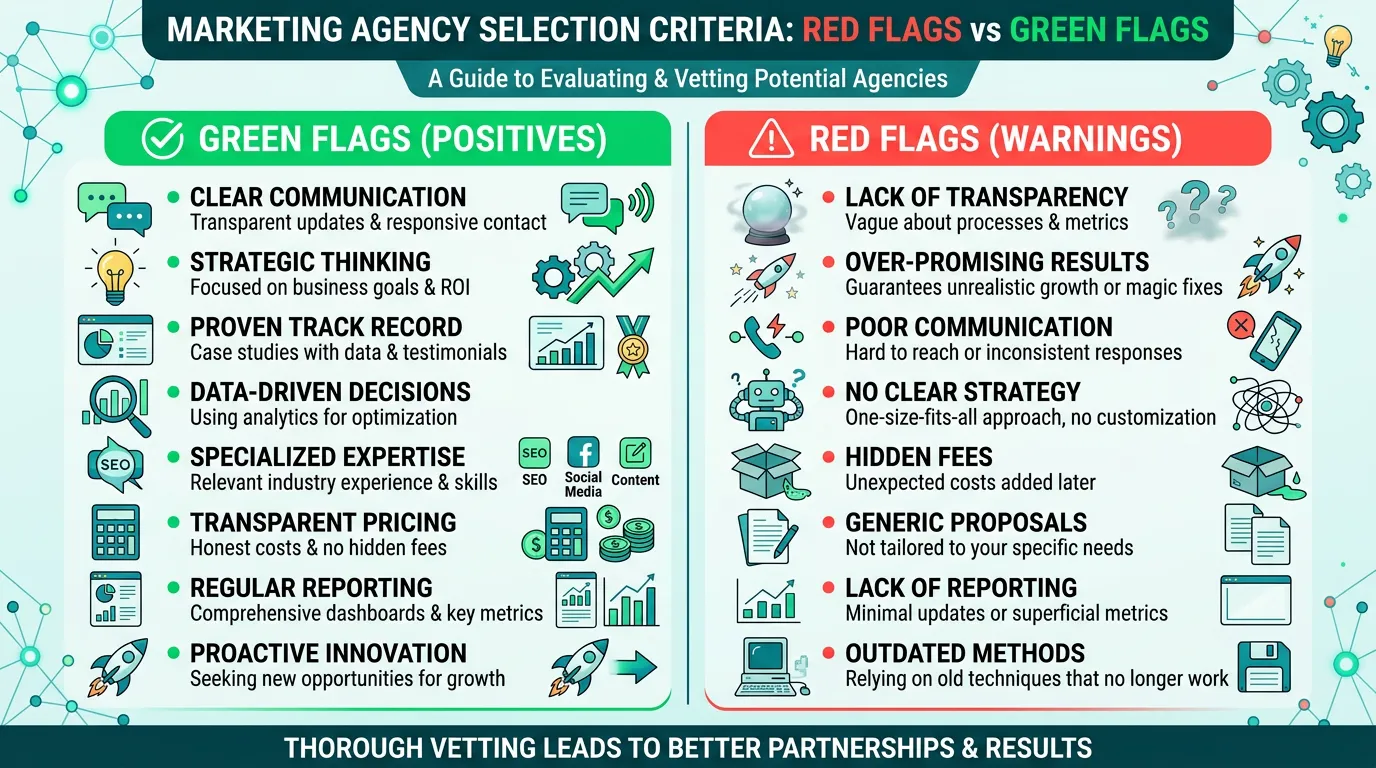
Frequently asked questions
How do I know if it is the agency or my own follow up?
The agency says results take time. How long is fair?
Should I get a second opinion before I cancel?
What if they will not give me account access?
Will switching agencies reset my progress?
Sources
- Google Search Central: Do you need an SEO?(opens in a new tab) Google sets out what to ask a search vendor before hiring, including scope, reporting, and contract terms, and warns against anyone guaranteeing rankings.
- Google Ads Help: About the search terms report(opens in a new tab) The search terms report shows the actual searches that triggered your ads, which is how you tell a traffic problem from a page problem.
- Google: Improve your local ranking on Google(opens in a new tab) Google names relevance, distance, and prominence as the three factors behind local results.
- Google Analytics 4 events guide(opens in a new tab) Form fills, calls, chats, and bookings are recorded as GA4 events, which is how a lead gets tied back to a traffic source.