
Foundational Guides
What Email Marketing and Automation Actually Costs
The three real costs, the market ranges behind each one, and the seven scope questions that decide whether your quote comes back high or low.
Call (714) 823-3164 or ask a question. Clear recommendations, even if we never work together.
Email marketing has three costs. Software, priced by how many contacts you store, runs from free to a few hundred dollars a month. Setup is a one time build, often one to five thousand. Ongoing writing and list care is billed monthly or hourly. List size and the number of automations move the price most.
Jump to a section
- The Three Things You Are Actually Paying For
- What the Software Costs, and Why It Climbs
- What Setup Costs, and Why It Is Front Loaded
- What the Monthly Work Actually Costs
- Seven Things That Move Your Quote Up or Down
- How to Tell If the Price Is Worth It
- What Each Piece Usually Costs
- Where the Money Goes Month by Month
- Ask These Before You Sign
- Buying Email Work Without Overpaying
- Questions
The Three Things You Are Actually Paying For
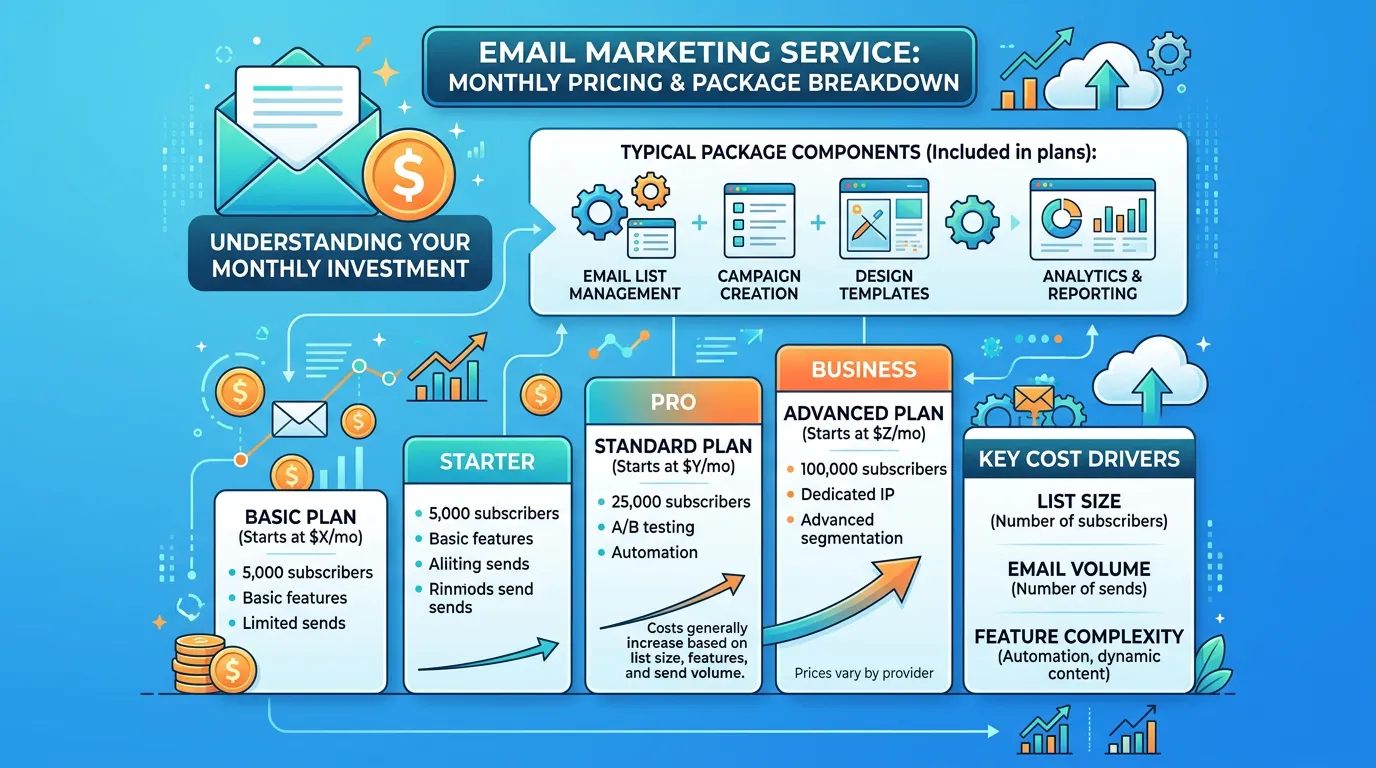
Every email quote is some mix of three things, and they are worth separating before you compare numbers. The first is software, the platform that stores your contacts and sends the mail. You pay it every month, whether or not anyone sends anything. The second is setup, the one time build: connecting your forms, proving your domain, importing and cleaning the list, designing a template, and writing the first automations. It is front loaded, and it is mostly writing. The third is the ongoing work. Somebody has to write the sends, watch what bounces, prune dead addresses, and read the numbers. Quotes go wrong when these three get blended into one figure. Two proposals at the same price can be very different underneath. One might include the software and four written sends. The other might be labor only, with the platform bill landing on your card. Ask every provider to split their number across the three buckets. The ranges below are what you commonly see in this market, not a price list. Scope moves every real quote, and scope is the rest of this article.
What the Software Costs, and Why It Climbs
Email platforms almost all price the same way. You pay by how many contacts you store, sometimes with a cap on sends. The tiers step up at round numbers, so crossing from 2,400 contacts to 2,600 can raise your bill more than doubling your sends would. At the small end, several well known tools are free or close to it under about 500 to 1,000 contacts, though the automation is limited. At a few thousand contacts, expect roughly twenty to sixty dollars a month for a tool that runs real sequences. At ten thousand, often fifty to one hundred fifty. At fifty thousand, a few hundred a month is normal. Tools built for sales teams start higher and climb faster. Two things push that bill up quietly. Dead addresses still count as contacts, so a list nobody prunes charges you every month for people who will never open anything. Duplicates count twice. A list clean done twice a year often pays for itself in software fees alone. Text messages are billed per message on top, so budget those apart from the contact tier.
What Setup Costs, and Why It Is Front Loaded
Setup is the piece owners underestimate. It is a one time project, and in this market it commonly lands between one thousand and five thousand dollars for a service business, with messier jobs going higher. Here is what is inside that number. Someone adds three DNS records at your domain registrar so mailbox providers can tell the mail is really yours. Someone imports your list, removes duplicates, and drops addresses that already bounced. Someone builds a template that reads well on a phone, where most of it gets opened. Someone connects your website forms and your job software so data flows without retyping. Then someone writes the first two or three automations, and that is where most of the hours go. Writing is the expensive part. A six email sequence for one service is a real day of work, and it needs time with whoever knows the common objections. Setup runs cheap when your list is clean, you sell one main service, and you know what you want to say. It runs expensive when you are moving off an old platform or none of it has ever been written down.
What the Monthly Work Actually Costs
Once the build is done, the ongoing cost depends on how much writing you want done for you. Three shapes are common. Hourly help runs about one hundred to two hundred fifty an hour and suits a shop whose office manager does the sending but wants a check on the plan. A light retainer, often five hundred to fifteen hundred a month, buys one or two written sends, list care, and a short report. A fuller program, roughly fifteen hundred to four thousand a month, adds more sends, new automations each quarter, subject line testing, and someone reading the numbers and changing things because of them. Above that you are paying for design work, more service lines, or a much bigger list. What matters more than the tier is what sits inside it. Ask how many sends are included, who writes them, and whether a new automation costs extra. Ask who prunes the list, because if nobody owns that job the software bill climbs and the complaints follow. If your team can write and you only need someone to build and watch the machinery, say so. That is a cheaper engagement, and a good provider will say when it fits.
Seven Things That Move Your Quote Up or Down
Two shops in the same trade can get quotes that differ by a factor of three, and it is almost never about the trade. It is about the seven items below. If you want a lower number, the fastest lever is usually cutting the automation count for phase one, not haggling on the hourly rate. Build three, prove they work, add more next quarter. The most expensive surprises come from migration and integrations. Moving off an old platform means untangling somebody else's tags and rebuilding sequences you cannot export. Connecting to job software with no ready made connector means developer time, and developer time is billed on top almost everywhere. Ask about both before you sign, not after the first invoice.
- List size, since it sets the software tier and the cleanup hours
- How many automations you want live in phase one
- Whether your job software connects out of the box or needs a bridge
- Who writes: your team, their writer, or a mix of both
- How many services and segments need their own message
- Whether you are migrating from an old platform or starting clean
- Design needs, since a custom template costs more than a clean text layout
How to Tell If the Price Is Worth It
Do the math before you sign, not after. You need three numbers you already have: your average job value, your close rate on a lead who talks to you, and the size of your list. Then run a hypothetical. Say a landscaping company has 1,800 past customers and an average job of nine hundred dollars. A spring send that gets one percent of that list to book would be eighteen jobs. That is not a promise, and real results vary widely with the trade, the list, and the offer. It is a way to see whether the numbers can even work. Now run the same math at a quarter of one percent and ask whether the program still pays. If it does not at the low end, the price is too high for your list right now. This also tells you when to wait. A list of two hundred addresses cannot carry a monthly retainer no matter how well the emails are written. Spend six months capturing addresses at the job and on the phone, then revisit. Any provider willing to say that plainly is worth more than one who takes the retainer anyway.
What Each Piece Usually Costs
Ranges commonly seen in this market, not a price list. Each one moves with the scope items further down the page.
| Piece | Common range | What it covers | When you can skip it |
|---|---|---|---|
| Email platform | Free to a few hundred a month | Storing contacts, sending, basic reports | Never, but a smaller tier often fits |
| One time setup | 1,000 to 5,000 | DNS, list import, template, first automations | If you have a capable person in house |
| Hourly help | 100 to 250 an hour | Planning, review, and straight answers | If your team already knows the plan |
| Light retainer | 500 to 1,500 a month | One or two written sends, list care, a report | If nobody will read the report |
| Full program | 1,500 to 4,000 a month | More sends, new automations, testing | Until the first three automations prove out |
Two quotes only compare when they are the same shape. Line up included sends and hours, never package names.
Where the Money Goes Month by Month
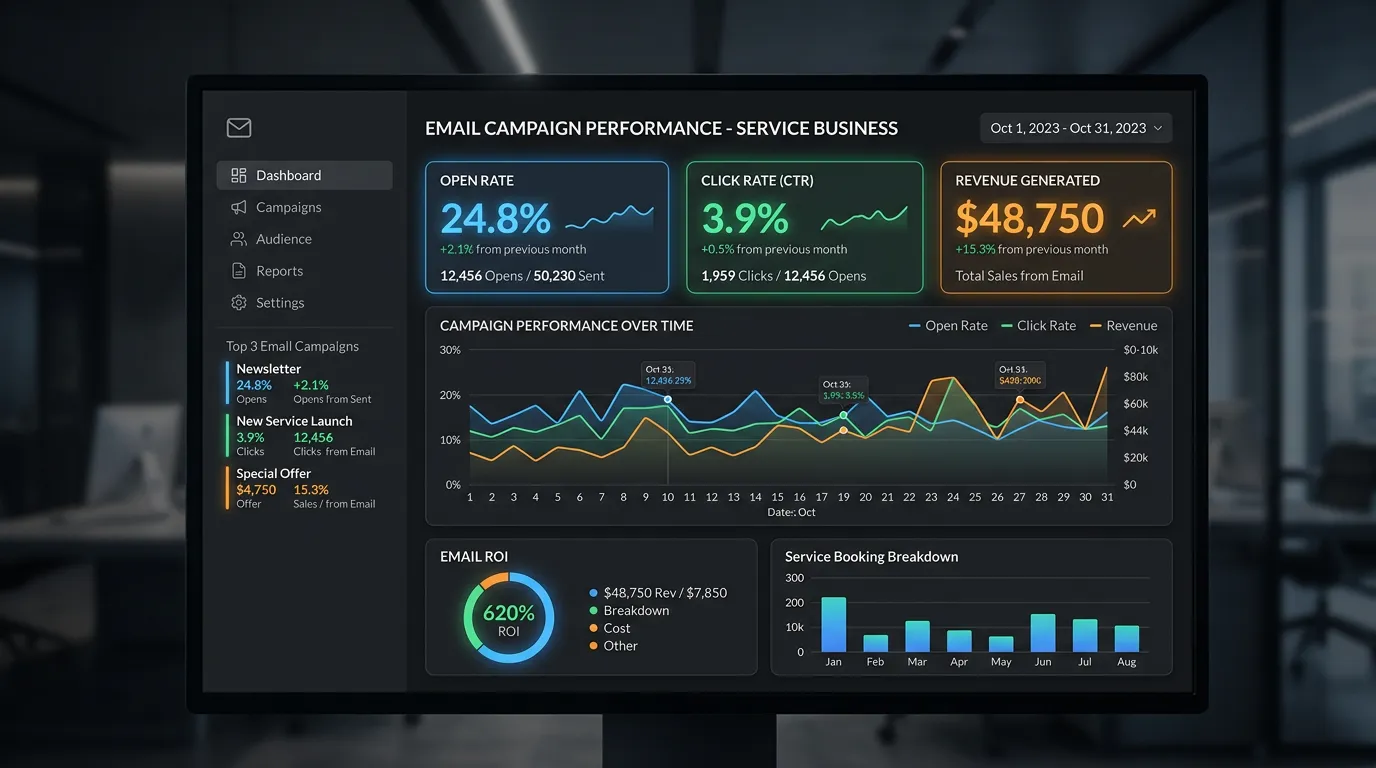
Email spend is lopsided. Most of the cost lands before a single campaign goes out, so month one and month six look nothing alike.
If your month six invoice still looks like month one, ask what the setup hours were spent on.
Ask These Before You Sign
Seven questions, all answerable in one email. The answers separate a real program from a monthly invoice.
Is the software bill included or separate?
Get the exact tier and contact cap in writing.
How many written sends are in the monthly fee?
A number, not the word regular.
Who writes the emails, your team or mine?
Writing is most of the cost either way.
What does a new automation cost after launch?
Ask for a per sequence price now, not later.
Who cleans the list, and how often?
Twice a year is a reasonable floor.
Is developer time for integrations included?
Usually billed on top. Confirm before you sign.
What do I keep if we stop working together?
The list, the templates, and the account itself.
Buying Email Work Without Overpaying
Most of the money wasted on email is wasted at the buying stage, before anybody writes a single word.
Do this
- Split every quote into software, setup, and monthly work before comparing.
- Start with three automations you can judge in 90 days, then add more.
- Clean the list before you import it, so you are not paying to store the dead.
- Own the platform account yourself and add the provider as a user.
- Put your average job value in writing before you look at any fee.
Not this
- Do not buy a retainer for a list of a few hundred addresses.
- Do not accept a promised open rate or a promised number of jobs.
- Do not pay for a custom designed template before the plain one is tested.
- Do not let a provider hold the platform account in their own name.
- Do not buy a list. It costs little and it can ruin your sending for months.
Would rather we handled it?
This article covers how to do the work yourself. If you would rather have it done for you, that is what our email and marketing automation service is.
Email and Marketing Automation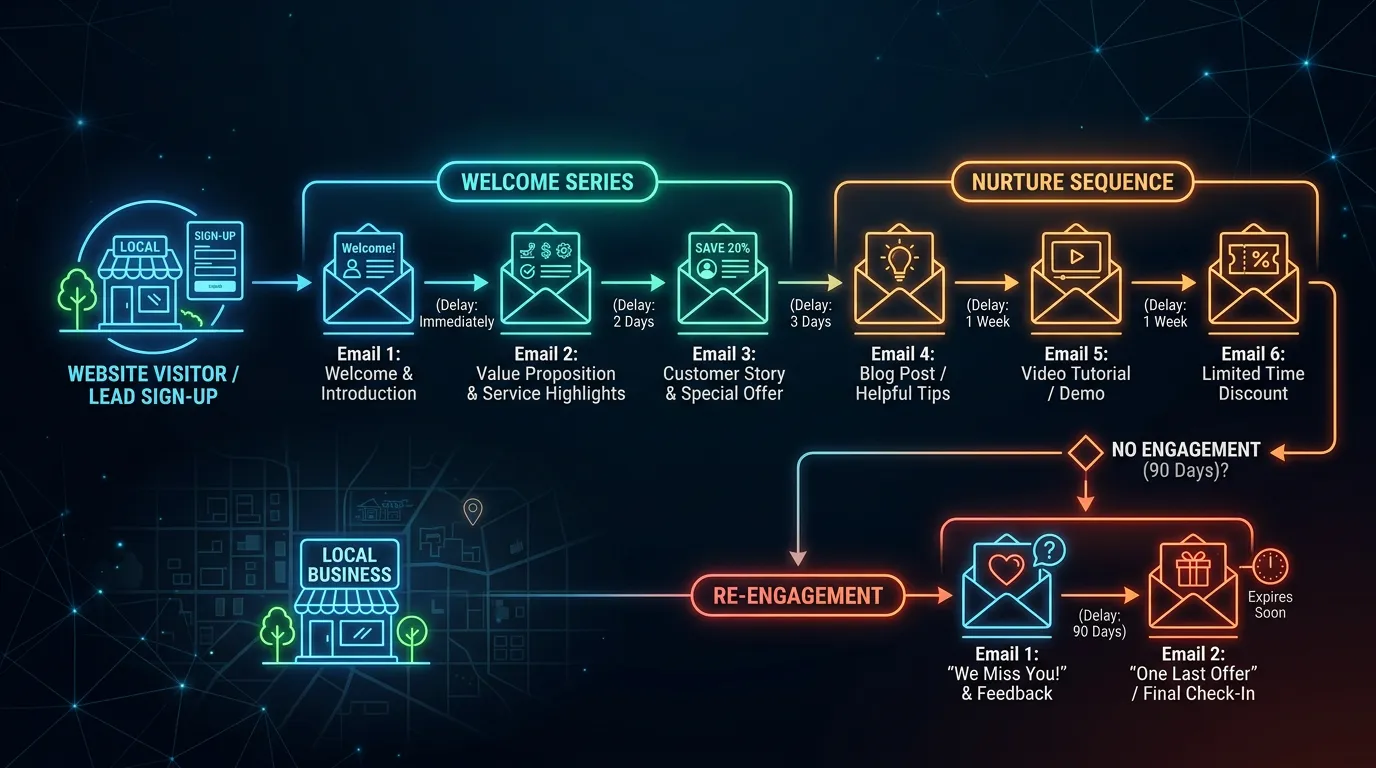
Frequently asked questions
Is email marketing cheaper than paid ads?
Should the agency or my business own the email account?
Do free email tools work for a small service business?
How long before email pays for itself?
Sources
- Gmail Help: Email sender guidelines(opens in a new tab) Why domain setup is a real line item, since senders must sign their mail and offer one click unsubscribe
- FTC: CAN-SPAM Act Compliance Guide for Business(opens in a new tab) The unsubscribe handling and sender identification any paid build has to cover
- Analytics Help: Collect campaign data with custom URLs(opens in a new tab) Tagging email links so you can judge whether the spend is returning bookings