FAQ and Problem Solution Articles
Why ChatGPT Never Names Your Business, and How to Fix It
The six real reasons AI answers skip your business, how to check each one yourself, and which fixes pay off first.
Call (714) 823-3164 or ask a question. Clear recommendations, even if we never work together.
Usually it is one of six things. The crawlers cannot reach your site, a snippet setting is quietly blocking you, your business details disagree across the web, your pages hold no clear answer worth lifting, no outside site backs up what you claim, or the question you are testing is far too broad to win.
Jump to a section
- First, Make Sure the Problem Is Real
- Cause One: The Crawlers Cannot Reach You
- Cause Two: A Snippet Setting Is Quietly Blocking You
- Cause Three: Your Business Facts Disagree Across the Web
- Cause Four: The Page Has No Answer Worth Lifting
- Cause Five: Nobody Else Backs You Up
- Cause Six: The Question Is Too Big to Win
- Which Crawler Controls What
- The Thirty Minute Self Check
- Running a Fair Test on Yourself
- The Order to Fix These In
- Questions
First, Make Sure the Problem Is Real
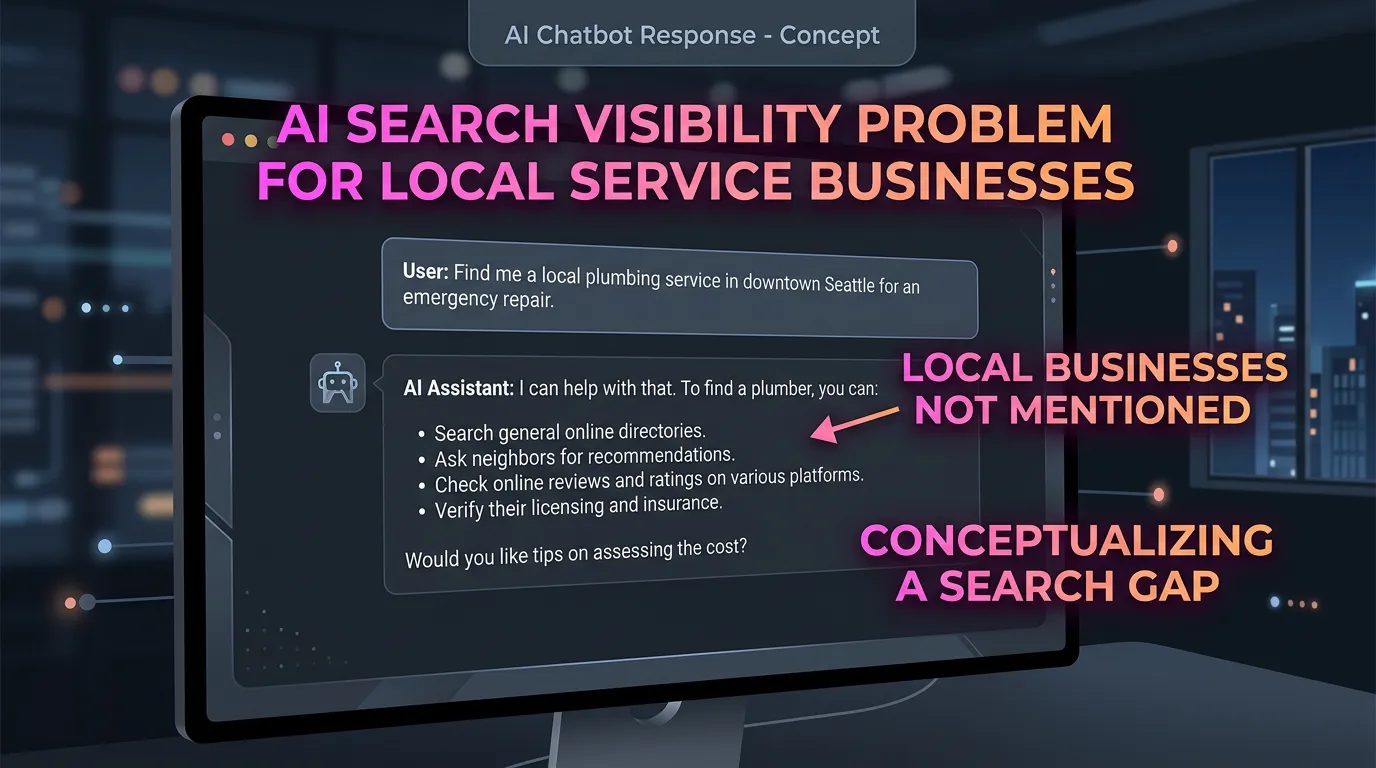
Before you spend a dollar, check that you are testing properly. Most owners test badly and reach the wrong conclusion. Three mistakes are common. The first is typing your own company name. That is not a test. If the engine knows your name it will find something, and that tells you nothing about whether a stranger hearing about you for the first time would be pointed your way. The second mistake is testing while signed in. Your chat history, saved memory, and location all shape the answer. What you see is not what a customer three towns over sees. Open a signed out window and test there. The third mistake is testing once. These systems build each answer fresh, so the same question can return different companies on different days. One run proves nothing. Do it properly instead. Write down ten to fifteen questions in the words a customer would actually use, not the words in your page titles. Include buying questions, comparison questions, and problem questions. Run every one signed out and record two things: which businesses got named, and which links were cited underneath. That second column is the one that tells you what to do next. If the same three sites keep getting cited and you are not on any of them, that is your whole diagnosis right there.
Cause One: The Crawlers Cannot Reach You
This is the fastest problem to find and the most annoying to have. If a crawler cannot read your page, nothing else on this list matters. Open your robots.txt file by adding slash robots dot txt to your domain. Read it. You are looking for rules that block named AI crawlers such as GPTBot, PerplexityBot, ClaudeBot, or Google-Extended. Plenty of sites block them without the owner ever knowing. A security plugin added the rules, a developer copied a template from a news site, or your hosting company switched on bot protection by default. Firewall and bot rules cause the same thing without touching robots.txt. Some security services block anything that is not a normal browser, and an AI crawler looks exactly like that. If your robots file is clean but you still suspect a block, ask your host to check the firewall logs for those crawler names. Two more access problems trip people up. Content behind a login is invisible, which is fine for a client portal and a disaster if your service list lives there. And pages that only build their text after JavaScript runs can be read by some crawlers and missed by others. If your key text is not in the page source, treat that as a risk worth fixing.
Cause Two: A Snippet Setting Is Quietly Blocking You
This one catches good sites with careful developers, which is what makes it worth its own section. Google treats its AI answers as part of Search, so the same controls that stop Google from showing a text snippet of your page also stop it from using that page in an AI Overview. If your pages carry a nosnippet tag, or a max-snippet setting of zero, you have opted out. The page can still rank and still be indexed, so nothing looks broken in your reports. You are simply never quoted. The same applies to sections wrapped in a data-nosnippet attribute. Some sites add these on purpose to stop competitors scraping their prices. That is a real trade off, and for a few businesses it is the right call. For most local service companies it is a mistake made years ago that nobody has revisited. Check the source of your main service pages for the word nosnippet. Check your content management system settings too, because some plugins add these tags site wide from a single checkbox. One more setting to know about. Google-Extended is a separate control that covers Gemini and related products, and Google states it does not affect inclusion in Search. So blocking it does not remove you from AI Overviews, and allowing it does not add you.
Cause Three: Your Business Facts Disagree Across the Web
A system deciding whether to name a business is really deciding whether it is confident. Conflicting information kills confidence. Say your website lists a mobile number, your Google profile lists an office line, an old directory carries the number you gave up in 2019, and a supplier page shows the address from before you moved. Nothing there is malicious. All of it makes you a shakier fact than the competitor whose details match everywhere. The nasty part is that old records do not fade away. They get read next to the good ones and create the conflict. Start by searching your business name in quotes and reading past the first page. Note every place your details appear and what each one says. Then pick the version that is correct today, down to how you write the suite number and whether you use Inc or LLC, and make everything else match it. Some records update quickly. Some sit inside data providers that feed dozens of smaller directories, so a single fix can take weeks to spread. Two other traps are worth checking. A duplicate business profile you forgot you made, and a business name on your site that does not match your legal or trading name anywhere else.
Cause Four: The Page Has No Answer Worth Lifting
An engine does not use whole pages. It pulls short passages and rewrites them. So a page can rank, be perfectly crawlable, and still give a model nothing usable. Read your main service page the way a machine would. Take one section at a time and ask whether it answers a question on its own, without the rest of the page. Sections that fail usually fail the same few ways. The answer sits four paragraphs down under a heading that says something like our approach. The heading is a label, not a question, so it does not match how anyone asks. The section covers three topics at once, so no part of it answers anything cleanly. Or the actual detail exists only in an image, a PDF, or a video with no transcript. Then there is the vagueness problem. A sentence promising quality workmanship at competitive prices has no reason to be quoted, because thousands of pages say it. A sentence saying most panel upgrades in homes built before 1980 need a permit and run two to three days does. Specifics are what get lifted. Numbers, ranges, timeframes, brand names, and named parts give a machine something concrete to repeat with your name attached.
Cause Five: Nobody Else Backs You Up
This is the most common cause for businesses that have already done everything else right. Your site is clean, your pages answer things, your data matches, and you are still not named. The reason is that you are the only one saying it. An engine naming a business to a stranger prefers claims that more than one source supports. If your name appears only on your own domain, there is nothing to confirm. There is a simple test. Search your business name in quotes and see what comes back that you do not control. If almost everything is your own site and your own profiles, that is the gap. Now look at your test log again and list the sources the engines cited when they named your competitors. It is usually a short and boring list: a trade association directory, a chamber page, a supplier or manufacturer dealer list, a local news piece, a review platform, and one or two industry directories. Those are your targets. Work them in that order, because the structural ones are the easiest to get. Association membership and supplier dealer listings are often just a form and a fee. Earned coverage takes longer. Expect this whole track to run months, not weeks.
Cause Six: The Question Is Too Big to Win
Some businesses are not missing from AI answers at all. They are missing from one question they picked, and it happens to be the hardest question in their market. Best plumber in Los Angeles is not a question you win with better markup. The answer will name large, heavily reviewed, widely written about companies, and no amount of page work changes that quickly. Narrower questions behave completely differently. Who repairs tankless water heaters in Chino Hills on weekends has far fewer businesses competing to be the answer, and it is asked by someone much closer to booking. Test the narrow questions before you conclude you are invisible. Add the neighbourhood, the specific service, the brand you work on, the property type, or the constraint that matters, like same day or after hours. If you are named in those and absent from the broad one, you are doing fine, and the broad one is a long project rather than a bug. There is a fair test for this. Ask the broad question and look at who does get named. If they are national brands or businesses ten times your size, the answer is telling you where you actually sit, and the useful move is to go narrower rather than to spend more.
Which Crawler Controls What
Blocking rules are the fastest thing to check and the most misunderstood. Each line below is a separate control with a separate effect.
| Crawler | Run by | What blocking it costs you | Where the rule lives |
|---|---|---|---|
| Googlebot | Search and AI Overviews together | robots.txt | |
| Google-Extended | Gemini products, not Search | robots.txt | |
| GPTBot | OpenAI | ChatGPT picking up your pages | robots.txt |
| PerplexityBot | Perplexity | Perplexity citing your pages | robots.txt |
| Any of them | Your host | Silent blocks you cannot see | Firewall or bot rules |
The row people get wrong is the second. Google states that Google-Extended does not affect inclusion in Search, so blocking it does not remove you from AI Overviews.
The Thirty Minute Self Check
Run these in order before you call anyone. Most businesses find at least one real problem in this list on the first pass.
Open your robots.txt file
Look for any named bot rules.
Search the page source
Find the word nosnippet if present.
Search your name in quotes
Note every site that is not yours.
Check the phone number
Same digits on every listing.
Check the address format
Suite number written one way.
Read your top service page
Is the answer in the first lines.
Ask five customer questions
Signed out, in plain wording.
List the cited sources
Who backs up your competitors.
Running a Fair Test on Yourself
A bad test sends you spending money on the wrong problem. These rules keep the results honest month to month.
Do this
- Test in a signed out window with history and memory off.
- Ask the way a customer asks, not the way you write titles.
- Run the same list of questions every month without edits.
- Write down the cited links, not only the business names.
- Use at least ten questions before drawing any conclusion.
Not this
- Do not type your own company name and call that a test.
- Do not judge anything from one run on one day.
- Do not test only the biggest phrase in your industry.
- Do not change question wording and compare to last month.
- Do not treat a good answer on your own phone as proof.
The Order to Fix These In
Fix access first. If a crawler cannot read the page, nothing else you do can register. That is usually a same week job for whoever maintains your site.
Fix wrong facts second. A dead phone number or a former address on a well read listing does active harm, and it is the quickest item on this list to correct.
Then rewrite your best pages so every section answers one question in its first two lines. Weeks of work for most sites, not months.
Leave the outside mention work for last and expect it to take longest. It is the slowest track and the only one you cannot finish on your own.
Would rather we handled it?
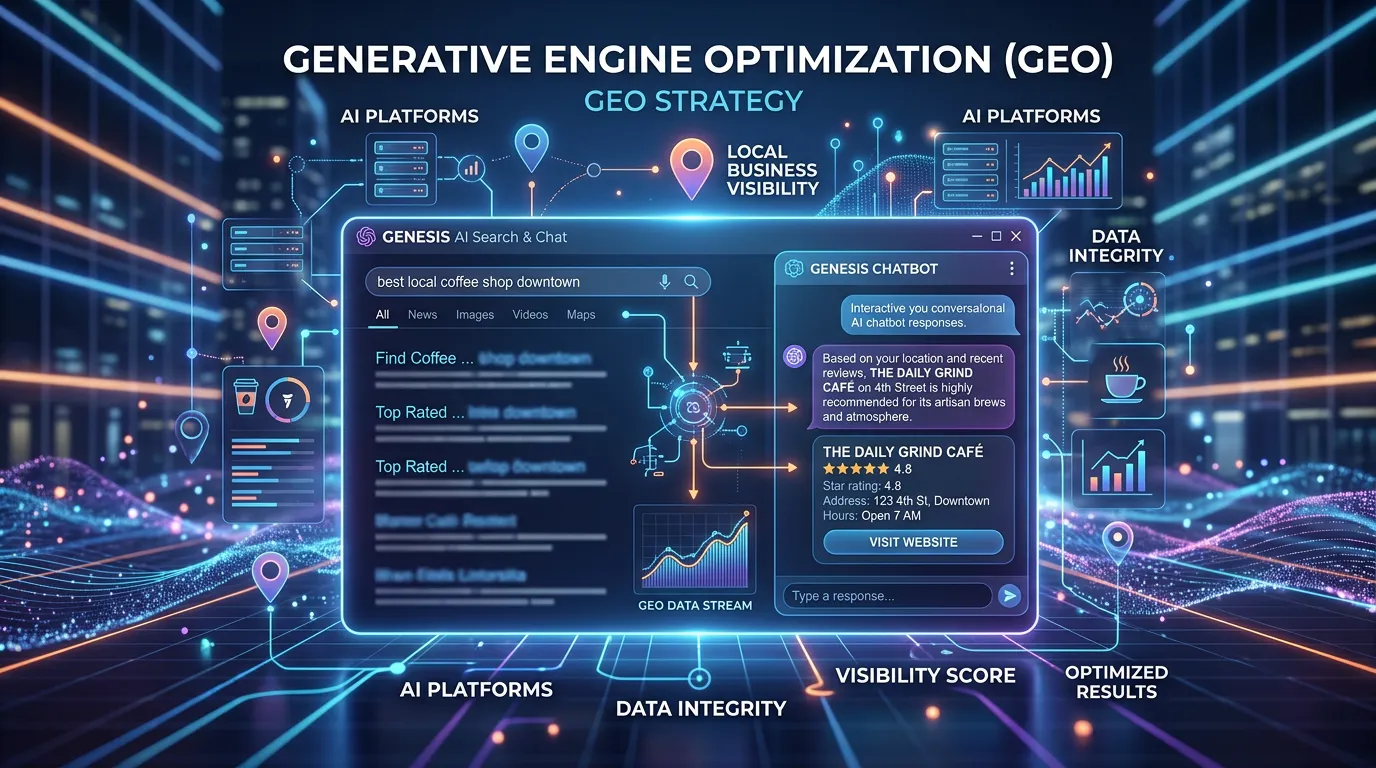
This article covers how to do the work yourself. If you would rather have it done for you, that is what our generative engine optimization service is.
Generative Engine Optimization
Frequently asked questions
How long after a fix before the answer changes?
My competitor has a worse website and still gets named. Why?
Will a new website fix this on its own?
Do I need to appear in every engine?
Sources
- Google Search Central: AI features and your website(opens in a new tab) Google explains that AI Overviews and AI Mode are part of Search and that snippet controls such as nosnippet and max-snippet affect whether a page can be used in them.
- Google Search Central: Overview of Google crawlers and fetchers(opens in a new tab) Google documents Google-Extended as a separate control for its generative AI products and states that it does not affect a site's inclusion in Google Search.
- Google Search Central: Introduction to robots.txt(opens in a new tab) Google explains how robots.txt rules control which crawlers may request pages from a site, which is the file to check first for blocking rules.
- Google Business Profile Help: Guidelines for representing your business on Google(opens in a new tab) Google requires business name, address, and contact details to be accurate and consistent, and prohibits duplicate profiles for the same business.