Generative Engine Optimization
Generative Engine Optimization for Local Service Businesses
Targets questions that include a city, neighborhood, or near me phrasing
- Timeline
- Nine to twelve weeks for the initial build across three to five priority cities
Call (714) 823-3164 or ask a question. Clear recommendations, even if we never work together.
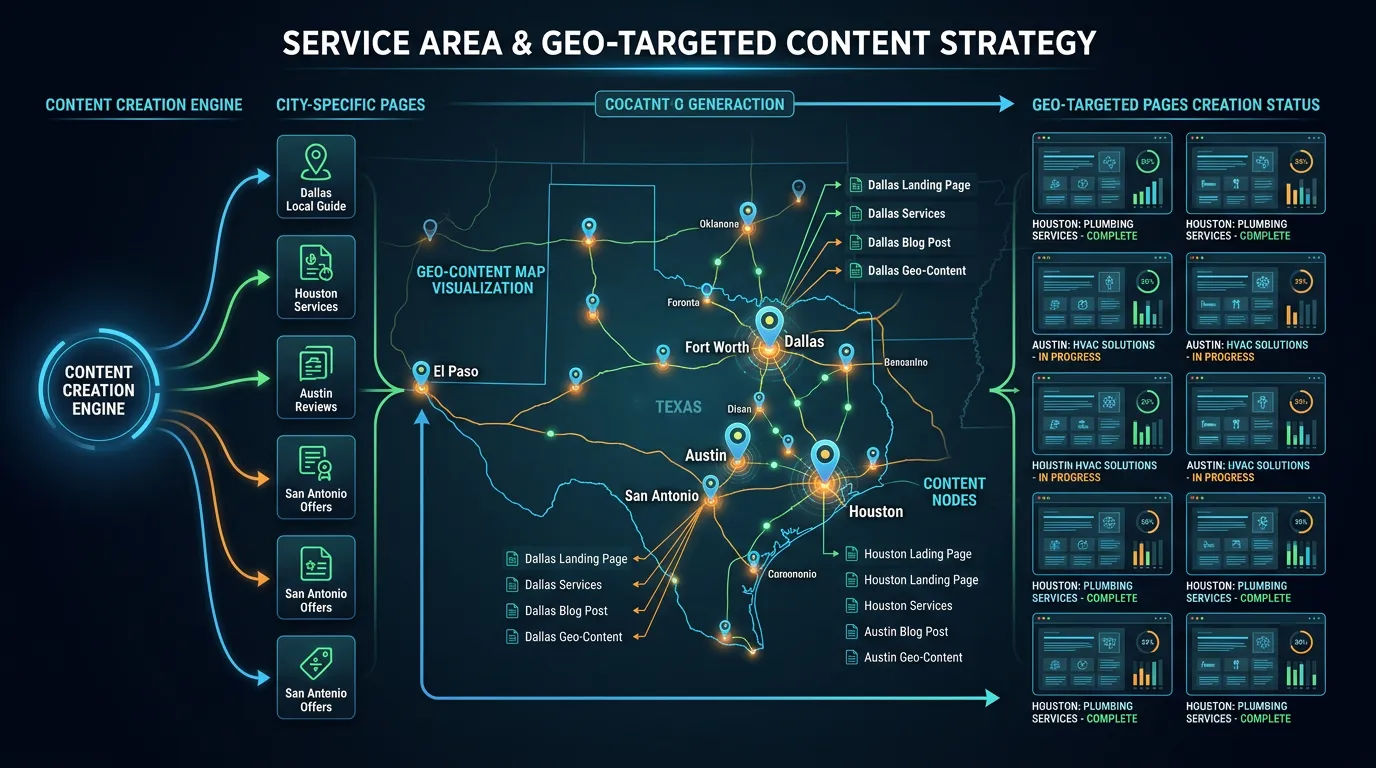
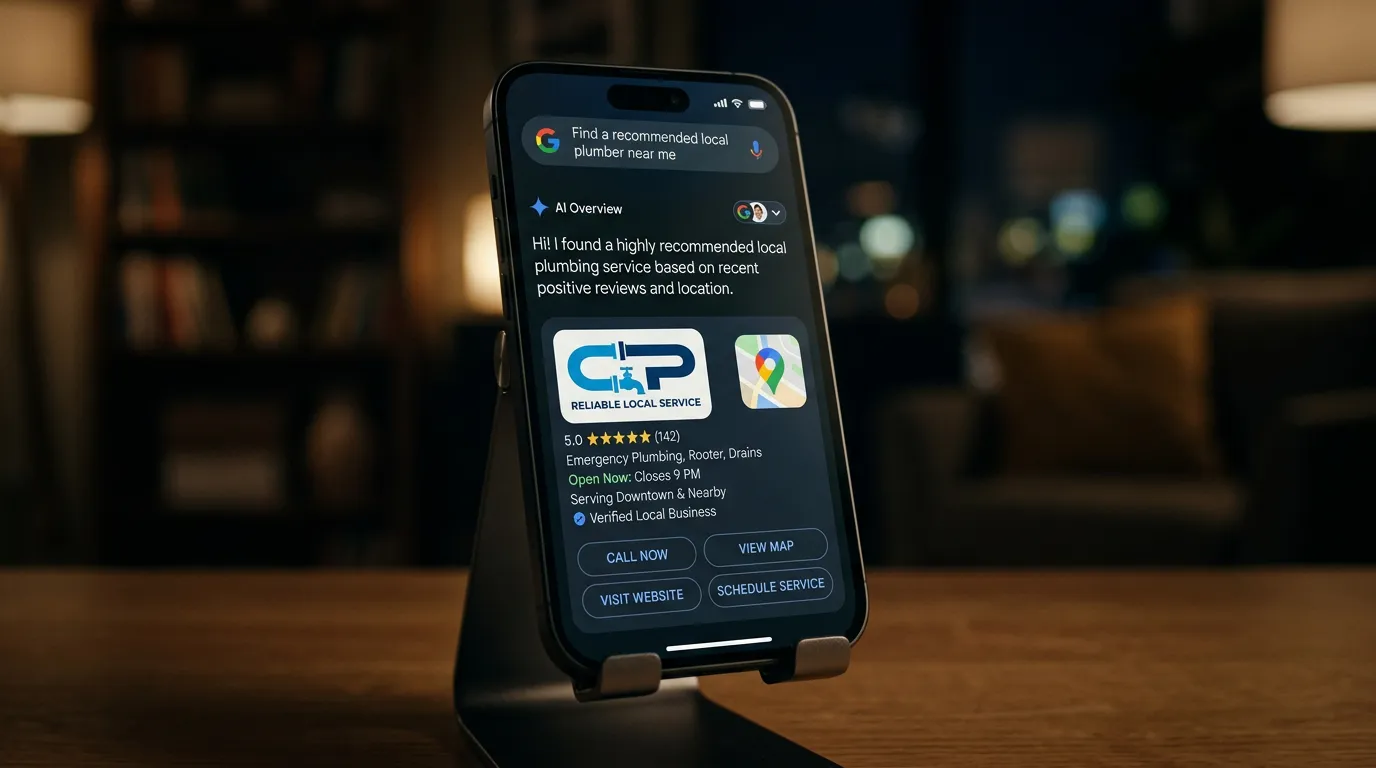
GEO for local service businesses is generative engine optimization aimed at questions with a place attached. One example is who to call for a water heater leak in Chino. The work ties your Google Business Profile, review text, service area pages, and local citations together, so AI answers name your company.
The problem
Local questions behave differently from general ones, and most GEO advice ignores that completely. When someone asks a general question, the engines pull from articles. When someone asks who to call in Rancho Cucamonga at ten at night, they lean heavily on map data, profiles, review text, and directory records, and they often return only two or three named businesses. That is a much shorter list than a page of search results, so being fourth is the same as being invisible. Local service businesses also get hurt by details general GEO advice never mentions: a service area that is defined in the profile but stated nowhere on the website, no emergency hours listed, reviews that say great job and nothing else, and city pages that repeat the same paragraph with the name swapped, which reads as filler to a model just as it does to a person.
What it is
This version of the work starts from your local footprint and builds outward. Your Google Business Profile gets treated as a main content source. These systems read the category, services, description, attributes, hours, and the Q and A section. Review text gets treated the same way. We ask customers, at the right moment, to name the service and the city in their own words. That gives a model real language to quote instead of five stars with no sentence attached. Service area pages get written with real local substance: permit offices, common housing stock, and the failures typical of that microclimate. So each city page says something a model can lift instead of repeating a template. Local citations get pointed at sources with local weight, like chambers, city business directories, neighborhood associations, and county trade lists. Then the prompt set gets built around local phrasing. That means city plus service, neighborhood landmarks, urgent wording like tonight and same day, and comparison questions with a place attached.
Signs you need this
- AI answers for your city name three competitors and never you
- Your city pages are the same paragraph with the city name swapped
- Most of your reviews are star ratings with no written text
- Your service area is in your Google profile but stated nowhere on your site
What is included
- Local prompt set covering city, neighborhood, near me, and urgency phrasing
- Google Business Profile content review focused on machine readable fields
- Profile Q and A seeded with the real questions customers ask on calls
- Review request wording that prompts customers to name the service and city
- Service area page rewrites with genuine local detail per city
- Local citation targets with geographic weight, not generic directories
- Service area and hours stated consistently on site, profile, and listings
- Monthly local prompt testing broken out by city
- Report of AI referral sessions mapped to the city pages they landed on
Our process
Map your real service footprint
Week 1We list the cities that actually produce work, not the forty you would technically drive to. Prompt testing and page effort go to the cities with real job volume, because spreading thin across a whole county produces weak pages everywhere and mentions nowhere.
Turn the profile into a content source
Week 1 to 3Categories, services list, business description, attributes, hours including emergency availability, and the Q and A section all get written as content a machine will read. Most profiles have an empty Q and A section, which is free space competitors are not using either.
Get reviews that say something
Week 2, then ongoingWe change the review request wording and timing so customers describe the job and the city. A review that says they replaced our AC condenser in Chino Hills in one day is source material. A five star rating with no text gives a model nothing to work with.
Rewrite the city pages with real substance
Week 3 to 9Each priority city page gets details only someone working there would know: the permit process, the common home age and system types, the seasonal failure patterns, the neighborhoods served. Template pages with a swapped city name get consolidated or removed.
Test locally and adjust by city
Ongoing, monthlyPrompts get run per city so you can see that you are named in Ontario and invisible in Corona. That breakdown drives where the next month of citation and content work goes, instead of treating the service area as one undifferentiated blob.
Realistic timeline: Nine to twelve weeks for the initial build across three to five priority cities. Profile and review changes can affect answers within 30 to 60 days because that data refreshes quickly. City page work takes longer, usually 90 to 150 days, and cities where you have no reviews and no local citations take longest of all.
City pages a model will quote
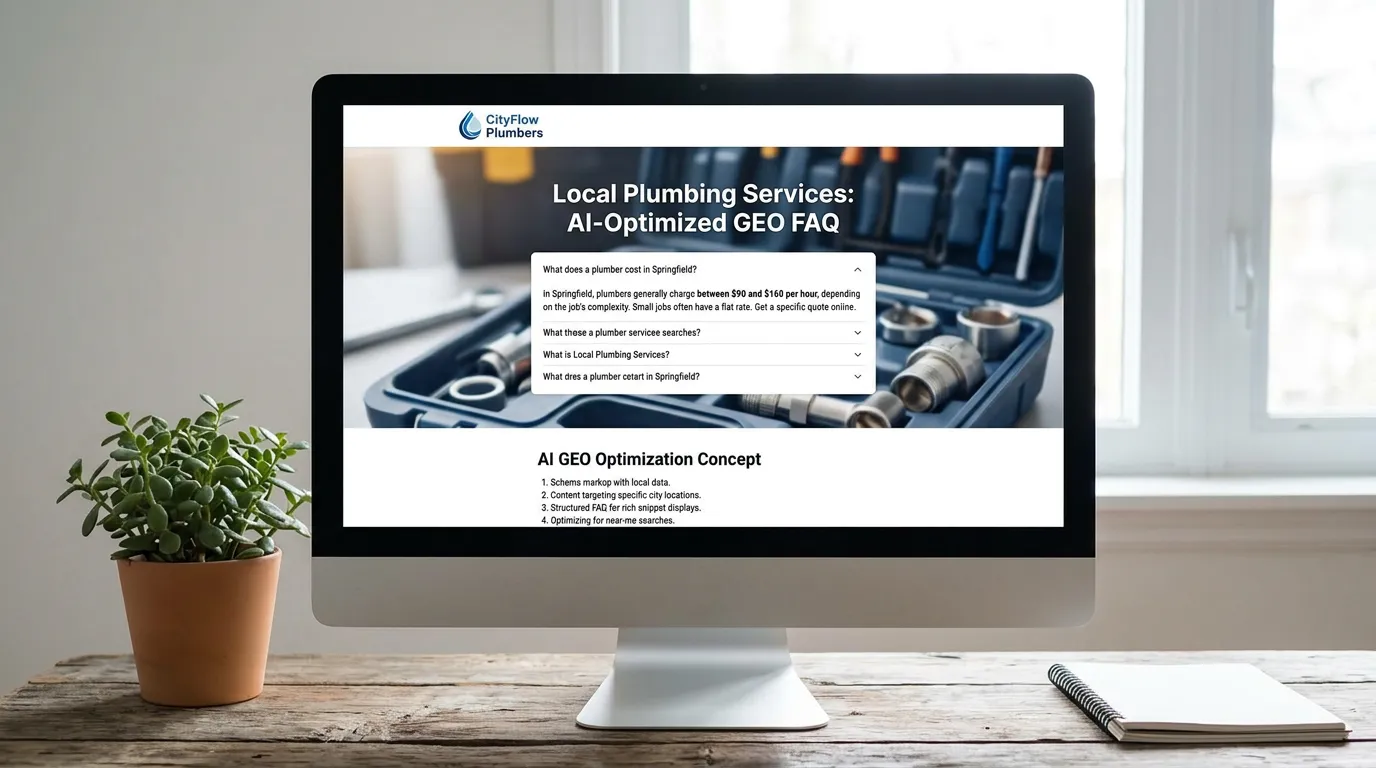
Local answers are built from local detail. These rules decide whether a city page is real or a template with a name swapped.
Do this
- Name the permit office and what a permit usually takes in that city.
- Describe the housing stock, like 1960s tract homes with original panels.
- List the neighborhoods and landmarks people there actually use.
- State your typical response time to that city in plain words.
Not this
- Do not publish a page for a city you have never worked in.
- Do not swap the city name and change nothing else.
- Do not hide your service area inside a map widget only.
- Do not build twenty five city pages before four of them are working.
Thin versus real, on the same city page
The difference is usually one line per section. This is what gets replaced.
| Section | Template version | Version worth quoting | Where the detail comes from |
|---|---|---|---|
| Opening | We serve Ontario and nearby areas. | We run two trucks out of Chino and reach most of Ontario in under half an hour. | Your dispatch records |
| Homes | Every home is different. | Much of north Ontario is 1970s slab construction with original copper. | Your technicians |
| Permits | We handle all permits for you. | Water heater swaps here need a permit and an inspection window. | The city building department |
| Season | We are available year round. | Rooftop unit failures spike after a week over 100 degrees. | Your own call volume |
| Proof | Great service, five stars. | A review that names the job and the neighborhood. | Your review requests |
These examples are illustrative. The test is simple: could only a company working in that city have written the line?
Why local answers name so few businesses
A general question returns an answer built from articles. A local question returns a short list of names, often two or three, sometimes one.
That happens because the engines lean on map and profile data for these questions, and that data arrives already ranked and filtered. There is no page two to scroll to. Fourth place is not visible at all.
So the strategy flips. Instead of covering more cities, you go deeper in fewer. Four cities with real reviews, real citations, and a page with real detail will beat twenty five thin ones, which is the opposite of how city page projects usually get sold.
A review flow that produces quotable sentences
Review text is source material for these systems. How you ask decides whether you get a sentence or just a star.
Ask within a day of the job
Details fade fast, and so does goodwill.
Let the tech who did the work ask
A face to face request beats an automated text.
Name the job inside the request
Remind them what you fixed before you ask.
Ask two short questions instead
What did we fix, and where? People answer questions.
Never script the words for them
Identical reviews read as fake to people and platforms.
Spread requests through the month
Ten reviews in one day looks bought.
Two local questions we get a lot
I cover four counties. Should I say that or list cities?
Does seasonal timing change what I should publish?