
How To Articles
How Google Decides Which Business Profiles Rank
Google weighs relevance, distance, and prominence. Here is what each one means and which parts you can actually move.
Call (714) 823-3164 or ask a question. Clear recommendations, even if we never work together.
Google ranks business profiles on three signals: relevance, distance, and prominence. Relevance is how well your listing matches the search. Distance is how far you sit from the searcher. Prominence is how well known your business is. Your categories, services, reviews, and website feed those signals, and the results change as the searcher moves.
Jump to a section
- The Three Signals Google Weighs
- Why Distance Decides More Than People Expect
- Where Google Gets Your Information
- Which Fields Actually Feed Relevance
- How Prominence Gets Built
- What Your Website Has To Do With It
- What You Can Change and What You Cannot
- How Fast Each Signal Moves
- A Worked Example, Made Up To Show the Math
- What Each Signal Responds To
- Working With Distance Instead of Against It
- Questions
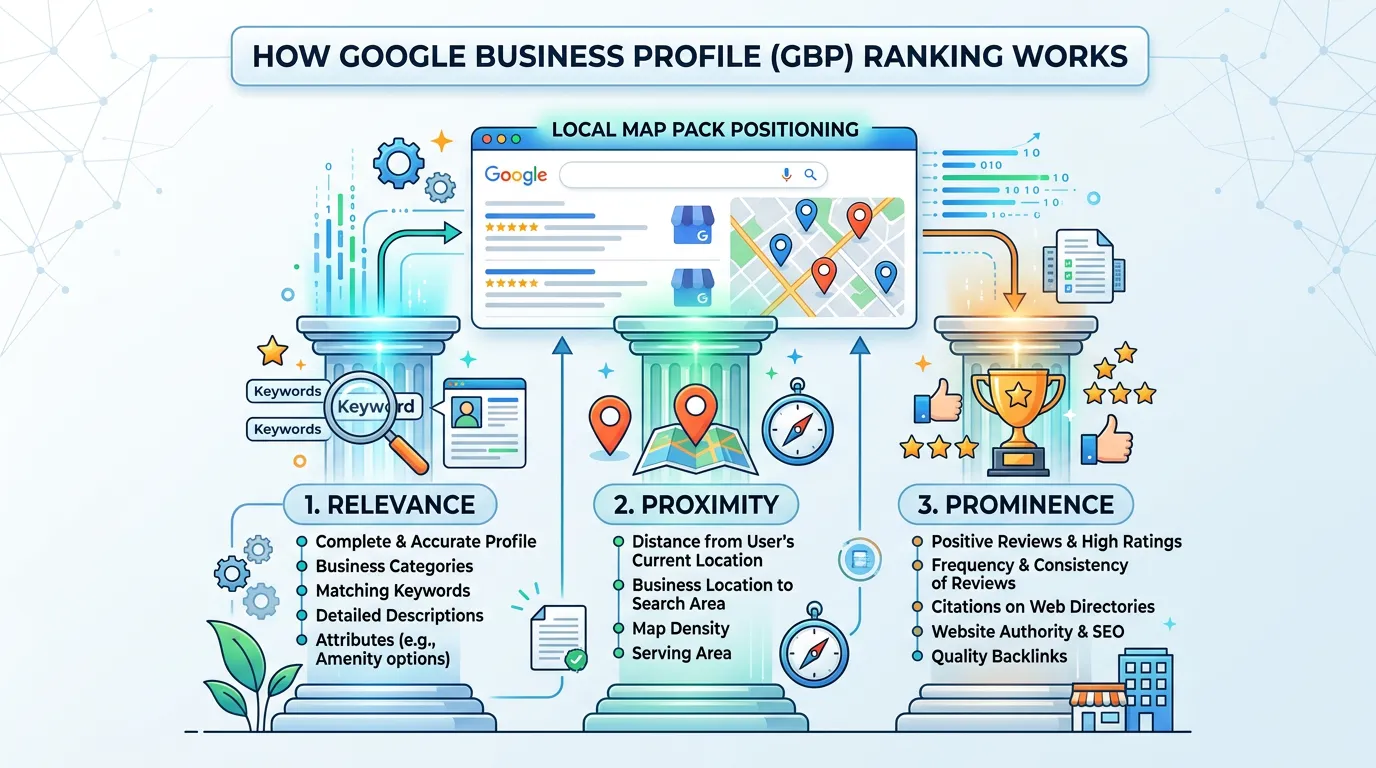
The Three Signals Google Weighs
Google says local results come from three things: relevance, distance, and prominence. Relevance is how well your listing matches what someone typed. Distance is the gap between the searcher and your pin on the map. Prominence is how well known your business is, online and off. Most owners spend their time on relevance, because that is the part they can edit. The model is useful because it tells you where your effort should go. If your primary category is wrong, more photos will not fix it. If you sit twelve miles from the searcher, better wording will not close that gap. And if nobody links to you or reviews you, a tidy profile still loses to the shop that has been on that street for twenty years. So read your problem against all three signals first. Skipping that step is why owners rewrite the same description five times.
Why Distance Decides More Than People Expect
Distance is the signal people underestimate. Google reads the searcher's location from their phone, their network, or the city they typed in. Results can change from one street to the next. That is why the map pack you see from your own desk is close to useless as a test. A more honest test is to run the same search from a few points across your service area, or to use a tool that draws a grid of results across a map. A grid shows a pattern instead of a single answer. Most local businesses have a strong core and a soft edge. You rank well within a mile or two, then fade as the pin gets farther away. That fade is normal, not proof your Google business profile is broken. It does mean a listing has a natural reach. If half your revenue comes from a city ten miles out, the Google business profile alone will not carry it. That job belongs to your website pages and to paid search.
Where Google Gets Your Information
Your Google business profile is not only what you typed into it. Google builds a picture of your business from several places at once. It reads the fields you filled in, and your website, especially the contact and service pages. It reads other sites that mention your name, address, and phone number, like directories, licensing boards, and chamber listings. It reads your reviews, including the words inside them. When these sources disagree, Google has to pick a winner. That is how a business ends up with an old suite number showing on Maps. Cleaning up ten stale directory listings can quietly help, because you are removing conflicts rather than feeding a ranking machine. Google can also create a listing for a business that never made one, using data it collected elsewhere. If you have never claimed a Google business profile and you still appear on Maps, that is usually what happened.
Which Fields Actually Feed Relevance
The primary category is the heavy field. It comes from a fixed list that Google controls, and it decides which searches you are even eligible for. A cabinet maker filed under general contractor is running the wrong race. Secondary categories add more searches, but stacking too many blurs your focus. The services list comes next. Those entries let you name the work in the words customers use, including terms your category never covers. The description matters less for ranking than most people think. Humans read it while deciding whether to call. Attributes, hours, and the opening date rarely move rankings on their own, but they change how your listing looks and whether you appear for filtered searches like open now. Photos and posts sit on the conversion side of the line. They seldom change your position. They change how many of the people who see you pick up the phone.
How Prominence Gets Built
Prominence is the slowest signal, and you cannot fake it. Reviews are the visible part. Count matters, recency matters, and a steady trickle beats twenty reviews in one week. A link from a local supplier, a trade association, a school you sponsor, or a news story tells Google the business exists in the real world. Plain mentions of your name and address on sites you do not own do similar work. Google also carries some of your website standing over to the profile. None of this moves in a week. Links come from things you actually do, like sponsoring a team or joining a local group. This is where honest advice gets uncomfortable, because the answer is slow. A business that opened last month will not outrank a twenty year old competitor by editing fields. It can still win the searches close to its door, which is often enough to fill a schedule.
What Your Website Has To Do With It
The Google business profile and the website are not separate projects. Google follows the link on your listing and reads what it finds. If your Google business profile says water heater repair and your site never says it, that is a gap. Building a real page for each main service closes it, and gives your services list somewhere useful to send people. Match the name, address, and phone number on your site to the profile exactly, down to the suite number. Add LocalBusiness markup so those details are machine readable. The markup does not rank you. It removes doubt about which business the page belongs to. The page your profile links to should load fast on a phone and put the phone number near the top. A large share of profile clicks come from people standing in a driveway or sitting in a truck. They will not hunt for a contact form.
What You Can Change and What You Cannot
Here is the honest split. You cannot change your distance from a searcher without moving, and renting a mailbox in the next city is a guideline break that gets profiles suspended. You cannot buy a map pack position either. Local ads sit above the pack and are a separate purchase. You cannot make prominence arrive faster than people are willing to review you and link to you. What you can change is still worth a lot. Category and service fixes are the fastest lever, and they often show inside two to six weeks. Filling empty fields, adding photos, and answering questions changes how many people call, sometimes within days. Review pace and local links raise your ceiling over three to twelve months. If someone promises you a top spot by a date, they are describing something nobody controls. Most profiles are so far from complete that careful basic work still has room to help.
- Days: photos, hours, answered questions, review replies
- Two to six weeks: primary category, secondary categories, services list
- Three to twelve months: review count and pace, local links, brand mentions
- Never: your distance from the searcher, or a bought spot in the pack
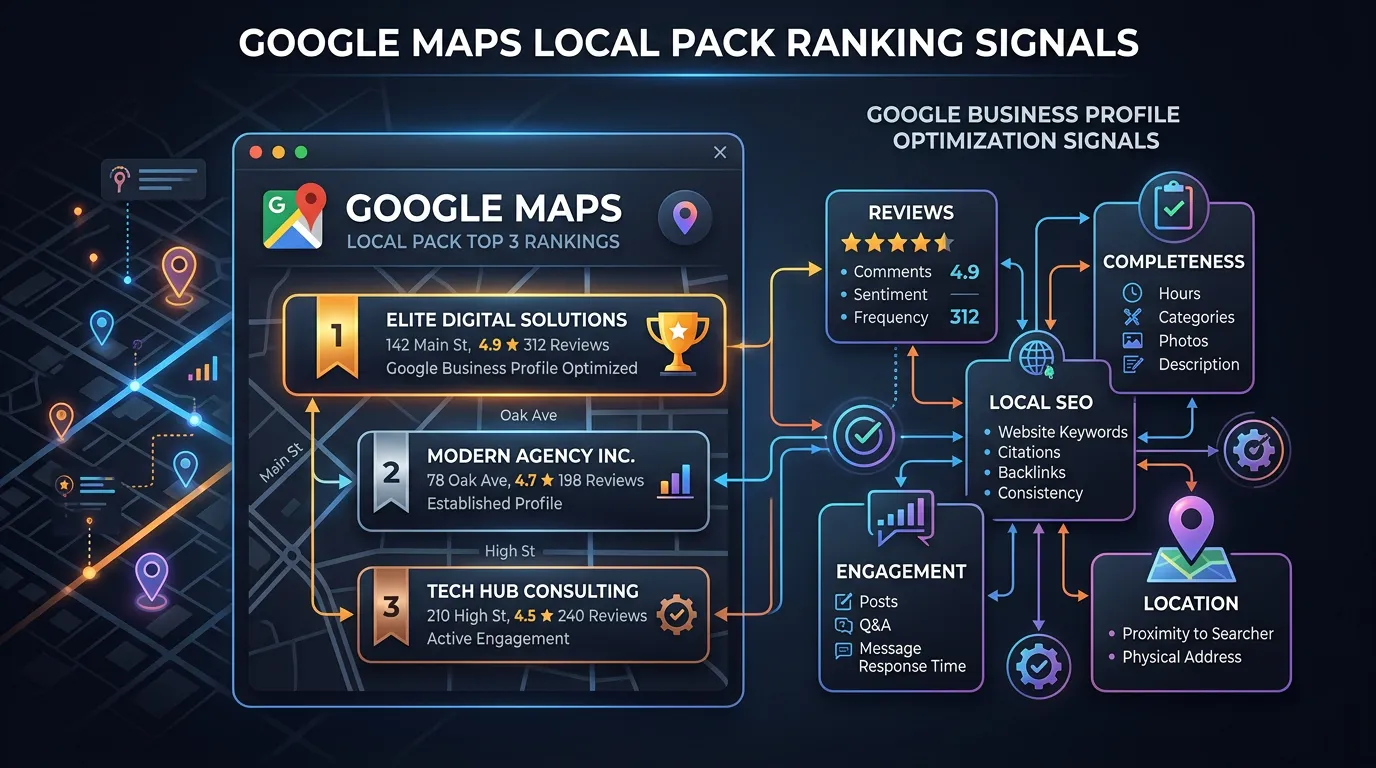
How Fast Each Signal Moves
Different parts of a Google business profile pay off on very different clocks. Knowing which is which stops you quitting three weeks too early.
Change one thing at a time and watch it on its own clock, not everything at once.
A Worked Example, Made Up To Show the Math
Picture a hypothetical plumber in Chino with three vans. He works a circle that covers Chino Hills, Ontario, and part of Pomona. His profile says plumber, which is right, and nothing else.
He adds water heater installation as a service, since that is half his revenue, and he writes short service entries in the words customers use. Within a few weeks he starts appearing for water heater searches he never showed up for before.
What does not change is Pomona. He is nine miles from most of it, and three shops sit closer. That gap is distance, not wording. The fix there is a service page on his own site plus paid search, not another pass at the Google business profile.
This is invented to show the reasoning, not a client result. The same profile can be strong and weak at once, depending on where the searcher stands.
What Each Signal Responds To
Google names three factors. Engagement is widely believed to feed prominence rather than stand on its own, so it sits inside that row.
| Signal | What it means | What you control | How fast it moves |
|---|---|---|---|
| Relevance | How well the listing matches the search | Primary category, secondary categories, services, website content | Two to six weeks after a real change |
| Distance | The gap between the searcher and your pin | Almost nothing, short of actually moving | It does not move |
| Prominence | How well known the business is | Reviews, local links, mentions, press, site strength | Three to twelve months |
| Engagement | What people do once they see you | Photos, offers, answered questions, response speed | Days to weeks |
Two of the four are in your hands most weeks.
Working With Distance Instead of Against It
You cannot move the pin. You can stop wasting money on searches the pin will never win.
Do this
- Check your rankings from several points across the area you serve
- Build a real page on your site for each city you want work from
- Put the money for far away towns into paid search, not more profile edits
- Ask new customers how they found you
- Judge a change on a grid of results, not on one search from your office
Not this
- Do not rent a mailbox or virtual office to fake a second location
- Do not add cities to your business name to try to reach them
- Do not create a second profile for the same business and staff
- Do not judge rankings from a phone sitting in your shop
- Do not change five fields in one week and then guess which one worked
Would rather we handled it?
This article covers how to do the work yourself. If you would rather have it done for you, that is what our google business profile optimization service is.
Google Business Profile Optimization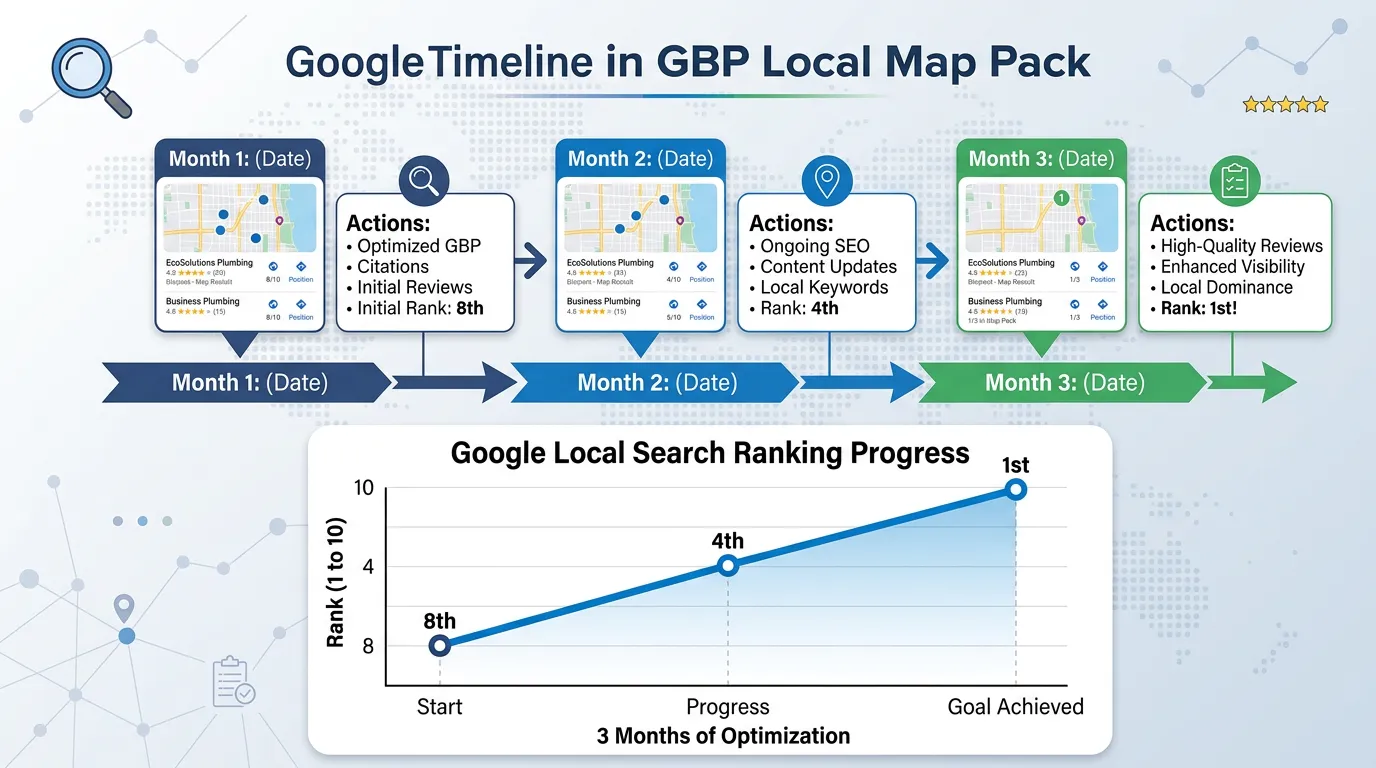
Frequently asked questions
Why do I rank first at my shop and nowhere else?
How many secondary categories should a Google business profile have?
Do keywords in my business name help me rank?
Does posting every week improve my position?
How long before a category change shows up in rankings?
Sources
- Google: Improve your local ranking on Google(opens in a new tab) Google names relevance, distance, and prominence as the three factors behind local results.
- Google: Guidelines for representing your business on Google(opens in a new tab) Rules for business names, addresses, categories, and duplicate listings.
- Google Search Central: LocalBusiness structured data(opens in a new tab) How to mark up address, hours, and business details on your own website.