
How To Articles
How Content Marketing Works, From Question to Booked Job
A plain walk through of how one question becomes a page, how that page gets found, and how it hands the reader to the part of your site that sells.
Call (714) 823-3164 or ask a question. Clear recommendations, even if we never work together.
Content marketing works by publishing pages that answer the questions buyers type before they hire anyone. Search engines match those pages to those questions. Readers arrive early, learn what the content marketing work costs and how it goes, then move to a page that takes calls. The pages keep earning visits long after they publish.
Jump to a section
- The Four Step Loop Behind All of It
- The Three Kinds of Questions Buyers Type
- How a Search Engine Picks Which Page to Show
- What One Page Has to Do to Earn Its Spot
- How One Page Hands the Reader to the Next
- What the First Year Usually Looks Like
- When Content Is the Wrong Tool
- From a Typed Question to a Booked Job
- Which Page to Write for Each Stage
- Why Eight Pages on One Service Beat One Page on Eight
- Questions About How the Pieces Fit
- Questions
The Four Step Loop Behind All of It
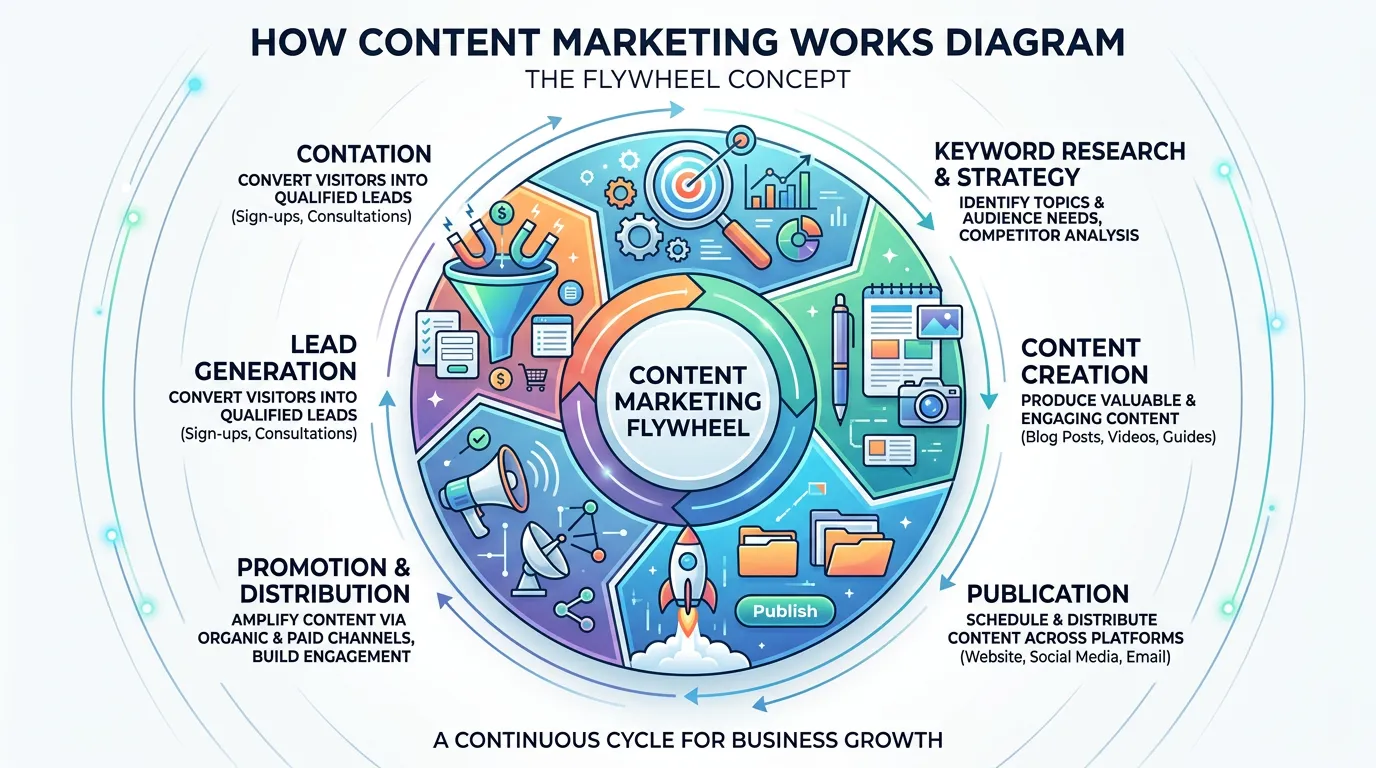
Content marketing runs on a loop with four steps. You find a question your buyers ask. You publish the best answer on your own site. Search engines send people who typed that question. Some of those readers move to a page that takes a call or a form. Then you start again with the next question. None of that is clever. What makes it hard is that all four steps have to work. Most sites break one of them and then blame the whole idea. A shop writes about a topic nobody searches. Or a page ranks but reads like a sales sheet, so nobody trusts it. Or the page is good, gets read, and has no link to anything that books work. One broken step stops the chain. The loop is also slow at the start. A new page has to be found, stored, and tested against the pages already there. That takes weeks in a quiet trade and months in a crowded one. Once it settles, the same page keeps working with no new spend. That is the trade you are making. Ads start today and stop the day you pause them. Content is slow to start and slow to fade.
The Three Kinds of Questions Buyers Type
Nobody goes from nothing to hiring in one search. Buyers move through three kinds of questions, and each kind needs a different page. Problem questions come first. My AC is blowing warm air. There is water pooling by the heater. These people do not want a sales page yet. They want to know what broke and how bad it is. Planning questions come next. What does a new furnace cost. How long does a roof job take. Is a tankless heater worth the extra money. Most buying gets decided at this stage, and it is the stage most sites skip. Hiring questions come last. Best roofer in Chino. A company name plus the word reviews. Your service pages, your Google profile, and your reviews own that stage. This order tells you what to write first. Cost and comparison pages sit closest to the money, so they pay back soonest. Problem pages pull far more traffic, but the reader is further from writing a check. A healthy library has both. Build the planning pages first, then fill in the problem pages around them. Doing it the other way round is why some blogs get visits for years and never a call.
- Problem stage: what is wrong and how bad is it
- Planning stage: what it costs, how long it takes, which option wins
- Hiring stage: who is nearby, who is trusted, who picks up the phone
How a Search Engine Picks Which Page to Show
Three things have to happen before your page can show up at all. A crawler has to find it. The index has to store a copy. Then the ranking step has to pick it over everything else it stored. Most pages that get no traffic fail at the third step, but plenty never get past the first. Google publishes what it looks for. The short version is that the page should be made for people, cover the question fully, and come from a site that clearly knows the subject. Original detail counts for a lot here. A page that repeats what four other pages say has no reason to win. A page with your real price bands, your permit timeline, and the failure you see most in older homes does. Links from other sites still matter, and so does how much of the topic your own site covers. One good page about water heaters on a site with nothing else about water heaters is a weak signal. Eight pages that cover the whole subject is a strong one. That is why depth on one service beats one post each about ten services. You are not just writing an article. You are giving the index a reason to treat you as the site that handles that job.
What One Page Has to Do to Earn Its Spot
Open with the answer. If someone asks what a panel upgrade costs, give a range in the first three lines. Readers who have to scroll past four paragraphs of setup leave, and that leaving gets noticed. Then cover the whole question, not a slice of it. For a cost page that means the range, what moves it up, what moves it down, what is not included, and what a fair quote looks like. Use headings that match the way people ask. Someone types how long does it take, so the heading should say how long it takes, not project duration. Put real numbers in. A range beats a promise. A count of days beats the word quickly. Add one thing only you could write, like what you find behind the drywall in a 1970s tract home. That single detail is often what makes a reader trust the rest of the page. Photos of your own crew beat stock images every time. Finish with a next step that fits where the reader is. On a problem page the right next step may be a related guide. On a cost page it is a quote request. Sending everyone to a contact form the second they land is how good pages get wasted.
How One Page Hands the Reader to the Next
A blog post that sits alone is a dead end. Links between your own pages do two jobs at once. They give a reader somewhere to go, and they tell search engines which pages belong together and which one matters most. The usual shape is a hub with spokes. The content marketing service page is the hub. It sells the content marketing work and takes the call. The posts are spokes. Each one answers a piece of the subject and links up to the hub. The spokes also link sideways to each other, so a reader who arrived on a cost question can find the comparison and the problem article without going back to search. Use plain words in the link text. A link that reads tankless water heater cost tells both the reader and the crawler what sits on the other side. A link that reads click here tells nobody anything. When you publish a new post, go back and add a link to it from two or three older pages. Skipping that step is common and it is expensive. Nothing points at the new page, so it takes far longer to be found, and the reader path stops at whatever they landed on.
What the First Year Usually Looks Like
Here is a fair picture of the pace, with no promises attached, because nobody can promise a position. Month one is mostly research and setup. You pick the questions, group them by service, and write the first few briefs. Nothing is live yet, and that feels slow. In months two and three, pages start going up. You will see impressions in Search Console before you see clicks. Impressions mean the page is being shown and not chosen yet. That is normal, and it is progress. Months three and four are where early movement usually shows. Long, specific questions move first because fewer sites bother to answer them. Broad phrases move much later, if at all. Months six through twelve are where the library starts acting like a lead source. By then you have enough pages on one subject for the site to look like a real authority on it, and the older pages have had time to settle. Sites that already rank well move faster than this. A brand new site in a crowded market moves slower. If someone tells you new articles will bring leads in thirty days, they are either running ads or guessing.
When Content Is the Wrong Tool
Content is not the right first move for everyone, and it is worth saying so plainly. Skip it for now if your work is pure emergency. When a pipe bursts at midnight, nobody reads a guide. They call the first number with good reviews. Put that money into your Google profile, your reviews, and ads instead. Skip it if you need leads next month. The math does not work. Content is slow by nature, so use ads to fill the calendar and add content once the phones are steady. Skip it if your site is broken. Slow pages, no mobile layout, or pages a crawler cannot reach will drag down anything you publish on top of them. Fix the base first. Content is worth it when the job costs enough that people research it, and when fear or confusion slows the sale. Roofing, remodels, solar, heating and cooling swaps, legal work, implants, and senior care all fit. So does any trade where the customer is afraid of being ripped off. Teaching removes that fear better than any ad ever will.

From a Typed Question to a Booked Job
Five steps sit between someone typing a question and someone calling you. Your work lands at different points in that chain.
Research fixes the first two steps. Writing fixes the middle. Internal links fix the last one, and that is the step most sites forget.
Which Page to Write for Each Stage
The same buyer needs a different page at each stage. Writing the wrong one for the stage is the most common waste.
| Buyer stage | What they type | Page that fits | Job of that page |
|---|---|---|---|
| Problem | My heater is leaking | Diagnosis article | Name the cause, calm the fear |
| Planning | What a new roof costs | Cost guide | Give a real range and the drivers |
| Comparing | Repair or replace a furnace | Comparison page | Show when each choice wins |
| Checking you | Company name plus reviews | Reviews and profile | Prove other people trusted you |
| Hiring | Roofer near me | Service page | Take the call or the form |
Most blogs are all problem pages. The planning row is where the money sits, and it is usually empty.
Why Eight Pages on One Service Beat One Page on Eight
Spreading one post across eight services feels like covering more ground. It does the opposite. Each page ends up alone, with nothing else on your site backing it up.
Eight pages on one service behave differently. They link to each other, they cover the whole question set, and together they make your site look like the place that handles that job. One page cannot send that signal by itself.
There is a practical gain too. The research overlaps. Once you have sat down with your lead tech about water heaters, the next five pages cost far less to make than the first one did.
Questions About How the Pieces Fit
How many pages does one service need?
Should the main guide be a blog post or a service page?
Do older posts need to be rewritten?
Would rather we handled it?
This article covers how to do the work yourself. If you would rather have it done for you, that is what our content marketing service is.
Content Marketing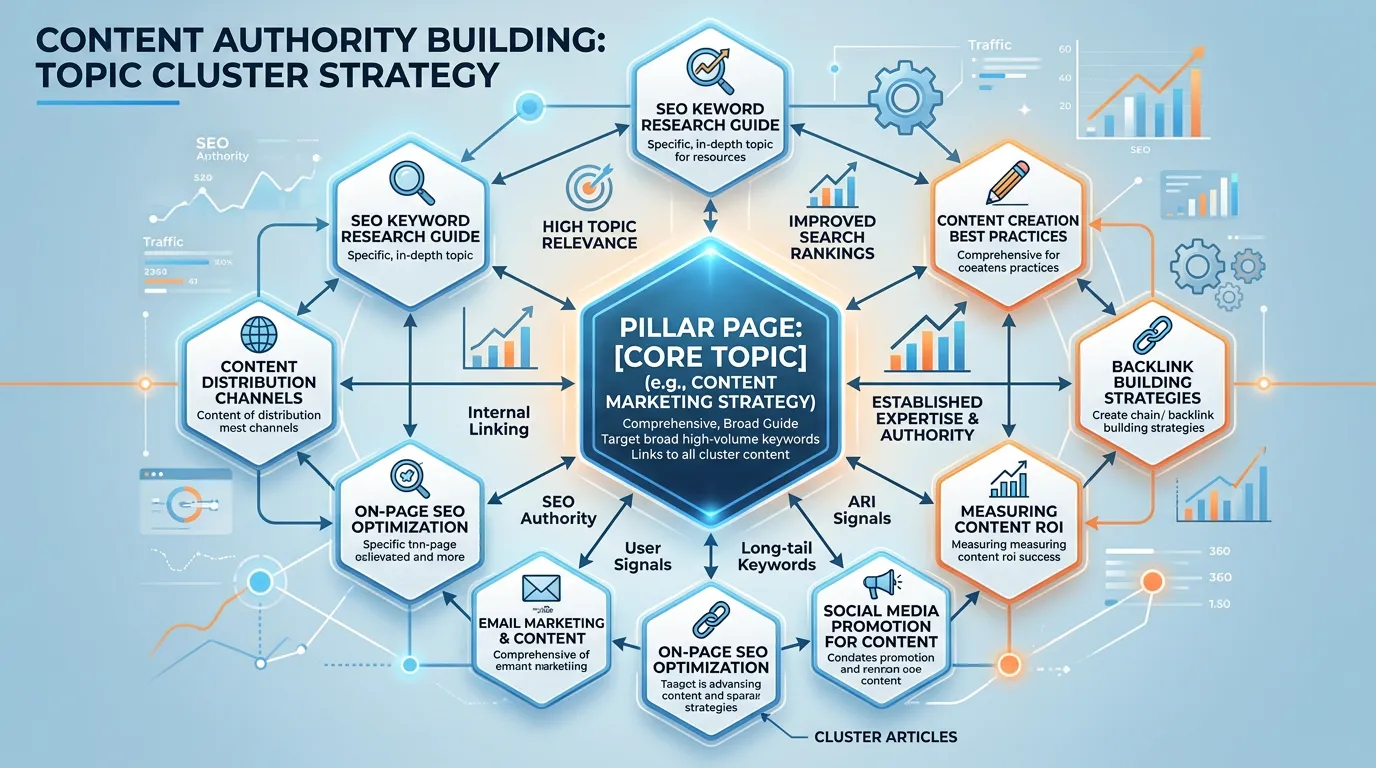
Frequently asked questions
Is content marketing just blogging?
Do I need a blog if my service pages already rank?
How does this content marketing work now that AI answers the question first?
Which comes first, content or fixing the website?
Can I write all of this myself?
Sources
- Google Search Central: Google Search Essentials(opens in a new tab) Google sets out the technical requirements, spam policies, and best practices a page has to meet to be eligible to appear in Search.
- Google Search Central: Creating helpful, reliable, people-first content(opens in a new tab) Google describes the self assessment questions it uses to judge whether content is original, useful, and written for people rather than for search engines.
- Google Search Central: SEO Starter Guide(opens in a new tab) Google explains how it finds, crawls, and indexes pages, and covers the basics of titles, descriptions, headings, and links.