
Foundational Guides
How Much Does Conversion Rate Optimization Cost?
What conversion rate optimization costs, how it gets priced, and the things that quietly move a quote up or down before you sign.
Call (714) 823-3164 or ask a question. Clear recommendations, even if we never work together.
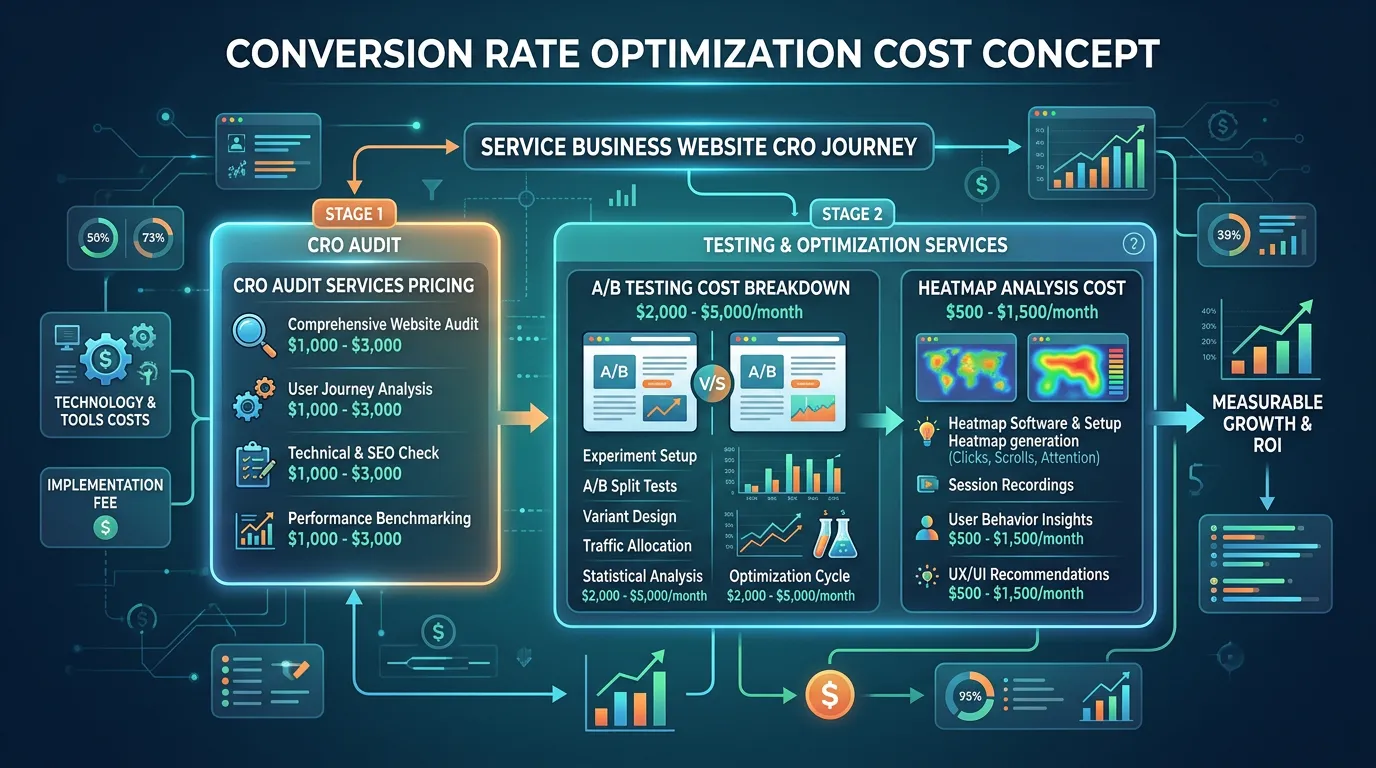
Conversion work is sold four ways: a one time audit, a monthly retainer, hourly consulting, or a fixed project. Audits commonly run 1,500 to 6,000 dollars. Retainers for a single location service business commonly run 1,000 to 5,000 a month. Traffic, page count, and site condition move the number most.
Jump to a section
- What the Money Actually Buys
- The Four Shapes a Quote Comes In
- What Pushes a Quote Up
- What Pulls a Quote Down
- The Line Items That Are Not in the Proposal
- Do the Break Even Math Before You Sign
- What a Very Cheap Quote Usually Means
- What Each Pricing Shape Fits
- Where a Monthly Fee Goes
- Ask These Before You Sign Anything
- Buying This Without Getting Burned
- Questions
What the Money Actually Buys
A quote for conversion work is a quote for hours, tools, and somebody's judgment. It is not a payment for a higher conversion rate, because nobody can sell you that up front. Knowing where the hours go is how you compare two proposals that look nothing alike on the cover page. On most programs the hours land in five buckets. Setting up and checking the tracking, so the numbers are real before anyone argues about them. Gathering evidence, which means watching recordings, reading reports, and listening to calls. Writing and design, which is where the page changes actually get made. Build and quality checks, including proving a change still looks right on a five year old Android phone. Then analysis and reporting, which is the part that tells you whether any of it worked. The mix shifts month to month. Month one is heavy on tracking and evidence and produces almost nothing you can see on the site. That feels slow, and it is the part people try to cut. Month four should be mostly changes and readings. If a provider bills the same hours for the same tasks in month nine as in month one, ask what happened to all that audit work. Software sits under all of it. Some of it is free. Some of it bills every month whether anyone opens it or not.
The Four Shapes a Quote Comes In
Almost every price you are handed is one of four shapes. The first is a one time audit. Somebody sets up tracking, gathers evidence, and hands you a ranked list of problems with the fix for each one. You will commonly see 1,500 to 6,000 dollars, depending on how many page templates and locations are involved. It suits a business with a web person who will do the conversion rate work afterward. Without that person, an audit turns into a file nobody opens. The second is a monthly retainer. A set fee buys a set scope each month: changes shipped, results read, next round planned. For a single location service business, quotes commonly run from about 1,000 to 5,000 a month. Multi location sites and programs with real testing run higher. The third is hourly. Consulting usually falls somewhere between 100 and 250 an hour. That fits an owner who will do the conversion rate work but wants direction, or a company with one specific fight to settle. The fourth is a fixed project, such as rebuilding a template set or a booking flow. Those are quoted like any build, often a few thousand dollars up into the mid five figures. Be careful with pay per lead offers in this work. It sounds fair, and then the argument about which calls counted starts in month two and never ends.
What Pushes a Quote Up
Two businesses in the same trade can get quotes that differ by triple, and it is usually scope rather than greed. Traffic volume is the first driver, and it cuts both ways. More traffic means more analysis, more segments to read, and real testing with sample size math behind it, all of which is more hours. Page templates are the second. A site with one service template costs far less to work on than one with service pages, city pages, a blog, and a booking flow, because each template needs its own evidence and its own changes. Locations are third. Every branch adds a tracking number, a routing check, and a page set that has to stay consistent. After that it is access. If nobody can touch the site without a developer, and that developer answers in four days, the same change costs three times the hours. Regulated trades add review time, because medical and legal copy has to be read by someone who can approve it. Reporting cadence matters more than owners expect. A monthly walkthrough call, call recordings reviewed by a person, and a written test log all take real time, and time is the whole invoice.
- More traffic, because real testing needs analysis and sample size math
- More templates, because each one needs its own evidence
- More locations, because each adds tracking and routing checks
- No developer access, or a slow one
- Regulated trades where copy needs formal review
- Monthly live reporting instead of a written summary
What Pulls a Quote Down
The same logic runs the other way, and some of it sits in your hands. A single location business with one service template, clean tracking already in place, and a site somebody can edit today needs a fraction of the hours a tangled setup does. Doing part of the conversion rate work in house is the biggest lever you control. If your office manager can update page copy and your web person can ship a form change, you are paying for thinking rather than typing. Starting with an audit instead of a retainer also lowers the first invoice, and for many small sites it is the right call anyway. Fix what the audit finds, live with it for a quarter, then decide whether a monthly program earns its keep. Written reporting instead of a live call every month saves hours without hiding anything. So does a narrower scope: two templates instead of nine, one goal instead of five. Longer commitments sometimes buy a lower monthly rate, but be careful signing a year with someone you have never worked with. A three month start with a clear scope tells you more than any discount does.
The Line Items That Are Not in the Proposal
Part of the cost never shows up on the agency invoice, and it surprises people in month two. Call tracking is the usual first one. Dynamic number software bills a monthly fee plus a per minute charge, and a busy shop with long calls can add real money there. It is still the tool most worth paying for, because without it nobody can say which page produced which call. Testing tools are next. Recordings and heatmaps can be free, so that line is often zero. Split testing software is where the money starts, and prices climb with traffic. Developer hours are the one people forget. If your site needs a template change, somebody has to build it, and that either comes out of the retainer or gets billed on top. Ask which before month one. Photography deserves its own line too. Real photos of your crew and your finished work beat stock images on a service site, and a half day with a photographer is a one time cost that lasts years. Then there is your own time. Somebody has to approve copy, answer questions about how the trade actually works, and forward the call recordings. Budget an hour or two a week and name the person. Pages written by someone who has never done the job read like it unless an owner reads them first.
Do the Break Even Math Before You Sign
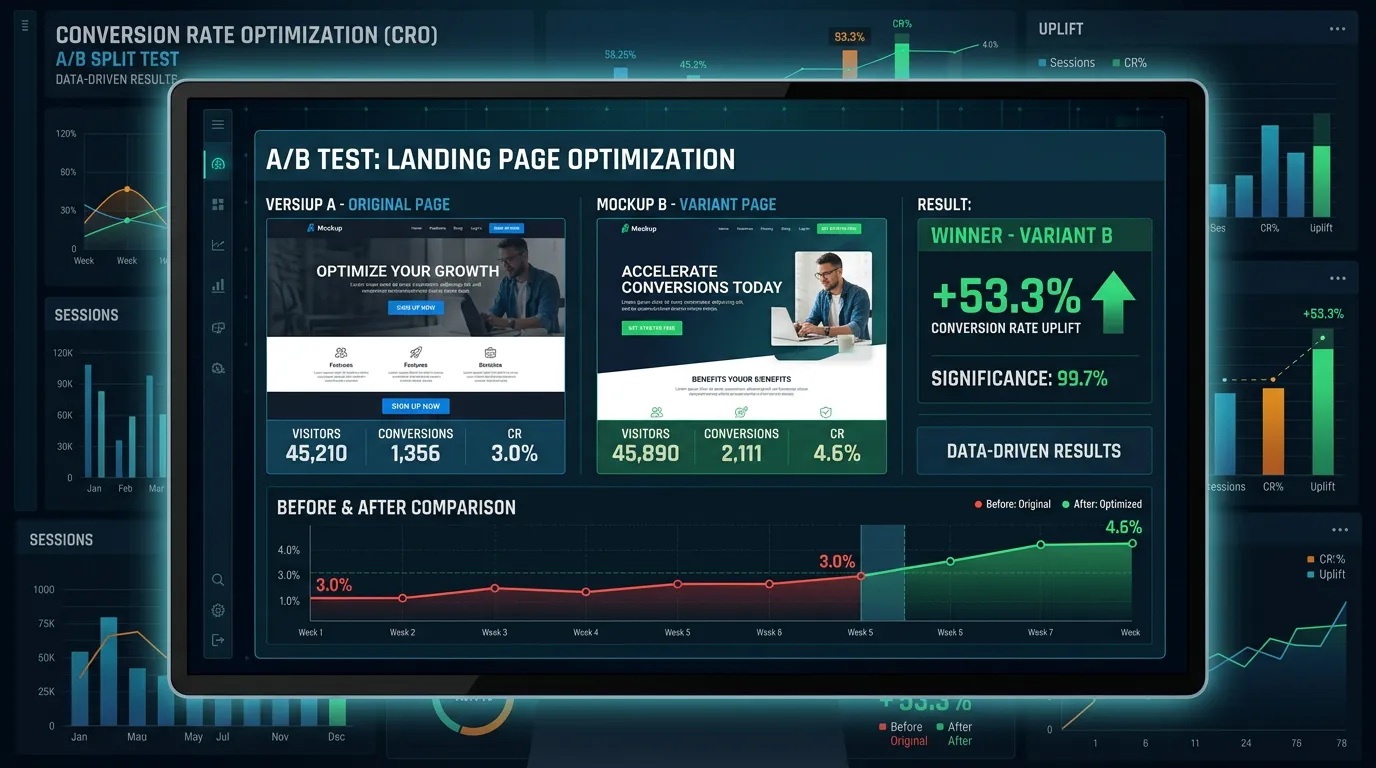
The useful question is not whether a price is high. It is how many jobs it takes to cover it. Run the arithmetic before you compare any two quotes. Here is a hypothetical. A remodeling company gets 4,000 visits a month and converts two percent, so 80 leads. It closes about 40 percent of them at an average job value of 600 dollars. Lift the conversion rate to two and a quarter percent and that is 90 leads, four more jobs, about 2,400 dollars of extra work a month. Now put your own numbers in and the decision stops being a feeling. Add repeat value if your trade has it. A dental office measures a new patient across years, so the break even can be a fraction of one patient a month. A roofer who sees each customer once every twenty years cannot use that math and should not pretend to. Then set a time frame you can fund. This conversion rate work does not pay back in week three, and results are never guaranteed by anyone honest. If you cannot cover four to six months of the fee without the extra work arriving, start with a one time audit and revisit later. That is a better decision than signing a retainer you have to cancel in month two.
What a Very Cheap Quote Usually Means
Low prices are not automatically bad, but they buy something specific, so know what it is. Under a few hundred dollars a month you are almost always buying software plus a dashboard. A heatmap tool gets installed, a popup gets switched on, and a report arrives showing you charts nobody acts on. There is no analyst hour in that price, because an analyst hour costs more than the whole fee. The second cheap version is a template swap sold as conversion work. The pages get rearranged to match somebody's preferred layout, no evidence is gathered first, and nothing is measured after. Sometimes it helps. Nobody will ever know which part helped, which means it cannot be repeated. Watch for two more warnings. If nobody checks your tracking before shipping changes, the whole engagement is unmeasured by design. And if there is no plan to undo a change that goes the wrong way, the provider is not expecting to look. It is also fair to say when cheap is right. If your phone already goes unanswered at lunch, spend the money on answering it. That fixes more leads this month than any page change will.
What Each Pricing Shape Fits
Ranges here are what you commonly see quoted in this market, not a price list. Any real quote moves with scope.
| Shape | Common range | What you get | Best when |
|---|---|---|---|
| One time audit | 1,500 to 6,000 | Tracking setup, evidence, a ranked fix list | You have someone to do the fixing |
| Monthly retainer | 1,000 to 5,000 a month | Changes shipped and results read each month | You have traffic and want it repeated |
| Hourly consulting | 100 to 250 an hour | Direction, review, and answers to your questions | Your team does the conversion rate work but wants a check |
| Fixed project | A few thousand and up | A rebuilt template set, form, or booking flow | One known thing needs replacing |
Two quotes only compare when they are the same shape. Line up hours and deliverables, not package names.
Where a Monthly Fee Goes
Ask any provider to split the retainer across these five. The answer tells you more about the engagement than the total does.
If the split never changes across nine months, the audit work either never finished or never started.
Ask These Before You Sign Anything
Seven questions, all answerable in one email. The answers separate a real program from a dashboard subscription.
How do the monthly hours split?
Analysis, writing, build, reporting. Rough percentages are fine.
Which tools do I pay for directly?
Call tracking and testing software are the usual two.
Is developer time included or billed on top?
Get this in writing before the first template change.
Who checks my tracking, and when?
It should happen before any change ships, not after.
What happens to a change that loses?
There should be a written rule for undoing it.
What do I keep if we stop?
Tracking setup, change log, and the unfinished fix list.
How much of my time do you need?
An honest answer is one to two hours a week, named.
Buying This Without Getting Burned
Most bad engagements go wrong at the buying stage, not the working stage. These are the habits that decide it.
Do this
- Compare quotes by hours and deliverables, never by the package name.
- Start with a scope you can judge in 90 days, then extend if it earns it.
- Ask for the fix list to be ranked by traffic touched, not by ease.
- Fix your phone answering first if calls already go to voicemail at lunch.
- Put your average job value and close rate in writing before you compare fees.
Not this
- Do not buy a monthly program for a site with a few hundred visits a month.
- Do not accept a promised percentage lift. Nobody can price a result honestly.
- Do not let a rebuild and a test program run at the same time.
- Do not pay for reporting you will not read. A written summary is cheaper.
- Do not sign a year for a discount from a provider you have not worked with.
Would rather we handled it?
This article covers how to do the work yourself. If you would rather have it done for you, that is what our conversion rate optimization service is.
Conversion Rate Optimization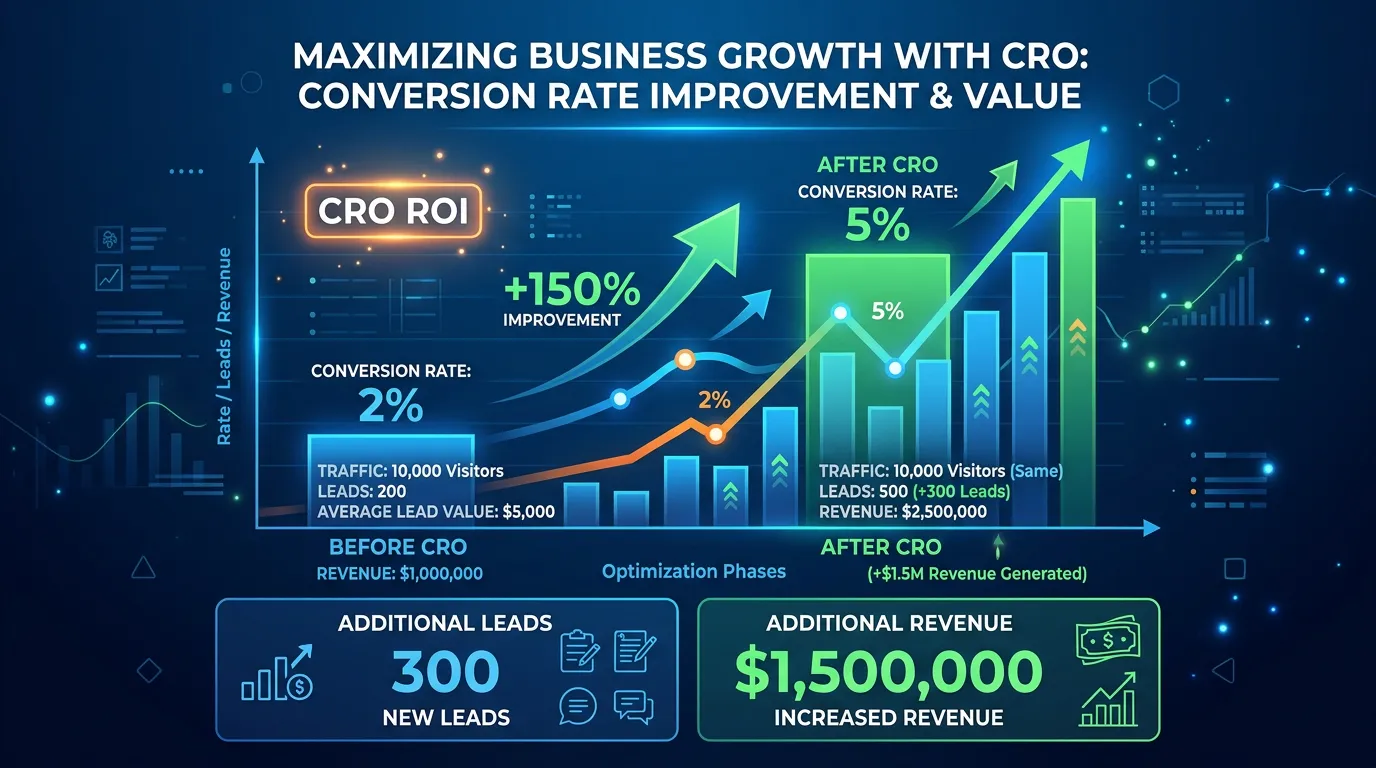
Frequently asked questions
Is this cheaper than just buying more traffic?
Should I pay per lead instead of a flat fee?
What is the difference between a cheap audit and an expensive one?
Do I have to sign a long contract?
What is the smallest budget that makes sense?
Sources
- Microsoft Clarity(opens in a new tab) Session recordings and heatmaps are available free, which is why tooling is often a zero line for small sites.
- PageSpeed Insights(opens in a new tab) Google's free page speed test, used here as an example of checks that cost nothing beyond the time to run them.