Google Business Profile Optimization
Google Review Strategy for Business Profiles
Target velocity set from what current map pack leaders have
- Timeline
- System live in 3 weeks
Call (714) 823-3164 or ask a question. Clear recommendations, even if we never work together.
A Google review strategy is a plan for earning reviews on a Business Profile at a steady, policy compliant pace. It sets a monthly target from what competitors have, and it defines when and how you ask. It uses the direct review link and covers responses, since Google weighs review count, rating, and recency in local ranking.
The problem
Reviews arrive in bursts when someone remembers to ask, then stop for four months. A profile that jumped from 12 reviews to 60 in three weeks and then went quiet looks worse to Google and to customers than one gaining four a month steadily. The other common failure is asking wrong: a mass email to five years of customers, an incentive that violates policy, or a survey that only forwards happy people to Google, which is review gating and against the rules.
What it is
This is the Google specific piece of review work. It sets a monthly target from the Google review counts and velocity of the businesses in your map pack right now. That way the goal comes from your market, not from a round number. It defines the ask moment. For most trades that is the technician or provider asking in person at the end of the job. A text with the direct review link follows within minutes. It sets the response standard too, since responding is a visible signal and Google prompts owners to do it. And it stays inside policy: no gating, no incentives, and no Google review stations on business wifi that produce a cluster of reviews from one IP address.
Signs you need this
- Your Google review count has barely moved in a year
- Reviews come in bursts and then stop for months
- The map pack leaders have five times your Google review count
- You ask for reviews but nobody knows the exact link to send
- Your newest review is over six months old
What is included
- Competitive review benchmark showing count and monthly velocity of pack leaders
- Realistic monthly review target based on your job volume
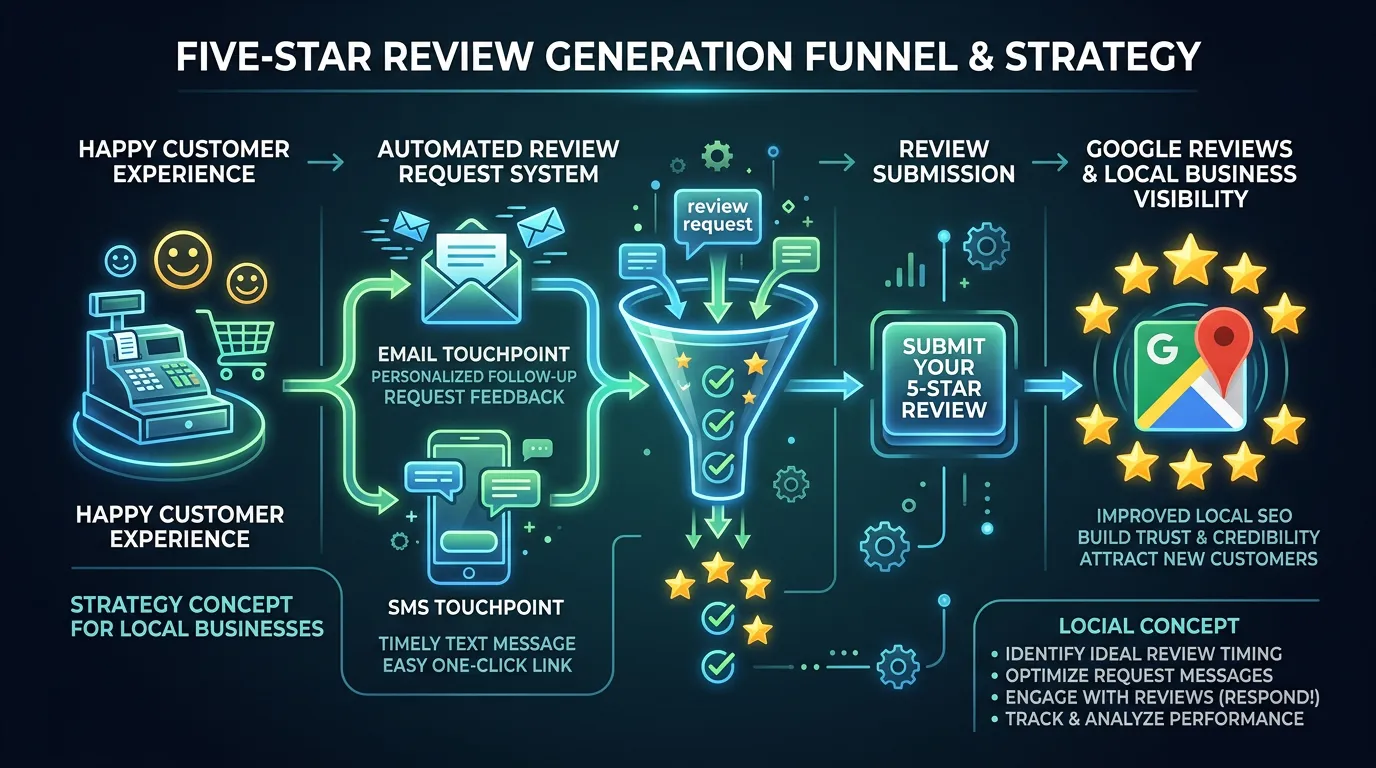
- Direct Google review link and QR code created and distributed
- Ask script for technicians, providers, or front desk staff
- Text and email request templates with correct timing rules
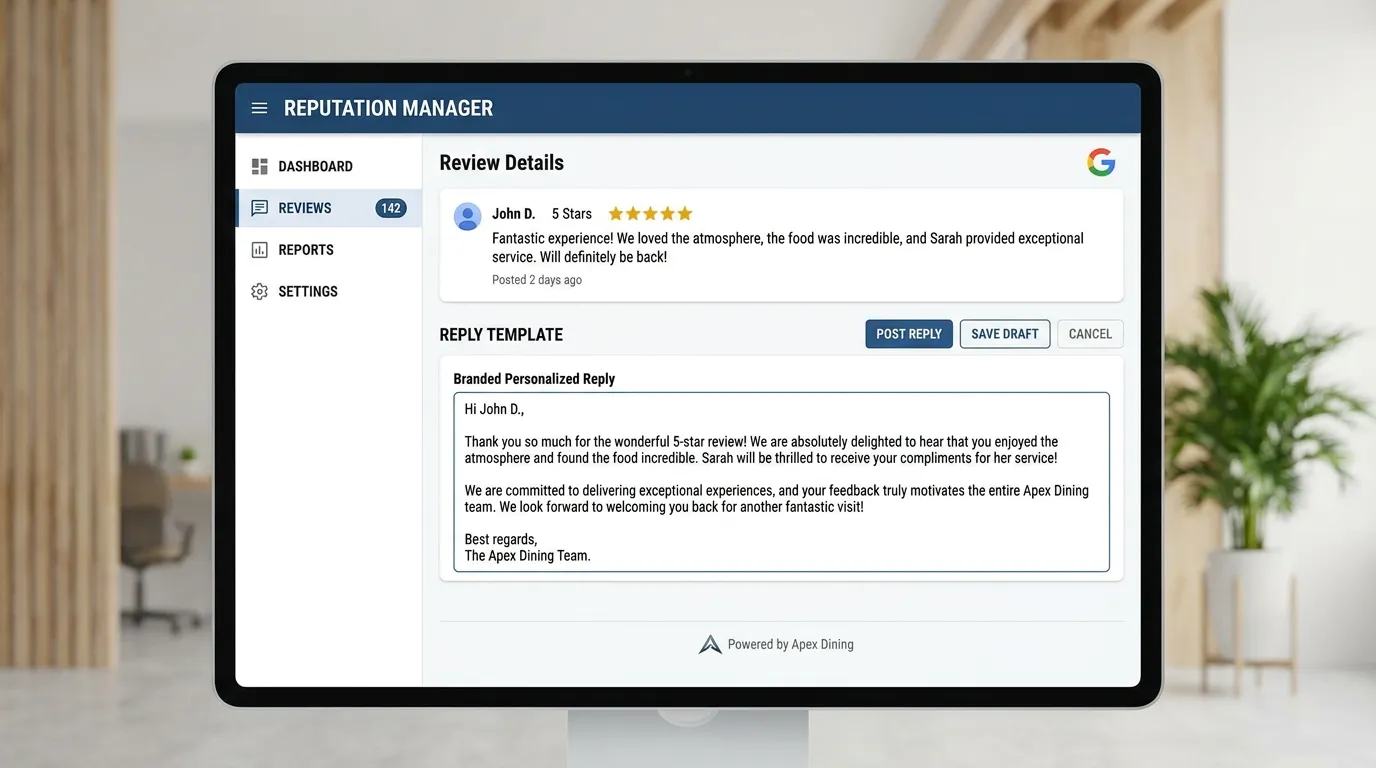
- Response templates for five star, mixed, and negative reviews
- Policy compliance review so nothing risks review removal
- Monthly tracking of new reviews, rating, and response rate
Our process
Benchmark the market
Week 1We count reviews and estimate monthly velocity for the businesses in your map pack. If the leader gained 96 reviews last year, a target of two a month will never close the gap, and knowing that up front prevents wasted effort.
Set the ask moment
Week 1 to 2We find the point of highest satisfaction in your process and put the ask there. For trades that is at job completion. For dental that is at checkout. For law that is at case resolution. Asking three days later cuts response rates sharply.
Build the tools
Week 2The direct review link gets generated, shortened, and turned into a QR code for cards and invoices. Text templates get written short enough to read on a lock screen. Staff get a script they can say naturally.
Train and launch
Week 3Fifteen minutes with the team covering what to say, when, and what not to do. The policy rules get covered explicitly: no offering discounts, no filtering unhappy customers, no asking a customer to Google review before the work is finished.
Track and adjust
Ongoing, monthlyMonthly we track new reviews against target, response rate, and which staff members generate the most reviews. When one tech consistently produces reviews and another produces none, that is a coaching conversation.
Realistic timeline: System live in 3 weeks. First month usually produces a jump as the backlog of recent happy customers gets asked. Steady state velocity settles by month 3. Closing a large competitive gap takes 9 to 18 months.
Where review requests leak out
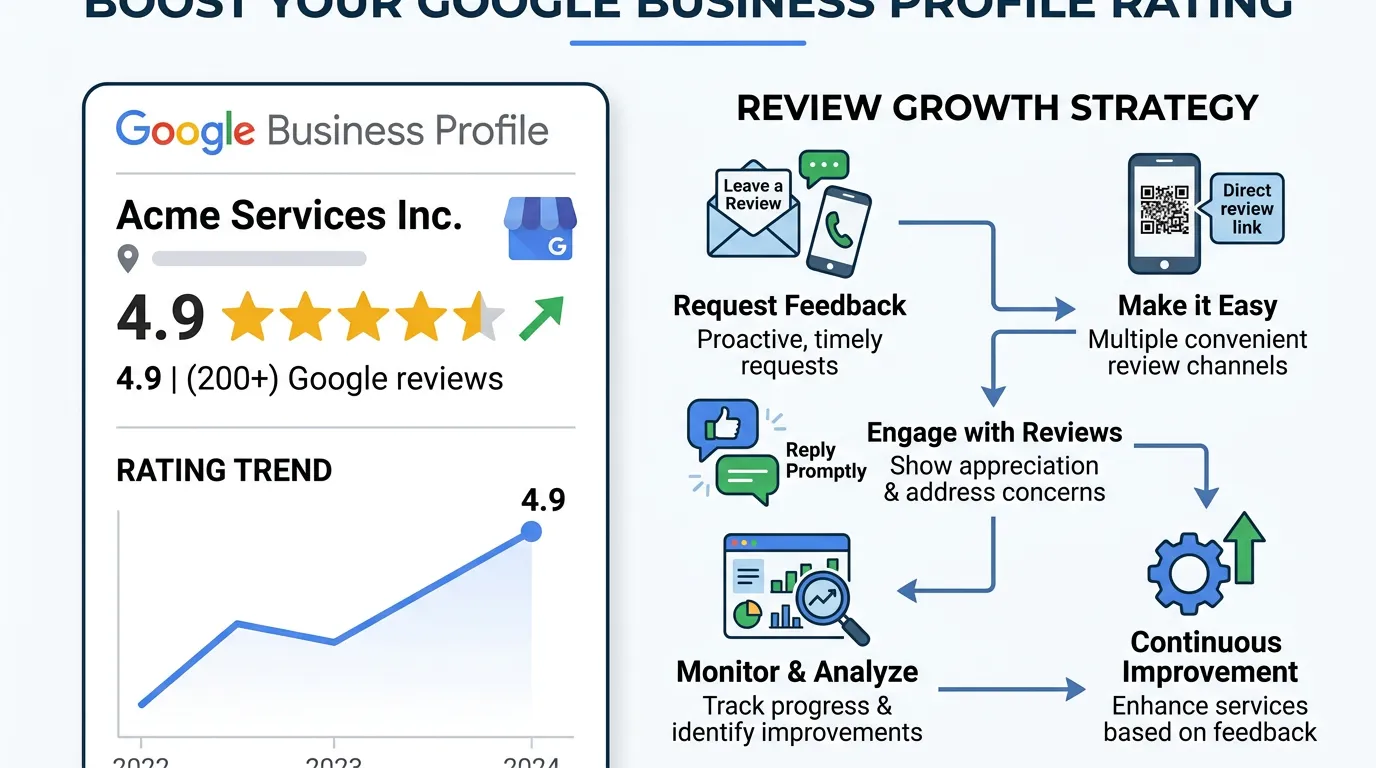
Reviews move through a funnel like anything else. Knowing which step you lose people at tells you what to fix first.
Most businesses lose the most people between the job ending and the text going out.
Staying inside Google's review rules
The rules are short and the penalties are not. These are the lines we hold on every account.
Do this
- Ask every customer, including the ones who were hard to please
- Send the direct review link so nobody has to search for you
- Ask once, send one reminder a few days later, then stop
- Reply to negative reviews in public within two business days
- Report reviews that break policy and keep a dated screenshot
Not this
- Do not offer a discount, a gift card, or an entry into a drawing
- Do not survey people first and send only the happy ones to Google
- Do not hand a customer your own phone or tablet to post the Google review
- Do not buy reviews or trade them with another business
- Do not argue with a reviewer in public, no matter how wrong they are
Why some reviews never show up
A customer texts you a screenshot of the review they left, and it is not on your profile. That is filtering, and it happens automatically. Common triggers are several reviews from one device or network, brand new accounts with no other activity, and text that includes a phone number or a link.
Wait about three days before doing anything, because some reviews come back on their own. After that, ask the customer to check whether it still shows under their own Google contributions. If it is gone there too, it was removed, and getting one back is rare.
Prevention beats appeals here. Let people review on their own phone, in their own time, from the link you texted. Spread requests across the week instead of sending forty on a Friday. Steady asking looks like what it is, which is a normal business with normal customers.
Two questions owners always ask
A competitor is posting fake one star reviews. What do I do?
Should I chase reviews on other sites too?