
Professional and Financial Services
Digital Marketing for Property Management
Doors under management is the only growth number
Call (714) 823-3164 or ask a question. Clear recommendations, even if we never work together.
Property management marketing has two audiences: owners and tenants. Owners are the ones who grow the business. They start looking after a bad tenant, or after a bad experience with another company. Tenants only need a fast leasing path. Most of the budget belongs on winning owners and on protecting your review rating.
What usually goes wrong
- Tenants leave one star reviews about a deposit or a repair, and owners read every one of them
- Doors leave the portfolio when owners sell, so you add units just to stay flat
- Owners compare you on percentage fee alone and ignore everything else in the agreement
- State rent cap and just cause rules keep shifting and owners expect you to explain them
- Maintenance calls and after hours emergencies eat the day, so nothing gets done on growth
- National franchises and door count aggregators outrank you for owner searches
- Onboarding a new owner takes weeks of work before you collect a single management fee
What usually makes an owner start looking
- Door count is flat or shrinking because owners sold into a strong market
- Your public rating drops below four stars from tenant reviews
- You hire a leasing agent or portfolio manager who needs more doors to justify the role
- A large owner or investor group leaves and takes a block of units with them
- You expand into a new city or into a new property type such as small commercial
- You buy another company's portfolio and the brand has to catch up
Which channels actually matter
Not every channel deserves the same weight for property management. This is how we would prioritise.
| Channel | Weight | Why |
|---|---|---|
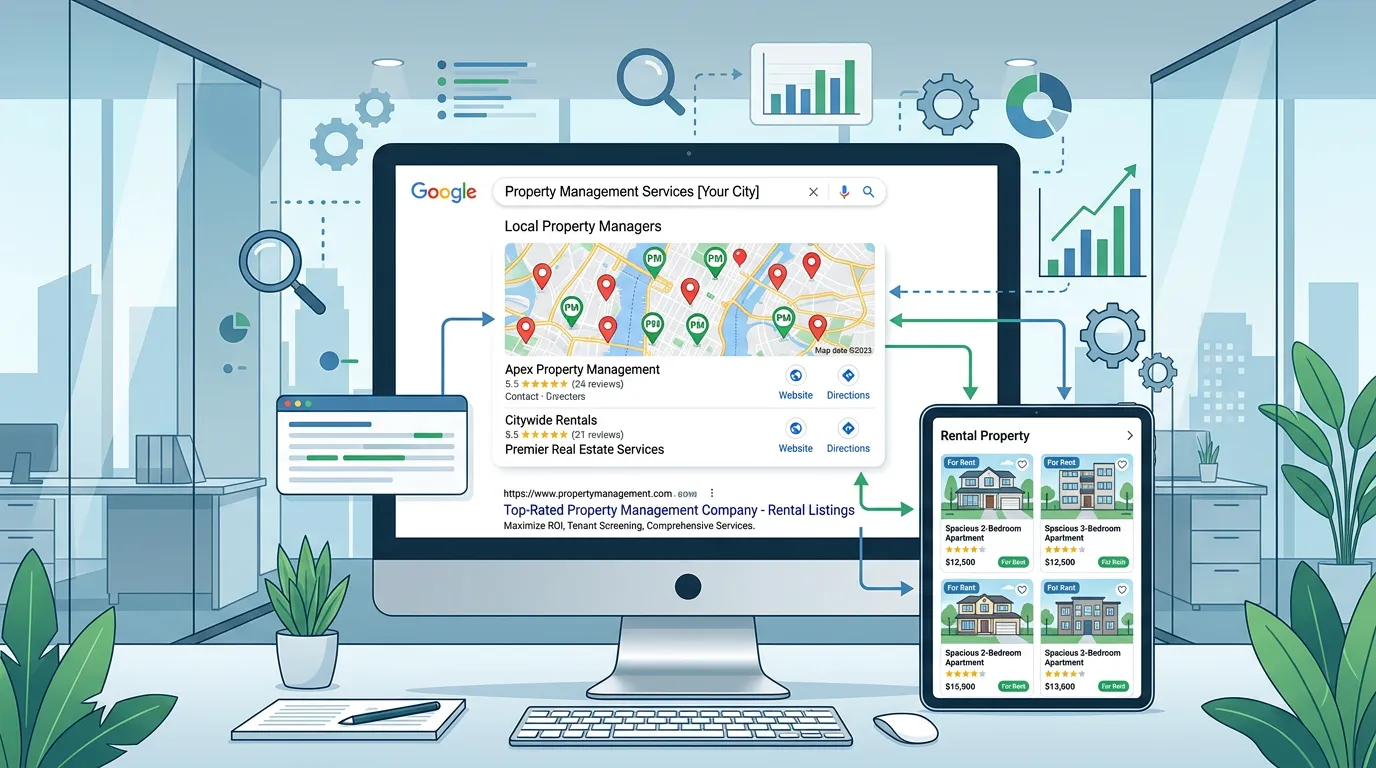
| Local SEO | Primary | Owners search property management companies plus a city name. Ranking there is the single biggest driver of new doors. |
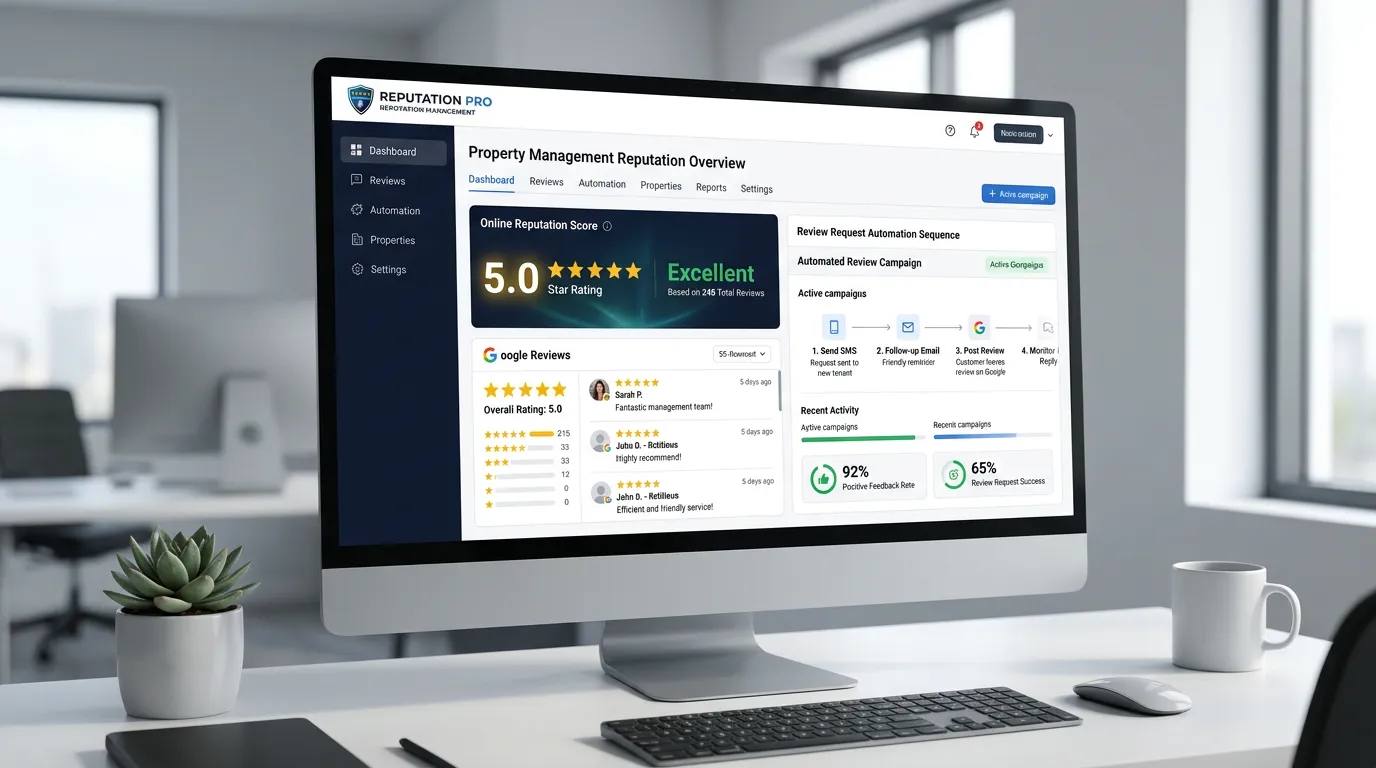
| Reputation Management | Primary | Tenants review more often than owners and they review when they are angry. A deliberate system for asking satisfied owners and residents is what keeps the rating usable. |
| Content Marketing | Secondary | Owner focused pages on fees, rent cap rules, eviction timelines, and what a manager actually does answer the questions that come right before someone signs. |
| Pay Per Click Advertising | Secondary | Owner search volume is small but a single door is worth years of fees, so paid search on owner terms usually pays back even at a high cost per click. |
| Web Design and Development | Supporting | Separate paths for owners and tenants, a working owner inquiry form, and an easy to find portal link cut down on both lost leads and angry phone calls. |
Seasonality
Leasing peaks from late spring through early fall in Southern California. Turnover is heaviest in June, July, and August, when families move between school years. Owner inquiries follow a different rhythm. They cluster in January when landlords face tax paperwork, and again right after a hard eviction or a long vacancy. Winter leasing is slower, which makes it the best stretch for owner growth work.
What we measure
New doors under management per month
Owner inquiries and inquiry to signed agreement rate
Average days on market for a vacancy
Tenant renewal rate
Average rating and new review volume per month
Concerns we hear
Our tenants will always leave bad reviews. There is nothing we can do.
There is. Most managers only hear from unhappy tenants because nobody asks the happy ones. Add a request at move in, at renewal, and after a fast repair, and the rating moves within a couple of quarters. How you respond in public matters even more than the review itself.
We grow through real estate agent referrals.
Good source, keep it. Agents refer to managers they can find and verify quickly. Ranking well with a clean review profile makes you the easy name for them to hand over without any risk to their own reputation.
Owners only care about the percentage we charge.
The ones who only care about that are usually the ones who leave. Content showing your average days on market, your renewal rate, and how maintenance is handled attracts owners who buy on results instead of on a single number.
We already manage more doors than we can handle.
Then the property management work is quality of doors, not quantity. We target the property types and areas you actually want, and use the same systems to recruit staff so capacity catches up with demand.
Marketing will just bring us tenant calls we do not want.
That is a targeting problem and it is fixable. Owner pages and tenant pages get separate keywords, separate ads, and separate forms, so the two audiences never land in the same inbox.
Where we would start
The services that move the needle fastest for property management.
Reputation Management
Generate reviews on purpose and protect the rating you have.
Reputation ManagementPay Per Click Advertising
Paid traffic that produces calls instead of clicks.
Pay Per Click AdvertisingWeb Design and Development
Fast, accessible websites built to turn visits into calls.
Web Design and DevelopmentGoogle Business Profile Optimization
Turn your profile into the strongest lead source you own.
Google Business Profile Optimization
Where we serve this industry
How an Owner Ends Up Calling You
Owners rarely switch managers on a good day. The path almost always starts with one specific problem.
Reviews get read before anyone calls, which is why tenant complaints cost you owners.
What One Door Actually Pays
Owner marketing looks expensive until you add up what a single door pays across the years an owner stays.
| Revenue line | How it usually works | Why it matters to your budget |
|---|---|---|
| Monthly management fee | Typically 6 to 10 percent of collected rent on a single family home | Recurring, so it compounds every month they stay |
| Leasing or placement fee | Often half a month to a full month of rent | Paid again at every turnover |
| Renewal fee | A flat amount or a small percentage at lease renewal | Rewards keeping good tenants in place |
| Maintenance coordination | A markup or a flat fee, depending on your agreement | Small per job, steady across a portfolio |
| The second property | Many owners bring another unit within a couple of years | One signed owner is rarely one door |
These ranges are typical for Southern California single family management and vary by company and property type.
Pulling a Stuck Rating Back Up
A rating under four stars costs you owner calls you never hear about. This is the sequence that moves it.
Ask at move in, while the resident is still happy
The keys worked and the unit was clean.
Ask again after a repair closed inside 48 hours
Speed is what people actually praise.
Ask owners after a quarter with no vacancy
Owner reviews carry more weight with owners.
Answer every negative review within two business days
Short, calm, and no private detail.
Never argue about a deposit in public
Move it to a phone number in one line.
Fix the thing the reviews keep naming
Three people saying slow repairs is data.
Track new reviews per month, not the average
Volume is the lever. The average follows.
Keeping Owner and Tenant Traffic Apart
The most common property management website problem is one form and one phone number for two audiences who want opposite things.
Do this
- Give owners and tenants separate buttons at the top of every page
- Put the resident portal link where a tenant sees it in one second
- Write owner pages around fees, vacancy days, and rules
- Route owner inquiries to a named person, not a shared inbox
- Run separate ad campaigns and tracking numbers for each audience
Not this
- Do not use one contact form and sort it out later
- Do not bury maintenance requests three clicks deep
- Do not bid on rental listing keywords with your owner budget
- Do not send tenant complaints to the person who signs owners
- Do not let vacancy listings take over the homepage
Why January Is the Month to Chase Owners
Leasing and owner growth run on different calendars, and most companies only plan around the leasing one.
Summer is turnover season. June through August is when the phones are loudest and nobody has time to sell anything. Winter is the opposite: fewer moves, fewer showings, and staff who can actually answer a careful owner question.
January adds a push of its own. Owners are pulling together tax paperwork and looking at a full year of statements. That is when a bad year becomes obvious and a landlord starts looking around.
So build owner pages and ads in October and November, and have them live before the first week of January. Start in January and you are publishing at the exact moment the demand shows up.